

 Britain’s immigration debate has intensified once again after a heated parliamentary exchange over illegal Channel crossings and the government’s handling of asylum policy.
During a recent debate, ministers defended Labour’s border strategy after opposition politicians accused the government of failing to reduce the number of small boats arriving on England’s southern coast. Critics argued that Labour’s election promises to tackle people-smuggling networks have yet to produce visible results, while government representatives maintained that rebuilding the border system requires time following years of challenges.
One of the central points raised during the discussion concerned the number of migrants arriving since Labour entered office. Opposition MPs cited Home Office figures they said showed that tens of thousands of people had crossed the English Channel in small boats since July 2024. They argued that the current rate of arrivals remains high despite repeated government commitments to strengthen border enforcement.
Labour ministers rejected suggestions that the situation demonstrates a policy failure, insisting they inherited a system that had already been under significant strain. They argued that criminal smuggling organizations continue to exploit vulnerable migrants and that dismantling those networks requires long-term cooperation with international partners rather than quick political solutions.
The debate also focused heavily on housing and public services. Several MPs claimed that communities across England continue to experience pressure on affordable housing, healthcare, schools, and local council budgets. They argued that these concerns have contributed to growing frustration among residents, particularly in areas already facing shortages of social housing.
Some opposition speakers questioned decisions to accommodate asylum seekers in hotels or other publicly funded facilities while many local families remain on waiting lists for permanent housing. Veterans were also mentioned during the debate, with critics arguing that former service personnel should receive greater priority when housing resources are limited.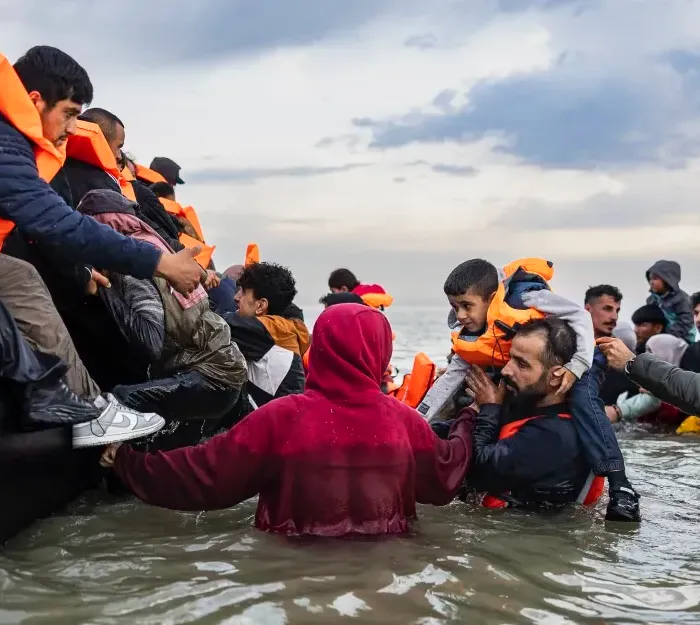
Government representatives responded that local authorities must balance legal obligations toward asylum seekers with broader housing responsibilities. Ministers also emphasized that many housing shortages predate the current administration and reflect wider structural problems affecting communities throughout the country.
Another major issue discussed was deterrence. Opposition MPs argued that people who travel through multiple safe countries before reaching Britain should face a greater likelihood of removal if they enter the country illegally. According to their argument, without a credible prospect of deportation, criminal smuggling gangs retain a financial incentive to continue organizing dangerous Channel crossings.
Several speakers called for stronger border measures, including renewed consideration of offshore processing arrangements and broader reforms to immigration legislation. Some also argued for changes to existing legal frameworks governing asylum claims and deportation procedures, claiming current rules make removals more difficult.
Labour ministers defended their approach by emphasizing efforts to target organized crime groups rather than focusing solely on individual migrants. They maintained that breaking the business model of smuggling gangs remains a central objective of government policy and argued that international cooperation is essential to achieving lasting results.
The parliamentary discussion also highlighted broader political disagreements over immigration policy. Opposition parties argued that successive governments have failed to restore public confidence in border management, while Labour maintained that meaningful reform requires a combination of enforcement, international agreements, and improvements to the asylum system.
Beyond Westminster, immigration remains one of the most closely watched political issues in the United Kingdom. Opinion polls have consistently shown that border security, public services, and housing remain among voters’ leading concerns, particularly as local councils continue managing increased demand for accommodation and community support.
Analysts note that the issue is likely to remain central to British politics in the coming months, especially as Parliament continues debating immigration legislation and broader reforms to border enforcement. Future discussions are expected to focus on whether current policies can reduce irregular migration while remaining consistent with Britain’s domestic laws and international obligations.
For now, both the government and its critics continue presenting sharply different assessments of the situation. While ministers argue that their strategy requires time to deliver measurable results, opponents contend that rising arrivals demonstrate the need for more immediate and far-reaching changes. As the debate continues, immigration is expected to remain one of the defining political issues facing the United Kingdom.
Britain’s immigration debate has intensified as the Labour government faces growing pressure to defend its border policies amid continuing illegal Channel crossings. Despite promises to restore control of the immigration system, the arrival of migrants in small boats remains a major political and public concern. Prime Minister Andy Burnham and Home Secretary Shabana Mahmood have defended the government’s strategy, insisting that stronger cooperation with European partners and tougher action against people-smuggling gangs are beginning to produce results. However, opposition politicians argue that the government has yet to demonstrate that it can bring the situation under lasting control.
The English Channel has become one of the most politically sensitive immigration issues in Britain. Every successful crossing attracts public attention, particularly when overcrowded inflatable boats carry large numbers of people across dangerous waters. The journeys frequently involve criminal smuggling networks that charge vulnerable migrants substantial sums while placing their lives at risk.
The government has repeatedly promised to dismantle these organisations and prevent dangerous crossings. Its strategy includes strengthening border enforcement, improving intelligence cooperation with France and other European countries, and increasing the number of investigations targeting organised immigration crime.
According to the Border Security Command’s annual report for 2025/26, small-boat arrivals increased by 3 per cent compared with the previous financial year. However, the report also identified a reduction during the second half of the year. Arrivals during April, May and June 2026 were 44 per cent lower than during the corresponding period in 2025.
The government has presented these figures as evidence that its enforcement strategy is beginning to have an impact. Officials point to increased arrests, seizures of boats and engines, and stronger international cooperation as important achievements.
The report recorded almost 2,000 arrests connected with organised immigration crime during 2025/26, representing a 74 per cent increase. More than 20,000 crossing attempts were also prevented through cooperation with French authorities.
In addition, returns of small-boat arrivals increased by 16 per cent compared with the previous financial year, reaching approximately 2,750 people.
These figures provide an indication of increased enforcement activity, although they do not mean that the Channel migration problem has been solved. Criminal organisations continue adapting their methods, changing launch locations and using increasingly large inflatable vessels to transport passengers.
One of the government’s biggest challenges is the relationship with France. British taxpayers contribute substantial funding towards French border operations, with the objective of preventing boats from reaching the water.
The two countries have expanded intelligence sharing, increased coastal patrols and developed joint investigations into the criminal networks responsible for organising crossings. However, disagreements remain about the effectiveness of individual operations and the restrictions placed on French officers when intervening at sea.
Opposition politicians argue that Britain should demand clearer results from its financial contribution. They believe that additional patrols and police officers are insufficient if large numbers of migrants continue departing from French beaches.
The government responds that stopping crossings requires a coordinated international effort rather than a single enforcement measure. It argues that people-smuggling organisations operate across several countries and can quickly relocate when police activity increases in a particular area.
The debate has also intensified because of the government’s wider immigration reforms. Labour has promised to reduce net migration, strengthen enforcement against illegal working and make it more difficult for criminal organisations to exploit weaknesses in the asylum system.
Its immigration white paper sets out plans to link legal migration more closely to skills and training requirements. The government wants employers to invest more in British workers instead of relying excessively on overseas recruitment.
The proposals also include stronger English-language requirements and measures intended to improve integration into local communities.
Andy Burnham has defended the general direction of these reforms, arguing that permanent settlement in Britain should be earned through meaningful contribution rather than granted automatically after a relatively short period.
One particularly controversial proposal involves extending the qualifying period for some migrants to obtain indefinite leave to remain from five years to as long as 15 years. Supporters argue that longer qualifying periods would reinforce the principle that permanent settlement carries responsibilities as well as rights.
Critics, however, warn that extending the waiting period could create uncertainty for families who have built their lives in Britain. Employers may also face difficulties retaining skilled workers if the immigration system becomes less predictable.
The government must therefore balance tighter immigration controls with the economic needs of the country.
Britain continues to rely on overseas workers in important sectors, including healthcare, education, construction and hospitality. A significant reduction in legal migration could create additional recruitment difficulties unless domestic training and workforce development improve.
The asylum system presents another major challenge. Thousands of people arrive in Britain seeking international protection, and their claims must be examined according to the relevant legal framework.
The government has promised to speed up asylum decisions, improve the removal of people who have no legal right to remain and reduce the use of expensive hotel accommodation.
However, processing applications efficiently requires sufficient trained staff, accurate information and cooperation from countries of origin. Delays can create additional costs for taxpayers while leaving applicants in prolonged uncertainty.
The political opposition has used these difficulties to challenge Labour’s credibility on immigration.
Nigel Farage and Reform UK argue that the government’s approach remains too cautious and that Britain needs more radical measures to deter irregular migration. Reform has proposed large-scale detention and deportation operations, alongside major changes to Britain’s relationship with international human rights arrangements.
The Conservative Party has also criticised Labour’s border record, calling for stronger enforcement and more effective arrangements with France.
Labour rejects the suggestion that its policies are ineffective. Ministers argue that dismantling criminal networks takes time and that the increase in arrests and seizures demonstrates a more organised response than previous arrangements.
Another important concern is the humanitarian cost of Channel crossings. Migrants frequently travel in overcrowded boats without adequate safety equipment. Some vessels are poorly constructed and cannot withstand difficult weather conditions or the movement of large numbers of passengers.
The use of larger boats has made rescue operations increasingly complicated. When an overcrowded inflatable becomes unstable, everyone on board can face serious danger.
Authorities must therefore balance border enforcement with their responsibility to protect human life. Preventing dangerous departures is important, but individuals who request asylum must also receive fair consideration of their claims.
It is equally important to distinguish between people-smuggling criminals and the migrants who pay them. Organised criminal networks profit from desperation and frequently provide misleading promises about the safety and legality of the journey.
Targeting the people who finance and organise these operations is therefore a central part of the government’s strategy.
The debate also raises questions about public confidence in the immigration system. Many British residents want to see clear rules, effective enforcement and greater transparency about the number of people entering the country.
Communities may become frustrated when accommodation decisions are made without sufficient consultation or when local services experience additional pressure.
The government must address these concerns through practical measures rather than political statements alone. This includes providing accurate information, improving local planning and ensuring that immigration decisions are made fairly and efficiently.
At the same time, public debate must avoid treating migrants as a single group. People arrive in Britain for different reasons, including employment, education, family reunification and protection from persecution. Each category has different legal requirements and responsibilities.
Ultimately, the future of British immigration policy will depend on whether the government can combine effective border enforcement with a system that remains economically productive and legally fair.
In conclusion, the intensifying immigration debate presents a major challenge for Andy Burnham’s Labour government. Although official figures indicate increased enforcement activity and a significant reduction in Channel arrivals during the second quarter of 2026, small-boat crossings remain a persistent problem. The government is defending its cooperation with France, stronger action against smuggling gangs and wider reforms to legal migration and asylum procedures. Nevertheless, opposition parties continue demanding tougher measures and clearer evidence that public money is producing lasting results. Britain needs an immigration system that protects its borders, supports economic growth, respects international obligations and maintains public confidence. The real test for Labour will be whether it can turn its promises into measurable and sustainable improvements while ensuring that security and humanitarian responsibilities are both taken seriously.