
Downing Street today said it was ‘open’ to the idea of a new ‘one in, one out’ migrant deal which would see Britain take migrants from across the European Union.
It came after French interior minister Laurent Nunez said he has warned UK counterparts his country wants to end the existing scheme.
Paris wants to replace it with an EU-wide initiative which would see Britain send migrants back to several countries across the EU and take around the same number in return from those nations.
At present, small boat Channel arrivals are only sent back to France under the deal struck between French President Emmanuel Macron and former UK premier Sir Keir Starmer last summer.
While supporters claim it acts as a deterrent to crossings, critics say it is largely pointless because only a small proportion are returned.
Advertisement
Negotiations are under way between London and Paris on whether to renew the existing one in, one out deal, due to expire on October 1.
Asked about Mr Nunez’s comments today, a No10 spokesman said: ‘We will be open to discussions on any scheme that leads to a drop in these dangerous crossings.’
Tory shadow home secretary Chris Philp blasted: ‘Returns under the deal amount to under 5 per cent of arrivals – so letting 95 per cent of the illegal immigrants stay will not deter anything.
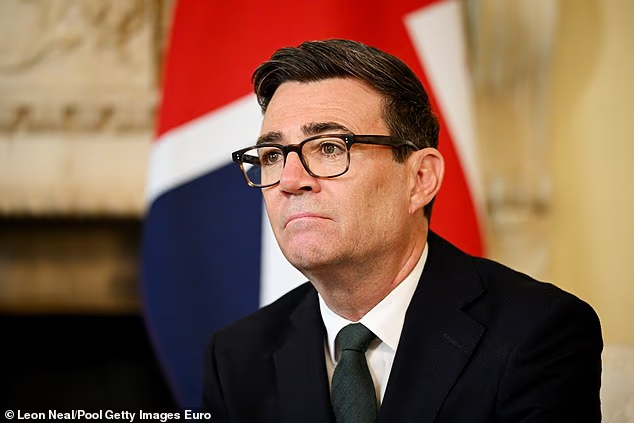
It is understood Prime Minister Andy Burnham appealed directly to French President Emmanuel Macron to extend the existing scheme during their first bilateral meeting last week
More than 17,000 small boat Channel arrivals have entered Britain so far this year, with a rise in so-called ‘mega-dinghies’ carrying 100 migrants at a time
Tory shadow home secretary Chris Philp said Labour’s ‘one in, one out deal has failed and France is about to cancel it’
Advertisement
‘First the government laughably claimed they would “smash the gangs”.
Now their one in one out deal has failed and France is about to cancel it.
‘No wonder nearly 20,000 illegal immigrants have crossed the Channel so far this year.

Advertisement
‘France has become a launchpad for thousands of illegal Channel crossings, yet its Government seems more interested in washing its hands of the problem than stopping the boats on its own beaches – despite Home Secretary Shabana Mahmood handing them £660 million of our money.’
It is understood Prime Minister Andy Burnham appealed directly to Mr Macron to extend the existing scheme during their first bilateral meeting last week.
Advertisement
Ms Mahmood wants to make the arrangement permanent and increase the number of migrants being returned as a deterrent to further crossings.
But critics point out that the number sent back is a small percentage of arrivals, with 17,281 small boat migrants having reached Britain so far this year.
Britain has so far returned about 1,400 Channel migrants to France under the one in, one out scheme, which has sent a similar number of legitimate asylum seekers to the UK.
While Channel crossings are down more than 40 per cent so far this year compared to 2025, the boats haven’t stopped.
And people smugglers have switched tactics to using ‘mega-dinghies’ capable of carrying more than 100 migrants at a time and travelling further, meaning boats can be launched further away from Calais and Dunkirk to better avoid detection.
In comments made by Mr Nunez in June, first reported by the Telegraph, he told a parliamentary inquiry: ‘For our part, we want to move away from this bilateral relationship with the UK.
‘We consider that France should not have to carry it alone, and that it would be better to integrate it into an agreement between the EU and UK.
‘So I have already clearly told my counterpart that this pilot agreement, which we signed in August 2025, was not intended to be renewed beyond Oct 1, 2026.’
Asked whether an EU-wide replacement could be ready by then, he added: ‘There is an action plan, there is interest, but it would be naive of me to tell you there will be a mechanism to bridge the gap.’
Such a deal could see Britain send back migrants to Europe and accept those with a genuine claim to asylum in the UK.
It is unlikely UK ministers would agree to any deal that saw the UK take more migrants than it sent back.
However, it is unlikely EU leaders – particularly from southern states where most migrants first enter the bloc – would agree to the proposals being pushed by Paris.
Advertisement

An EU-wide returns deal – known as the Dublin agreement – existed before Britain left the EU but attempts to continue it as part of the Brexit deal have been snubbed by the bloc’s leaders.
A Home Office spokesman said: ‘The government’s agreement with France has been extended until the end of September.
‘This will ensure we continue removing migrants who arrive on small boats through this programme over the summer.’
BRITAIN’S MIGRATION BOMBSHELL: NEW RETURNS DEAL COULD FORCE UK TO ACCEPT MIGRANTS FROM EUROPEAN COUNTRIES — LABOUR FACES FRESH BACKLASH!
Britain’s immigration debate has been thrown into another major controversy following discussions about a proposed migration returns arrangement that could see the United Kingdom accept migrants transferred from European countries.
The proposal has attracted considerable attention because it could represent a significant change in how Britain cooperates with European governments on migration.
For supporters, the arrangement could provide a more organised system for managing irregular migration, strengthening border cooperation, and discouraging dangerous journeys across the English Channel.
For critics, however, the possibility of accepting migrants from European countries has raised difficult questions about immigration numbers, asylum accommodation, national sovereignty, and the government’s ability to control Britain’s borders.
The issue is particularly sensitive because successive British governments have promised to reduce irregular migration and restore public confidence in the immigration system.
Now, the possibility of a new returns agreement has created another political headache for Labour.
The central question is simple: if Britain agrees to return some migrants to European countries, what will the UK receive in exchange, and how many people could ultimately be affected?
WHAT IS THE PROPOSED RETURNS AGREEMENT?
The proposed arrangement is linked to wider discussions about cooperation between Britain and European countries on irregular migration.
Under the suggested framework, the UK could return certain migrants who have arrived through irregular routes to participating European countries.
In exchange, Britain could accept an agreed number of migrants from those countries through an organised transfer mechanism.
Such an arrangement would be designed to create a more predictable system for managing migration across borders.
Rather than allowing every case to become a separate diplomatic dispute, participating governments would establish agreed procedures covering eligibility, responsibility, and transfers.
However, the precise conditions would be crucial.
A returns agreement does not automatically mean that Britain would accept every migrant arriving in Europe.
Nor would it necessarily mean that every person transferred to the UK would receive permanent permission to remain.
Each person’s circumstances would still need to be considered under the relevant immigration and asylum rules.
The distinction between returning irregular arrivals and accepting people through an organised mechanism is essential to understanding the proposal.
WHY HAS THE PROPOSAL CAUSED SUCH A POLITICAL STORM?
The controversy comes at a time when immigration remains one of Britain’s most divisive political issues.
Many voters want the government to demonstrate stronger control over the country’s borders.
Small-boat crossings across the English Channel have become a powerful symbol of frustration with the existing system.
At the same time, asylum accommodation, housing shortages, pressure on public services, and the financial costs of immigration administration continue to attract political attention.
Against this background, the suggestion that Britain could accept migrants from European countries may appear contradictory to voters who expected Labour to reduce immigration.
Critics are likely to ask why the government would agree to accept additional people while simultaneously promising to strengthen border enforcement.
Supporters, however, argue that international cooperation may be necessary to make returns more effective.
Their position is that a functioning returns system could discourage dangerous journeys by making it harder for people to remain in Britain after an unsuccessful or ineligible asylum claim.
Whether the proposed arrangement achieves that objective will depend on its final terms and implementation.
LABOUR FACES QUESTIONS OVER IMMIGRATION POLICY
For Labour, the proposal creates a difficult political balancing act.
The government wants to demonstrate that it can manage migration more effectively while maintaining cooperation with European partners.
It also faces pressure to address public concerns about irregular arrivals and the growing costs associated with asylum administration.
A returns agreement could potentially support those objectives.
However, accepting migrants through an organised mechanism could become politically difficult if ministers cannot explain how many people would be involved and what safeguards would apply.
Opposition politicians are likely to demand detailed answers.
They will want to know whether the arrangement includes annual limits, which nationalities or categories of migrants could be transferred, and how the government intends to manage accommodation and support.
The public will also expect transparency about the financial arrangements.
Without clear information, even a potentially useful international agreement could become another source of political distrust.
NIGEL FARAGE AND REFORM UK COULD SEIZE THE OPPORTUNITY
The proposal could provide Nigel Farage and Reform UK with another opportunity to challenge Labour’s immigration strategy.
Reform UK has consistently argued that Britain needs stronger border controls and a fundamental change in its approach to irregular migration.
Farage has made immigration one of the central issues of his political campaign.
The party is likely to question whether accepting migrants through a European returns arrangement is compatible with the government’s promises to reduce migration.
It could also argue that the public deserves a direct explanation of any agreement that changes Britain’s immigration responsibilities.
For Reform UK, the political message is straightforward: the government must demonstrate that it is controlling immigration rather than simply reorganising the system.
Labour will therefore need to explain why the proposed arrangement would benefit Britain and how it would produce measurable results.
WHAT WOULD BRITAIN RECEIVE IN RETURN?
One of the most important aspects of the proposed arrangement concerns reciprocity.
If Britain agrees to accept certain migrants from European countries, the government would expect participating countries to cooperate with returning people who are eligible for transfer from the UK.
The purpose would be to establish a system in which responsibility is shared rather than allowing individual countries to deal with every case independently.
However, the effectiveness of such an agreement would depend on several factors.
First, participating countries would need to accept their responsibilities.
Second, identity checks and legal procedures would need to operate efficiently.
Third, governments would need to agree on how asylum claims and individual circumstances should be handled.
Finally, there would need to be a clear mechanism for resolving disagreements.
If these arrangements are complicated or poorly implemented, the agreement could create additional administrative costs without producing the expected benefits.
That is why the details matter far more than the political headlines.
COULD THE AGREEMENT INCREASE PRESSURE ON BRITISH HOUSING?
Housing is likely to become one of the biggest domestic questions surrounding the proposal.
Many local authorities are already dealing with pressure on temporary accommodation and increasing demand for affordable housing.
Asylum accommodation is a particularly sensitive issue in communities where residents believe local services are already stretched.
If Britain accepts additional migrants through an organised arrangement, the government will need to explain how accommodation will be provided.
It will also need to consider the responsibilities of local councils and the funding available to support affected communities.
There is an important distinction between accepting people through a transfer mechanism and automatically placing them in particular towns or accommodation facilities.
Any arrangements would need to account for individual circumstances, legal requirements, and available resources.
Nevertheless, local authorities will want clear information before being asked to take on additional responsibilities.
THE HUMANITARIAN ARGUMENT
Supporters of international migration cooperation argue that the system should also recognise the circumstances of vulnerable people.
Some migrants arriving in Europe have fled war, persecution, or serious threats to their safety.
Others may have family connections or particular circumstances that need to be considered when determining which country should examine their asylum claims.
An organised agreement could potentially provide a more structured process for identifying appropriate cases.
However, humanitarian considerations must operate alongside effective border management.
Governments have responsibilities to protect vulnerable people while maintaining fair and workable immigration systems.
A successful agreement would therefore need safeguards ensuring that people are treated lawfully and that individual claims receive appropriate consideration.
WILL THE PUBLIC ACCEPT THE DEAL?
Ultimately, the political success of the proposal may depend on public confidence.
British voters have heard numerous promises about immigration over the years.
Many want to see evidence that the government can reduce irregular crossings, improve enforcement, and process asylum claims more efficiently.
A new agreement will be judged against those expectations.
If ministers can demonstrate that it leads to effective returns and better cooperation, supporters may argue that it represents a practical improvement.
If the public instead sees it as another arrangement involving additional migration without clear benefits, political opposition could grow considerably.
Communication will therefore be essential.
The government must explain the numbers, eligibility criteria, financial costs, legal safeguards, and expected benefits.
Without those details, speculation and political controversy are likely to dominate the discussion.
WHAT HAPPENS NEXT?
The next stage will depend on the negotiations between Britain and participating European governments.
The final agreement would need to establish exactly which people could be transferred, what responsibilities each country would accept, and how the arrangements would be enforced.
Parliamentary scrutiny and legal requirements would also be important.
The government would need to demonstrate that any agreement complies with domestic law and Britain’s international obligations.
Until the final terms are published and confirmed, it would be premature to claim that Britain has agreed to accept a particular number of migrants.
The difference between a proposed arrangement and an implemented agreement is significant.
Nevertheless, the political debate has already begun.
CONCLUSION: ANOTHER MAJOR TEST FOR BRITAIN’S IMMIGRATION POLICY
The proposed European returns arrangement could become one of the most controversial developments in Britain’s immigration debate.
For the government, it offers the possibility of stronger cooperation with European partners and a more organised approach to irregular migration.
For critics, it raises serious questions about whether Britain could end up accepting additional migrants while struggling to address existing pressures on housing and public services.
Nigel Farage and Reform UK are likely to use the controversy to challenge Labour’s promises on border control.
Meanwhile, ministers will need to convince the public that the arrangement would deliver genuine benefits rather than simply create another complicated layer of immigration administration.
The most important questions remain unanswered: how many people could Britain accept, which cases would qualify, what would the UK receive in return, and how would the agreement affect local communities?
Until those details are clear, the proposal should be treated as a developing political and diplomatic issue rather than a confirmed commitment to accept a specific number of migrants.
One thing is certain: immigration will remain one of the defining challenges facing the British government.
And if Labour wants the public to support its new approach, it will need to provide clear answers rather than relying on political promises.