
quyen433-42 minutes 4/13/2026
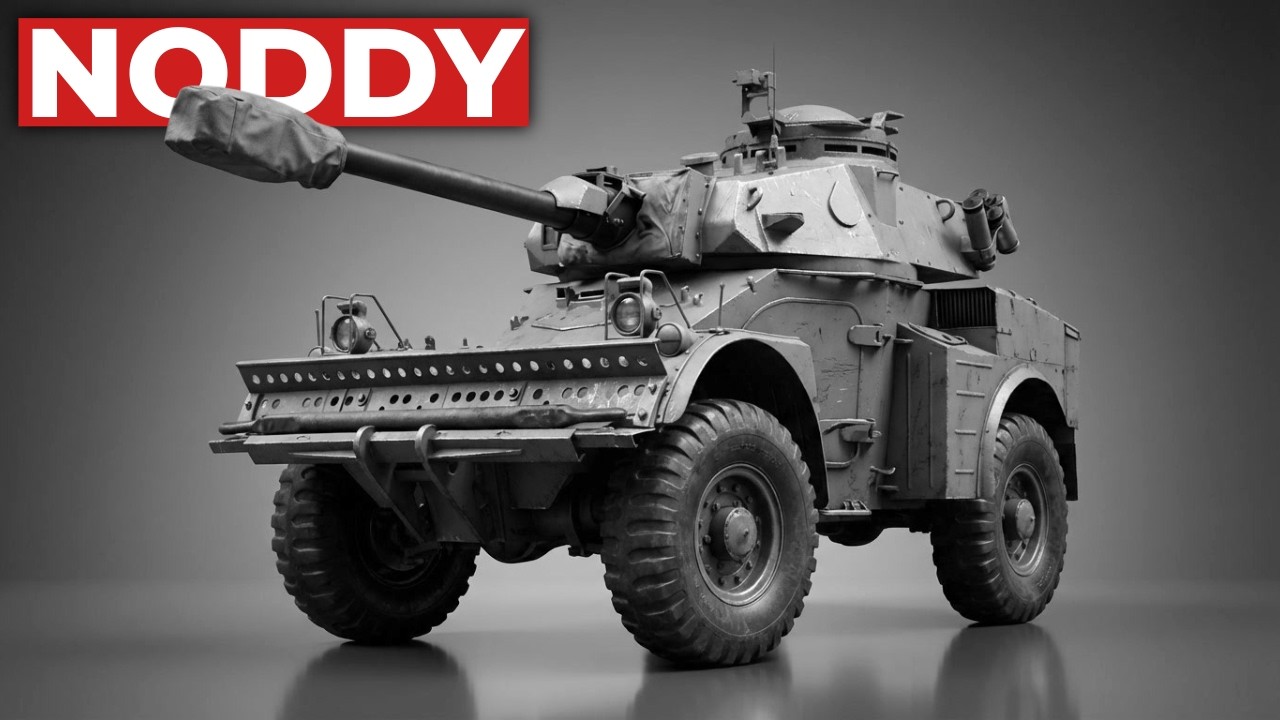
November 1975, somewhere in the Angolan bush, 300 km north of the Namibian border, a small armored car rolls to a halt in the red dust. It is an unremarkable machine, 6 tons, four wheels, three men inside. Its hull is barely 12 mm of welded steel, thin enough that a heavy machine gun at close range would pass clean through it.
Its turret is a narrow cone of gray metal with a long gun jutting from the front. It carries no night vision, no stabilizer, no laser rangefinder. It cannot fire accurately while moving. It was designed in France as a colonial police vehicle. It was never intended to fight tanks. Standing on the opposite riverbank 200 m away sat a Soviet T-34 tank.
Discover more
Model warplanes tanks
Skip Content Feature
Military vehicle models
32 tons of rolled armor, a cannon that had conquered Berlin, a machine that had won World War II. The T-34’s crew were Cuban soldiers, veterans, well-supplied, well-supported. The armored car facing them was crewed by South African conscripts aged 18 and 19 who had driven from the border on a tourist road map from a Caltex petrol station. The Eland swung its turret.
It did not look like a weapon that could kill anything. It looked ridiculous. It looked wrong. Its crew called it the Noddy car. It fired once. The T-34’s turret came off. Its name was the Eland armored car, and over the next 13 years it would destroy T-34s and T-54s, chase Cuban armored columns through the Angolan lowveld, and become the most combat-proven wheeled armored vehicle in the Cold War.
It was a licensed copy of a French police car. It was built under a mandatory United Nations arms embargo, and it was never supposed to exist at all. To understand why the Eland existed, you need to understand the position South Africa found itself in during the late 1950s. The South African Defense Force was still relying on British Daimler Ferret Scout Cars from World War II, armed with a single machine gun, starved of spare parts, tactically obsolete.
Discover more
Replica antique firearms
Military history books
Collectible war medals
A new strategic study concluded that South Africa’s most probable future wars would not be fought in Europe, but across the vast semi-arid terrain of Southern Africa, where mobility, range, and firepower mattered more than armor thickness. A vehicle was needed, fast, light, long-legged, but with a gun that could genuinely threaten anything it encountered.
Three candidates were evaluated. The British Alvis Saladin, the Panhard EBR, and the Panhard AML. The AML won. In July 1961, South Africa’s Defense Minister Jim Fouché and Commandant General Pieter Grobbelaar flew to Paris and sat across a table from Panhard’s directors. The deal they negotiated was unusually ambitious. 100 complete AML armored cars purchased outright, plus turrets, components, and a production license for the domestic manufacture of 800 more inside South Africa.
The contract was awarded to Sandock Austral, with production lines established in Boksburg and Durban. West German engineers from Henschel provided technical assistance, Panhard having quietly routed the deal through them to insulate itself from criticism by its other African clients. The first locally assembled vehicles, designated Eland Mark II, rolled off the line in July 1963 with 40% local content.
The result was immediately rejected. All 56 Mark II vehicles were returned to Sandock Austral for complete disassembly and rebuild. South African tolerances and quality control had not yet matched French standards. The engineers went back to work. They did not stop improving it for the next 23 years. By 1967, 2/3 of the Eland’s components were locally sourced.
Discover more
Contact Page Service
Daily News Subscription
Podcasts on warfare
By 1970, 500 Elands were in service. The majority carrying the 60 mm mortar turret for fire support, and 131 mounting the 90 mm gun that would define the vehicle’s legacy. By the time the final Mark VII variant entered production in 1979, South Africa manufactured 95% of the vehicle domestically.
This included the complete 90 mm gun, the mortar, the fire control optics, and every round of ammunition. The timing was decisive. The United Nations had imposed a voluntary arms embargo in 1963, tightened it in 1970, and made it mandatory under the Chapter VII of the United Nations Charter in November 1977. South Africa had built the factory, secured the license, and trained the engineers before the door slammed shut.
The single most consequential modification came with the Mark variant. The original Panhard air-cooled flat-four engine overheated catastrophically in African conditions. Crews in Angola reported engine temperatures that made the vehicle undriveable by mid-afternoon. South Africa replaced it entirely with the Chevrolet 153, a water-cooled inline four-cylinder petrol engine originally designed for the Chevrolet Nova, manufactured locally by General Motors South Africa.
It produced 86 to 90 horsepower at 4,600 revolutions per minute. To accommodate liquid cooling, engineers had to reconstruct the entire rear hull section. They mounted the engine on sliding rails, allowing a complete field replacement in 40 minutes. That figure was not theoretical. It was a combat requirement, written in the heat of Angola.
The final vehicle was compact and lean, 6 tons combat-ready, 5.12 m long with the gun forward, 2 m wide, a crew of three, commander, gunner, driver. Maximum road speed of 90 to 100 km/h, giving it a tactical advantage over anything tracked it would ever face. Operational range of 450 km on road, 12 mm of armor at best, 29 rounds of 90 mm ammunition stowed in the turret bustle.
Every one of those rounds carried a shaped charge warhead that could punch 320 mm of steel plate at any range. That penetration figure is the key to everything that follows. 320 mm of armor killed by a high explosive anti-tank round whose penetration is independent of velocity. A BRDM-2 armored car carried 14 mm of protection.
A BTR-60 armored personnel carrier carried 11 mm. A T-34/85 carried 90 mm at its thickest point on the turret front. On paper, the Eland’s gun could kill every one of them with a single round. In practice, it did exactly that, again and again, across a front that stretched from the Angolan coast to the Zambian border.
Now, before we get into the combat record, if you are finding this deep dive into Cold War armored warfare worth your time, please hit subscribe. It takes a second. It costs you nothing, and it helps this channel continue producing this kind of content. The Eland’s baptism of fire came in October 1975, when South Africa covertly intervened in Angola’s civil war.
Operation Savannah deployed roughly 3,000 South African soldiers in unmarked uniforms, carrying no identification, fighting for a country that officially denied they were there. 22 Eland 90s were flown to the interior to spearhead the advance. Their commanders were regular officers. Their crews were 19-year-old national servicemen. Colonel Jan Breytenbach’s Task Force Zulu covered 3,159 km in 33 days, fought 21 engagements, and at Catengue on November 2 and 3 knocked out seven enemy armored vehicles in the war’s first armor versus armor battle. Cuban General Abelardo Colomé
Ibarra later wrote that his inability to counter the Eland’s speed and maneuverability was among his greatest tactical frustrations of the entire campaign. Then came Ebo. The Battle of Ebo on November 23, 1975 is remembered in the South African Armored Corps as its darkest day of the entire border war.
Battle Group Foxbat, commanded by Captain Johan Holm, attempted to bypass a blown bridge by pushing through the town of Ebo toward Kibala. Cuban and Angolan government forces had prepared an ambush at the Mabassa River crossing with meticulous care. When Lieutenant Johan de Tu Toit’s Eland reached the bridge, a 75 mm recoilless rifle on the high ground above put a round through the turret.
Trooper Neil Lombard was killed instantly. Within minutes, three more Elands were struck by rocket-propelled grenades fired from foxholes at 60 m range. A BM-21 Grad rocket salvo from 2,500 m out obliterated the mortar platoon, killing the mortar commander and more than a dozen allied soldiers in a single strike.
Captain Holm was killed while standing in an Eland turret directing the withdrawal when a 122 mm rocket hit within meters of him. Five Elands were destroyed. Two were captured intact and later exhibited as war trophies. Lieutenant de Tu Toit was pinned inside his wrecked vehicle for the rest of the day. He escaped that night on foot, making contact with friendly forces 12 hours later.
His fellow crews called him Magnet Arse from that day forward, and he wore the name with considerable pride. The redemption came 19 days later. On December 12th, 1975, Battle Group Foxbat returned to the near river crossing with reinforced artillery, fresh Eland crews, and hard-won tactical intelligence. What followed was methodical, controlled, and lethal.
12 Eland 90s crossed the rebuilt bridge under the heaviest artillery barrage of the entire operation. In the fighting that followed, Lieutenant van Vuuren’s troop encountered a Soviet-supplied truck full of Cuban soldiers attempting to pass their column using indicator lights, apparently confused about who was who in the dust and chaos.
Van Vuuren let the truck overtake his Eland, then he put a 90 mm round through its rear. All occupants were killed. He subsequently ran out of ammunition, encountered 20 more Cuban soldiers taking cover in a farmhouse, closed his hatches, and shot 11 of them through the turret hatch with his service pistol. Sergeant Danny Roxburgh was awarded the Honoris Crux for killing 12 enemy soldiers during bridge reconnaissance that same day.
South African casualties at Bridge 14 numbered four dead. Cuban and Angolan government losses are estimated at 200 to 400 killed. Six days after Bridge 14, on December 18th, the war’s most significant armor engagement occurred. An Eland troop attached to Battle Group Orange, under Captain Fred Rindel of First Special Service Battalion, was reconnoitering river crossings east of the main axis when it identified three T-34/85 tanks dug into the opposite bank.
A single Eland moved forward, leveled its gun, and destroyed the lead T-34 with one 90 mm heat round. The other two tanks withdrew. A 6-ton wheeled car had just killed a 32-ton Soviet tank that had been the most feared armored vehicle on Earth 30 years earlier. In the turret, the crew barely had room to reload. Operation Protea in August and September of 1981 was the Eland’s finest hour.
Roughly 5,000 South African soldiers in four battle groups struck Angolan government and South West Africa People’s Organization bases at Xangongo and Ongiva in the largest South African mechanized operation since World War II. At Xangongo on August 24th, Eland 90 troops encountered a company of T-34-85 tanks used as static artillery pieces.
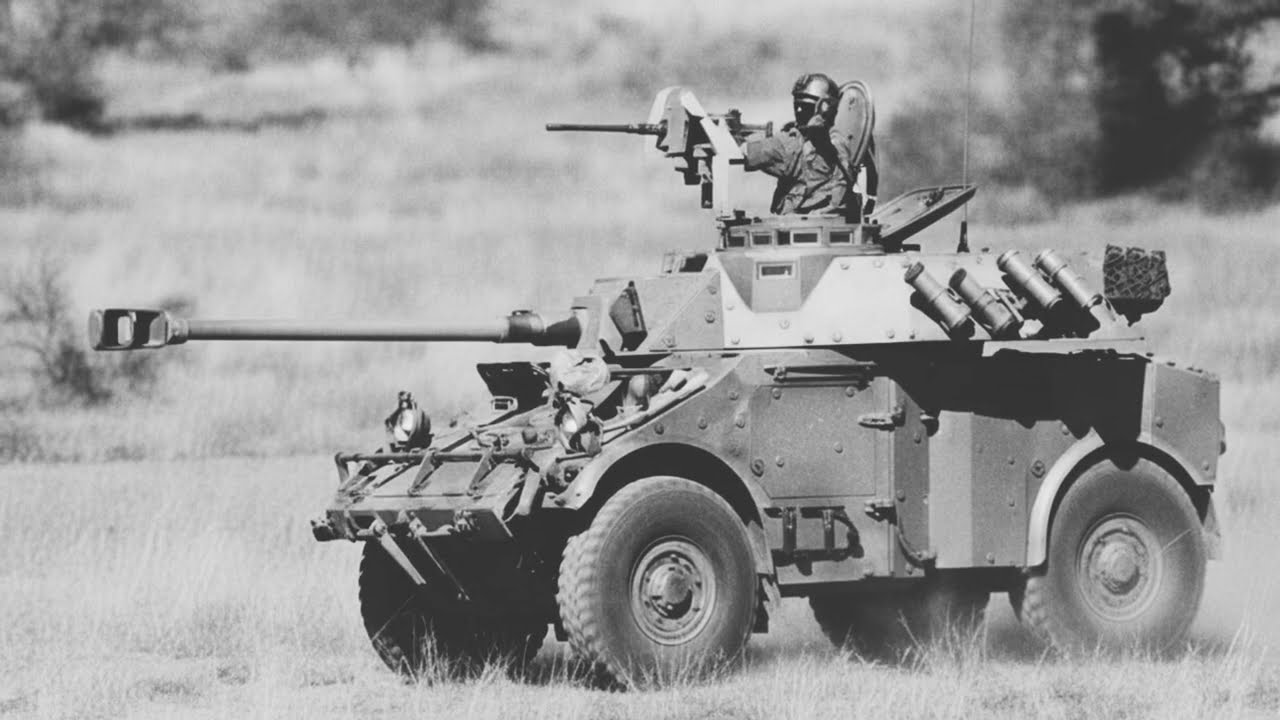
Their hulls dug into revetments facing south. The South Africans attacked from the north. Three T-34s were destroyed by concentrated 90 mm fire before their crews could traverse their turrets to respond. One officer later recorded what he saw that morning. “A small, odd-looking armored car with a long gun barreled toward the enemy position at top speed, stopped in the open at 80 m, waited 2 seconds, and fired one shot.
The T-34’s turret was lying off to one side when the smoke cleared. The vehicle’s body was burning, belching black smoke into the morning sky.” The officer noted that he had never seen anything killed so cleanly, so quickly, by something that looked so incapable of killing. On the Xangongo to Cahama highway, Elands exploited their road speed to set up blocking positions against a fleeing Angolan government convoy.
The lead vehicle was identified as a BRDM-2. Three rounds set it ablaze. The trailing trucks, armored personnel carriers, and rocket launchers were destroyed or captured. Operation Protea ultimately netted the South African Defense Force over 3,000 tons of Soviet military hardware, including eight T-34 tanks, three BRDM-2s, approximately 200 trucks, artillery pieces, and communications equipment.
Angolan government and People’s Organization losses reached over 800 killed. South African dead numbered 10. Among the bodies found in the overrun headquarters at Xangongo were four Soviet military advisers, including Warrant Officer Nikolai Pestretsov. But the Bush War was also teaching the Eland’s limits. Operation Askari in December 1983 exposed the vehicle’s fundamental inadequacy against the latest Soviet armor.
A squadron of Elands manned by reserve soldiers from Regiment and Regiment Malopo was assigned to Task Force Victor under Commandant van Greyling. At Cuvelai, the force was counterattacked by Angolan government T-54 and T-55 tanks supported by two Cuban battalions. The T-54 and T-55 carried frontal armor approaching 200 mm.
The Eland’s 320 mm penetration was theoretically sufficient. In practice, in the dust and confusion of a night engagement against a moving target with a gun that required the vehicle to halt before firing, it was not enough. Multiple hits were required to achieve penetration. With only 29 rounds on board and no stabilized sight, the Eland’s gunners ran out of ammunition before they ran out of targets.
The withdrawal at Cuvelai became, for a brief period, a retreat. General Epenliels’ post-operation report was unsparing. The Eland could not stand up to the heavier protection and armament of T-54 and T-55 tanks. The Eland was removed from conventional armored combat. A squadron of Olifant tanks was kept on permanent standby for all future operations.
The anti-armor role passed to the Ratel 90, which mounted the Eland’s proven turret on a faster, larger, diesel-powered six-wheeled hull. On paper, the Soviet BRDM-2 appeared to offer comparable capabilities as a wheeled armored scout car. In practice, the BRDM-2 was designed to observe and report, not to fight. Its 14 mm armor offered modest protection against small arms.
Its machine gun armament, typically a heavy 12.7 mm, was effective against unprotected infantry. Against another armored vehicle, it was a liability. The Eland, by contrast, was designed from the beginning to fight and destroy. Its 90 mm gun gave it what South African doctrine called first-shot lethality, the ability to kill any target it encountered before that target could respond effectively.
This was the core philosophical difference. The Soviets built vehicles to avoid contact. South Africa built vehicles to seek it. The Eland was exported to more than a dozen African nations, including Morocco, Chad, Zimbabwe, Senegal, and Uganda. Morocco received the largest foreign consignment and deployed Elands extensively in the Western Sahara War against the Polisario Front.
In September 1979, Moroccan Elands were sent through a narrow valley against the explicit advice of South African instructors who had personally walked the ground. The Polisario ambushed the column and captured over 30 intact vehicles, several still bearing Afrikaans inscriptions on their fuel caps.
After 1979, Panhard itself began sourcing spare parts for the original AML from South Africa. The company that had created the design was buying components from the country that had copied it. The Eland entered its final years of frontline service through the mid-1980s. Its last confirmed major action came on October 5, 1987, when Eland 90S ambushed and destroyed an Angolan government motorized column of BTR-60s and trucks north of Ongiva.
On June 27th, 1988, a Cuban MiG-23 airstrike destroyed one of the last combat-deployed Elands outside the Calueque Dam in a strike that killed 11 South African soldiers, among the final casualties of a war that had lasted 13 years. The Eland was officially retired from South African National Defense Force service in 1994, replaced by the Rooikat, a 28-ton, eight-wheeled armored car with a stabilized 76 mm high-velocity gun, laser rangefinder, and the ability to fire accurately at 120 km/h.
The Rooikat was superior in every measurable respect. It could also not fit in a Hercules transport aircraft. The Eland weighed 6 tons and could be flown anywhere in Africa within hours. The SANDF discovered, shortly after retiring it, that some tactical problems can only be solved by a vehicle that is small enough to disappear into the bush and fast enough to outrun everything it cannot outfight.
Several Elands survive today. The South African Armor Museum at Tempe in Bloemfontein holds multiple examples, including an Eland 90 Mark 7 returned to running condition as recently as October 2024. The Ditsong National Museum of Military History in Johannesburg displays a further example. Two vehicles captured at the Battle of Ebo in 1975 reportedly still stand in Angola as battlefield memorials.
In a factory in Boksburg in July 1963, the first locally assembled Eland was rejected and sent back for rebuilding. It looked wrong. It was too light. Its steel was too thin. Its engine unreliable. Its components insufficiently precise. Every criticism was correct. It was not fast enough for the tracked vehicles that chased it.
It had no protection against mines, no night vision, no gun stabilizer, no ability to fight on the move. Its armor could be penetrated by a heavy machine gun at close range. It carried fewer than 30 rounds and had to stop completely to aim. And yet, in the Angolan lowveld, in the red dust of Xangongo, at 80 m from a T-34 that should have killed it, a 6-ton copy of a French police car fired once and ended the argument.
That is not an accident of history. That is what happens when a small country, cut off from every weapon supplier on Earth, is forced to build exactly the weapon it needs and nothing more. The Noddy car. It was never supposed to work. It worked every time it mattered.
Why Eisenhower Refused to Negotiate With Hitler’s Arrogant Replacements
Imagine a war is completely, unconditionally lost. Your supreme leader is dead. Your capital city is nothing but a smoking graveyard of shattered brick and twisted steel. Your armies have surrendered and foreign troops patrol every single inch of your country. The nightmare is officially over. Now, imagine waking up the very next morning, putting on a perfectly pressed military uniform, pinning a row of gleaming medals to your chest, walking into an office and pretending that you still rule an empire.
It sounds completely absurd. It sounds like the plot of a dark psychological movie. But in the middle of May, 1945, more than 2 weeks after Nazi Germany had unconditionally surrendered to the Allied forces, this exact bizarre scenario was playing out in real life. In a quiet, untouched coastal town near the Danish border, the surviving high command of the Third Reich had established a phantom government.
They held daily cabinet meetings. They issued official government decrees to an army that no longer existed. They saluted each other in the hallways. They drank fine wine and sincerely believed that the United States and Great Britain would recognize them as the legitimate ruling government of a new Germany.
They were living in a staggering, breathtaking bubble of pure narcissistic delusion. But on the morning of May 23rd, 1945, the Allied High Command decided that this pathetic, theatrical circus had gone on long enough. General Dwight D. Eisenhower dispatched a heavily armed task force led by American Major General Lowell Rook to deliver a brutal dose of reality.
The Americans did not come to negotiate. They did not come to recognize a new government. They came to kick the doors in, rip off the medals, and permanently erase the last remaining delusion of the master race. To understand how this phantom government even existed and why the Americans delivered such a humiliating, psychological knockout blow, we have to look at the chaotic power vacuum left behind by the death of Adolf Hitler.
To truly grasp the absolute absurdity of the situation the American soldiers found themselves in, we must rewind to the final days of April 1945. As the Soviet Red Army closed in on his underground bunker in Berlin, Adolf Hitler realized the end had arrived. Before taking his own life, he dictated his final political testament.
In a move that shocked many of his top generals, he did not name Heinrich Himmler or Hermann Göring as his successor. Instead, he named Grand Admiral Karl Dönitz, the commander of the German Navy and the mastermind behind the deadly U-boat campaigns, as the new president of the Reich. Dönitz was located far to the north, away from the burning capital.
When he received the news of his promotion, he immediately moved his headquarters to Flensburg, a small, picturesque port city near the border of Denmark. The city had largely escaped the devastating Allied bombing raids, making it a perfectly quiet, surreal setting for the final act of the regime. Dönitz quickly assembled a cabinet of surviving high-ranking officials.
He brought in Generaloberst Alfred Jodl, the chief of the operations staff. He brought in Field Marshal Wilhelm Keitel. For the first week of May, this Flensburg government actually served a practical military purpose. Dönitz used his authority to order the remaining German forces to surrender to the advancing British and American armies, desperately trying to save millions of German soldiers from falling into the vengeful hands of the Soviets in the east.
On May 7th and May 8th, representatives of the Flensburg government officially signed the documents of unconditional surrender. The Second World War in Europe was completely over. The guns fell silent. By every logical, international, and legal standard, the German government ceased to exist the moment that ink dried.
But Karl Dönitz and his cabinet simply refused to accept reality. >> Instead of stepping down, packing their bags, and awaiting trial, they went right back to work. Inside the beautiful red brick Marineschule, the German Naval Academy in Flensburg, they continued to operate as if they were a sovereign, independent government.
They held highly formal morning briefings. They drafted memos regarding post-war agriculture and economic policies. They strictly enforced military discipline among the hundreds of German guards still stationed in the town. They walked the manicured lawns wearing pristine uniforms, their boots polished, their chests heavily decorated.
They were surrounded by the ashes of Europe, but inside their quiet Naval Academy, they were still the masters of the universe. Why would highly intelligent military commanders engage in such a pathetic game of make-believe? Why didn’t they just run and hide? The answer lies in the profound, deeply ingrained arrogance of the German elite and their massive misunderstanding of American and British politics.
Grand Admiral Dönitz and General Jodl were playing a high-stakes, desperate gamble. They knew that the alliance between the Western powers, the United States and Great Britain, and the Soviet Union was incredibly fragile. The Germans firmly believed that it was only a matter of time before the capitalist West and the communist East went to war with each other.
The Flensburg government genuinely believed that the Americans and the British would realize they needed a strong, organized, and experienced German leadership to help them fight the Russians. They assumed that men like Winston Churchill and General Eisenhower would look past the concentration camps, look past the atrocities, and pragmatically recognize their newly formed government.
They expected to be treated as respected diplomatic partners. They expected to keep their ranks, their privileges, and their comfortable lives. They believed their own propaganda. They thought they were simply too brilliant and too valuable to be treated like common criminals. Let me pause right here and ask you a quick question.
Knowing the massive threat the Soviet Union posed after the war, do you think the Americans should have actually used these experienced German generals to fight the communists? Or was arresting them the only moral choice? Drop your opinion in the comments below, because the Allied leaders had to make that exact decision.
For 2 long weeks, the Allies actually allowed this bizarre situation to continue. The British forces controlling the Flensburg area simply ignored the German cabinet, treating them as a temporary administrative convenience to help process the millions of surrendered German troops. But this temporary patience gave the arrogant Nazi leaders the false hope they craved.
Every day they were not arrested, their delusion grew stronger. They began demanding diplomatic immunity. They began complaining to British officers about the quality of their for Allied weakness. The news of this phantom government operating freely in northern Germany quickly reached the desk of the Supreme Allied Commander, General Dwight D.
Eisenhower. And Eisenhower was absolutely furious. Eisenhower had recently toured the liberated concentration camps of Ohrdruf and Buchenwald. He had stared directly into the mass graves. He had smelled the stench of the execution sheds. His patience for the German High Command had been permanently and violently erased.
To Eisenhower, the men sitting in the Flensburg Naval Academy holding polite cabinet meetings were not legitimate politicians. They were not honorable military strategists. They were the architects of a genocidal, criminal enterprise. Furthermore, the Soviet Union was growing incredibly suspicious. The Russians were furious that the Americans and the British were seemingly allowing a new Nazi government to operate on their watch.
>> Stalin accused the West of secretly plotting to keep the German command structure intact. Eisenhower knew that the Flensburg circus had to be shut down immediately. There would be no negotiations. There would be no diplomatic recognition. There would only be absolute, uncompromising justice. He selected American Major General Lowell W.
Rook, a tough, no-nonsense veteran commander, to execute the mission. He was ordered to go into Flensburg, accompanied by heavily armed British and American troops, and permanently dissolve the fake government. Eisenhower’s orders were crystal clear. They were to be arrested not as a recognized government, but as prisoners of war and suspected war criminals.
The era of gentlemen’s agreements was over. It was time to pull the plug. On the morning of May 23rd, 1945, the sky over Flensburg was bright and clear. Inside the Naval Academy, Grand Admiral Karl Dönitz and his top officials were going about their daily routine. They were dressed in their finest uniforms. They had just finished a morning meeting discussing administrative policies for a nation they did not control.
Suddenly, the heavy unmistakable rumble of armored vehicles echoed through the quiet coastal town. A massive task force of heavily armed British tanks, armored cars, and American infantry completely surrounded the Naval Academy. The Allied troops did not politely knock on the gates. They established heavy machine gun positions aimed directly at the windows.
British soldiers with fixed bayonets stormed the courtyards, immediately disarming the stunned German guards who had been standing at attention just moments before. Inside the building, the illusion of the Flensburg government shattered in an instant. American Major General Lowell Rooks, accompanied by British and Soviet officers, marched directly into the headquarters.
He did not salute. He did not offer friendly military greetings. He sent a blunt message to Grand Admiral Dönitz, General Jodl, and General Admiral von Friedeburg. He ordered them to pack their bags and report immediately to his temporary office on the passenger ship Patria, which was docked in the harbor. The German commanders, sensing that their elaborate game of make-believe was finally crashing down, desperately tried to maintain their dignity.
They put on their long leather coats. They adjusted their service caps. They grabbed their polished ceremonial batons. They were driven under heavy armed guard to the ship. When they walked into the room to face Major General Rooks, they still expected a degree of professional respect. They expected a formal, polite dialogue between commanding officers.
General Rooks sat behind a simple table. He looked at the three most powerful men remaining in the Third Reich with absolute, emotionless efficiency. He did not ask them to sit down. He looked at a piece of paper, and then he looked directly at Dönitz. “I am in receipt of instructions from General Eisenhower,” Rooks stated, his voice completely devoid of any diplomatic warmth.
“He has directed me to inform you that he has decided to terminate the acting German government. You and all members of your cabinet are to be placed under arrest as prisoners of war.” Dönitz stood frozen. The words hung in the air like a physical weight. The grand, aristocratic dream of being recognized as the leader of a new Germany evaporated in a single sentence.
“Any word from me would be superfluous,” Dönitz replied quietly, his massive ego completely deflated. But General Rooks was not finished. The Americans knew exactly who they were dealing with, and they knew the extreme, cowardly lengths these men would go to in order to avoid facing true justice. Just a few hours prior to this meeting, the Allies had captured Heinrich Himmler, the head of the SS.
Himmler had managed to bite down on a hidden cyanide capsule while being examined by a British doctor, choosing a coward’s suicide over facing a war crimes tribunal. The Americans were absolutely determined not to let the top leadership of the Flensburg government pull the same cowardly trick. They needed them alive.
They needed them to stand trial before the entire world. When Dönitz, Jodl, and the rest of the cabinet were taken back to the Naval Academy to gather their belongings, the Americans initiated a psychological breakdown that was completely unprecedented for men of their rank. The American and British troops did not just casually search their luggage.
They executed a highly invasive, deeply humiliating security protocol. The aristocratic, highly decorated generals and admirals, men who had commanded millions of troops and lived like royalty for 12 years, were ordered to step into the center of the room. Heavily armed American GIs surrounded them. “Take off your clothes,” the American guards ordered.
The German High Command gasped in absolute shock. Stripping a high-ranking officer naked is considered the ultimate violation of military dignity. They protested. They argued that it was completely unnecessary. They demanded to be treated with the respect due to their prestigious ranks. The American soldiers completely ignored their protests.
They raised their rifles and repeated the command. Slowly, humiliated beyond comprehension, the leaders of the master race unbuttoned their tailored tunics. They took off their silver medals. They removed their polished boots and their trousers. They stood completely naked, shivering in the cold rooms of the academy, while ordinary 19-year-old American and British privates systematically searched every single inch of their clothing, their mouths, and their hair for hidden poison capsules.
Think about this moment for a second. Do you think stripping these high-ranking generals naked was a step too far by the American troops, or was it the absolute perfect way to strip them of their arrogant pride and ensure they faced justice? Tell us in the comments right now. The psychological impact of this moment was catastrophic for the German leaders.
A uniform provides a man with an identity. It provides him with a shield of authority. When you take the uniform away from an arrogant narcissist, you take away his entire world. Standing naked under the harsh glare of the American soldiers, Dönitz, Jodl, and the rest of the cabinet suddenly realized how incredibly pathetic and powerless they truly were.
They were no longer the fearsome leaders of an unstoppable empire. They were just ordinary, aging, defeated old men. The illusion of their superiority was scrubbed away in an instant. During the search, the Americans found what they were looking for. Several of the officers had hidden vials of cyanide taped inside their clothing or concealed in their luggage.
The Americans confiscated all of it. They were not going to be allowed to escape. However, one man, General Admiral Hans-Georg von Friedeburg, managed to ask for a moment of privacy to use the restroom before the search was completed. He had a capsule of cyanide hidden in his clothing. Unable to face the overwhelming humiliation and the reality of his defeat, he bit down on the glass.
He collapsed on the floor and died within minutes. The rest of the Flensburg government was not so lucky. After being thoroughly searched and dressed in plain, unadorned clothing, the entire cabinet was marched out into the courtyard of the Naval Academy. Hundreds of Allied soldiers, journalists, and photographers were waiting for them.
The cameras flashed endlessly. The world was given a front-row seat to the final, pathetic downfall of the Nazi regime. They were loaded onto the back of open military trucks, sitting shoulder to shoulder like common street criminals. There were no luxury cars. There were no salutes. There was only the harsh, unforgiving road leading to the prison camps, and ultimately to the courtroom at Nuremberg.
Operation Blackout, the arrest of the Flensburg government, is one of the most deeply satisfying moments of the immediate post-war period. It perfectly highlights the massive difference between how the Axis powers viewed themselves and how the Allied forces viewed them. The men who ran the Third Reich lived in a state of perpetual, narcissistic delusion.
They believed that their crimes could be erased simply by pinning on a clean uniform and offering a polite handshake to the conquering army. They genuinely thought they could talk their way out of accountability by pretending to be civilized, indispensable gentlemen. But men like General Dwight D. Eisenhower and Major General Lowell Rooks refused to play along with their theatrical delusions.
The United States military understood that you cannot negotiate with a phantom. You cannot offer respect to men who have entirely abandoned their humanity. The only way to deal with an arrogant tyrant who refuses to accept reality is to kick the door down, strip him of his illusions, and force him to look at the cold, hard truth.
By arresting the Flensburg government, denying them diplomatic immunity, and subjecting them to the humiliating, necessary procedures of common prisoners, the allies delivered the final, undeniable knockout blow to the Nazi ego. They proved that no matter how many medals you wear, and no matter how grand your titles are, an empire built on cruelty and lies will always end exactly the same way.
Handcuffed, humiliated, and exposed to the light of justice. What do you think of Eisenhower’s swift and brutal shutdown of the Flensburg government? Was stripping the German generals of their uniforms the ultimate, perfect reality check? Let us know your thoughts in the comments section below. If you appreciate the raw, authentic, and untold history of World War II, make sure to hit that like button, subscribe to the channel, and turn on the notification bell, so you never miss a story of true historical justice.
Thank you for watching. Respect the fallen, honor the veterans, and never forget history. We will see you in the next video.