
The Breaking Point: Europe’s Summer of Discontent and the Crisis of Coexistence
Europe entered the summer of 2026 hoping for a season of calm. Instead, across borders and political capitals, the continent has found itself confronting a familiar but increasingly difficult question: how can societies maintain social cohesion while dealing with migration, economic pressure, political polarisation and rapidly changing public attitudes?
The latest tensions have been particularly visible around migration. A dramatic episode in the Spanish enclave of Ceuta at the end of July sent shockwaves through European politics after tens of thousands of people crossed from Morocco in a sudden and chaotic movement. The episode overwhelmed local authorities, generated fierce political reactions and quickly became a symbol in Europe’s increasingly bitter argument over immigration.
What made the crisis particularly significant was not simply the number of people involved.
It was what happened afterward.
Instead of producing a unified European response, the episode exposed competing national interests, conflicting political narratives and growing distrust between governments.
Spain faced criticism from other European leaders over its migration policies. Italy introduced temporary checks affecting travel from Spain, while Madrid responded with its own measures. European officials subsequently stressed that the border controls were temporary, but the confrontation demonstrated how quickly a migration crisis can become a dispute over European solidarity itself.
For many Europeans, the images from Ceuta were shocking.
For others, they confirmed fears that national borders were becoming increasingly difficult to control.
And for politicians on the right, the episode offered evidence for a long-standing argument: that Europe needs stronger external borders and a tougher approach to irregular migration.
The danger is that a single dramatic event can become a substitute for a much more complicated discussion.
A Continent Under Pressure
Europe’s migration debate cannot be separated from wider economic and demographic realities.
Many European countries have ageing populations and shortages of workers in healthcare, construction, agriculture, transportation and technology. At the same time, governments are tightening immigration policies and trying to reduce irregular arrivals.
The European Union’s Migration and Asylum Pact entered into application on 12 June 2026, introducing common procedures for screening irregular arrivals, determining responsibility for asylum claims and accelerating certain asylum and return processes.
The contradiction is obvious.
Europe needs workers.
Europe also wants tighter control over migration.
Both statements can be true.
The challenge is deciding how to reconcile them.
A functioning migration system must distinguish between different categories of people. An asylum seeker fleeing persecution is not the same as an economic migrant. A legal worker is not the same as someone who enters irregularly. A person who commits a serious crime is not representative of an entire immigrant population.
Yet political debates increasingly collapse these distinctions.
When that happens, public frustration can become directed toward entire communities rather than specific policies or individual behaviour.
That is where the crisis of coexistence begins.
The Politics of Fear
Europe’s political landscape has changed dramatically over the past decade.
Parties on the populist and far-right have gained influence in numerous countries by arguing that established political elites have failed to protect borders, maintain public order or preserve national identity.
Migration is central to that message.
The argument is often simple: governments allowed immigration to rise, public services came under pressure, integration failed in some communities, and ordinary citizens were left to deal with the consequences.
Supporters of tougher policies say these concerns should not be dismissed as prejudice.
There is a legitimate political question about how many people a country can absorb, how quickly newcomers can integrate and whether housing, schools, healthcare and infrastructure can expand sufficiently to accommodate population growth.
But there is another danger.
If political leaders describe migration primarily as an invasion or existential threat, they can encourage the belief that people from different backgrounds are inherently dangerous.
That can damage social cohesion even when the underlying policy concerns are legitimate.
The challenge is therefore not whether Europe should discuss migration.
It absolutely should.
The challenge is how that discussion takes place.
Protest and Backlash
The tensions are not confined to government offices.
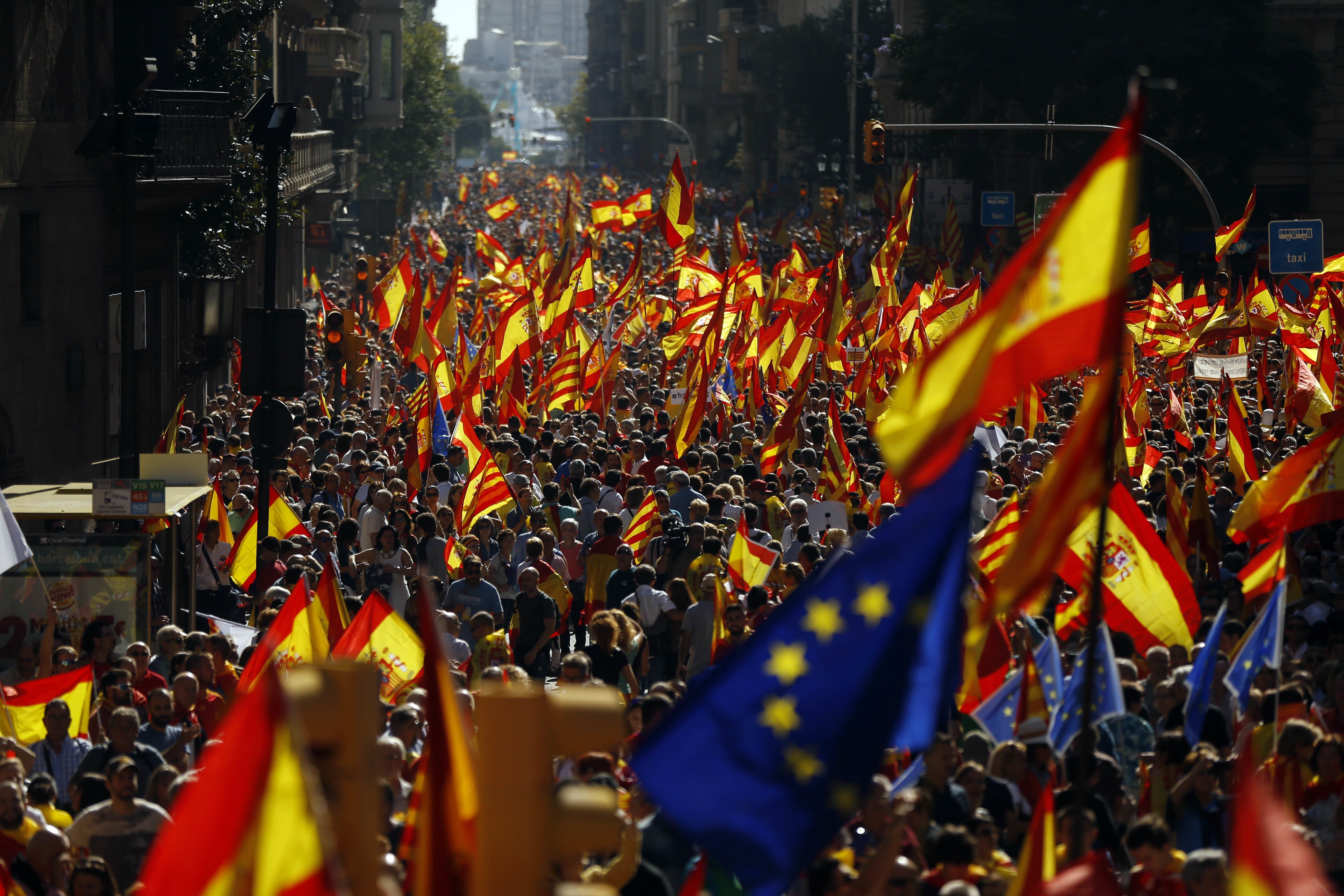
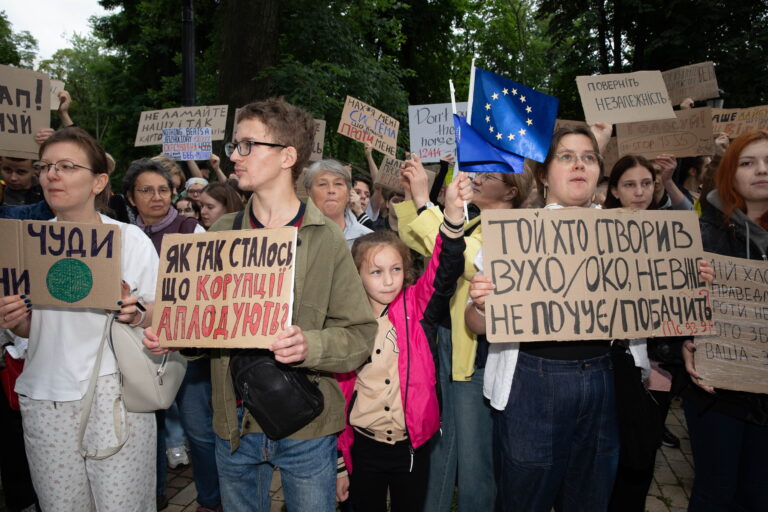
Public anger has increasingly appeared on the streets.
In the Netherlands, anti-migration demonstrations increased sharply during May, with the Armed Conflict Location & Event Data Project recording 45 anti-migration events across 17 locations. More than 20 involved violence, including attacks involving fireworks and other objects against police and buildings housing refugees. Counter-protests also emerged.
Such incidents reveal the dangerous feedback loop developing in parts of Europe.
Residents become anxious about migration.
Protests follow.
Political groups mobilise around those concerns.
Opposing groups organise counter-protests.
Social media amplifies the most dramatic images.
The result is a society in which people increasingly encounter one another through political confrontation rather than ordinary daily interaction.
Once that cycle begins, compromise becomes harder.
People stop seeing opponents as neighbours with different opinions.
They start seeing them as representatives of an opposing camp.
The Crisis of Coexistence
The phrase “crisis of coexistence” should not be understood as meaning that Europeans and immigrants are inevitably destined for conflict.
Millions of people across Europe live peacefully in mixed communities.
Immigrants work alongside native-born Europeans. Children from different backgrounds attend the same schools. Businesses employ workers from multiple countries. Families contain people with different cultural and religious backgrounds.
Most of everyday life is far less dramatic than political headlines suggest.
But peaceful coexistence cannot be taken for granted.
It requires functioning institutions.
It requires confidence that laws are enforced.
It requires citizens to believe that public services are fair.
It requires newcomers to have genuine opportunities to participate in society.
And it requires governments to communicate honestly about both the benefits and costs of immigration.
When those conditions weaken, resentment can grow.
A neighbourhood struggling with overcrowded housing may blame immigration.
A community experiencing high unemployment may blame newcomers for competition over jobs.
A person concerned about crime may associate unfamiliar groups with insecurity.
Sometimes these perceptions are based on real local problems.
Sometimes they are exaggerated by political rhetoric or misinformation.
Either way, governments cannot simply tell frustrated citizens that their concerns are illegitimate.
They need to address the underlying problems.
The Role of Social Media
The summer’s events have also demonstrated the enormous influence of social media.
In the Ceuta crisis, misinformation and viral claims appear to have played an important role in encouraging people to attempt the crossing. Spanish intelligence reportedly concluded that the movement was largely spontaneous and driven partly by misinformation circulating online, rather than a clearly established state-directed operation.
The significance goes beyond Ceuta.
Modern political crises can develop at extraordinary speed.
A video posted in one country can influence public opinion thousands of kilometres away within minutes.
Images of a crowded border can be interpreted as evidence of invasion.
Images of police confronting protesters can be interpreted as evidence of authoritarianism.
Images of violent protesters can be used to portray an entire political movement as extremist.
The internet does not merely report political conflict.
It can accelerate it.
That creates a serious challenge for European democracies.
Citizens need access to reliable information precisely when emotions are highest.
The Human Cost
Behind the statistics are individual human beings.
Some migrants crossing European borders are escaping poverty. Others are fleeing war or persecution. Some are seeking employment or better opportunities for their families.
Their motivations differ.
So do the circumstances of the communities receiving them.
Residents of border regions may experience pressures that are invisible to people living far away. Local authorities may suddenly need to provide accommodation, healthcare and security for thousands of people.
Both sides can experience fear.
Both sides can feel ignored.
And both sides can become vulnerable to political manipulation.
That is why a sustainable European migration policy must recognise both the humanity of migrants and the legitimate responsibilities of governments toward their citizens.
Humanitarianism cannot mean unlimited migration.
Border control cannot mean abandoning humanitarian obligations.
A serious policy must find the space between those extremes.
Europe at a Crossroads
The political consequences of this summer could extend far beyond migration.
European governments are already facing economic pressures, security concerns, ageing populations and political fragmentation.
Migration has become a powerful symbol of all those anxieties.
When voters feel that governments cannot control borders, they may conclude that governments cannot control anything else.
That creates opportunities for populist movements.
But there is a danger for those movements too.
It is easier to campaign against immigration than to govern a complex country.
Once political parties gain power, they must confront the practical realities of labour shortages, international law, demographic change and economic dependence on foreign workers.
Europe’s migration debate therefore cannot be solved through slogans alone.
It requires long-term planning.
A Different Kind of European Solidarity
The events of the summer have also raised an uncomfortable question about European solidarity.
The EU was created partly to reduce the importance of national borders between member states.
Yet migration has repeatedly exposed the limits of that ambition.
Countries on the external frontier often argue that they carry a disproportionate burden.
Northern states worry that migrants will move onward through the Schengen area.
Southern states demand more assistance.
Eastern states frequently resist mandatory redistribution.
National governments therefore have strong incentives to prioritise their own voters.
The Ceuta episode demonstrated how quickly those competing interests can collide.
If Europe wants a genuinely common migration policy, solidarity cannot exist only when conditions are easy.
It has to operate during crises.
Otherwise, every major migration event risks becoming another test of whether the European project can survive national political pressure.
Beyond the Breaking Point
Europe is not necessarily at the end of coexistence.
But it is at a moment when the foundations of coexistence are being tested.
The continent cannot avoid the reality of migration.
It cannot ignore citizens who feel that immigration has changed their communities too rapidly.
Nor can it ignore the humanity of migrants and refugees.
The answer cannot be unlimited openness.
It cannot be blanket exclusion either.
Europe needs controlled and predictable immigration systems, effective external borders, credible asylum procedures, faster decisions, meaningful integration policies and serious investment in the communities receiving newcomers.
It also needs political leaders willing to reject collective blame.
A migrant who commits a crime should be held responsible as an individual.
A citizen who attacks migrants should be held responsible as an individual.
A politician who spreads false information should be challenged.
And a government that fails to manage its borders should be held accountable.
Those principles are compatible.
They are also essential.
The greatest danger facing Europe may not be migration itself.
It may be the inability to discuss migration without destroying trust between citizens.
When every argument becomes a battle between “the people” and “the elites,” between natives and foreigners, between left and right, society loses the ability to solve practical problems.
That is the real breaking point.
Europe’s summer of discontent has exposed genuine fears, genuine policy failures and genuine humanitarian challenges.
But it has also exposed how quickly those problems can become fuel for political division.
The continent now faces a choice.
It can allow fear, misinformation and nationalism to push societies further apart.
Or it can build a system capable of combining secure borders with humanitarian responsibility, integration with national identity, and political disagreement with social peace.
The choice will not be easy.
But coexistence is not something that happens automatically.
It has to be built.
And in the turbulent summer of 2026, Europe is discovering just how fragile that achievement can become when trust begins to disappear.