
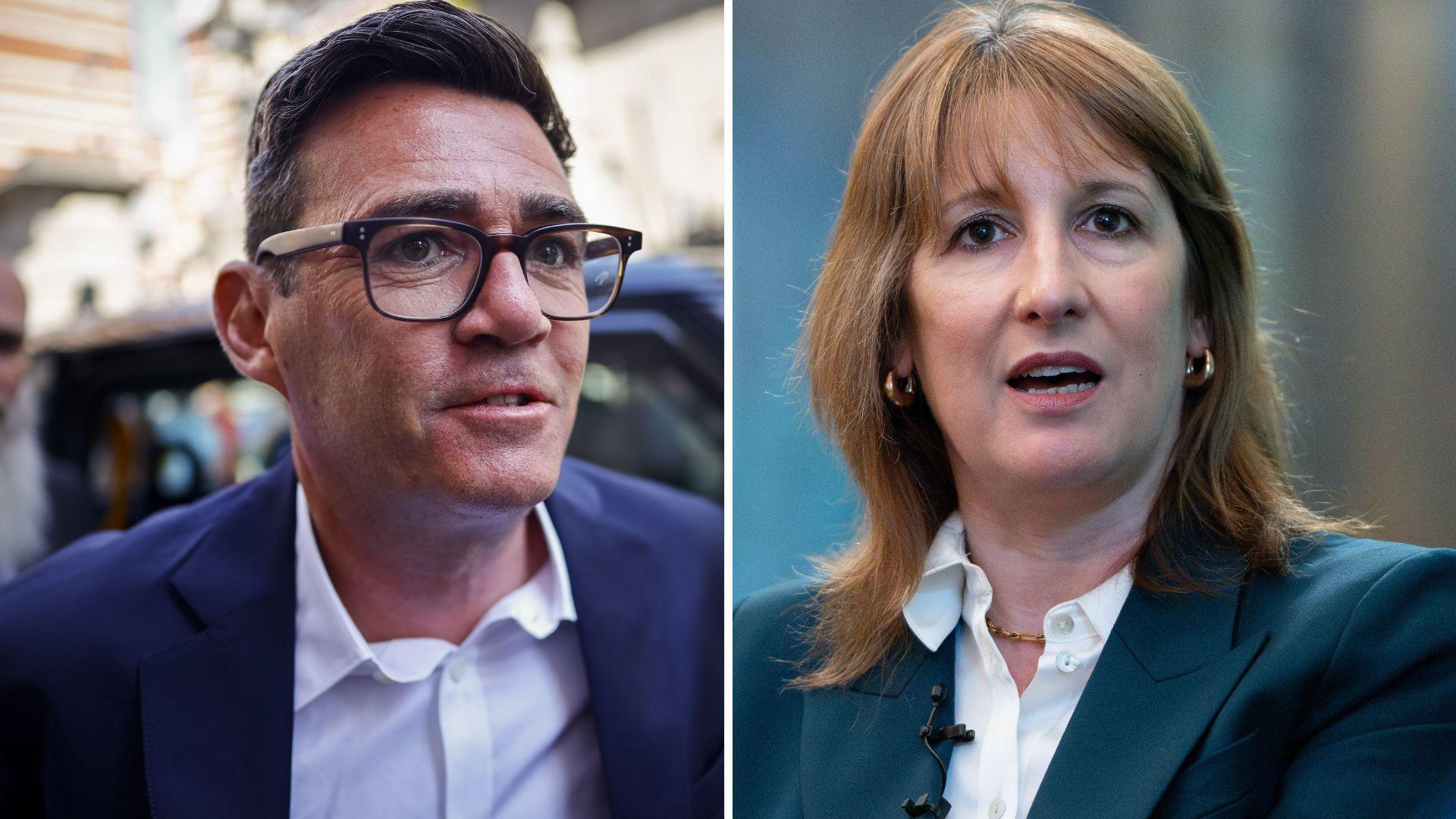
Last week, Burnham confirmed that state pensioners with no other income will be handed a special income tax exemption. But the pledge isn’t a new one. He’s simply rolling over a plan introduced by that one-woman policy disaster zone, former chancellor Rachel Reeves. She previously announced that retirees who have no other source of income apart from the state pension itself wouldn’t be made to pay income tax. Which sounded great. Until you took a closer look.
The state pension has become a tax issue because of the longstanding freeze on the £12,570 personal allowance. This was originally introduced by Rishi Sunak from April 2022. Reeves later extended the freeze by three years to April 2031. While the personal allowance will remain frozen, the state pension will continue to rise each year under the triple lock, increasing in line with earnings, inflation or 2.5%, whichever is highest.
Today, the full new state pension is worth £12,547 a year, just a fraction below the personal allowance. The Government Actuary has projected a 3.4% increase in April next year, which would lift it to roughly £12,974. That’s only a projection. But if correct, next year’s full new state pension would be around £404 above the personal allowance. A pensioner receiving absolutely no other taxable income could therefore face an income tax bill of roughly £81 a year at the basic 20% rate.

Andy Burnham pledges more than £1.5bn in spending
And that bill could increase every year until 2031, as the state pension rises while the tax-free allowance remains frozen. This has created a politically toxic situation where the state pension itself pushes the poorest pensioners ever deeper into the tax net. Reeves’s answer was a quick fix. She promised that retirees whose only income comes from the state pension wouldn’t pay income tax during this Parliament. It sounded reassuring but in practice opened a nasty can of tax worms.
The underlying problem is that the UK has two state pension systems running side by side. Millions of retirees who reached state pension age from April 6, 2016 receive the new state pension. If they have absolutely no other source of taxable income, Reeves’s pledge just about works for them.
But older retirees are in a different position. They receive the older basic state pension, worth significantly less than the new one. Many also receive additional state pension, typically through SERPS or the state second pension (S2P). Unfortunately for them, these “increments” are taxable today and will remain taxable. If they lift their total state pension above the £12,570 personal allowance, they become liable for income tax even if the pensioner has no other source of income.
That could create a bizarre situation where one retiree pays tax on their state pension while another doesn’t, even if the two receive similar amounts. In fact, the older pensioner could potentially receive less money overall while paying tax when the other doesn’t.
Burnham didn’t create this mess. He’s inherited the problem and chosen to push it through while claiming the glory for protecting pensioners. But it will only help a minority, while leaving many more in the lurch.
The state pension is rising. The personal allowance isn’t. That’s the real problem. And Burnham hasn’t fixed it. He’s botched the job.
“STATE PENSIONERS HAVE BEEN BETRAYED!” 😡 Fury Erupts as Andy Burnham Is Compared to Rachel Reeves Following His Latest Controversial Move
A fresh political storm has erupted in the United Kingdom after Greater Manchester Mayor Andy Burnham found himself at the center of growing criticism over his latest policy position. Across social media, political commentators and members of the public have accused Burnham of abandoning the interests of older citizens, with some even drawing comparisons to Chancellor Rachel Reeves. The controversy has reignited a broader debate about how politicians from different parties are handling issues affecting Britain’s state pensioners during a period of economic uncertainty.
Many critics argue that pensioners, who have spent decades contributing to the country’s economy through taxes and National Insurance, deserve stronger protection from rising living costs. Inflation may have eased compared to its recent peaks, but millions of retirees continue to struggle with increasing energy bills, food prices, council taxes, and healthcare expenses. For those relying primarily on the State Pension, every government decision concerning benefits, taxation, or public spending has a direct impact on their quality of life.
The backlash intensified after Burnham’s latest remarks were interpreted by some as placing fiscal priorities ahead of pensioner welfare. Opponents claimed that his stance echoed the approach associated with Chancellor Rachel Reeves, who has faced criticism from various groups over decisions designed to tighten public finances. As a result, social media quickly filled with accusations that politicians across the political spectrum are becoming increasingly disconnected from the concerns of elderly voters.
Supporters of Burnham, however, reject the comparison. They argue that the Mayor has consistently campaigned for greater investment in public services, better healthcare, affordable housing, and increased regional funding. According to his defenders, taking one controversial position does not erase years of advocacy on behalf of vulnerable communities. They also stress that many difficult financial decisions reflect broader economic pressures rather than a lack of concern for pensioners.
The debate highlights a growing challenge facing British politics. The country has an ageing population, placing greater pressure on public finances while increasing demand for pensions, healthcare, and social care. Governments of every political persuasion must balance responsible budgeting with protecting those who depend on state support. Finding that balance has become increasingly difficult as economic growth remains modest and public borrowing continues to attract intense scrutiny.
Public reaction demonstrates just how politically influential pensioners remain. Older voters traditionally have some of the highest turnout rates in UK elections, making them an important constituency for every major political party. Any perception that pensioners are being treated unfairly can quickly become a significant political issue, particularly in the run-up to future elections.
Whether the criticism directed at Andy Burnham proves justified remains a matter of political opinion. Supporters view the controversy as an oversimplification of complex policy choices, while critics see it as further evidence that politicians are failing to prioritize those who built the country through decades of work. What is clear is that debates surrounding pensions, public spending, and the cost of living will continue to dominate British politics, with every major decision closely scrutinized by millions of voters who depend on the State Pension for financial security.
As the controversy unfolds, the pressure on political leaders is unlikely to diminish. Pensioners, advocacy groups, and opposition figures will continue demanding clear answers about how future policies will protect older citizens from economic hardship. In an era marked by rising expectations and limited public resources, decisions affecting retirees are likely to remain among the most contentious issues in British public life.