

Shabana Mahmood Dismisses Nigel Farage’s Claim of ‘Systematic Two-Tier Policing’ in Britney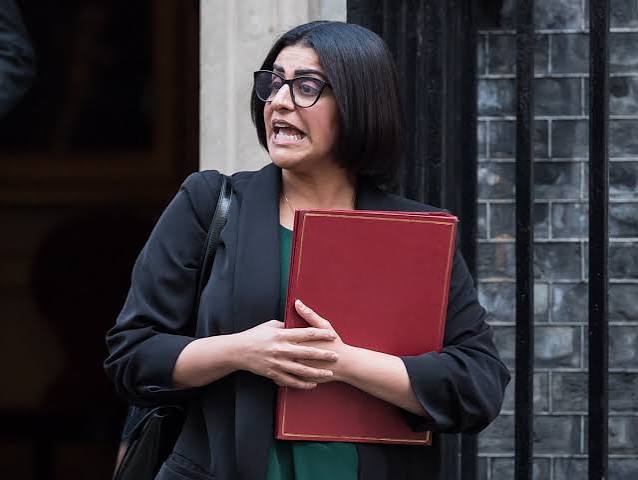
A major political controversy has erupted in Britain after Home Secretary Shabana Mahmood rejected Nigel Farage’s claim that the country operates a system of systematic two-tier policing. Her intervention has reignited a heated national debate about equality before the law, police impartiality, racial discrimination, and public confidence in Britain’s justice system.
The disagreement comes amid growing concerns about how police officers handle politically sensitive demonstrations, public disorder, and incidents involving people from different ethnic and religious backgrounds.
Farage and Reform UK have repeatedly questioned whether British police forces apply the law consistently. They argue that some individuals and groups appear to receive different treatment depending on their background or the political sensitivities surrounding an incident.
Mahmood, however, has rejected the suggestion that two-tier policing is a routine or systematic feature of British law enforcement.
Nevertheless, the Home Secretary has acknowledged that examples of differential treatment have damaged public confidence and announced plans for new national guidance on police impartiality.
The controversy raises an important question: can the government restore public trust while ensuring that every individual receives equal treatment under the law?
Shabana Mahmood Delivers a Firm Response to Farage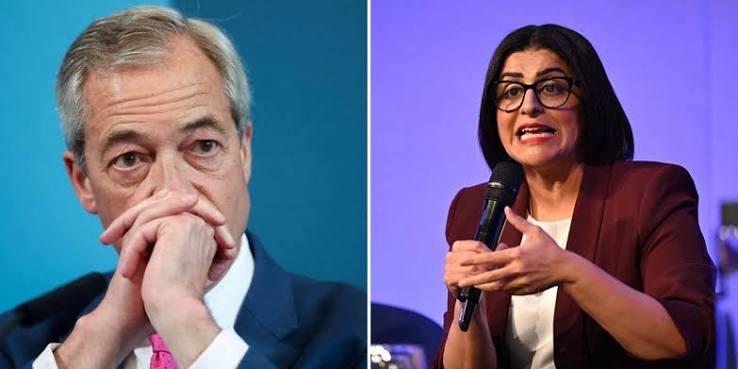
Speaking to senior police leaders on 18 November 2026, Mahmood addressed what she described as the corrosive and growing perception of two-tier policing.
She insisted that the vast majority of British police officers perform their duties impartially and remain committed to policing without fear or favour.
However, she acknowledged that certain incidents involving differential treatment had undermined confidence in the police.
Her position is that individual failures should be investigated and corrected, but they should not automatically be presented as evidence of a nationwide system of discriminatory policing.
Mahmood also criticised misguided attempts to address inequality when they risk creating different standards of treatment.
She argued that the pursuit of equality must never undermine the fundamental principle that everyone deserves the same protection under the law.
Her announcement included plans for a new impartiality standard, developed through the College of Policing, to establish clearer expectations for officers dealing with members of the public.
The objective is to ensure that decisions are made according to evidence, professional judgement, and the law rather than assumptions about race, religion, or personal characteristics. <Cite refs={[“turn185571news0″,”turn185571search7”]}/>
Nigel Farage Refuses to Back Down
Nigel Farage has responded by arguing that Mahmood’s acknowledgement of differential treatment supports concerns that Reform UK has raised about policing.
The Reform UK leader believes the government must go further than discussing public perceptions and directly address incidents that have raised questions about police conduct.
Farage has repeatedly argued that people should not have to wonder whether their background or political beliefs influence how officers treat them.
His position has attracted support from voters who believe that police forces must demonstrate greater consistency and transparency.
However, Mahmood has rejected Farage’s broader suggestion that systematic two-tier policing is taking place across Britain.
The disagreement reflects a wider political battle over how individual policing failures should be interpreted and whether they demonstrate isolated misconduct or a more extensive institutional problem.
Reform UK has also called for changes to police equality policies, arguing that professional standards should focus on equal treatment rather than identity-based approaches. <Cite refs={[“turn185571news3″,”turn185571search7”]}/>
The Henry Nowak Case That Intensified the Debate
One of the most significant incidents behind the controversy involves 18-year-old Henry Nowak, who was fatally stabbed in Southampton in December 2025.
Following the attack, the murderer falsely accused Nowak of racially abusing him.
Police officers subsequently handcuffed and arrested the seriously injured teenager while he was dying.
Body-camera footage later showed Nowak repeatedly telling officers that he had been stabbed. One officer responded: “I don’t think you have, mate.”
The incident caused widespread public outrage and raised serious questions about the judgement and conduct of the officers involved.
Vickrum Digwa was subsequently convicted of murder.
The police response is being investigated by the Independent Office for Police Conduct, including questions about whether officers recognised the seriousness of Nowak’s injuries and provided appropriate medical assistance.
The case has become a major reference point in the political debate about impartiality.
However, the circumstances must be examined through the evidence and investigation rather than automatically treated as proof of systematic discrimination throughout the police service. <Cite refs={[“turn185571news13″,”turn185571news0”]}/>
New Rules Could Change How British Police Operate
Mahmood’s proposed impartiality standard is intended to establish clearer national expectations for police officers.
The guidance will address how officers should behave when dealing with political organisations, community groups, demonstrations, and controversial public events.
One particularly sensitive issue concerns police officers participating in Pride events while wearing their uniforms.
Mahmood has supported restrictions on officers marching in uniform at such events, arguing that the police must avoid appearing to endorse particular political positions.
She has also criticised previous anti-racism guidance that suggested fair policing did not necessarily mean treating everyone in the same way.
Her argument is that the public must be confident that police officers apply the law consistently.
However, critics have warned that excessive restrictions on community engagement could damage relationships between police forces and minority communities.
The College of Policing is expected to develop further guidance, with consultation planned for early 2027. <Cite refs={[“turn185571search10″,”turn185571news4”]}/>
The Debate Over Race and Equality in Policing
The controversy also highlights a wider disagreement about how equality should operate within British policing.
Supporters of stronger impartiality rules believe officers should never make decisions based on racial or religious assumptions.
They argue that professional standards must be consistent and that no individual should receive preferential or inferior treatment because of their identity.
However, campaigners concerned about discrimination argue that treating everyone equally also requires recognising the different challenges experienced by particular communities.
Official policing statistics have identified disparities in stop and search and the use of force involving Black people.
These concerns cannot simply be ignored when discussing police impartiality.
The National Police Chiefs’ Council has also acknowledged that discrimination continues to exist within police organisations.
Its chairman, Gavin Stephens, has argued that public trust depends on fair and impartial policing, while recognising that a diverse police service is stronger.
The challenge is therefore to address genuine discrimination without introducing policies that create new perceptions of unequal treatment. <Cite refs={[“turn185571news0″,”turn185571news14”]}/>
Labour Faces Political Pressure From Both Sides
The controversy places Labour in a difficult political position.
If the government dismisses public concerns entirely, it risks appearing unwilling to acknowledge genuine failures.
However, accepting every allegation of two-tier policing without sufficient evidence could reinforce misleading conclusions about the entire police service.
Farage and Reform UK are likely to continue using the issue to challenge Labour’s credibility on law and order.
Conservative politicians have also called for stronger action against unequal treatment.
Meanwhile, organisations representing minority communities want assurances that new impartiality rules will not weaken efforts to tackle racism and discrimination.
Mahmood must therefore balance several competing concerns.
She needs to demonstrate that the government takes public confidence seriously while protecting the independence of police forces and ensuring that discrimination is properly investigated.
Public Trust Is the Biggest Challenge
Ultimately, the controversy is about more than political disagreements between Labour and Reform UK.
Public confidence is essential to the effectiveness of British policing.
People must believe that officers will investigate crimes fairly, protect victims, and treat suspects according to the same legal standards.
When confidence declines, communities may become less willing to report offences or cooperate with investigations.
This can make it more difficult for police forces to prevent crime and protect vulnerable individuals.
Restoring trust requires transparency, professional standards, and accountability.
It also requires politicians to distinguish between documented misconduct, public perceptions, and allegations that have not been established by evidence.
The government must ensure that every police force demonstrates its commitment to impartiality through its actions.
Conclusion
Shabana Mahmood’s rejection of Nigel Farage’s claim of systematic two-tier policing has reignited one of Britain’s most contentious debates about law enforcement and equality. Although the Home Secretary insists that systematic discrimination is not a feature of everyday policing, she has acknowledged that individual examples of differential treatment have seriously damaged public confidence. The Henry Nowak case has further highlighted the importance of professional judgement, accountability, and consistent treatment. Meanwhile, Farage continues to demand stronger action, arguing that the government must address the underlying concerns rather than simply challenge the language used to describe them. The proposed impartiality guidance could provide an opportunity to improve policing standards, but it must also protect legitimate efforts to tackle racism and discrimination. Ultimately, British citizens deserve a police service that protects everyone equally, investigates wrongdoing without political interference, and treats individuals according to the same legal principles. Nobody should receive preferential treatment, and nobody should be denied justice because of their race, religion, or political beliefs. Equality before the law must remain the foundation of British democracy.