
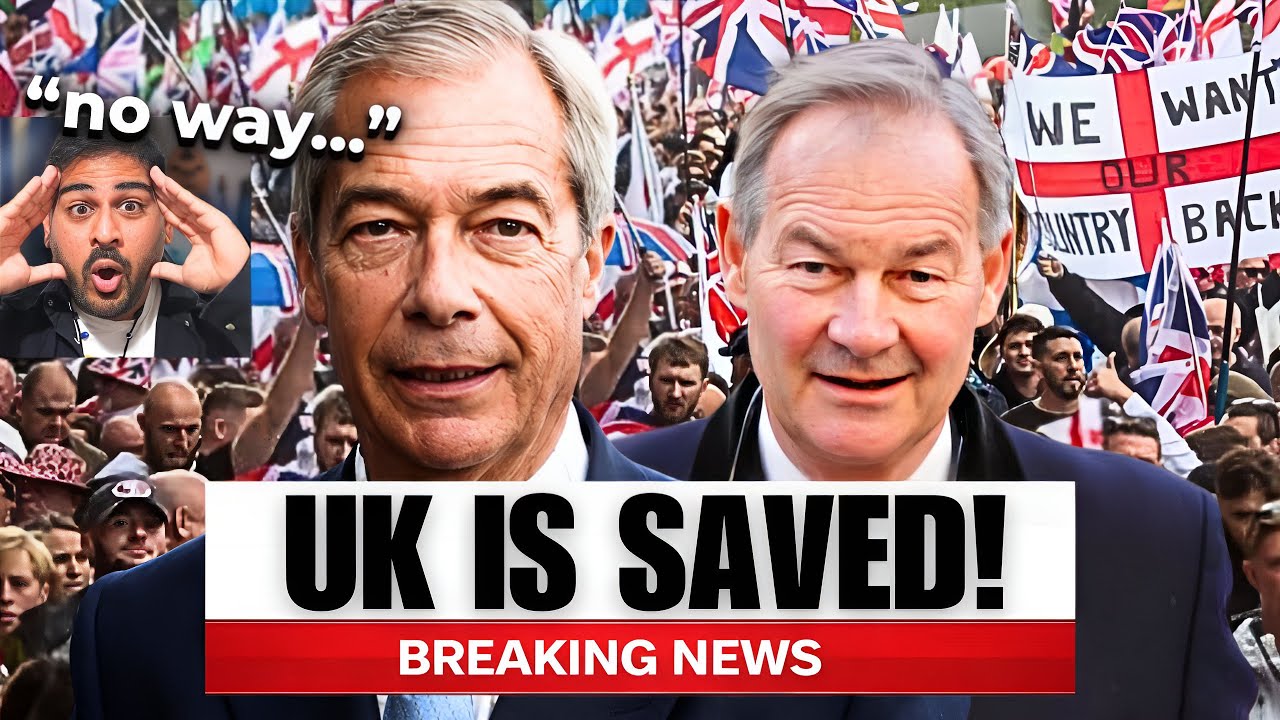
Rupert Low has made a public appeal to Nigel Farage and Reform UK, arguing that Britain’s political right should put aside personal disagreements and work together ahead of the next general election. In a statement presented as a call for cooperation, Low said the political landscape had changed significantly since he and four other MPs were elected in July 2024, and argued that the divisions that have emerged since then should no longer prevent cooperation. Low acknowledged his disagreement with the way he was removed from Reform but said he did not want to revisit the dispute, instead asking how the two movements could work together to pursue what he described as the restoration of Britain. He pointed to the recent Greater Manchester result and cooperation at Norfolk County Council as examples of what he believes can be achieved when political differences are set aside. According to Low, any national agreement would need to be based on five fundamental principles. The first would be a major tightening of immigration policy, including a much broader programme of deportations. Low argued that simply ending mass immigration would not be sufficient and called for the removal of illegal migrants as well as some legal migrants who, in his view, fail to integrate, cannot speak English, refuse to work or are considered hostile to British society. These proposals represent a significantly harder line than policies traditionally associated with the political centre, and Low acknowledged that some people within Reform would not support them. He nevertheless presented them as essential conditions for cooperation. His second principle concerned what he called demographic security. Low expressed concern about projected demographic changes in Britain and linked mass immigration to what he described as profound changes to the country’s population and cultural identity. He also called for policies aimed at reversing what he termed the “Islamification” of Britain, including restrictions on practices such as halal and kosher slaughter, burka wearing, cousin marriage, public Islamic prayer and Sharia courts. Those proposals are likely to remain highly controversial, particularly because they would affect religious practices and communities. Low also argued that recommendations from an inquiry into grooming gangs should be fully implemented, including the deportation of foreign nationals who were allegedly aware of serious crimes but failed to act. He further called for a referendum on restoring the death penalty for what he described as the most serious and undeniable crimes, acknowledging that Farage has previously opposed such a policy. Beyond immigration and criminal justice, Low called for a more economically self-sufficient Britain, with tighter control of public spending, lower welfare costs, stronger domestic energy and food production, and greater attention to long-term public finances. His fifth principle focused on restoring public confidence in politics. He argued that voters had lost faith in Westminster and said former Conservative ministers who had previously held government positions should not automatically be given another opportunity to serve in a future administration.
Low’s appeal comes with a clear acknowledgement that cooperation would not necessarily be easy. He said he and Farage had significant disagreements and that some of those differences had been documented publicly for more than a year. However, he argued that millions of British voters want what he described as a patriotic government focused on national interests rather than political personalities. Low said his primary concern was not which political movement received credit for implementing the policies, but whether those policies were actually put into practice. He therefore framed his message as an offer to work together “for the good of the country,” rather than as an attempt to settle old disputes. The statement also suggests that Low sees the next election as a potential contest in which cooperation between different right-wing movements could be decisive. He warned that refusing to cooperate simply because of personal disagreements would be a mistake and argued that the two groups could have enough common ground to challenge what he described as a looming left-wing alliance. Commentary surrounding Low’s announcement has portrayed him as a potential future leader, although such assessments remain political opinion rather than an established prediction about the 2029 election. The transcript’s commentator praised Low’s message and suggested that he could eventually become the leader capable of taking his movement further, while also acknowledging that there was no guarantee of such an outcome. The discussion then turned to Low’s proposed restrictions on religious slaughter, particularly his call to ban both halal and kosher slaughter. The commentator, speaking personally, said the issue was controversial but argued that it could potentially be addressed through alternative arrangements, including imported kosher food. These comments reflect the commentator’s own position rather than an established policy agreement between Low and Farage. More broadly, Low’s proposals would represent a substantial restructuring of Britain’s approach to immigration, integration, criminal justice, public spending and national identity. Whether Reform UK would accept such conditions remains uncertain, and the transcript does not provide a response from Farage to the proposal. Any potential alliance would therefore depend on whether the two sides could overcome disagreements that have previously contributed to their separation.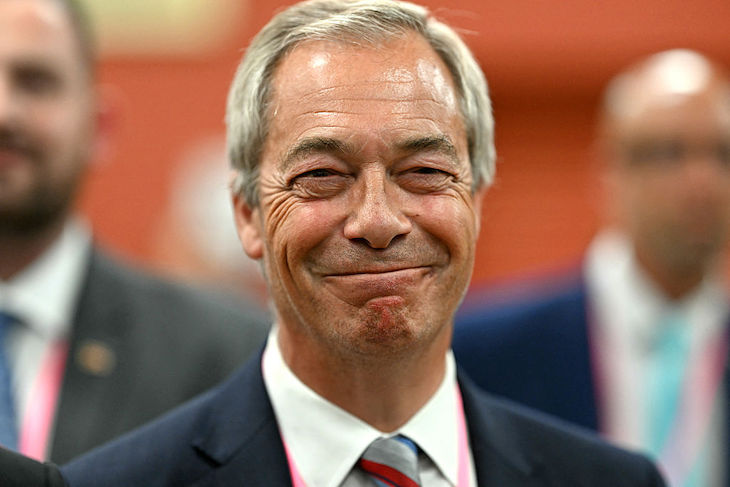
The wider significance of Low’s announcement is that it places political unity on the British right at the centre of the discussion about the next general election. Rather than simply criticising Reform UK or Farage, Low is explicitly offering cooperation while making clear that he expects substantial policy commitments in return. His five-point framework would require agreement on issues that are among the most politically contentious in Britain, including immigration, deportation, religious practices, demographic change, the death penalty and the future size of the welfare state. At the same time, his message attempts to appeal to voters who feel disconnected from Westminster politics and believe that established parties have failed to address their concerns. Whether that strategy can translate into broader electoral support remains to be seen. The political landscape could change considerably before 2029, and neither the future strength of Restore Britain nor the eventual position of Reform UK can be established from this statement alone. What is clear is that Low is positioning himself as a politician willing to pursue cooperation despite previous personal and political conflicts. His message to Farage is essentially that disagreements should not prevent the two movements from exploring common ground. If Farage accepts that invitation, it could open a new discussion about the structure of Britain’s political right. If he rejects it, Low has already indicated that Restore Britain intends to take its programme to voters independently. Either way, the proposal signals that the battle over the future direction of Britain’s right-wing politics is likely to continue well before the next general election ca