
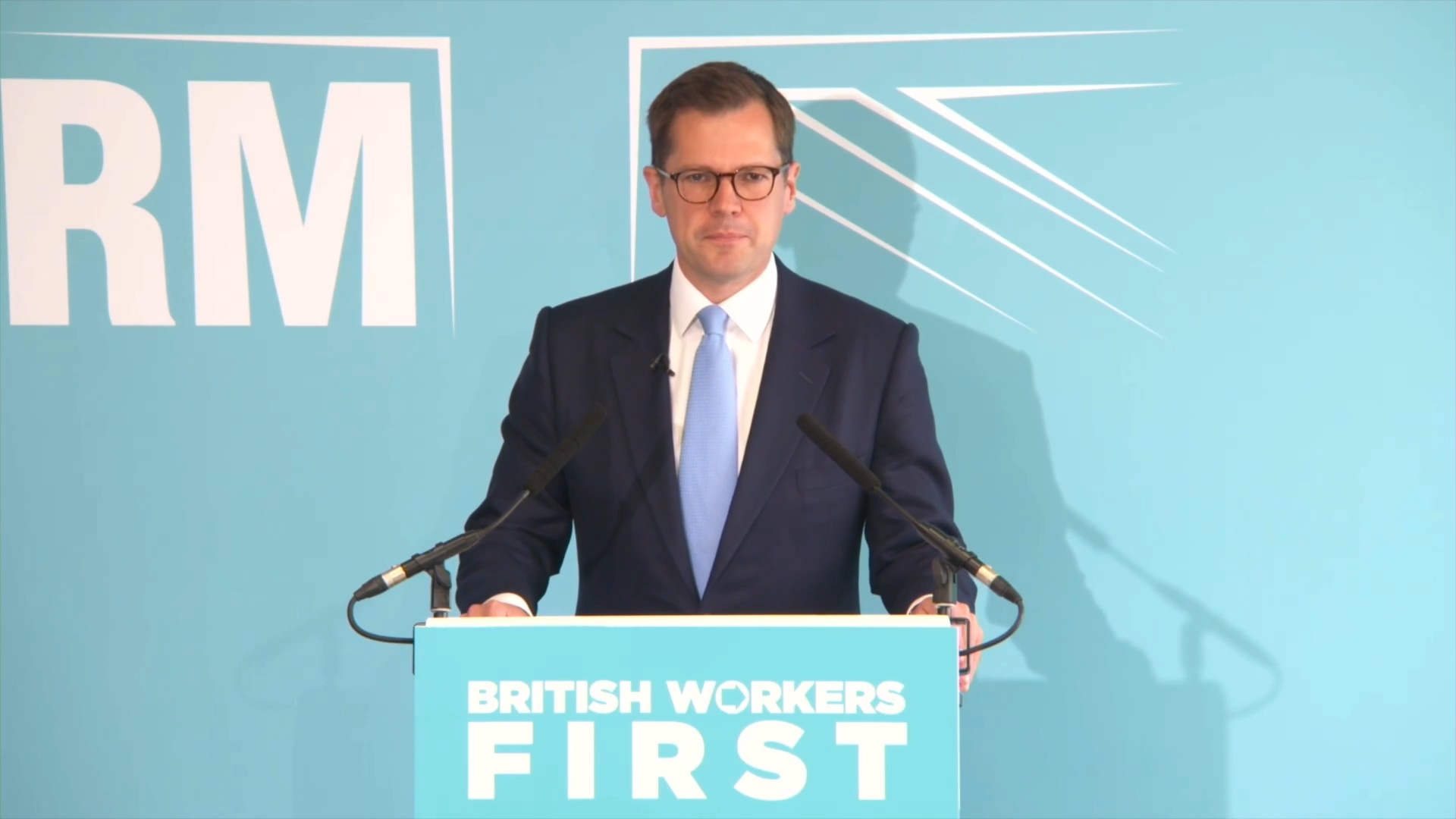
At a press conference this morning, Jenrick promised to put “British workers first, migrants second”.
He said: “For more than 20 years now, we’ve had British workers coming second – undercut by cheap migrant labour, which drives down wages and our people’s quality of life.
“According to the government’s own figures, the millions of low-skilled migrants that have been brought into our country have cost us hundreds of billions of pounds. Not to mention the pressure they place on GP surgeries, on our schools, housing, on the roads. Well, under a Reform government, those days are going to come to an end.”
In April 2025 Labour Chancellor Rachel Reeves raised Employer National Insurance Contributions (NICs) to 15% – a punitive policy that has discouraged employers from hiring at exactly the time when Britain needs more people in work.
Reform UK will reverse Reeves’ raid and cut NICs back from 15% to 13.8%. But Jenrick was clear that the cut would apply to British citizens only. Employer NICs for foreign nationals would remain at 15%. Reform UK will also introduce a new Employers’ Migrant Labour Levy, which businesses will have to pay for each foreign worker they employ. These changes will incentivise businesses to hire British staff.
The current system is stacked in favour of cheap foreign labour. Successive Conservative and Labour governments have allowed employers to rely on overseas workers, while nearly one million young people in Britain are not in education, employment or training. In fact, 27 young non-EU migrants have been hired for every young Brit since 2020. The new levy will make it cheaper to hire British workers and more expensive to rely on migrant labour, particularly in lower-paid sectors.
Reform UK’s tax cut would cost around £11.2 billion, but this would be fully funded by the new Employers’ Migrant Labour Levy. Every penny raised will be used to cut employment taxes on British workers. The policy would generate further savings by enabling more British citizens to move from Universal Credit into work.
Combined with Reform’s recent pledge to abolish income tax on overtime earnings, this new tax policy reaffirms Reform UK’s status as the party that will stand up for British workers.
Robert Jenrick: “Reform’s Tax Policy Will Put British Workers First”
By Reform Daily Team
15 June 2026
Senior Reform UK figure Robert Jenrick has declared that the party’s proposed tax reforms are designed to “put British workers first,” arguing that the current tax system places too much pressure on working families and businesses while failing to deliver stronger economic growth.
Speaking about Reform UK’s economic agenda, Jenrick said the party wants to create a simpler, fairer, and more competitive tax system that rewards work, encourages investment, and helps British businesses expand. He argued that lower and more efficient taxes would allow workers to keep more of their earnings while making the UK a more attractive place to invest and create jobs.
“Our tax system should reward hard work, not punish it,” Jenrick said. “Reform’s tax policy will put British workers first by allowing people to keep more of the money they earn and by supporting businesses that create jobs across the country.”
According to Jenrick, many households continue to struggle with the rising cost of living, higher energy bills, housing costs, and inflation. He argued that reducing the overall tax burden would give families greater financial security while increasing consumer spending and stimulating economic activity.
A central feature of Reform UK’s tax strategy is simplifying the tax code. The party says Britain’s tax system has become increasingly complex, creating unnecessary costs for businesses and confusion for taxpayers. Reform believes that a more straightforward system would reduce bureaucracy, improve compliance, and make it easier for individuals and companies to understand their obligations.
Jenrick also emphasized the importance of supporting British businesses, particularly small and medium-sized enterprises (SMEs). He argued that entrepreneurs and family-owned companies are the backbone of the economy but often face excessive taxation and regulatory burdens. Reform says reducing these pressures would encourage business expansion, attract investment, and generate more employment opportunities throughout the country.
The party also argues that encouraging investment is essential for long-term economic growth. Reform believes lower business taxes and a more stable fiscal environment would increase confidence among domestic and international investors, leading to greater productivity, innovation, and higher wages. Jenrick said a growing economy ultimately benefits workers by creating better-paid jobs and improving living standards.
Manufacturing and industry also feature prominently in Reform UK’s economic vision. The party has repeatedly argued that tax policy should support companies producing goods in Britain and investing in domestic supply chains. Reform believes stronger manufacturing would improve national resilience, strengthen exports, and reduce dependence on imported products in key sectors.
In addition to business taxation, Reform says it wants to ensure that working people receive a greater share of the rewards generated by economic growth. The party argues that employment should remain financially attractive and that government policy should encourage work rather than discourage it through excessive taxation or unnecessary complexity.
Jenrick also linked tax reform to broader public spending priorities. He argued that government should focus on delivering efficient public services while ensuring taxpayers receive better value for money. Reform believes reducing waste, improving efficiency, and controlling unnecessary spending would make it possible to lower taxes without compromising essential public services.
Supporters of Reform UK’s proposals argue that lower taxes would stimulate economic growth by increasing disposable income, encouraging entrepreneurship, and making Britain more competitive internationally. They believe that stronger economic performance would generate higher tax revenues over time through increased employment and business activity.
Critics, however, have questioned whether significant tax reductions could be delivered without affecting government finances or public services. Some economists argue that tax cuts may require either reduced public spending, increased borrowing, or alternative sources of revenue to maintain fiscal sustainability. Others contend that investment in healthcare, education, and infrastructure also plays a crucial role in supporting long-term economic growth.
Reform UK responds that a faster-growing economy, combined with more efficient government, would generate sufficient resources to fund essential services while allowing taxes to fall. Party representatives argue that economic expansion, rather than higher taxation, offers the most sustainable path to improving living standards and strengthening public finances.
Political analysts note that tax policy is likely to remain one of the defining issues in British politics as parties compete over how best to promote growth while managing public finances. Reform UK’s emphasis on rewarding work and supporting domestic businesses reflects its broader economic message of lower taxes, reduced regulation, and stronger national competitiveness.
In conclusion, Robert Jenrick’s statement that Reform’s tax policy will “put British workers first” highlights the party’s commitment to reducing the tax burden, encouraging investment, and supporting economic growth. Reform argues that a simpler and more competitive tax system would help workers keep more of their earnings, enable businesses to create more jobs, and strengthen Britain’s economy for the long term. Whether these proposals gain wider public support will depend on the continuing political debate over taxation, public spending, and the future direction of the UK economy.