

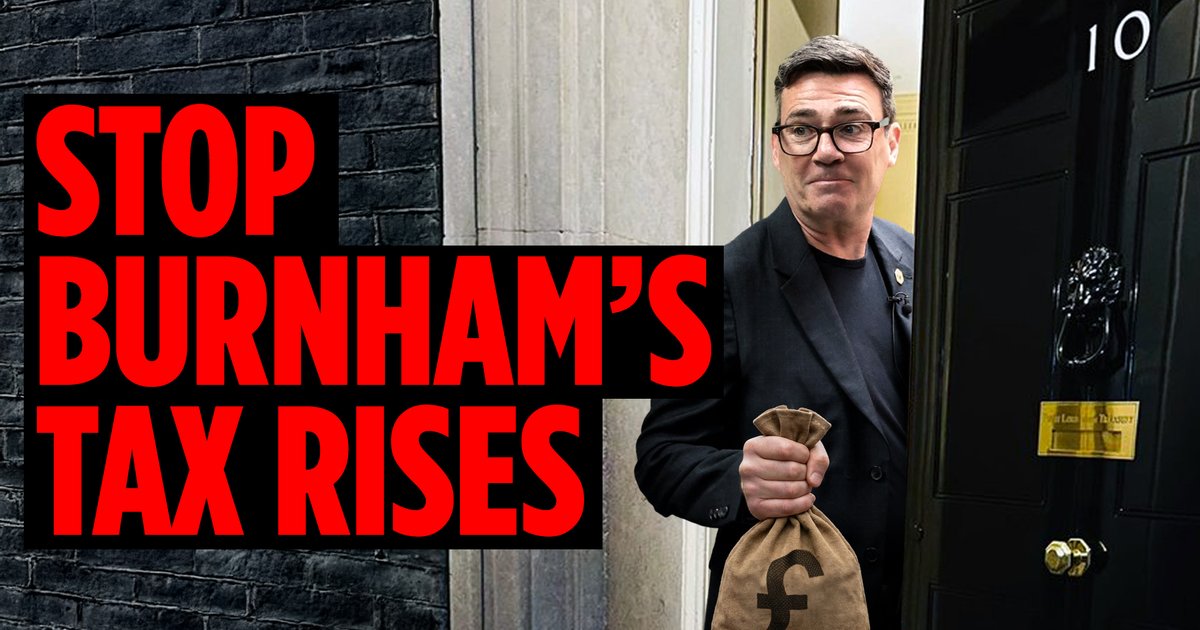
Reform UK Shadow Chancellor Robert Jenrick has challenged Andy Burnham to rule out a £38 billion-a-year package of tax rises that could leave families paying thousands of pounds more. Reform UK is now calling on voters to sign our petition against Burnham’s tax raid.
Analysis by Reform UK has identified 10 tax hikes that Burnham has previously proposed, supported or refused to rule out over the course of his political career. These include a 10% levy on estates after death, a graduate tax, the restoration of the 50p top rate of income tax and a £14 billion raid on savings and investment through changes to capital gains tax.
This laundry list of new burdens on the taxpayer also includes a land value tax, National Insurance on landlords’ rental income and an expansion of Labour’s so-called mansion tax to cover 150,000 more homes. This would mean homes worth £1.5 million or more, instead of £2 million, would have to pay the extra charge, bringing about 150,000 more properties into the tax.
Burnham has also previously backed or at least expressed openness to proposals for a mandatory tourist tax, higher gambling duties and a workplace parking levy.
Taken together, Reform UK estimates that the measures could extract an additional £38 billion a year from taxpayers. Combined with the £66 billion of tax rises already imposed under Rachel Reeves, Labour’s total annual tax burden could be more than £100 billion higher by the next election – equivalent to £3,450 for every family each year once the measures were fully in place.
Jenrick said: “Andy Burnham has spent 20 years reaching for other people’s money – a death tax on family homes, a graduate tax on young people getting their first pay cheque, a £14 billion raid on savings and investment, and new levies on everything from your parking space at work to your weekend away.”
Rather than bringing Britain’s bloated state and soaring welfare bill under control, Burnham is prepared to raid people’s homes, savings, investments and earnings to bankroll yet more government spending.
As Jenrick pointed out, “no one voted for this.” Burnham “needs to rule [tax rises] out, today. If he won’t, Reform will fight him.” Burnham is expected to enter Downing Street later this month without facing the country in a general election, which Reform UK has called for. Reform is now demanding that he rule out all 10 tax rises individually, or seek a fresh democratic mandate.
Hardworking British families are already paying record levels of tax, while being squeezed by the cost-of-living crisis. They should not be forced to fund yet another Labour spending spree – especially one they never voted for.
Robert Jenrick: “No One Voted for Burnham’s £38 Billion Tax Raid”
By Reform Daily Team
Senior Reform UK politician Robert Jenrick has strongly criticized Greater Manchester Mayor Andy Burnham, claiming that voters did not support what he described as Burnham’s proposed £38 billion tax raid. Jenrick argued that any large-scale increase in taxation would place an unnecessary burden on working families, businesses, and taxpayers already facing economic pressures.
Speaking about Reform UK’s economic priorities, Jenrick said the British public expects politicians to reduce the cost of living and promote economic growth rather than introduce higher taxes. He argued that raising billions of pounds through additional taxation would weaken business confidence, discourage investment, and leave households with less disposable income.
“No one voted for Burnham’s £38 billion tax raid,” Jenrick said. “People voted for lower living costs, stronger economic growth, and better public services—not for higher taxes that would make life more difficult for working families.”
Jenrick claimed that proposals involving substantial tax increases would risk slowing economic activity at a time when many households continue to face rising housing costs, energy bills, and inflationary pressures. He argued that businesses require certainty and competitive tax rates to expand, hire more workers, and invest in the future.
Reform UK says its economic strategy is built around a different approach. Rather than increasing taxation, the party advocates reducing unnecessary government spending, simplifying the tax system, encouraging private investment, and supporting British businesses. According to Reform, faster economic growth and greater efficiency in public spending offer a more sustainable way to improve public finances than raising taxes.
Jenrick also argued that higher taxes could discourage entrepreneurship and reduce the competitiveness of the UK economy. He said small and medium-sized businesses, which employ millions of people across the country, would be particularly vulnerable to increased tax burdens. Reform believes that allowing businesses to retain more of their earnings would encourage expansion, innovation, and job creation.
The criticism forms part of a wider political debate over how Britain should finance public services while maintaining economic growth. Reform argues that government should focus on controlling waste, improving efficiency, and stimulating private-sector investment instead of relying on additional taxation. Party leaders say this approach would increase productivity while helping workers keep more of the money they earn.
Supporters of Reform UK’s position argue that lower taxes encourage investment, strengthen business confidence, and improve long-term economic performance. They believe that stronger economic growth ultimately generates higher government revenues through increased employment, rising wages, and expanding business activity rather than through higher tax rates.
Supporters of Andy Burnham and Labour, however, argue that investment in public services, infrastructure, housing, healthcare, and transport often requires substantial public funding. They contend that any discussion of taxation should be considered alongside the benefits of improved public services and long-term economic development. They also dispute Reform UK’s characterization of Labour’s fiscal approach.
Political analysts note that taxation is expected to remain one of the defining issues in British politics. Parties continue to debate the balance between funding essential public services, supporting economic growth, reducing public debt, and maintaining competitive tax rates. These competing priorities are likely to feature prominently in future election campaigns.
The disagreement also reflects broader differences in economic philosophy. Reform UK generally advocates lower taxes, reduced regulation, and a smaller role for government in the economy. Labour, meanwhile, has argued that strategic public investment can support growth, improve infrastructure, and strengthen public services. Voters will ultimately decide which approach they believe offers the best path to long-term prosperity.
As political debate continues, taxation is expected to remain a central issue affecting households, businesses, and public finances. Jenrick’s criticism of Burnham’s alleged tax proposals highlights the contrasting economic visions being presented by Britain’s major political parties, with each seeking to persuade voters that its approach will deliver stronger growth, higher living standards, and greater financial security.