

RNLI members have been warned they may have been hit with a cyberattack amid a heightened threat from far-Right agitators.
Article continues below
Volunteers for the organisation were told their data may have been stolen by hackers – just days after they suffered online and physical abuse for rescuing 120 migrants from a dinghy in the English Channel.
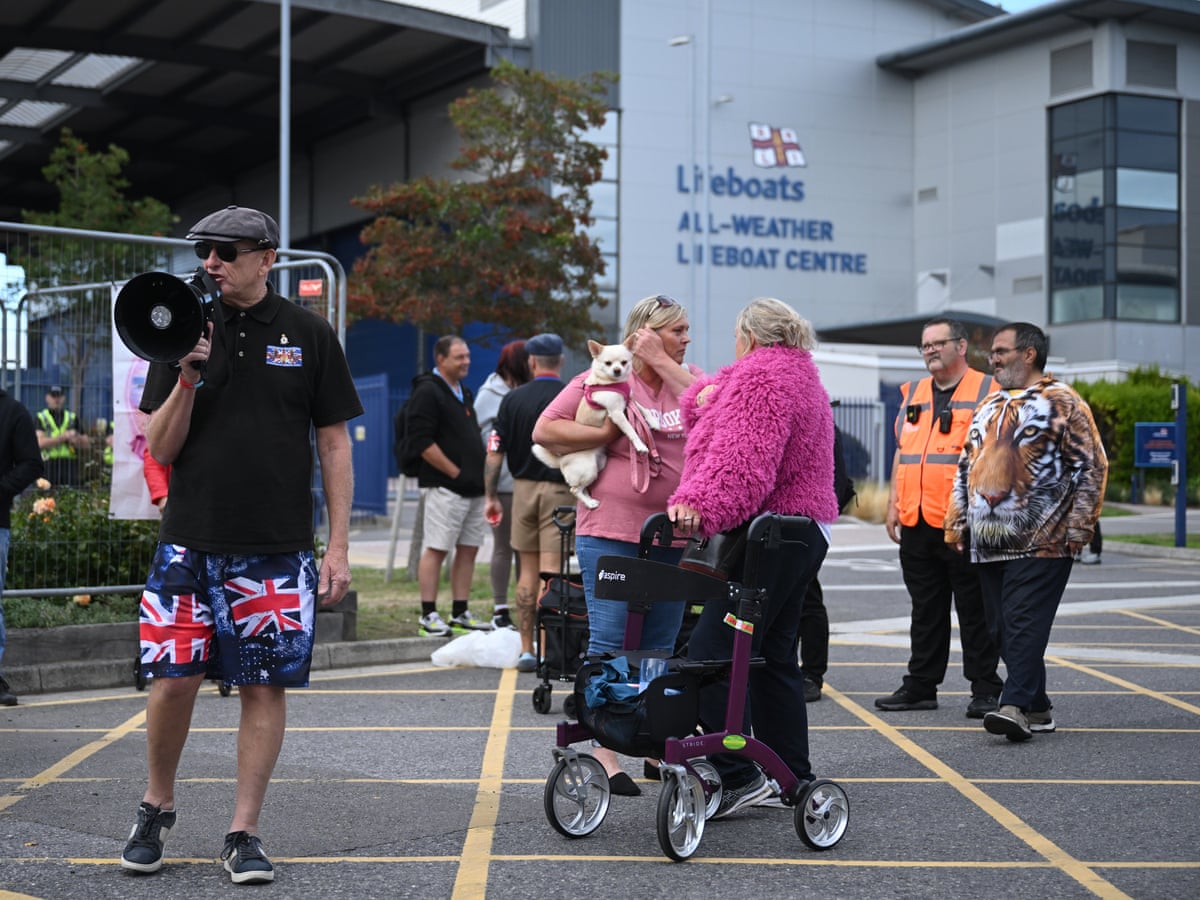
Online security experts have warned that the identities of RNLI members could have been leaked or fallen into the wrong hands after a cyber-attack on a third-party software provider. In a letter accompanying the autumn copy of its Lifeboat magazine, the charity warned supporters that their “name, contact details and records of interactions with the RNLI” could have been breached in the raid on Beacon CRM.
Article continues below
The RNLI said it was advised last month by the provider to “assume that data held within its systems was taken” in a cyber-attack that affected around 1,500 charities in late July.
“At this stage we’re not aware of any misuse of your personal information and have no evidence that your information has been published or shared,” the charity added.
We use your sign-up to provide content in ways you’ve consented to and improve our understanding of you. This may include adverts from us and third parties based on our knowledge of you. More info
The RNLI has suspended its services in Portsmouth since its staff were subjected to relentless abuse and branded “traitors” by anti-migrant protesters.
Peter Sparkes, the charity’s chief executive, condemned abuse of its volunteers as “wholly unacceptable in civilised society”, adding that the RNLI worked to save lives at sea irrespective of whose they are.
The latest data breach has fuelled concerns that lifeboat volunteers will face “doxxing”, which involves the publication online of a person’s home address.
Article continues below
Dr William Allchorn, a senior research fellow at Anglia Ruskin University’s International Policing and Public Protection Research Institute, said that those on the far-Right could exploit the data breach.
He told the Sunday Telegraph: “They use open source maritime tracking and endto-end encryption, but beyond that I don’t know how sophisticated their set up is.”
“It is the chill effect,” he added. “For those on the fringes of the movement this information could be quite key.”
Andy Burnham hit out at “appalling” abuse directed at hero crews after they were labelled as traitors online by far-right thugs for rescuing asylum seekers in the Channel and bringing a dinghy to safety in Portsmouth, Hants.
Hundreds of protesters blocked roads overnight on September 6 and vowed to stop migrants from leaving the port.
The boat, reported to be carrying about 140 migrants, is thought to have made one of the longest journeys of any small boat and landings as far west as Hampshire are rare.
The Mirror later revealed two RNLI heroes were named and pictured online by Portsmouth protestors who condemned them as “collaborators” and “traitors” for rescuing asylum seekers.
The RNLI issued security advice warning volunteers and staff not to wear the charity’s branding because of “unacceptable abuse”.
A spokesman for the RNLI said: “Beacon CRM works with many charities and organisations across the UK and Ireland, and while they cannot confirm exactly which records were accessed or downloaded, it advised all affected organisations, including the RNLI, to assume that data held within its systems was taken.
Article continues below
“At this stage, there is no evidence that information relating to RNLI supporters has been published, shared online or otherwise misused.”
RNLI Warned of Cyber Attack After Volunteers Abused for Saving Migrants
The Royal National Lifeboat Institution has warned supporters that their personal information may have been compromised in a cyberattack, raising fresh concerns about the safety of volunteers already facing abuse and intimidation over the charity’s role in rescuing migrants in the English Channel.
The warning comes at a particularly sensitive moment for the RNLI.
In recent weeks, volunteers have been subjected to online abuse and protests after two RNLI crews helped bring a dinghy carrying around 120 asylum seekers to safety in Portsmouth. Some demonstrators described the rescuers as “traitors”, while photographs and personal information relating to volunteers were circulated online.
The RNLI has since temporarily suspended operations at its Portsmouth lifeboat station and advised volunteers to consider whether wearing RNLI-branded clothing could put them at risk.
Now, the charity has confirmed that personal information held by an external software provider may also have been accessed during a cyberattack.
The organisation says there is currently no evidence that the information has been published, shared or misused.
Nevertheless, the combination of a suspected data breach and an increasingly hostile atmosphere has prompted concern about the possibility of further targeting of RNLI staff, volunteers and their families.
A Warning to RNLI Supporters
The cyberattack took place in late July and involved Beacon CRM, a customer relationship management company used by the RNLI and approximately 1,500 charities and organisations.
According to the RNLI, Beacon advised affected organisations to assume that data stored within its systems had been taken because it was not possible to determine precisely which records had been accessed or downloaded.
The information potentially affected includes supporters’ names, contact details and records of their interactions with the RNLI.
However, the charity has stressed that there is currently no evidence that information relating to its supporters has been published online or otherwise misused.
Beacon has reportedly said that the incident did not appear to have been specifically targeted at the RNLI or another individual organisation. The attacker subsequently claimed that stolen information would be deleted rather than sold or distributed.
That distinction is important.
The cyberattack itself does not establish that RNLI volunteers were deliberately targeted because of their work rescuing migrants.
The breach affected a third-party provider serving a large number of organisations.
But the timing has inevitably raised additional security concerns because the RNLI has simultaneously been dealing with a wave of hostility surrounding its Channel rescue operations.
The Portsmouth Rescue
The latest controversy can be traced back to 6 September, when two RNLI crews assisted a large dinghy carrying asylum seekers in the Channel.
The crews eventually brought approximately 120 people ashore at Eastney in Portsmouth.
The rescue was followed by protests involving anti-migration activists.
According to police and media reports, demonstrators attempted to block access routes and prevent migrants from leaving the area.
The protests later developed into confrontations with police.
The RNLI became a particular focus because of its role in the rescue.
Some volunteers were publicly identified and accused online of helping migrants rather than carrying out a traditional lifesaving mission.
The charity rejected that interpretation.
Its stated position is that RNLI crews rescue people in danger at sea regardless of their nationality, immigration status or the circumstances that led them into danger.
The RNLI has also rejected claims circulating online that it acts as a transport service for migrants or secretly houses asylum seekers.
It says such claims are false.
From Political Anger to Personal Targeting
The situation became more serious when individual volunteers were identified online.
Reports said that photographs and names of RNLI crew members were circulated by protesters.
This raised concerns about “doxxing” — the publication or distribution of personal information online without consent, often with the potential to expose individuals to harassment or threats.
The RNLI responded by issuing security guidance to its volunteers.
Staff were advised that they could avoid wearing RNLI-branded clothing if they believed doing so could put them at risk.
The charity also said people should feel able to close shops or lifeboat stations if they believed they were in danger.
The measures illustrate how a national political dispute over migration has begun to affect the everyday working conditions of people whose primary role is emergency rescue.
Portsmouth Station Temporarily Closed
The RNLI subsequently temporarily took Portsmouth lifeboat station off service.
Jacqui Irons, the organisation’s head of the south-east region, said the charity had a duty of care towards its people and therefore decided to pause activity while reviewing crew safety and wellbeing.
The closure did not mean that Portsmouth was left without maritime rescue cover.
The RNLI said established contingency arrangements were in place, including support from nearby stations and other declared assets.
The charity emphasised that temporary periods when individual lifeboat stations are unavailable are not unusual and that alternative arrangements are designed to maintain search-and-rescue coverage.
The decision nonetheless demonstrated the seriousness of the security concerns.
A lifeboat station exists to respond to emergencies.
Having to temporarily suspend its normal operations because of threats and intimidation represents an unusual challenge for a voluntary emergency service.
The Cybersecurity Threat
The newly disclosed data breach creates another layer of risk.
Cybersecurity experts have warned that information obtained through a breach can potentially be used for further targeting.
If names, contact details or other records were to fall into the hands of people intent on harassing RNLI volunteers, the information could potentially be used to identify individuals or establish connections between volunteers and the organisation.
This is why concerns about the breach have been discussed alongside the recent cases of online targeting.
However, there is currently no evidence that the cyberattack was carried out by people connected with the anti-migration protests.
The RNLI has specifically said there is no evidence that its supporters’ information has been published or misused.
The available reporting also indicates that the attack on Beacon CRM affected a large number of charities rather than being directed specifically at the RNLI.
That distinction should remain clear as the story develops.
Government Concern Over Doxxing
The issue has attracted attention from the government.
Digital Secretary Lisa Nandy has said she is concerned about the online targeting of RNLI volunteers and has discussed the issue with social media companies.
She has also raised concerns about doxxing and harmful online content.
Nandy told RNLI staff and volunteers that she was “shocked and saddened” by the targeting that occurred during protests in Portsmouth and Dover.
She said the government wanted social media platforms to respond more quickly to harmful and illegal material.
Her intervention reflects a wider political debate about the responsibilities of technology companies.
The government faces pressure to ensure that legitimate political debate remains possible online while preventing threats, harassment and the publication of private information.
The Police Response
Police forces have also become increasingly involved in monitoring the protests.
The demonstrations in Dover and Portsmouth have prompted questions about whether authorities had sufficient intelligence before large numbers of masked protesters arrived.
The Guardian reported that police believed some of the gatherings were coordinated through closed social-media networks and that some participants took steps to avoid detection.
Police are investigating incidents involving violence, criminal damage and obstruction.
At the same time, officers must distinguish between lawful protest and criminal behaviour.
That is particularly important in a politically sensitive environment where protesters argue that they are exercising legitimate opposition to irregular migration.
The challenge is to protect the right to peaceful protest while preventing intimidation and violence.
Why the RNLI Is Different
The RNLI’s position in the controversy is unusual because it is not an immigration-enforcement organisation.
Its core purpose is maritime search and rescue.
The charity says that in 2025 its lifeboats launched 9,058 times, while only 109 of those call-outs involved small boats in the Channel — approximately 1.2% of its total rescue activity.
The statistic is intended to demonstrate that Channel migration represents only a small proportion of the organisation’s overall work.
RNLI crews also rescue people from yachts, fishing vessels, beaches, rivers and other maritime emergencies.
The charity’s volunteers do not determine whether someone has the right to enter Britain.
They do not decide asylum claims.
They do not write immigration policy.
Their role is to respond when people are in danger.
The Political Argument
The controversy nevertheless reflects the wider political conflict over small-boat migration.
Reform UK and other anti-immigration campaigners have called for substantially tougher measures to prevent people crossing the Channel.
The government has pursued cooperation with France, action against smuggling networks and reforms to the asylum system.
These disagreements are legitimate subjects for political debate.
But the RNLI has argued that its rescue crews should not become targets simply because they save people whose immigration status is politically controversial.
Chief executive Peter Sparkes described abuse directed at volunteers and their families as unacceptable.
He said the charity would take whatever steps it could to protect its people.
A Charity Caught in a Political Storm
The situation illustrates how the immigration debate has moved beyond Parliament and government policy.
It has reached ports, police stations, accommodation sites and now an organisation whose principal function is saving lives.
The RNLI has attempted to maintain a politically neutral position.
It does not campaign for a particular immigration system.
Instead, it argues that people in danger at sea should receive assistance.
That principle has nevertheless become politically contested.
The result is that volunteers who once operated largely outside Britain’s political arguments have suddenly found themselves exposed to protests, online abuse and threats.
The cyberattack adds an additional dimension because it creates uncertainty about whether personal information may have been accessed.
No Evidence of Misuse — Yet
The RNLI has been careful to emphasise that there is currently no evidence that information taken during the Beacon CRM incident has been published or misused.
That qualification is crucial.
A potential data breach is not the same thing as confirmed doxxing.
Nor is there currently evidence linking the cyberattack to the people who have targeted the RNLI over its migrant rescues.
Nevertheless, the charity has advised supporters to assume that data may have been taken.
For an organisation whose volunteers are already concerned about personal safety, even the possibility that names and contact details could become available to hostile individuals is understandably significant.
The Wider Lesson
The RNLI’s experience highlights a growing challenge for Britain’s emergency services and voluntary organisations.
Political controversies increasingly unfold online as well as on the streets.
Information can move rapidly from social-media posts to private groups and then into wider public circulation.
Volunteers can become personally identified with an organisation simply because they perform their duties.
And a relatively small incident can quickly become part of a much larger national argument.
For the RNLI, the priority remains keeping its people safe while maintaining its lifesaving responsibilities.
For police and government officials, the challenge is protecting volunteers without restricting lawful political expression.
For social-media companies, the question is how quickly harmful material can be identified and removed.
And for the public, the controversy raises a fundamental question about the boundary between political disagreement and personal intimidation.
What Happens Next?
The immediate focus will be on determining exactly what information was accessed during the Beacon CRM breach and whether any of it subsequently appears online.
The RNLI has said it will continue monitoring the situation.
Meanwhile, police investigations into the Portsmouth and Dover protests are continuing.
The government is also considering how online platforms should respond to doxxing and other forms of targeted abuse.
The RNLI’s Portsmouth station is expected to return to normal service once the organisation is satisfied that appropriate safety measures are in place.
But the wider atmosphere may take longer to change.
The debate over small-boat migration is unlikely to disappear, and the RNLI is likely to remain involved whenever people face danger in British waters.
The charity’s position is straightforward: rescuers should save lives without judging the people they find in distress.
The current controversy shows how difficult that principle can become when a humanitarian operation is drawn into a highly polarised political debate.
For the volunteers involved, however, the immediate concern is more personal.
They want to be able to rescue people at sea without fearing that their names, photographs or private details could be used against them when they return home.
The cyberattack has added another layer to those concerns.
At present, there is no evidence that RNLI supporters’ data has been misused.
But after weeks of protests, online abuse and threats, the warning has served as a reminder that the security challenges facing the charity now extend far beyond the water.