

The RNLI has paused its services in Portsmouth after its life-saving volunteers were abused by anti-migrant protestors.
Article continues below
Andy Burnham earlier this month hit out at “appalling” abuse directed at hero crews after they were labelled as traitors online by far-right thugs for rescuing asylum seekers in the Channel and bringing a dinghy to safety in the Hampshire port city.
Article continues below
The RNLI, whose mandate is to save lives at sea, has been the target of online and physical abuse after anti-migrant protestors faced off with police in Portsmouth earlier this month. A separate demonstration saw masked protesters bring Dover to a standstill.
Article continues below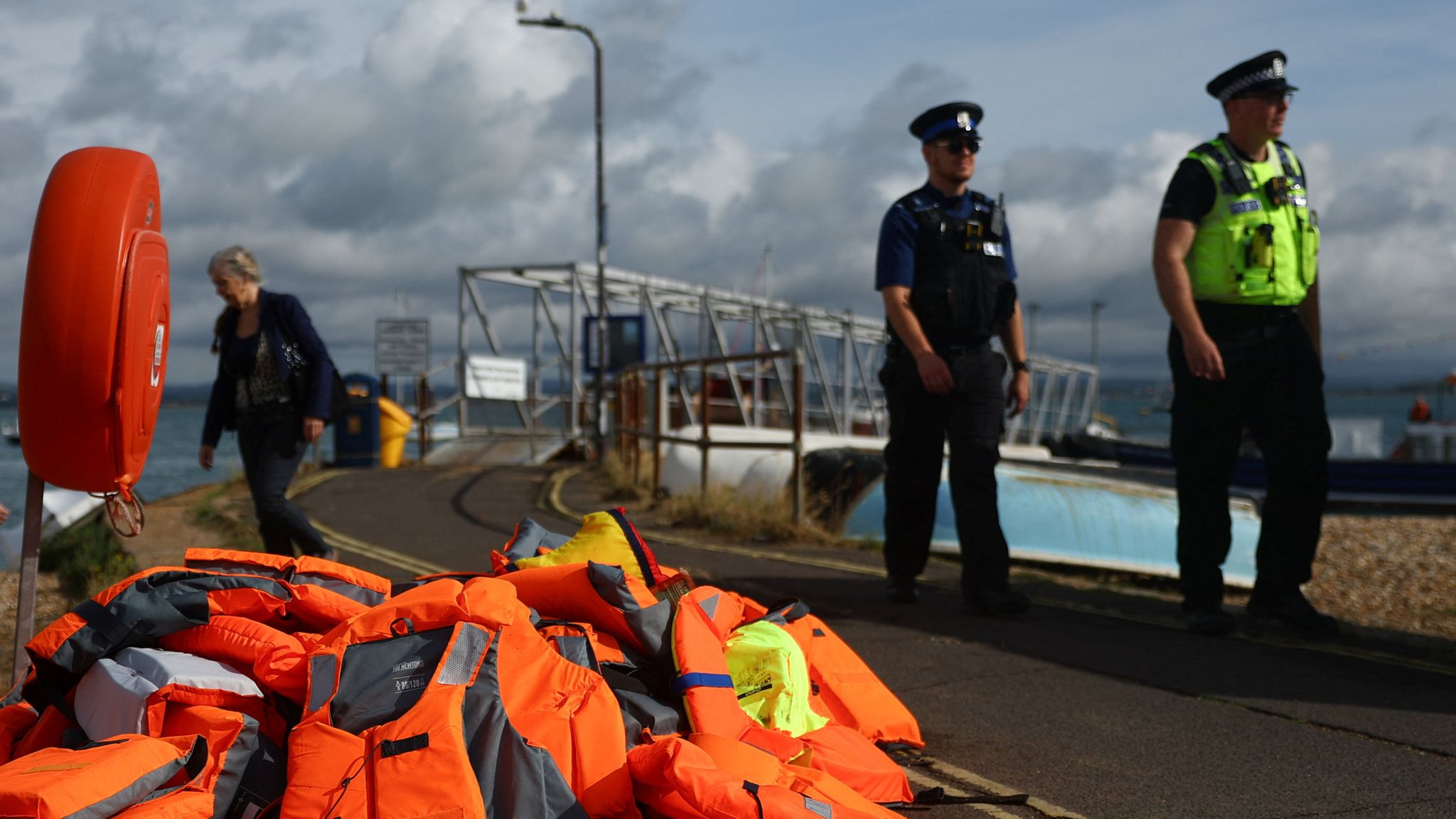
The charity said the Portsmouth Lifeboat Station has been “temporarily off service” since September 7.
RNLI’s south-east head of region for the charity, Jacqui Irons, yesterday said: “We have a duty of care to our people, we therefore took the decision to pause activity at the station to review crew safety and wellbeing and to support those involved in the incident on September 6.
We use your sign-up to provide content in ways you’ve consented to and improve our understanding of you. This may include adverts from us and third parties based on our knowledge of you. More info
“Search and rescue cover continues to be provided by flank RNLI and independent lifeboat stations, and the most appropriate asset to respond to any incident will be co-ordinated through HM Coastguard as is the case around the rest of the coast.”
She added the charity looks forward to the Portsmouth RNLI “returning to operational service in the near future”.
The charity has another lifeboat station on Hayling Island and there is another lifeboat station independent of the RNLI in Gosport.
Article continues below
Hundreds of protesters blocked roads overnight on September 6 and vowed to stop migrants from leaving Portsmouth after they arrived in a dinghy across the English Channel.
The boat, reported to be carrying about 140 migrants, is thought to have made one of the longest journeys of any small boat, and landings as far west as Hampshire are rare.
The Mirror later revealed two RNLI heroes were named and pictured online by Portsmouth protestors who condemned them as “collaborators” and “traitors” for rescuing asylum seekers. The RNLI issued security advice warning volunteers and staff not to wear the charity’s branding because of “unacceptable abuse”.
RNLI Chief Executive Peter Sparks condemned the abuse faced by volunteers, saying: “The RNLI’s people represent the very best in our society, they selflessly give up their time to keep others safe. Yet they and their families are being threatened by those who would hide behind a balaclava or a keyboard. Their action, in contrast, is wholly unacceptable in a civilised society. We will take whatever steps we can, to care for and protect our people and their families.”
And the Prime Minister’s official spokesman said: “Directing abuse at people who dedicate themselves to helping others is appalling. We won’t tolerate social media being a haven for this kind of behaviour. We support the police in investigating any threatening or unlawful behaviour and taking action where appropriate.”
Protests have been held at RNLI sites, including on September 9, when a small anti-migrant gathering was held at the RNLI College in Poole, Dorset.
An RNLI volunteer, who wished to remain anonymous, said the charity was being targeted “as one”. Although he has not himself worked on the south coast or in the Channel, he said: “We’re obviously quite shielded from what’s been happening down, particularly on the south coast and in the Channel, but what’s been really interesting over the last, I suppose, two weeks now, is how much the organisation, rightly, is seen as one organisation.
“And even though there’s a number of lifeboat stations around the country that have absolutely nothing to do with the incidents in the Channel and the kind of protests against that, we’re, to a degree, receiving the same amount of negative response from certain communities on social media.”
The 35-year-old, who has been with the RNLI for more than 11 years, said volunteers at the charity have been “mindful” about whether or not to wear their uniform.
Article continues below
He told PA: “There’s definitely a lot of talk amongst the crew, but it all centres around that affirmation that we’re just gonna keep doing what we’re doing. And the very small minority (of protesters) who have undertaken these activities doesn’t change what we’re gonna do.”
RNLI Suspends Services in Portsmouth After Volunteers Abused for Saving Migrants by Far-Right Protesters
The Royal National Lifeboat Institution (RNLI) has temporarily suspended operations at its Portsmouth lifeboat station following abuse and intimidation directed at volunteers after they helped bring migrants rescued from the English Channel to safety. The decision has highlighted growing tensions on the south coast over small-boat crossings, as well as concerns about the safety of people working for one of Britain’s best-known maritime rescue charities.
The Portsmouth station has been temporarily taken off service while the RNLI reviews the safety and wellbeing of its crews. The charity has stressed that the wider search-and-rescue system remains operational, with alternative RNLI stations and independent lifeboat services available to respond to emergencies.
The immediate controversy followed an incident on 6 September, when RNLI crews were involved in bringing around 120 people to safety after a small boat crossed the Channel and reached the Portsmouth area. The arrival was followed by demonstrations, road blockades and confrontations involving anti-migrant protesters.
The incident quickly moved beyond a debate about immigration policy. Images and footage of RNLI personnel circulated online, with some volunteers being branded “traitors”. Police also became involved after personal information relating to members of the rescue operation was reportedly shared online.
Why the Portsmouth Station Was Suspended
The RNLI said its decision was based on its responsibility to protect its personnel.
Jacqui Irons, the charity’s south-east head of region, said the organisation had a duty of care towards its people and had therefore paused activity while reviewing crew safety and wellbeing. The charity said it hoped to return the Portsmouth station to operational service as soon as possible.
Importantly, the suspension does not mean that search-and-rescue coverage around Portsmouth has disappeared. Other nearby resources, including the RNLI station on Hayling Island and an independent lifeboat station in Gosport, remain part of the wider response arrangements. HM Coastguard continues to coordinate which available rescue asset should respond to maritime incidents.
The temporary closure therefore reflects a specific safety decision rather than a withdrawal by the RNLI from maritime rescue operations.
The charity has also introduced additional security measures at some of its locations. Volunteers have been told they may choose not to wear RNLI-branded clothing if they believe doing so could put them at risk. Staff have also been advised that lifeboat stations or shops can be closed if people feel threatened.
The Protest That Triggered the Crisis
The Portsmouth controversy emerged during a period of intense public anger over small boats crossing the Channel.
Hundreds of protesters gathered in the city following the arrival of the migrant boat. Demonstrators blocked roads and attempted to prevent people rescued from the sea from leaving the area.
The confrontation escalated, with police dealing with disorder around the port. Reports said officers were injured and vehicles were damaged during the disturbances. The incident subsequently became part of a wider series of anti-migration demonstrations in southern England, including protests around Dover and outside RNLI facilities in Dorset.
The RNLI itself became a particular target because of its involvement in maritime rescues.
The charity has explained that its crews do not determine immigration policy and do not decide where people rescued at sea should ultimately be processed. Their role is focused on maritime safety and saving lives.
That distinction has become central to the debate.
The RNLI’s Position
RNLI chief executive Peter Sparkes has condemned the abuse directed at volunteers and criticised what the charity described as misinformation about its role.
The RNLI has said that claims that it deliberately transports migrants to Britain, houses asylum seekers or secretly moves them around the country are false. It has repeatedly emphasised that its crews respond to maritime emergencies according to established search-and-rescue procedures.
The charity has also highlighted the relatively small proportion of its overall work involving Channel crossings.
According to figures provided by the RNLI, its lifeboats launched 9,058 times in 2025. Only 109 of those call-outs, or approximately 1.2%, involved small boats in the Channel. The organisation has used those figures to demonstrate that small-boat rescues represent only a small part of its wider lifesaving operation.
The figures have become an important part of the RNLI’s response because the organisation says its work extends far beyond the politically sensitive issue of migration.
Its crews rescue people involved in boating accidents, respond to people in danger around the coast and assist those facing emergencies at sea regardless of nationality.
Volunteers Targeted Online
The controversy has also raised concerns about the growing use of social media to identify and target individuals involved in contentious public events.
Police launched an investigation after two RNLI volunteers were reportedly identified online and had personal details shared publicly. Sussex Police said officers were reviewing abusive social-media content directed at members of the rescue operation.
For volunteers, the experience has created an unusual situation.
RNLI crew members normally operate away from political arguments. Their work is based on responding to emergencies, often in difficult weather and dangerous conditions. Yet involvement in Channel rescues has increasingly placed some volunteers at the centre of the national immigration debate.
One volunteer interviewed by The Independent said the online abuse had not persuaded him to stop his work. His comments reflected the position of many people involved with the charity: whatever the political arguments surrounding immigration, rescuers see their immediate responsibility as responding when lives are at risk.
Security Measures Spread Across the RNLI
The Portsmouth suspension has not been an isolated security concern.
The RNLI has increased security around several facilities, including its headquarters in Poole, Dorset. Police have also provided protection around some RNLI sites amid concerns about demonstrations and possible targeting.
At one stage, protesters gathered outside the charity’s headquarters, while additional security measures were introduced around buildings and public areas. The RNLI subsequently advised staff to be cautious when dealing with members of the public and to report incidents where appropriate.
The organisation has also faced protests calling for people to stop donating.
At the same time, the RNLI reported a significant increase in donations following the controversy. Some members of the public contacted the charity to withdraw support, but others responded by increasing their donations or becoming new supporters.
That reaction illustrates how divisive the issue has become.
A Wider Argument About Immigration and Rescue
At the heart of the dispute is a difficult question: how should Britain respond when people attempting to cross the Channel are in danger at sea?
Critics of the government’s approach to migration argue that rescuing people in small boats can become part of a wider system that ultimately encourages dangerous crossings. Supporters of maritime rescue operations counter that emergency crews cannot simply ignore people who are at risk of drowning.
The RNLI has maintained that its role is not to decide immigration policy.
The charity’s position is that questions about asylum, border enforcement and the UK’s migration system are matters for government and law-enforcement authorities. Its volunteers are responsible for lifesaving.
This separation of responsibilities has been emphasised by RNLI supporters, including veteran sailor Sir Robin Knox-Johnston, who argued that crews respond when requested by the coastguard because people are believed to be in danger.
Government and Police Response
The confrontation has also prompted wider concerns about public order.
Home Secretary Shabana Mahmood has called for police forces to respond firmly to intimidation and disorder connected with anti-migration protests. Police chiefs have increased planning and intelligence-gathering following disturbances on the south coast.
The authorities face the difficult task of protecting the right to peaceful protest while preventing violence, intimidation and obstruction of emergency services.
That distinction is particularly important when protests occur around lifeboat stations. If rescue crews are unable to operate safely, the consequences could potentially extend beyond the immediate political dispute.
The RNLI’s Portsmouth decision demonstrates the practical consequences of that concern.
What Happens Next?
For now, the RNLI says its Portsmouth station is expected to return to service once safety and wellbeing reviews have been completed.
The charity has not indicated that it intends to abandon Channel rescue work. Instead, it has continued to defend its traditional role while introducing additional measures to protect volunteers.
The episode has nevertheless exposed a growing challenge for emergency organisations operating in an increasingly polarised political environment.
Immigration remains one of Britain’s most contentious issues, and the arrival of small boats has generated strong reactions across the political spectrum. But the Portsmouth dispute has also raised a separate question about the treatment of volunteers whose role is to respond to people in danger.
The RNLI’s temporary suspension shows how political tensions can have direct operational consequences. The charity must now balance its commitment to lifesaving with its responsibility to protect the people who carry out that work.
For the volunteers involved, the central task remains unchanged: when people are in danger at sea, they are trained to respond.
The debate over Britain’s borders, asylum system and Channel crossings will continue to be fought in Parliament, through elections, in courts and across the public sphere. The RNLI, however, maintains that those political arguments should not determine whether its crews can safely perform their fundamental lifesaving role.