
RNLI Lifeboats Packed with Migrants Refused Access to Two Ports
The issue of illegal immigration has become one of the most controversial political and social challenges facing Britain in recent years. The increasing number of migrants attempting to cross the English Channel in small boats has raised serious concerns about border security, public spending, national sovereignty, and the government’s ability to manage immigration effectively. Recently, a dramatic incident involving two Royal National Lifeboat Institution (RNLI) vessels carrying approximately 120 migrants attracted widespread public attention after they were reportedly refused permission to enter two major British ports: Southampton and Portsmouth. The incident not only intensified the national debate over immigration but also raised important questions about maritime safety, humanitarian responsibilities, public order, and the role of rescue organisations in Britain’s immigration crisis.
The incident occurred after a large boat carrying around 120 people attempted to cross the English Channel from the French coast near Cherbourg. The vessel reportedly departed from an unusual location near Utah Beach in Normandy, considerably farther west than many traditional departure points used by migrants travelling towards Britain. The journey was particularly dangerous because of the large number of people on board. As the situation developed, several French rescue vessels and helicopters became involved in the operation. Eventually, two RNLI lifeboats from Bembridge and Yarmouth assisted in rescuing the migrants and transporting them towards the British coast. The rescue operation demonstrated the considerable risks associated with overcrowded boats and irregular Channel crossings.
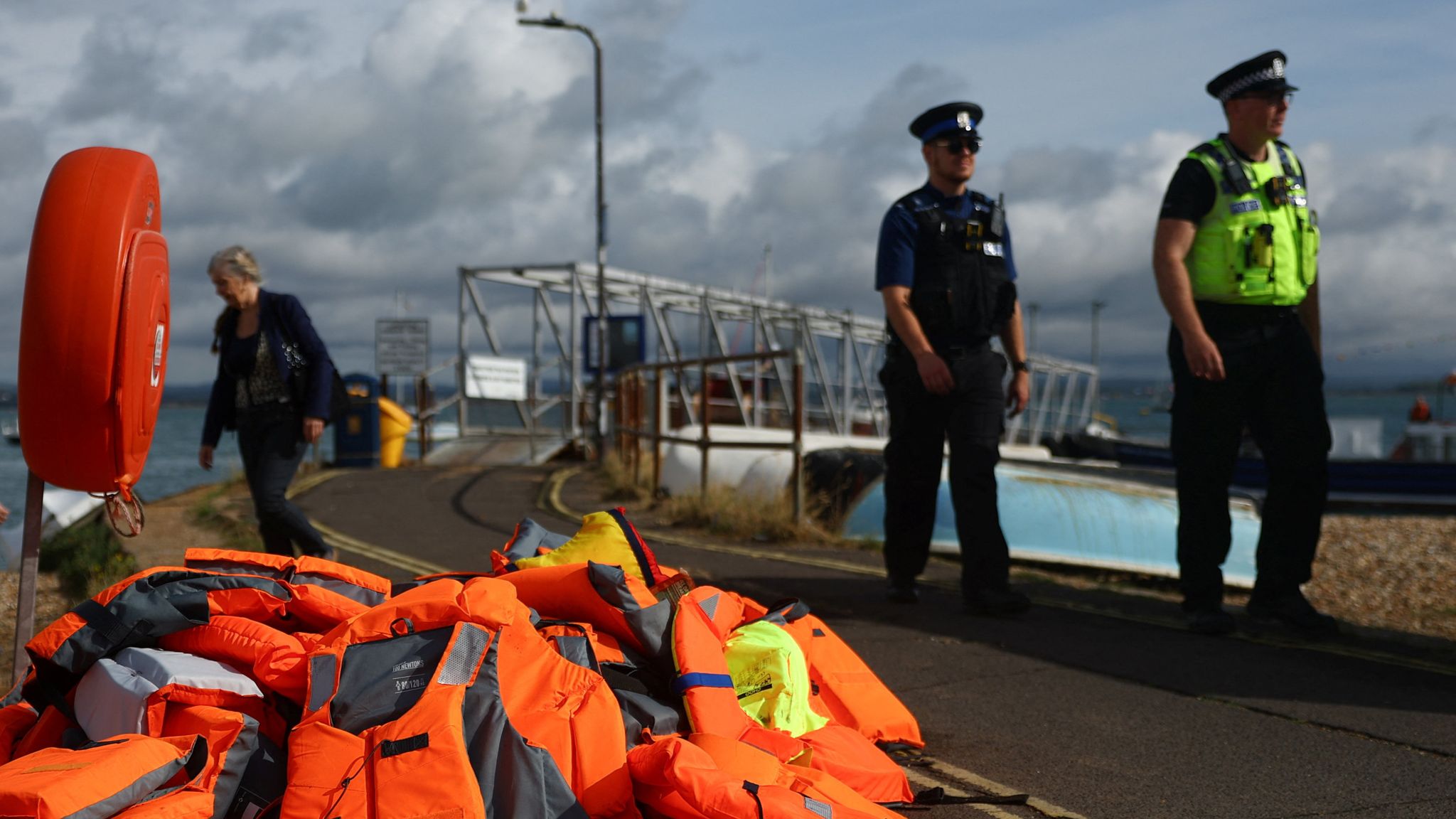
However, the situation became increasingly complicated when the RNLI crews attempted to bring the rescued migrants ashore. According to reports, the lifeboats requested permission to enter Southampton Port and Portsmouth Harbour, but both requests were refused. The crews were subsequently directed towards Eastney, in Portsmouth’s Langstone Harbour, several miles away. The decision created considerable controversy because the lifeboats were carrying a large number of people who had already experienced a dangerous journey across the Channel. Questions were immediately raised about why two major ports had refused access and whether the decisions had been based on operational difficulties, security concerns, or the politically sensitive nature of the situation.
Associated British Ports (ABP), which operates Southampton Port, provided an explanation for its decision. A spokesperson stated that the port did not have suitable reception facilities available to accommodate the rescued migrants. The company also explained that it would have played a role if Southampton had been the closest suitable port during a life-threatening emergency at sea or if the relevant authorities had issued a formal direction. According to ABP, neither condition applied in this particular situation. Nevertheless, the refusal attracted criticism and raised concerns about the coordination between harbour authorities, the Coastguard, and rescue organisations during large-scale maritime emergencies.
The eventual decision to bring the migrants ashore at Eastney created another serious challenge. Unlike larger commercial ports, Eastney has limited road access, with a relatively narrow route connecting the area to the surrounding city. This geographical situation made it difficult for police and other authorities to manage the arrival of approximately 120 people. Once the migrants reached the shore, hundreds of anti-immigration protesters gathered in the surrounding area. Many demonstrators expressed anger about the continued arrival of small boats and accused the government of failing to control Britain’s borders. Some protesters attempted to block the road and prevent coaches transporting the migrants from leaving the area. As a result, an operation that had initially focused on saving lives at sea developed into a major public-order incident.
The protests eventually became violent, placing additional pressure on local police officers. Reports indicated that some officers were assaulted, police vehicles were damaged, and members of the police force were pushed from their motorcycles. The Hampshire Police Federation condemned the disorder and emphasised that the right to peaceful protest must not be confused with violence, intimidation, or criminal damage. Spencer Wragg, chairman of the federation, praised the professionalism of officers who had faced difficult circumstances while attempting to maintain public order. He also warned that attacks against police officers were unacceptable, regardless of people’s political opinions about immigration. These events demonstrated how quickly public frustration can turn into disorder when a sensitive political issue is not managed effectively.
Another important consequence of the incident concerned the RNLI volunteers themselves. The organisation, which has a long history of saving lives at sea, found its personnel at the centre of an increasingly hostile political debate. Some anti-immigration protesters criticised the charity for rescuing migrants and accused its lifeboats of acting as a transportation service for people entering Britain illegally. Individual volunteers were reportedly subjected to online abuse, threats, and intimidation. Photographs and personal information were circulated on social media, creating concerns about their safety and that of their families.
The RNLI strongly rejected these accusations and defended the actions of its volunteers. The organisation explained that its primary responsibility is to save lives at sea, regardless of a person’s nationality, background, or immigration status. Its crews do not decide who is permitted to enter Britain, nor do they determine whether an individual qualifies for asylum. These responsibilities belong to government authorities and immigration agencies. From the RNLI’s perspective, refusing to rescue people simply because they may be undocumented would contradict the fundamental humanitarian principles of maritime rescue. Its volunteers are trained to respond to emergencies and prevent unnecessary loss of life, not to enforce immigration laws.
Nevertheless, the incident has intensified criticism from people who believe that rescue operations may indirectly encourage illegal immigration. Some campaigners argue that migrants and human-smuggling networks may become more willing to organise dangerous Channel crossings if they expect rescue services to transport them safely towards British shores. They believe that the government should introduce stronger deterrents, improve border security, and take tougher action against criminal gangs responsible for organising the journeys. From this perspective, the involvement of rescue organisations should be considered alongside the wider consequences of Britain’s immigration policies.
However, it is important to distinguish between saving lives and encouraging illegal immigration. The existence of rescue operations does not mean that the RNLI supports illegal border crossings. People who attempt to cross the Channel in overcrowded and poorly equipped boats face serious dangers, including drowning, hypothermia, exhaustion, and unpredictable weather conditions. Rescue organisations cannot simply ignore individuals in distress because of their immigration status. At the same time, the British government must maintain effective border controls and ensure that asylum applications are processed according to national and international law. Both responsibilities are important and should not be treated as mutually exclusive.
The economic consequences of illegal immigration are another important issue in this debate. Many British taxpayers are concerned about the cost of accommodating asylum seekers, providing temporary housing, processing applications, and maintaining immigration enforcement operations. Local authorities may also face additional pressure on public services, particularly when large numbers of migrants arrive in areas that are not prepared to receive them. Hotels used to accommodate asylum seekers have become a particularly controversial subject, with critics arguing that public money should be spent more effectively on housing, healthcare, education, and other essential services. These concerns have contributed to growing public frustration and increased political pressure on the government to develop a more effective immigration strategy.
Furthermore, the incident has raised questions about the preparedness of Britain’s maritime and emergency services. When a large vessel carrying more than 100 people approaches the coast, several organisations may need to cooperate, including the RNLI, Coastguard, Border Force, police, harbour authorities, and local councils. Each organisation has different responsibilities, but their activities must be carefully coordinated. Decisions about where rescued people should be brought ashore should be made quickly and transparently, taking into consideration maritime safety, available facilities, security arrangements, and transportation requirements. If communication between these organisations is unclear, unnecessary delays and additional risks may arise.
In my opinion, the British government should take a balanced and practical approach to this complicated situation. It is understandable that citizens expect their government to protect national borders, prevent illegal immigration, and ensure that public resources are used responsibly. People who organise dangerous crossings and exploit vulnerable migrants for financial gain should face serious legal consequences. At the same time, rescue volunteers should never be threatened or punished for carrying out their humanitarian responsibilities. They are not responsible for the government’s immigration policies, and protecting their safety should remain a priority.
The government should also strengthen cooperation with French authorities to prevent human-smuggling networks from organising dangerous crossings. More effective intelligence sharing, improved border surveillance, faster asylum procedures, and appropriate accommodation facilities could help reduce the pressure on coastal communities. In addition, clear emergency procedures should be established to determine where rescued migrants can safely disembark. This would reduce confusion between ports and rescue organisations while preventing similar incidents from developing into major public-order problems.
In conclusion, the incident involving two RNLI lifeboats carrying approximately 120 migrants who were refused access to Southampton and Portsmouth highlights the growing complexity of Britain’s immigration crisis. What began as a maritime rescue operation eventually developed into a controversial political confrontation involving port authorities, protesters, police officers, and humanitarian organisations. The incident has exposed weaknesses in communication and coordination while highlighting the difficult balance between border security and humanitarian responsibilities. Britain has the right and responsibility to control its borders, but it must also respect human dignity and protect those who risk their lives to save others. Ultimately, an effective immigration policy should combine strong border enforcement, international cooperation, public safety, and compassion. The RNLI should be allowed to continue its lifesaving mission without political intimidation, while the government must take responsibility for managing immigration in a fair, organised, and sustainable manner.