
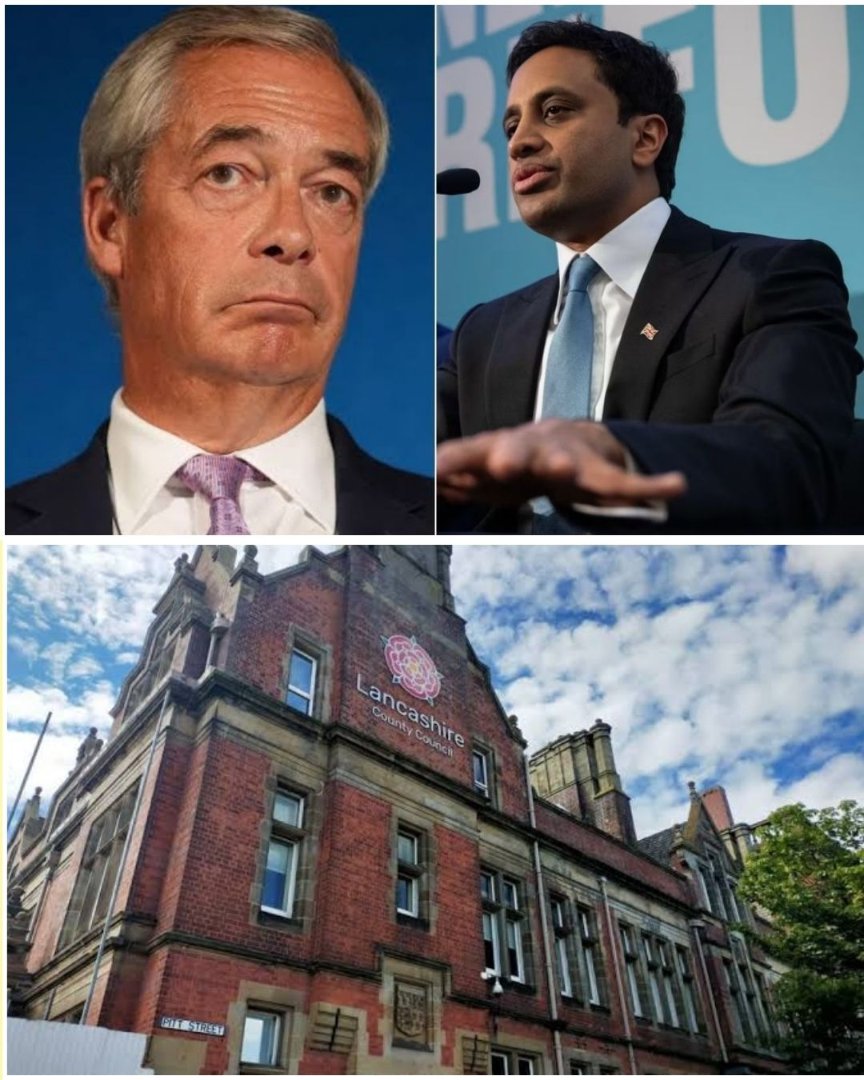
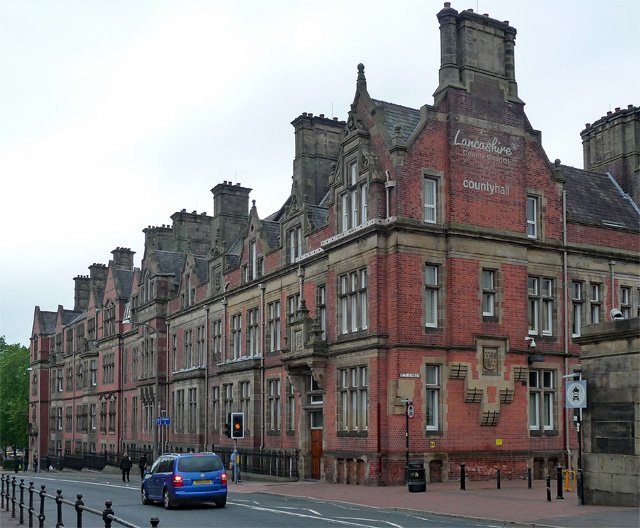
Lancashire County Council is poised to become the first local authority in Britain to quit the Government’s refugee resettlement programme.
The Reform UK-run authority has pledged to withdraw from the scheme, vowing to put “British people first”.
Nigel Farage’s party secured a commanding majority on the council last May, clinching 53 of 84 seats.
Reform UK has argued that the Resettlement Scheme – introduced by the Conservatives in 2021 – has forced councils to prioritise newly arrived migrants ahead of long-standing local residents when it comes to support and services.
Advertisement
Under the current system, refugees arriving through the scheme can receive council-backed assistance including immediate cash payments, welcome packs and help with household bills.
Councils also provide support registering with GPs and arranging Jobcentre appointments to help new arrivals access benefits.
Reform UK says homeless veterans and struggling locals are too often left to fend for themselves without the same level of support.
The party’s Home Affairs spokesman Zia Yusuf said: “These schemes have only served to prioritise recent arrivals and foreign nationals ahead of the British public.
Lancashire County Council is poised to become the first local authority in Britain to quit the Government’s refugee resettlement programme
Advertisement
“Reform UK in Lancashire is putting an end to a shameful Conservative policy which shoved British people to the back of the queue for housing and council services.”

Advertisement
Joshua Roberts, Lancashire County Council’s cabinet member for communities, said the move would put local Lancastrians “at the front of the queue”.
Mr Roberts also called on Labour to stop placing refugees in the county and instead direct public money towards vulnerable residents and veterans who he said had been “deprioritised by successive Labour and Conservative governments for far too long”.
Advertisement
The proposal will go before the council’s Cabinet this summer for formal approval.
The withdrawal would cover both the UK Resettlement Scheme and the Afghan Resettlement Programme – although support for Ukrainian refugees would remain in place.
The move is expected to pile pressure on other Reform UK-controlled councils to consider similar withdrawals.
It comes as Mr Farage’s party also unveiled plans to place migrant detention centres in Green-controlled council areas if it wins the next General Election.
Zack Polanski’s Greens are expected to rival Reform UK as one of the biggest winners in Thursday’s local elections, with some polls suggesting both parties could secure more than 1,000 council seats.
The withdrawal covers both the UK Resettlement Scheme and the Afghan Resettlement Programme
The Greens have previously condemned Reform UK’s proposed mass deportation policy – dubbed Operation Restoring Justice -describing it as “ill-thought-out,” “cruel,” and “abhorrent”.
Advertisement
Meanwhile, Mr Yusuf said Reform UK would not place detention centres in areas represented by Reform MPs or councils.
He told The Telegraph: “Even though illegal migrants will not be allowed to leave the sites, we are committing to not placing these detention sites in areas with a Reform MP or where Reform controls the council.
“Given the Green Party advocates for open borders and for an infinite number of undocumented men to come here, we will prioritise Green constituencies and Green-controlled councils to locate these detention centres.”
He added: “This is the fairest approach to ensuring democratic consent for all aspects of our mass deportation programme.”
REFUGEE BOMBSHELL: LANCASHIRE COUNCIL MAKES UNPRECEDENTED DECISION TO END ITS REFUGEE RESETTLEMENT ROLE — POLITICAL FURY ERUPTS ACROSS BRITAIN!
Britain’s immigration debate has been thrown into another major political controversy after Lancashire County Council approved a historic decision to withdraw from its role coordinating refugee resettlement programmes across the county.
The decision, made by the Reform UK-led council on 3 September 2026, has triggered fierce disagreements between councillors, political representatives, and organisations involved in refugee support.
For supporters of the decision, it represents a major change in how local authorities should manage public money, housing responsibilities, and services for vulnerable residents.
For opponents, it raises serious concerns about the future of support arrangements for hundreds of refugees who have already established their lives in Lancashire.
But there is an important detail that has become central to the controversy: the council has not voted to abolish all refugee support or immediately remove assistance from people currently receiving it.
Instead, Lancashire County Council has decided to end its coordinating and administrative responsibilities for several refugee resettlement programmes by 31 March 2027.
The distinction has not stopped the political storm.
With immigration continuing to dominate Britain’s national conversation, the Lancashire decision could become an important test of how far local authorities are prepared to challenge existing arrangements.
THE DECISION THAT HAS SHAKEN LANCASHIRE POLITICS
On 3 September 2026, Lancashire County Council’s Cabinet approved a proposal to withdraw from its role as the coordinating authority for refugee resettlement schemes across the county.
The decision followed an extensive review of the council’s involvement in administering the programmes.
Lancashire had previously coordinated refugee resettlement arrangements involving 15 local authorities.
Its responsibilities included working with the Home Office, district councils, and partner organisations to organise support for people arriving through different government resettlement routes.
However, the Reform UK-led administration concluded that the county council should no longer carry out this coordinating role.
Cabinet approved the complete withdrawal option, with administrative responsibilities scheduled to end no later than 31 March 2027.
County Councillor Joshua Roberts, the Cabinet Member for Rural Affairs, Environment and Communities, defended the decision.
He argued that the council had carefully considered its responsibilities and concluded that stepping back was the appropriate course of action.
The administration cited fairness, practical considerations, value for money, and forthcoming local government reorganisation as important reasons.
This was not simply a routine administrative adjustment.
It represented a significant change in how refugee resettlement coordination would be organised across Lancashire.
745 REFUGEES COULD BE AFFECTED BY THE TRANSITION
One of the most important figures in the controversy is approximately 745.
According to local reporting, around 745 refugees in Lancashire were receiving government-funded support through the programmes affected by the decision.
The schemes include arrangements for Afghan nationals who assisted British military operations in Afghanistan, alongside programmes supporting other vulnerable people fleeing conflict and persecution.
These individuals arrived in Britain through legal routes and have been granted permission to remain.
Their circumstances are therefore different from those of people arriving through irregular small-boat crossings.
This distinction matters because the decision concerns established refugee resettlement arrangements rather than the cancellation of asylum applications.
The council has stated that the withdrawal concerns administration and coordination, not the support available to refugees living in Lancashire.
A managed transition is intended to transfer responsibilities to alternative arrangements involving the Home Office and relevant local partners.
Nevertheless, questions remain about how smoothly that transition will work.
Councillors and community organisations will want assurances that people currently receiving assistance do not experience unnecessary disruption.
WHY THE REFORM UK ADMINISTRATION WANTS TO WITHDRAW
The decision reflects a wider political argument about the responsibilities of local government.
The Reform UK administration has argued that dedicated refugee resettlement support arrangements raise questions about fairness when other vulnerable residents also require assistance.
Supporters of the withdrawal say councils must consider whether their resources are being used efficiently and whether particular administrative responsibilities should continue indefinitely.
Joshua Roberts has also argued that the county council is not legally required to remain the coordinating authority.
Another important factor is Lancashire’s forthcoming local government reorganisation.
As responsibilities are redistributed between different authorities, the administration believes that refugee resettlement coordination should sit more directly with councils that have statutory responsibilities for housing and related services.
From this perspective, withdrawing from the coordinating role is intended to simplify administrative arrangements.
However, opponents argue that changing administrative responsibility does not necessarily make a service more efficient.
They fear that removing a central coordinating team could create additional costs and complications for individual councils.
OPPOSITION COUNCILLORS LAUNCH A CHALLENGE
The Cabinet decision immediately attracted criticism from opposition councillors.
Nineteen councillors from different opposition groups submitted a formal call-in request, seeking scrutiny of the decision-making process.
They raised concerns about financial implications, equality assessments, legal considerations, and the circumstances surrounding the Cabinet recommendation.
A special meeting of the Community, Cultural and Corporate Services Scrutiny Committee took place on 11 September.
During the meeting, opposition representatives argued that the decision deserved further examination.
Some questioned whether the administration had adequately considered the consequences for refugees and the wider community.
Others raised concerns about the potential loss of government funding associated with the coordinating role.
The committee ultimately voted against asking Cabinet to reconsider its decision.
The motion was defeated, meaning the original withdrawal decision remained in place.
The result represented a significant political victory for the Reform UK administration.
However, it did not end the wider debate.
THE CONTROVERSY OVER GOVERNMENT FUNDING
Perhaps one of the most important arguments concerns money.
Refugee resettlement programmes receive funding from central government to support the costs of administration and services.
Opposition councillors have questioned whether withdrawing from the coordinating role could actually leave Lancashire financially worse off.
Some argued that government funding also supported services benefiting the wider population, including welfare advice and assistance for vulnerable residents.
During the scrutiny process, opposition representatives warned that losing this funding could create financial pressures elsewhere in the council’s budget.
One argument raised was that taxpayers might eventually face the consequences if essential services lost their existing financial support.
The Reform administration, however, defended its approach on the grounds of fairness, efficiency, and the council’s future responsibilities.
This creates a difficult question for Lancashire residents.
Will withdrawing from the programme genuinely save public money, or could the loss of central government funding create additional financial problems?
The answer will depend on the final arrangements and how responsibilities are transferred.
It is an issue that deserves close scrutiny.
THE POLITICAL CONTROVERSY OVER JOSHUA ROBERTS
Another aspect of the story concerns the political process behind the decision.
During the September scrutiny meeting, opposition councillors questioned whether Joshua Roberts had already formed a firm opinion before the Cabinet formally considered the available options.
They referred to earlier public comments in which he had expressed an intention to withdraw from the schemes.
Roberts acknowledged having a view on the issue but denied that his mind had been closed.
He argued that he had considered the available options and listened to the discussion before reaching his final judgement.
The disagreement became an important part of the scrutiny process.
However, the committee ultimately decided not to overturn or refer the Cabinet decision back for reconsideration.
The episode demonstrates how politically sensitive local government decisions can become when they involve immigration, public money, and services for vulnerable people.
WHAT HAPPENS TO REFUGEES ALREADY LIVING IN LANCASHIRE?
This is perhaps the most important question for the people directly affected.
The council has specifically stated that its decision does not automatically end refugee support.
Nor does it mean that refugees will immediately lose their accommodation, healthcare access, or other assistance.
Instead, the responsibility for coordinating the relevant resettlement programmes will be transferred through a managed process.
The Home Office and relevant local partners will need to establish alternative arrangements.
Lancashire County Council has also emphasised that its statutory responsibilities towards residents will continue.
This means that the withdrawal from the coordinating role should not be confused with an immediate cancellation of every service available to refugees.
Nevertheless, the transition requires careful planning.
People who depend on support with language learning, employment, healthcare, housing advice, and community integration need clarity about where they can obtain assistance in the future.
Any disruption could create difficulties not only for refugees but also for the organisations and local authorities responsible for supporting them.
COULD OTHER UK COUNCILS FOLLOW LANCASHIRE?
The Lancashire decision could attract attention from other local authorities across Britain.
Councils are facing financial pressures, changing responsibilities, and increasing demands on public services.
Some may examine whether their current arrangements for refugee resettlement remain financially and administratively sustainable.
Others may argue that established coordination teams are essential for ensuring successful integration and preventing additional pressure on public services.
The circumstances will differ from one region to another.
Lancashire’s decision does not automatically create a national precedent or require other councils to withdraw.
However, it could encourage a wider debate about who should coordinate refugee support and how central government should fund these responsibilities.
For Reform UK, the decision also demonstrates how its political priorities can influence local government policy.
The party has repeatedly called for tougher immigration controls and changes to Britain’s migration system.
Although refugee resettlement is legally distinct from irregular migration, the political arguments surrounding public spending and immigration frequently overlap.
LABOUR AND THE HOME OFFICE FACE NEW QUESTIONS
The controversy also creates questions for the national government.
If a county council withdraws from coordinating refugee programmes, the Home Office must work with alternative authorities to ensure continuity.
Ministers will need to explain how the transition will operate and whether sufficient funding will be available.
There are also wider questions about the future of Britain’s refugee resettlement system.
National programmes have been changing, while local government reorganisation is creating uncertainty about which authorities should carry particular responsibilities.
The government must ensure that these administrative changes do not leave vulnerable people without appropriate support.
At the same time, taxpayers deserve transparency about how public money is allocated and whether existing arrangements deliver value.
These are legitimate questions that require clear answers rather than political slogans.
CONCLUSION: A MAJOR POLITICAL TEST FOR BRITAIN’S REFUGEE POLICY
Lancashire County Council’s decision to withdraw from its refugee resettlement coordination role has opened another major political dispute over immigration, public spending, and local government responsibilities.
For the Reform UK administration, the move represents an opportunity to change how refugee programmes are administered and challenge arrangements it considers unfair or inefficient.
For opposition councillors, it raises concerns about funding, accountability, and the possible consequences for hundreds of people already receiving support.
For the refugees themselves, the most important issue is whether the transition will protect the assistance they currently depend on.
The decision does not abolish refugee support across Lancashire, but it does mark a significant change in who will coordinate the programmes.
With administrative responsibilities scheduled to transfer by 31 March 2027, the coming months will be crucial.
Other councils will be watching closely, and the Home Office will face pressure to ensure that the arrangements work effectively.
Ultimately, Lancashire has raised a question that extends far beyond one county: how should Britain balance the responsibilities of supporting legally resettled refugees with the financial pressures facing local communities?
The political argument is far from over.
And as the country continues debating immigration and public services, Lancashire’s decision could become an important example of how Britain’s approach to refugee resettlement is changing.