
Unions are pushing Andy Burnham to act over huge £72million donations to Reform – but insist their own funding of Labour is fine.
TUC general secretary Paul Nowak said the gifts from crypto billionaires Christopher Harborne and Ben Delo showed the influence of the ‘super-rich’.
The intervention came after Angela Rayner warned yesterday that although rules to crack down on overseas political funding are still going through Parliament, they will be backdated.
The Communities Secretary said any expats who have given money since the end of March, including those who subsequently moved back to the UK, will be restricted to giving £100,000 a year.
Advertisement
However, Reform deputy leader Richard Tice accused Labour of ‘hyperventilating hypocrisy’ this morning.
The party has insisted it is ‘100 per cent confident both are legal and won’t ever have to be handed back’.
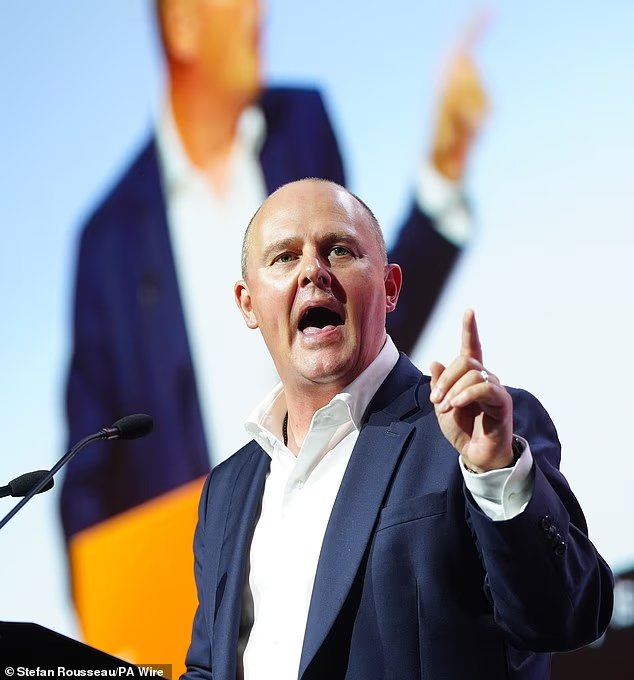
TUC general secretary Paul Nowak (pictured addressing the annual conference in Brighton today) said the gifts from crypto billionaires Christopher Harborne and Ben Delo showed the influence of the ‘super-rich’
Reform deputy leader Richard Tice accused Labour of ‘hyperventilating hypocrisy’ this morning
Speaking on BBC Radio 4’s Today programme, Mr Nowak – who will address the TUC conference in Brighton later – was asked if he wanted the donations blocked retrospectively.
‘I’m not quite sure what the detail of the law would look like, but I am quite sure about this,’ he said.
‘Nobody can be comfortable about the prospect of the super-rich effectively buying and selling British politics…
‘This is the Americafication of our politics and I don’t say that in a good way.’
Mr Nowak dismissed the idea that union funding was comparable to the Reform donations.
‘Everybody knows what we’re after because we are open democratic organisations that represent millions of working people up and down this country,’ he said.
Advertisement
‘I am concerned about the impact of these huge donations.
As far as I’m concerned trade union money is the cleanest most transparent money in British politics.’
Advertisement
However, Labour former Cabinet minister Lord Blunkett said he believed union donations should be covered by a limit.
‘Obviously, we’ve been talking about overseas donations.
I think there should be a cap on donations internally as well for domestic reasons,’ he told Times Radio.
‘And I think we should reach an agreement that respects that both business, trade unions, and wealthy individuals, as well as the poor devils who sustain the Labour Party over the many years I’ve been in it, which is giving £20 here and £50 there.
Advertisement
‘All of us deserve a system that protects our freedom, protects our democracy and allows us to argue the case without distorting that case.’
Under the Representation of the People Bill, which will be debated in the Lords today, a ‘minimum residency period’ could prevent expats returning to Britain from breaching the limit for a calendar year after they come home.
Advertisement
Asked in interviews yesterday whether the law could spell problems for two recent £36million donations to Reform from cryptocurrency billionaires living abroad, Ms Rayner replied: ‘It will be backdated.’
She said the rules would apply to ‘overseas donators’ and those who have ‘recently returned to the UK’, affecting all donations received since March 25, when the Government published a review of foreign influence on politics by former mandarin Philip Rycroft.
Advertisement
She added: ‘Look, we’re saying that if you don’t pay taxes, if you don’t live here, you can’t buy your way into our democracy.’
Asked if Reform might have to return the sums, she said she didn’t know their ‘individual circumstances’.
But she added: ‘With the retrospective action, anyone that’s received donations that don’t comply with what was in the Rycroft review, what legislation is currently going through Parliament, would have 60 days to return that money.’
Advertisement
Mr Tice told ITV’s Good Morning Britain today: ‘These donations are made in accordance with the rules and the regulations, and you’ve now got a hyperventilating hypocrisy from the socialists ruining this country, who are trying to change the rules retrospectively, which is it’s not the fair way, it’s not the British way, and I think most people will say ”does that just mean that Labour are terrified of the progress of Reform and they’re trying to create an unlevel playing field?”
Advertisement
‘What these two donations are trying to do is to actually level the playing field.
We’re relatively new, we haven’t had the vast donations over the last five to 10 years that Labour and the Tories have had, so we need to employ campaign managers up and down the country, we need to employ brilliant policy people, the best minds, in order to ensure that we have the best policies.’
Advertisement
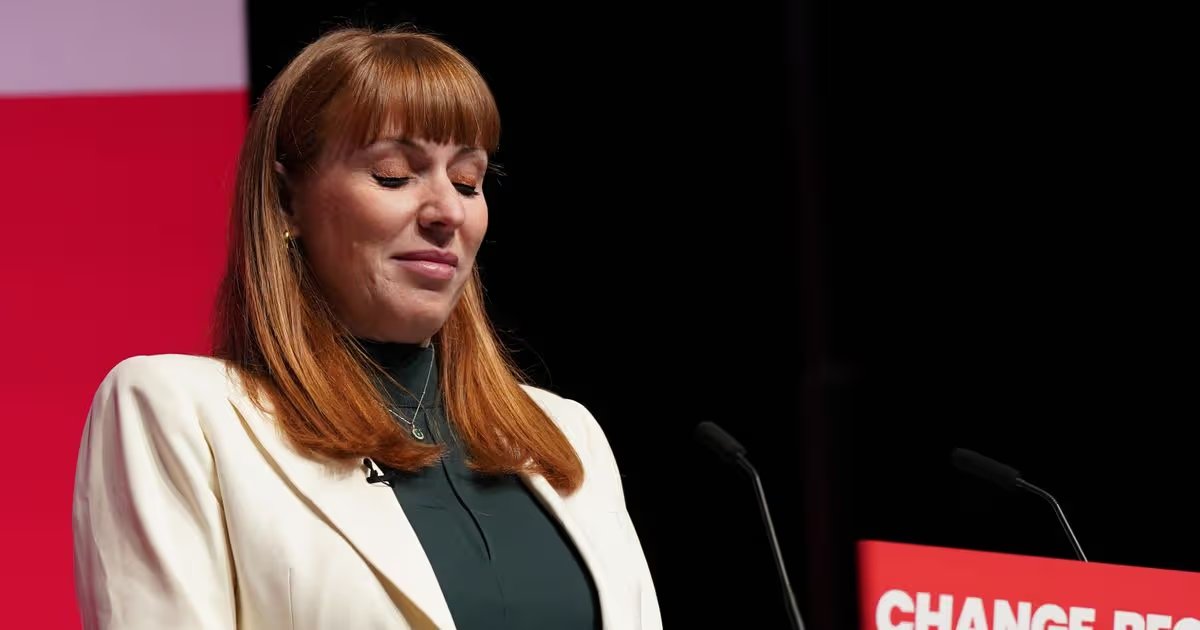
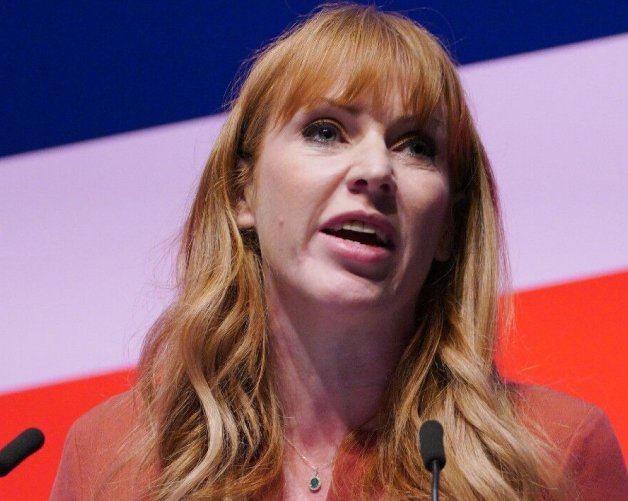
The intervention came after Angela Rayner warned yesterday that although rules to crack down on overseas political funding are still going through Parliament, they will be backdated
He said the donors would have ‘absolutely zero’ influence on Reform’s policy platform.
‘They haven’t made any asks, they haven’t made demands and nothing would be given in return, we’ve made that crystal clear,’ he said.
It is thought that Mr Delo, who lived in Hong Kong, and Mr Harborne, who was based in Thailand, both moved back to Britain before the March cut-off date.
REFORM’S £72M WAR CHEST SPARKS POLITICAL BATTLE! NIGEL FARAGE’S FINANCIAL POWERHOUSE SENDS SHOCKWAVES THROUGH WESTMINSTER AS LABOUR AND THE CONSERVATIVES FACE A NEW THREAT!
British politics has been thrown into another fierce controversy following claims that Reform UK is building a staggering £72 million election war chest.
The reported financial backing has sparked intense debate about the party’s growing ambitions and its ability to challenge Britain’s established political organisations.
For Nigel Farage, money could provide the resources needed to transform Reform UK from a rapidly expanding political movement into a serious contender for national power.
For Labour and the Conservatives, however, the prospect of a heavily funded Reform campaign represents another major political headache.
The question now being asked across Westminster is whether Farage is preparing to launch the most ambitious election campaign in the party’s history.
With immigration, taxation, economic uncertainty, and public dissatisfaction dominating political discussions, Reform UK believes there is an opportunity to reshape the British political landscape.
But a reported £72 million war chest also raises important questions about who is financing the party, how the money will be spent, and what influence wealthy donors could have over Britain’s political future.
THE £72 MILLION QUESTION: HOW POWERFUL COULD REFORM UK BECOME?
A political party’s financial resources can make an enormous difference during an election campaign.
Running a nationwide operation requires significant investment in staff, research, communications, advertising, candidate recruitment, and local campaigning.
For a relatively young political organisation, competing against Labour and the Conservatives presents substantial financial and organisational challenges.
A war chest reportedly worth £72 million would therefore represent a major opportunity for Reform UK.
It could help the party strengthen its presence in constituencies across England, Scotland, and Wales while increasing its ability to communicate directly with voters.
It could also support professional campaign operations and help candidates compete in areas where Reform previously lacked an established organisation.
However, the reported figure needs careful examination.
There is an important difference between money already donated, funds held by a political party, promised contributions, and projected fundraising totals.
These figures should not be treated as interchangeable.
The precise financial position must be established through official donation disclosures and party accounts.
Nevertheless, the wider political significance is clear: Reform UK wants to demonstrate that it has the financial strength to compete seriously for power.
NIGEL FARAGE’S BIGGEST POLITICAL AMBITION YET
Nigel Farage has spent decades challenging Britain’s political establishment.
From his campaigning against European integration to his central role in the Brexit referendum, he has consistently attempted to reshape the country’s political direction.
Reform UK represents the next stage of that ambition.
Farage wants to convince voters that the traditional political parties have failed to address the problems facing ordinary households.
His message focuses heavily on immigration control, national sovereignty, economic reform, taxation, and public sector performance.
The party believes that millions of voters are dissatisfied with the political choices offered by Labour and the Conservatives.
A substantial financial operation could allow Farage to take that message to a much wider audience.
But there is a major challenge ahead.
Reform must demonstrate that it has the experience, policies, and personnel required to govern a country as complicated as Britain.
Financial strength can help build a political organisation.
It cannot automatically create public confidence.
LABOUR FACES ANOTHER SERIOUS POLITICAL HEADACHE
For Labour, the growth of Reform UK’s financial resources comes at a difficult moment.
The government faces continuing criticism over the cost of living, immigration, taxation, housing, and pressure on public services.
Many voters want to see meaningful improvements in their everyday lives.
Reform UK is attempting to position itself as the party that understands their frustrations.
Farage has repeatedly argued that Labour has failed to deliver the changes it promised.
A well-funded election campaign could give Reform greater opportunities to challenge the government’s record.
It could also help the party target constituencies where Labour’s support appears vulnerable.
The government will therefore need to defend its economic decisions and demonstrate that its policies are producing results.
If voters remain dissatisfied, Labour could face growing competition from Reform in areas where the party previously enjoyed considerable support.
THE CONSERVATIVES COULD FACE AN EVEN BIGGER PROBLEM
The Conservative Party has another reason to be concerned.
Reform UK has increasingly attracted voters who previously supported the Conservatives.
Many of these voters are particularly concerned about immigration, taxation, national identity, and government accountability.
Farage has attempted to convince them that the Conservative leadership failed to deliver on promises made while in government.
A £72 million campaign operation, if confirmed, could make that challenge considerably more effective.
Reform could invest in constituencies where Conservative support remains important but increasingly uncertain.
This presents the Conservatives with a difficult strategic decision.
Should they adopt policies closer to Reform’s position, or should they attempt to rebuild a separate political identity?
Either approach carries risks.
Moving too close to Reform could make the Conservatives appear to be following Farage.
Moving away could encourage more voters to support Reform instead.
The financial strength of Farage’s party could make this competition even more intense.
WHO IS FUNDING REFORM UK?
The question of political donations is becoming increasingly important.
Large donations can help parties organise national campaigns, but they also raise legitimate questions about transparency and political influence.
British electoral law requires political parties to report relevant donations and comply with rules governing permissible sources of funding.
The Electoral Commission publishes information about political donations, allowing voters and journalists to examine the financial support received by political organisations.
For Reform UK, any substantial funding increase will inevitably attract scrutiny.
The public will want to know who is contributing, whether donations are coming from individuals or organisations, and whether any conditions are attached.
There is nothing inherently improper about wealthy individuals supporting political parties through lawful donations.
However, transparency is essential.
Voters should be able to understand who is financially supporting the political organisations seeking their votes.
A party demanding greater accountability from government must also be prepared to demonstrate accountability in its own financial affairs.
IMMIGRATION WILL REMAIN AT THE CENTRE OF REFORM’S CAMPAIGN
One of the biggest areas where Reform UK hopes to gain political support is immigration.
Farage has repeatedly criticised the government’s handling of irregular migration and called for stronger border controls.
The party argues that Britain needs a more effective immigration system that considers the pressure on housing, public services, wages, and infrastructure.
Small-boat crossings across the English Channel remain a particularly sensitive issue.
Reform believes that public dissatisfaction with the government’s response could become a major electoral opportunity.
Its campaign is likely to focus on border security, asylum procedures, immigration enforcement, and national sovereignty.
However, the party will also need to explain how its proposals would work in practice.
Immigration policy involves complicated legal obligations, economic requirements, and humanitarian considerations.
Voters will expect detailed answers rather than political slogans.
If Reform wants to become a credible governing party, it must demonstrate that its proposals are realistic and financially sustainable.
COULD £72 MILLION CHANGE THE NEXT GENERAL ELECTION?
A large campaign budget could give Reform UK several important advantages.
It could help the party recruit experienced campaign professionals, increase its visibility, improve its research operation, and develop stronger local organisations.
It could also allow Reform to compete more effectively in constituencies where established parties have traditionally dominated.
However, Britain’s electoral system creates its own challenges.
Winning votes nationally does not automatically translate into winning parliamentary seats.
The distribution of support across individual constituencies is particularly important.
Reform therefore needs a sophisticated strategy that identifies where its resources can have the greatest electoral impact.
It must also ensure that its candidates are capable of representing local communities and defending the party’s policies under intense scrutiny.
A large budget may help create opportunities, but successful campaigning still depends on public trust and political organisation.
WESTMINSTER IS WATCHING FARAGE VERY CLOSELY
The reported financial expansion has become another reason for established politicians to pay attention to Reform UK.
For years, some Westminster figures dismissed Farage’s movement as a temporary protest against the traditional political system.
That assessment has become increasingly difficult to maintain.
Reform has demonstrated that it can attract substantial public attention and challenge established parties in elections.
Its growing financial ambitions suggest that it wants to build a permanent presence in British politics.
Labour and the Conservatives will need to develop stronger arguments if they want to prevent further losses.
The Liberal Democrats and Greens will also be watching carefully as political competition becomes more fragmented.
The possibility of a major Reform campaign could change the way every party approaches the next election.
THE BIGGEST TEST: CAN REFORM TURN MONEY INTO RESULTS?
Despite the excitement surrounding the reported £72 million figure, Reform UK still faces a fundamental challenge.
The party must prove that it can turn financial resources into successful political representation.
That means developing credible policies, recruiting capable candidates, building strong local branches, and maintaining public confidence.
It must also demonstrate that its economic proposals can withstand serious scrutiny.
Britain faces major challenges involving national debt, productivity, healthcare, education, housing, defence, and international trade.
A future government would need detailed plans to address these problems.
Farage cannot rely indefinitely on criticism of Labour and the Conservatives.
At some point, voters will want to know exactly how Reform intends to govern.
That is where the party’s real test will begin.
CONCLUSION: REFORM’S FINANCIAL AMBITIONS COULD SHAKE UP BRITISH POLITICS
The reported £72 million war chest has created another major talking point in Britain’s increasingly competitive political environment.
For Nigel Farage, substantial financial resources could help transform Reform UK into a much more powerful national organisation.
For Labour, it represents another warning that public dissatisfaction could become an electoral threat.
For the Conservatives, it raises the possibility that Reform may continue taking support from voters who once formed the foundation of their electoral success.
But the most important question is not simply how much money Reform UK can raise.
It is whether the party can use those resources to convince millions of people that it is ready to govern Britain.
Money can finance campaigns, strengthen organisations, and amplify political messages.
It cannot guarantee victory.
The next general election will ultimately be decided by voters who want credible answers about the economy, immigration, public services, and Britain’s future.
Nigel Farage now has an opportunity to demonstrate that Reform UK is more than a political protest movement.
Westminster has been put on notice. Reform UK wants to fight for power, and Britain’s established political parties may be facing their toughest challenge in years.