
Reform UK Racism Row Erupts Over “Adverts Full of Black People” as Wes Streeting Slams MP
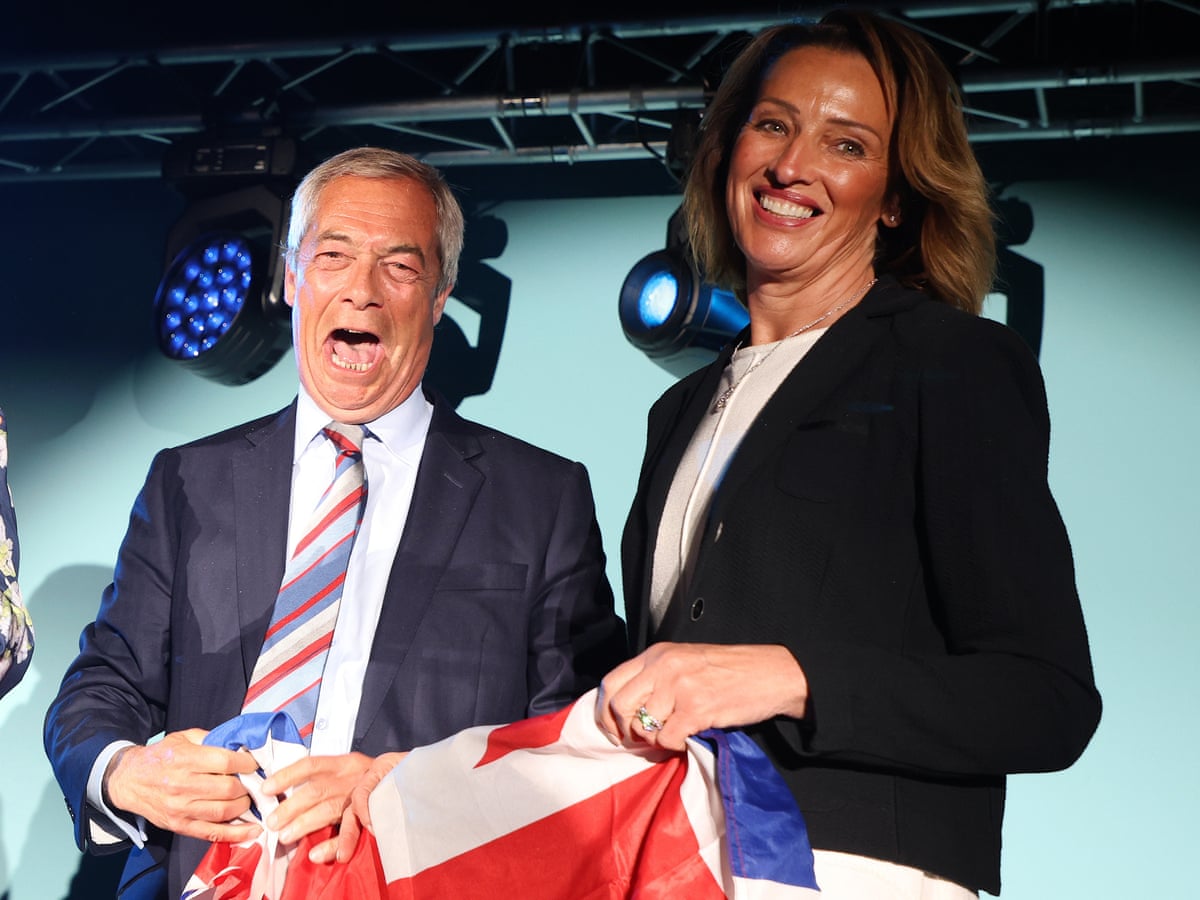
A bitter political row has erupted after Reform UK MP Sarah Pochin came under intense criticism over comments about the representation of Black and Asian people in television advertising.
The controversy has quickly developed into a wider political confrontation, with Labour figures accusing Reform of failing to draw a clear line against remarks they regard as racist.
Wes Streeting has been among the most outspoken critics.
The Labour politician described Pochin’s comments as a disgrace and accused Reform leader Nigel Farage of failing to respond strongly enough.
Pochin subsequently apologised, saying that her comments had been poorly phrased.
But the apology has not ended the controversy.
Instead, it has opened a much wider debate about race, representation, political language and the increasingly aggressive battle between Labour and Reform UK.
The Comment That Triggered the Storm
The controversy began during an appearance on TalkTV when Pochin criticised what she saw as the increasing presence of Black and Asian people in advertising.
She complained that advertisements were frequently featuring people from ethnic minority backgrounds and argued that this did not accurately reflect what she regarded as the typical British family.
The remarks immediately generated a political backlash.
Critics argued that focusing on the ethnicity of people appearing in ordinary advertisements was itself deeply troubling.
Pochin later apologised for causing offence and said that her words had been poorly expressed.
However, she maintained that she had been attempting to raise a wider question about diversity and representation in advertising rather than deliberately targeting ethnic minorities.
That distinction has become central to the political debate.
Streeting’s Furious Response
Wes Streeting did not accept the explanation.
The Labour politician accused Pochin of making racist remarks and argued that her apology came only after she had been publicly challenged.
Streeting also turned his attention towards Farage.
His argument was that the Reform leader should have condemned the remarks more forcefully.
The criticism placed Farage in a difficult political position.
As Reform leader, he is expected to defend his MPs.
But he must also consider the consequences of allowing controversial comments to define the party.
That is particularly important for a movement attempting to persuade voters that it is ready for government.
Farage Faces a Difficult Choice
Farage has spent much of his political career challenging what he describes as establishment thinking.
His political strategy has often involved allowing controversial debates to develop rather than immediately retreating from them.
But Reform’s growing influence changes the calculation.
A small protest movement can survive controversy.
A political party seeking widespread electoral support has to consider how every statement affects potential voters.
Farage therefore faces a difficult balancing act.
If he strongly condemns Pochin, he risks angering supporters who believe politicians should be allowed to speak freely about immigration, culture and diversity.
If he defends her too strongly, opponents can argue that Reform is unwilling to confront racism within its own ranks.
If he remains relatively restrained, Labour can accuse him of avoiding responsibility.
There is no easy option.
The Meaning of Representation
At the heart of the argument is a deceptively complicated question.
What should British advertising look like?
Should advertisements attempt to reflect the exact demographic composition of the country?
Or should advertisers deliberately include people from different backgrounds because their customers are diverse?
The advertising industry has generally moved towards greater representation.
Companies increasingly use mixed casts, multicultural families and people from a wide range of backgrounds.
Supporters argue that this reflects modern Britain.
Critics sometimes argue that advertising has become too focused on diversity initiatives.
The political dispute emerges when those arguments become connected to race.
Advertising Is Not a Census
One important point often lost in the controversy is that advertisements are not designed to function as demographic surveys.
A company does not necessarily select actors according to the exact ethnic percentages of the national population.
Advertising is designed to attract attention.
It may seek to communicate particular values.
It may target a particular audience.
It may attempt to show different kinds of customers.
A single advert therefore cannot reasonably be expected to represent the country statistically.
That does not prevent legitimate discussion about diversity.
But it does change the nature of the argument.
The Reform Position
Reform supporters have argued that concerns about diversity in advertising should not automatically be treated as racist.
The party’s policy head, Zia Yusuf, defended Pochin’s right to raise the issue while acknowledging her apology.
This represents an important part of Reform’s broader political philosophy.
The party frequently argues that British public debate has become too restrictive.
Its supporters believe that politicians should be able to discuss immigration, national identity, multiculturalism and diversity without automatically being accused of racism.
That argument has considerable political appeal among voters who believe the boundaries of acceptable debate have become too narrow.
But there is an equally strong counterargument.
Freedom to discuss an issue does not remove responsibility for how that discussion is framed.
Where Is the Line?
This is where the controversy becomes much more complicated.
There is a legitimate debate about advertising.
There is a legitimate debate about diversity policies.
There is a legitimate debate about whether companies sometimes prioritise symbolic representation over other considerations.
But critics argue that discussing the ethnicity of people in advertisements in terms of being driven “mad” by seeing Black and Asian people crosses a line.
The disagreement is therefore not simply about whether diversity should be discussed.
It is about the language used to discuss it.
The Politics of Intent
Another central issue is intent.
Can a statement be racist even when the person making it says they did not intend to be racist?
Political arguments frequently become trapped around this question.
Supporters of Pochin can argue that she made a clumsy statement about advertising practices.
Critics can respond that the impact and content of the statement matter regardless of intention.
The two positions can coexist without resolving the argument.
Someone can deny intending to offend while other people can legitimately say that they were offended by what was said.
That is why apologies sometimes fail to end political controversies.
The Apology
Pochin’s apology was an attempt to draw a line under the incident.
She said her comments had been poorly phrased and apologised for any offence caused.
But an apology can sometimes create another problem.
If a politician apologises without fully withdrawing the underlying argument, critics may conclude that the apology is merely tactical.
If the politician refuses to apologise, critics can accuse them of refusing to accept responsibility.
Pochin’s case demonstrates precisely how difficult that balance can be.
Streeting’s Broader Argument
Streeting has placed the controversy within a much larger discussion about racism in Britain.
He argued that recent events showed signs of a return to the kind of racism associated with previous decades. ITV reported that he described the remarks as a disgrace and called for racism to be confronted directly.
His political argument is straightforward.
If mainstream politicians fail to challenge controversial racial remarks, such language risks becoming normalised.
Labour therefore has a political incentive to confront Reform whenever such controversies emerge.
Doing so allows Labour to present itself as the party defending multicultural Britain.
Labour’s Political Calculation
There is also an electoral dimension.
Reform is increasingly competing with Labour for voters who are dissatisfied with the political establishment.
Labour therefore has an interest in defining Reform before Reform defines itself.
If Labour can persuade voters that Reform is irresponsible or extreme, it may prevent the party from expanding into new areas of the electorate.
But there is a danger.
If Labour attacks Reform too aggressively, Reform can portray itself as the victim of an establishment campaign.
Farage has used that argument repeatedly.
He can tell supporters that traditional politicians are attempting to silence an alternative movement.
The Outsider Advantage
This is one of Reform’s greatest political advantages.
The party can often turn criticism into publicity.
A controversy that damages a traditional party can sometimes strengthen a populist movement.
Why?
Because supporters already expect the establishment to attack the movement.
When criticism arrives, they may interpret it as proof that Reform is challenging the political system.
That makes controversies extremely difficult to manage.
The Danger for Reform
However, there is a limit to this strategy.
If every criticism is dismissed as an establishment attack, the party risks appearing unwilling to accept legitimate criticism.
A party seeking government must demonstrate that it can distinguish between political attacks and genuine mistakes.
That is a much harder task than simply campaigning against opponents.
Government requires judgement.
It requires discipline.
It requires responsibility.
And it requires politicians to understand that their words can have consequences.
Reform’s Candidate Problem
The controversy also highlights a wider challenge for Reform.
The party has grown rapidly.
Rapid growth can bring large numbers of new candidates, activists and politicians into an organisation.
Not all will have the same political experience.
Not all will use the same language.
Not all will understand how closely their comments will be scrutinised.
That creates a significant organisational challenge.
The bigger Reform becomes, the harder it becomes for Farage to control every statement made by every representative.
The Candidate Selection Question
Traditional parties have spent decades developing candidate-selection systems.
They have established procedures.
They have disciplinary structures.
They have internal rules.
Newer parties often have less institutional experience.
That can create vulnerabilities.
One controversial comment can dominate national coverage.
A single candidate can become the face of an entire political organisation.
Reform therefore faces an important question about how it manages growth.
The Battle Over Political Correctness
The controversy also feeds into the broader political battle over political correctness.
Reform supporters often argue that mainstream politicians are too afraid to discuss sensitive subjects.
They believe ordinary voters are frustrated by what they see as excessive restrictions on language.
Labour takes a different view.
Its argument is that political leaders have a responsibility to challenge prejudice rather than normalise it.
These two philosophies are fundamentally different.
One emphasises freedom from political constraints.
The other emphasises responsibility for social consequences.
The Cultural Divide
Britain’s political divisions increasingly reflect this cultural disagreement.
People argue about immigration.
They argue about national identity.
They argue about multiculturalism.
They argue about language.
They argue about diversity.
And increasingly, they argue about what can and cannot be said in public.
These debates are not confined to Westminster.
They appear in workplaces, schools, universities, newspapers and social media.
Political parties are responding to divisions that already exist within society.
Social Media Amplifies Everything
The internet makes these controversies much larger.
A politician can make one comment during an interview.
Within minutes, the clip can circulate nationally.
Supporters defend it.
Opponents condemn it.
Journalists write about it.
Other politicians respond.
The original context can disappear.
The result is a political argument that grows faster than anyone can control.
That makes controversial language particularly dangerous.
The Role of Television Advertising
The specific subject of the controversy is also significant.
Television advertising is one of the most visible forms of popular culture.
Millions of people see adverts every day.
They appear between entertainment programmes, during major sporting events and across streaming services.
Because advertising is so ubiquitous, people notice changes in representation.
But what they notice is subjective.
One person may see greater diversity as normal.
Another may perceive it as excessive.
Another may not notice ethnicity at all.
That difference in perception is itself part of the debate.
Modern Britain
Britain today is more ethnically diverse than it was several decades ago.
Cities in particular contain communities with roots across the world.
That reality is reflected in schools, workplaces, sport, entertainment and advertising.
Supporters of multicultural representation argue that advertising should reflect this reality.
Critics can argue that advertisers sometimes go beyond representation and deliberately pursue diversity as a commercial or ideological objective.
The challenge is discussing that disagreement without reducing people to their ethnicity.
The Political Risk of Simplification
Political debate becomes dangerous when complex issues are reduced to simple categories.
A debate about advertising becomes a debate about race.
A debate about immigration becomes a debate about patriotism.
A debate about integration becomes a debate about identity.
Once that happens, compromise becomes much more difficult.
People begin defending identities rather than examining policies.
That is one reason the Reform controversy has become so emotionally charged.
What Does Reform Want to Be?
The deeper question is what kind of political party Reform intends to become.
Does it want to remain a movement built around anger and protest?
Or does it want to become a conventional governing party?
The answer will determine how it handles controversies like this one.
A protest movement can thrive on confrontation.
A governing party must demonstrate restraint.
A protest movement can attract supporters by breaking political taboos.
A governing party must persuade people that it can represent the entire country.
Farage’s Leadership Test
For Farage, this is therefore more than a dispute involving one MP.
It is a leadership test.
He must demonstrate that Reform can tolerate political disagreement while maintaining clear standards.
He must protect freedom of speech without appearing indifferent to racism.
He must defend his supporters without defending every controversial statement.
And he must convince voters that Reform can operate professionally.
Those objectives can conflict.
The Labour Opportunity
For Labour, the controversy provides an opportunity to attack Reform on one of its most vulnerable areas.
Labour can argue that the party is not ready for government.
It can highlight controversial remarks.
It can question candidate selection.
It can challenge Farage’s leadership.
It can present itself as the more inclusive alternative.
But Labour must also be careful.
If the debate becomes too focused on accusations and insults, voters may become exhausted.
Many people want politicians to talk about wages, housing, healthcare and public services.
The Voter Perspective
The most important voices in this argument are ultimately the voters.
Some will be deeply offended by Pochin’s comments.
Some will agree with her concerns about advertising.
Some will think the entire argument is an unnecessary distraction.
Others may hear the controversy and decide that neither Labour nor Reform is speaking to their priorities.
That diversity of reactions makes political prediction difficult.
What Happens Next?
The immediate controversy may eventually disappear from the headlines.
Another story will emerge.
Another speech will dominate television.
Another poll will change the political conversation.
But the underlying disagreement will remain.
Britain will continue debating race and representation.
It will continue debating immigration.
It will continue debating multiculturalism.
And it will continue debating the limits of political speech.
A Larger Test for British Politics
The incident provides a useful reminder that modern politics is not simply a battle between parties.
It is also a battle over language.
Political leaders increasingly understand that words can mobilise supporters.
But words can also divide.
A phrase can win a headline.
It can also damage a reputation.
That is why political leaders must consider not only what they mean, but how their words will be understood.
Reform’s Moment of Choice
For Reform, this could become an important moment.
The party can treat the controversy as another example of the establishment attacking it.
Or it can use the incident to demonstrate political maturity.
It can say that difficult questions about advertising and diversity can be debated without attacking people because of their ethnicity.
That would allow Reform to preserve its argument about free speech while distancing itself from language that critics regard as unacceptable.
Such a strategy could help the party broaden its appeal.
Labour’s Moment of Choice
Labour faces a similar challenge.
It can continue attacking Reform whenever controversial statements appear.
Or it can use the controversy as a starting point for a broader argument about what modern Britain should look like.
If Labour wants to defeat Reform, it must offer more than condemnation.
It must offer a positive vision.
It must explain how it intends to improve living standards, strengthen communities and maintain social cohesion.
The Question of Trust
Ultimately, this entire controversy is about trust.
Do voters trust Reform to represent their concerns without dividing society?
Do they trust Labour to defend diversity without ignoring legitimate concerns about immigration and integration?
Do they trust politicians to have difficult conversations honestly?
Those questions cannot be answered by one television interview.
They will be answered over years.
The Final Political Battle
The row over “adverts full of black people” has therefore become much bigger than the original comment.
It has become another battlefield in the growing confrontation between Labour and Reform.
For Streeting, it is an opportunity to argue that racism must be confronted directly.
For Reform, it is an opportunity to argue that political debate has become too restrictive.
For Farage, it is another difficult test of leadership.
And for voters, it is another example of how Britain’s political debate is becoming increasingly polarised.
The immediate argument may eventually fade.
But the underlying questions will remain.
What should modern Britain look like?
How should its diversity be represented?
Where should the boundaries of political speech lie?
And how can politicians discuss race without turning every disagreement into a battle over identity?
Those are difficult questions.
There are no easy answers.
But as Reform grows and Labour attempts to contain it, those questions are unlikely to disappear.
The political stakes are becoming higher.
The language is becoming sharper.
And every controversial statement carries greater consequences.
For Sarah Pochin, the controversy has already demonstrated how quickly a single comment can become a national political storm.
For Wes Streeting, it provides another opportunity to challenge Reform’s credibility.
For Nigel Farage, it creates another leadership dilemma.
And for Britain, it is another reminder that the country’s political divisions extend far beyond Westminster.
The next election will not be decided by one controversy.
But controversies like this one may influence how voters see the parties competing for their support.
Reform wants to persuade Britain that it represents a new political future.
Labour wants to persuade Britain that it represents a safer and more inclusive one.
Between those competing visions lies an increasingly bitter political struggle.
And the question facing both parties is no longer simply who can win the argument.
It is who can convince the public that they can be trusted with the future.