

Nigel Farage’s Extraordinary By-Election Claim: Could Reform Really Have Won Without Non-British Voters?
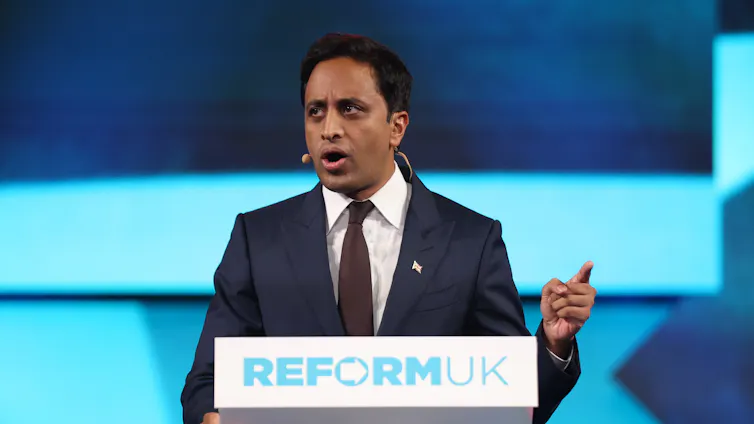
Nigel Farage has never been a politician afraid of making a controversial argument.
But his latest intervention following the Gorton and Denton by-election has taken the debate over Reform UK, immigration and British democracy into remarkably sensitive territory.
After Reform candidate Matt Goodwin finished second behind Green Party candidate Hannah Spencer, Farage insisted that the result would have been very different if only British citizens — and particularly British-born voters — had taken part.
“I’m absolutely convinced that amongst British-born voters, Matthew Goodwin came first,” Farage said, declaring that he had “absolutely no doubt whatsoever” about his assessment.
The claim immediately triggered a furious political reaction.
Critics accused Farage of attempting to delegitimise an election result simply because Reform had lost. Supporters, however, argued that the Reform leader was raising a legitimate question about who should have the right to vote in Britain’s national elections.
That distinction matters.
Because behind Farage’s explosive statement lies a much bigger political argument: Who should decide Britain’s political future?
The result that triggered the storm
The Gorton and Denton by-election produced a striking result.
The Green Party’s Hannah Spencer won the contest, while Reform’s Matt Goodwin finished second and Labour came third. For Reform, the result was disappointing given the party’s ambitions and its growing confidence in becoming a major force in British politics.
Farage did not simply accept the result as another example of electoral competition.
Instead, he focused on the composition of the electorate.
Reform subsequently proposed restricting voting in parliamentary elections to British citizens, removing the existing voting rights of certain Commonwealth citizens who are eligible to vote while resident in Britain. The party also proposed substantial restrictions on postal voting.
For Farage, this is fundamentally an argument about sovereignty.
He believes that national elections should be decided exclusively by citizens of the country concerned.
His opponents see something much more troubling: an attempt to change the electorate after suffering an electoral defeat.
That is why the controversy has become so intense.
A question about citizenship
Farage’s supporters argue that the principle is simple.
If a person is not a British citizen, they should not determine who governs Britain.
The argument sounds straightforward.
But Britain’s electoral system has historically developed in a more complicated way, particularly because of its relationship with Commonwealth countries.
That means a person who is not a British citizen can, under existing rules, have voting rights in certain UK elections if they meet the relevant eligibility requirements.
Reform wants to change that.
Robert Jenrick, the party’s Treasury spokesman, pointed out that countries including the United States and Japan restrict national voting rights to citizens. Farage has argued that Britain should do the same.
From Reform’s perspective, this is not an attack on democracy.
It is an attempt to redefine democracy around citizenship.
But that explanation has not convinced its opponents.
The “sore loser” accusation
The timing is politically awkward.
Farage’s proposal came immediately after Reform’s defeat in Gorton and Denton.
That allowed critics to argue that the party was attempting to rewrite the rules after losing.
A Green Party spokesperson described Farage’s claim as an attempt to delegitimise the election and argued that Reform had simply been beaten at the ballot box.
Trade union leaders have also accused Farage of behaving like a “sore loser”, particularly because the proposed electoral changes followed the by-election defeat.
Farage, however, rejects that interpretation.
His argument is that he has been concerned about electoral rules for years.
Reform has previously criticised postal voting, and Farage has complained about electoral practices in other contests where his political campaigns failed to produce the result he wanted.
That history gives his supporters an argument of their own.
They can say that this is not simply about one defeat.
It is about what they regard as a long-standing weakness in Britain’s electoral system.
A fictional voter asks a simple question
Imagine a fictional voter in Manchester called David.
He has lived in Britain all his life, works locally and pays taxes.
He watches the by-election coverage on television.
“Why should someone who isn’t a British citizen decide who represents us in Parliament?” he asks.
A neighbour, fictionalised as Amina, responds differently.
“I’ve lived here for twenty years,” she says. “I work here, pay taxes here and raise my children here. Why should I have no political voice simply because I haven’t taken British citizenship?”
Neither person represents a real interview.
But their fictional disagreement captures the heart of the political argument.
Citizenship and residence are not always the same thing.
And the question of which should determine voting rights is far more complicated than Farage’s original statement might suggest.
The accusation of racism
The most explosive part of the controversy concerns the identity of the voters Farage believes would have changed the result.
Opponents have argued that his intervention risks implying that voters from particular ethnic or religious backgrounds were responsible for Reform’s defeat.
That criticism became especially intense because Gorton and Denton contains a diverse electorate.
Farage has argued instead that the issue is citizenship rather than race.
He has also criticised what he sees as foreign policy concerns influencing British elections, arguing that national elections should be focused on domestic issues rather than international conflicts.
At his press conference, he referred to concerns that voters could be motivated by issues such as Gaza rather than local British political questions.
This is an important distinction in Reform’s defence.
The party says its proposed rule would apply regardless of ethnicity or religion.
A British citizen of any background would retain the right to vote.
A non-British citizen would not.
Critics nevertheless argue that changing voting rights along citizenship lines could disproportionately affect some communities.
And that is why the argument is unlikely to disappear.
The bigger Reform strategy
There is also a wider political strategy behind Farage’s intervention.
Reform is attempting to establish itself as more than a protest party.
It wants to become a government-in-waiting.
That means it needs a distinctive position on almost every major political question.
Immigration is already central to its programme.
Border control is central.
National sovereignty is central.
Now electoral reform is being placed alongside those issues.
The message to Reform supporters is clear:
Britain needs to take back control — not only of its borders, but of its democratic institutions.
That language is deliberately reminiscent of the political arguments that surrounded Brexit.
And Farage understands better than almost anyone how powerful the concept of “taking back control” can be.
But there is a serious political risk
The danger is that Reform may appear to be changing the rules because it did not like the result.
That is a damaging perception for any political party.
Democracy requires parties to accept defeats as well as victories.
If Reform wins, it expects its opponents to accept the result.
If Reform loses, voters will expect Reform to do the same.
Farage’s challenge is therefore not simply to explain why he believes only British citizens should vote.
He must also persuade voters that this principle existed independently of the Gorton and Denton result.
Otherwise, opponents will continue to portray the proposal as political opportunism.
Postal voting adds another layer
The controversy does not end with citizenship.
Reform has also proposed sharply restricting postal voting.
Under its plans, postal ballots would largely be reserved for groups such as elderly or disabled voters, serving armed forces personnel and people working overseas during an election.
Farage has warned about what he calls the “mass harvesting” of postal ballots.
But there is an important counterargument.
The Electoral Commission’s latest data did not show evidence of large-scale electoral fraud in Britain. According to the data cited in reporting on the controversy, most allegations were resolved with advice or no further police action, and there were no convictions proving widespread postal-voting fraud.
That creates a difficult question for Reform.
Is the existing system genuinely broken?
Or is Reform attempting to solve a problem that has been exaggerated for political purposes?
The answer depends largely on one’s interpretation of the evidence.
What happens next?
The Gorton and Denton result may ultimately become more important than the individual candidates.
It has exposed a fundamental disagreement about the meaning of democracy.
For Labour and the Greens, democracy means accepting the electorate as it exists and competing for its support.
For Reform, democracy increasingly means redefining who belongs within that electorate.
That is a much bigger argument.
And it could become one of the defining issues of the next general election.
Imagine a future campaign in which Farage stands before thousands of supporters and asks:
“Who should decide Britain’s future?”
His answer would be immediate:
“British citizens.”
His opponents would respond:
“Everyone legally entitled to vote should have an equal voice.”
The clash between those two principles could become fierce.
Farage’s gamble
There is little doubt that Farage’s intervention has created another controversy around Reform.
But controversy is not necessarily bad news for him.
Farage has built his career by turning political disputes into national conversations.
Every time his opponents attack him, he gains another opportunity to speak directly to voters who already distrust the political establishment.
That is why the Gorton and Denton defeat may not be the end of the story.
It could be the beginning of another major Reform campaign.
The party can now argue that Britain’s electoral system itself needs to change.
Whether voters agree is another question.
The most important issue is not whether Farage’s counterfactual claim about British-born voters can ever be conclusively demonstrated.
It cannot simply be proven by looking at the published result.
The real issue is whether Britain accepts his underlying principle: that national political power should belong exclusively to citizens.
That is a legitimate political question.
It is also an extraordinarily divisive one.
And as Reform continues its attempt to transform itself from an insurgent movement into a serious governing party, Nigel Farage may discover that changing Britain’s political system is considerably harder than changing Britain’s political conversation.
For now, one thing is certain.
The Gorton and Denton by-election may have produced a Green victory.
But its aftermath has given Reform another battle to fight — over citizenship, sovereignty and the very definition of who gets to decide Britain’s future.