
Nigel Farage Accuses Keir Starmer of Leading an “Authoritarian” Regime: The Growing Battle Over Freedom and Democracy
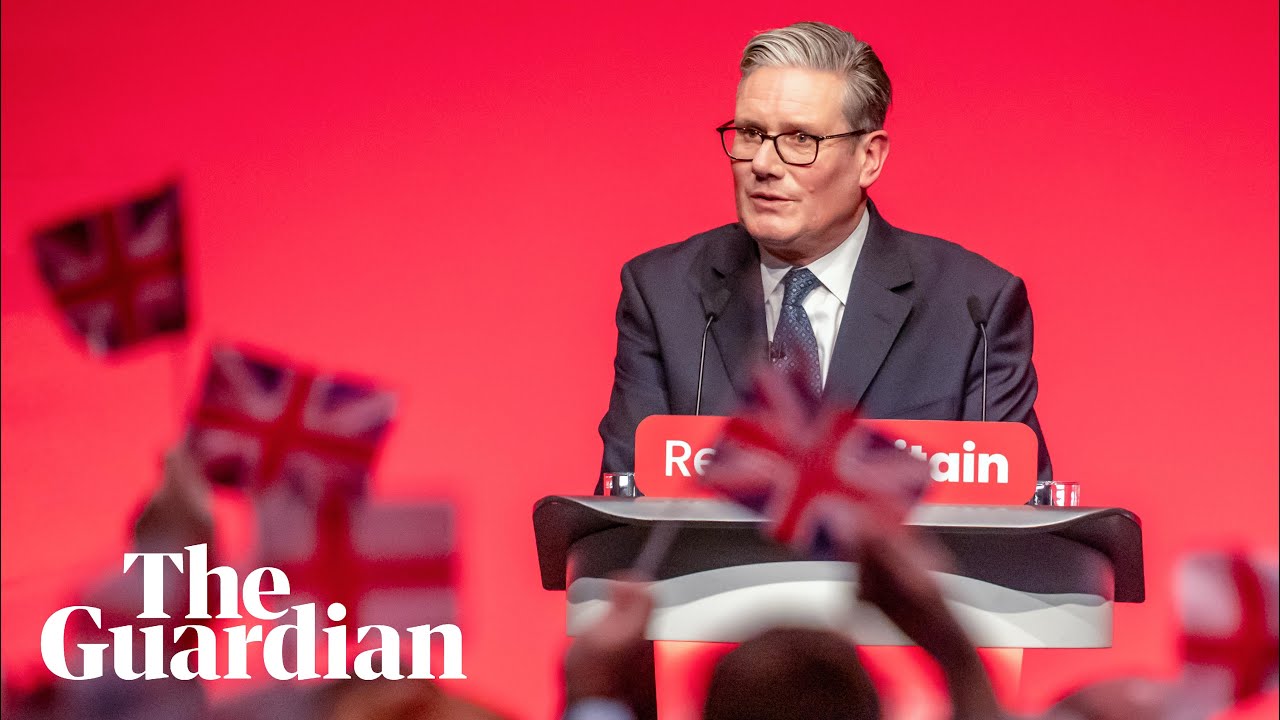
Nigel Farage has launched another extraordinary attack on Keir Starmer, accusing the Prime Minister of presiding over an increasingly “authoritarian” government and arguing that Britain is witnessing an erosion of individual liberty, democratic accountability and freedom of expression.
The confrontation reflects one of the most persistent themes in Farage’s political career. Whether the subject is immigration, Brexit, digital identification, online speech or government regulation, the Reform UK leader frequently presents himself as a defender of personal freedom against what he describes as an overreaching political establishment.
His latest attack therefore needs to be understood within a much broader political struggle.
Farage is not simply criticising one government policy. He is attempting to persuade voters that Labour’s approach represents a fundamental change in the relationship between the individual and the state.
At the same time, Starmer and his supporters reject the characterisation, arguing that measures criticised by Reform are intended to improve public safety, modernise government and protect people in an increasingly complicated digital environment.
The dispute raises a difficult question: when does legitimate government regulation become an unacceptable restriction on freedom?
Farage’s Authoritarianism Argument
Farage’s use of the word “authoritarian” is deliberately powerful.
In ordinary political debate, accusing an elected government of being authoritarian is far more serious than simply saying that a policy is misguided.
It suggests that the government is becoming too willing to restrict individual choices, impose controls and limit democratic freedoms.
Farage has made similar arguments on several occasions.
In September 2025, while giving evidence before a US congressional committee, he described Britain’s situation regarding free speech as “awful” and “authoritarian”, criticising the government’s approach to online speech and the Online Safety Act. Reuters reported that he argued Britain was experiencing a clampdown on free expression.
This is consistent with Farage’s wider political identity.
For him, freedom is not an abstract concept.
It is a central part of the argument that originally drove his opposition to Britain’s membership of the European Union.
The Brexit campaign was built partly around the idea that decisions affecting British citizens should be made by elected British institutions rather than distant European bodies.
Now Farage is applying a similar argument domestically.
His criticism is essentially that Britain can be sovereign internationally while still becoming excessively restrictive internally.
Digital Freedom and the State
One of the most important areas of disagreement concerns digital policy.
The growth of the internet has created problems that governments cannot simply ignore.
Online platforms can be used to spread misinformation, organise harassment, encourage violence and exploit children. Governments therefore argue that some regulation is necessary.
The difficulty is deciding how far that regulation should go.
Farage has repeatedly criticised Britain’s Online Safety Act, arguing that rules designed to protect users can also create a chilling effect on legitimate speech.
Reuters reported that he described the legislation as a dangerous path despite its stated objectives, warning that government intervention could ultimately undermine free expression.
This argument has resonated particularly strongly with voters who believe that Britain has become too willing to criminalise offensive or controversial expression.
But critics of Farage’s position respond that freedom of speech has never meant an unlimited right to threaten or incite violence.
The challenge is therefore not simply whether speech should be regulated.
It is about where the boundary should be drawn.
The Digital ID Controversy
Another issue has strengthened Farage’s argument.
In January 2026, after Starmer abandoned plans for a compulsory digital ID system, Farage described the decision as a victory for individual liberty and called the government “authoritarian”. He also said Reform UK would scrap the scheme entirely.
Digital identification is a particularly sensitive issue because it touches on privacy and the relationship between citizens and the state.
Supporters argue that digital ID systems could make it easier to access public services, verify identity, reduce fraud and simplify administration.
Opponents fear that a compulsory system could become a mechanism for excessive state surveillance or control.
For Farage, the issue fits perfectly into his broader political narrative.
The question is not merely whether digital identification is convenient.
It is whether citizens should be required to participate in a system that could potentially become increasingly comprehensive over time.
That is why Reform has treated digital ID as a major issue of personal liberty.
Starmer’s Alternative Vision
The government sees the issue differently.
Starmer’s political philosophy is far more focused on the role of the state in delivering security, economic stability and public services.
Labour argues that modern governments have to respond to modern problems.
Crime has moved online.
Identity fraud has become increasingly sophisticated.
Social-media platforms can expose children to harmful material.
Artificial intelligence is changing the information environment.
And governments need effective systems to deliver services efficiently.
From this perspective, regulation does not automatically represent authoritarianism.
It can represent democratic government responding to new challenges.
That is the central disagreement between Labour and Reform.
Farage begins with the assumption that government power should be tightly constrained.
Labour is more willing to argue that government intervention is necessary when it serves a legitimate public interest.
The Meaning of “Freedom”
The word “freedom” itself is at the centre of the dispute.
For Farage, freedom often means the ability of individuals to make decisions without unnecessary government interference.
That can include freedom of speech, freedom from excessive taxation, freedom to travel without intrusive identification requirements and freedom for communities to maintain traditional ways of life.
This is a powerful political message because almost everyone values freedom.
The difficulty comes when one person’s freedom conflicts with another person’s security.
For example, an individual may argue that they should be free to say whatever they wish online.
Another person may argue that targeted threats can make them genuinely unsafe.
A government may argue that restrictions are therefore necessary.
Farage would then ask whether those restrictions are proportionate and whether they create dangerous precedents.
That is why the debate is unlikely to be settled simply by declaring one side “pro-freedom” and the other “anti-freedom”.
The Importance of Democratic Accountability
Farage’s argument also contains a second element: democratic accountability.
He believes citizens should have the ability to challenge the people making decisions on their behalf.
This is one reason he has frequently criticised institutions that he regards as insufficiently accountable.
His political career began with opposition to the European Union precisely because he believed too much power had been transferred away from national democratic institutions.
After Brexit, that argument did not disappear.
Instead, it moved closer to home.
Farage now frequently asks whether Westminster itself has become too powerful.
The irony is that Reform is now a parliamentary party with MPs and an increasingly serious ambition to form a government.
If Farage eventually achieves that goal, he would inherit many of the powers he currently criticises.
That would create a significant test.
It is easy for an opposition politician to demand limits on state power.
It is much harder for a government to maintain public safety, enforce laws and administer a modern country while respecting those limits.
Why the Argument Appeals to Reform Supporters
The authoritarianism argument has particular resonance among Reform supporters because it reinforces a broader belief that traditional political parties have become disconnected from ordinary citizens.
Many Reform voters believe that politicians have accumulated too much power while ordinary people have too little influence.
Farage’s message turns that frustration into a simple political narrative.
The establishment wants more control. Reform wants to give control back to the individual.
This resembles the political strategy that helped drive the Brexit campaign.
The same concepts appear repeatedly:
- sovereignty;
- independence;
- democratic accountability;
- freedom;
- opposition to bureaucracy;
- distrust of political elites.
The vocabulary has changed somewhat, but the underlying philosophy remains familiar.
Labour’s Challenge
For Labour, the problem is that dismissing Farage as extreme may not be enough.
The word “authoritarian” is deliberately provocative, but it gives voters a framework through which to interpret individual government policies.
A voter who already dislikes digital ID may see Farage’s criticism as evidence that the government cannot be trusted.
Someone concerned about online censorship may similarly conclude that Reform is defending a fundamental democratic principle.
Someone opposed to restrictions on rural traditions may see the same pattern.
Farage’s strategy is to connect seemingly unrelated policies.
He wants voters to see them as symptoms of one larger problem: an expanding state.
Labour therefore has to do more than defend individual policies.
It needs to explain why those policies are necessary and how safeguards will prevent government power from being abused.
The Risk for Farage
There is also a danger for Farage.
The more frequently he describes the government as authoritarian, the more important it becomes for him to demonstrate that the term is being used carefully.
Britain remains a functioning parliamentary democracy with regular elections, an independent judiciary, a free press and extensive legal protections.
Calling an elected government “authoritarian” can therefore appear excessive if it is used simply as a political insult.
There is a difference between opposing government regulation and claiming that a country has ceased to be democratic.
That distinction matters.
If Farage wants to be regarded as a potential prime minister rather than simply an opposition campaigner, his arguments will increasingly be judged according to the standards expected of a serious national leader.
The Bigger Political Transformation
Farage’s attacks also reveal how much British politics has changed.
For decades, the principal political competition was between Labour and the Conservatives.
Now Reform is attempting to establish itself as a third major force.
That changes the language of political debate.
Farage does not simply attack Labour’s economic policies.
He challenges its legitimacy, its approach to freedom and its understanding of the relationship between citizens and government.
At the same time, Labour is increasingly forced to confront Reform on issues that previously belonged primarily to Conservative politics.
Immigration is one example.
Taxation is another.
Law and order is another.
And civil liberties are becoming an increasingly important part of the competition.
A Battle Over Britain’s Political Identity
Ultimately, the argument between Farage and Starmer is not really about one policy.
It is about competing visions of Britain.
Farage wants a country in which individuals have greater freedom from government interference, national sovereignty is strongly protected and political institutions are subjected to constant scrutiny.
Starmer’s Labour government presents a different vision: a state that is capable of intervening when necessary to improve security, regulate powerful companies and deliver public services.
Neither vision is inherently simple.
A society with no government regulation would not necessarily be free.
It could leave individuals vulnerable to powerful corporations, criminals or other forms of coercion.
But a government with unlimited power would also be dangerous.
The fundamental challenge of liberal democracy is therefore to maintain the balance.
Conclusion
Nigel Farage’s accusation that Keir Starmer is leading an “authoritarian” regime represents one of the sharpest attacks in Britain’s current political debate.
Farage’s criticism is part of a consistent philosophy. He has repeatedly warned that government regulation, digital identification systems and restrictions on online speech can gradually weaken individual liberty. His earlier intervention in Washington, where he criticised Britain’s approach to free speech as “authoritarian”, demonstrates that this is not a one-off political attack.
His opposition to compulsory digital ID follows the same logic. When Starmer abandoned plans for compulsory digital identification in January 2026, Farage described the move as a victory for individual liberty and said Reform would go further by scrapping the scheme.
But the accusation also deserves scrutiny.
Calling a government authoritarian is a serious claim. Britain remains a parliamentary democracy, and regulation designed to address genuine problems cannot automatically be equated with authoritarian rule.
The real question is more subtle.
How much power should a democratic government have—and how can citizens ensure that legitimate government action does not become excessive control?
That question will become increasingly important as technology gives governments new ways to identify citizens, regulate online platforms and collect information.
For Farage, the answer is clear: individual liberty must come first.
For Labour, the answer is that freedom must coexist with security, regulation and effective government.
The political battle between those two philosophies is likely to continue long after this particular row has disappeared from the headlines.
And as Reform attempts to transform itself from an insurgent political movement into a potential governing party, Farage’s greatest challenge may be proving that his defence of freedom is more than opposition rhetoric—that it can form the foundation of a credible philosophy of government.