
Protesters ‘Block 140 Migrants From Entering UK City’ After ‘Mega Dinghy’ Arrives
A dramatic confrontation unfolded in Portsmouth after around 140 people who had crossed the English Channel in a large small boat were brought ashore, prompting hundreds of protesters to gather near the landing site and attempt to prevent coaches carrying the group from leaving the area.
The incident, which took place in early September 2026, became one of the most significant anti-migration demonstrations seen in the city in recent years. Police formed lines around vehicles and brought in additional officers as protesters blocked roads and confronted authorities.
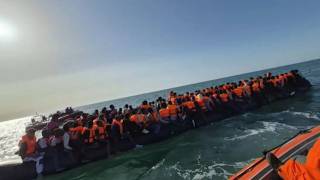
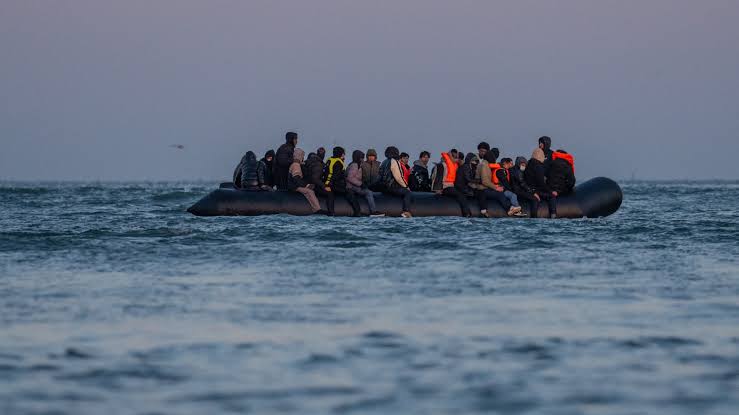
The events followed the arrival of what was described as a “mega dinghy”, carrying approximately 140 people. The unusually large boat had travelled from the French coast and reached waters off southern England after a journey that was considerably longer than the traditional route towards Kent.
The episode has since prompted questions about changing Channel-crossing routes, the government’s asylum accommodation system, the role of people-smuggling networks and the limits of lawful protest.
A Very Different Arrival
The boat’s arrival was unusual because Portsmouth is not normally the main landing point for small boats carrying migrants across the Channel.
Most crossings have historically been associated with the shorter route from northern France towards Kent. The vessel involved in the Portsmouth incident was reportedly launched further west, in the Bay of the Seine, creating a much longer journey before reaching the Hampshire coast.
The journey reportedly lasted around 10 hours.
When the boat reached UK waters, the Maritime and Coastguard Agency and other emergency services responded. Coastguard aircraft, helicopters and lifeboats were involved in the operation.
The people aboard were eventually brought ashore near Eastney in Portsmouth.
The operation was primarily a rescue and emergency response rather than a conventional arrival at the UK’s main Channel-processing locations.
Once the group had been safely disembarked, arrangements were made for them to be transported out of Hampshire for processing.
Protesters Gather
News of the arrival quickly spread, and hundreds of protesters travelled to the area.
Reports put the number of demonstrators at around 300, while other accounts described crowds of several hundred. Some protesters entered the water near the landing area, while others positioned themselves on roads used by vehicles leaving the site.
The stated objective of some demonstrators was to prevent the migrants from being transported to the Manston processing centre in Kent.
The situation developed into a lengthy standoff.
Police officers equipped with public-order equipment formed lines around coaches while protesters attempted to obstruct access routes.
The demonstration continued late into the night and into the early hours of the following morning.
The scale of the police response reflected concerns that the confrontation could escalate.
Police Officers Injured
Hampshire and Isle of Wight Constabulary later confirmed that several officers were injured during the disorder.
The force launched an investigation to identify people suspected of assaulting officers, damaging police vehicles and committing other offences.
Police also imposed a dispersal order covering the area.
The order gave officers additional powers to direct people to leave and to arrest those who refused to comply.
Eventually, reinforcements were brought in from other police forces.
Hampshire’s Police and Crime Commissioner, Donna Jones, said mutual-aid officers from forces around the country, including the Metropolitan Police Service, were deployed to help manage the situation.
She described the operation as an effort to “take back control” of the roads after several hundred people gathered in the area.
Coaches Finally Leave
The standoff lasted for hours.
According to reports, the remaining demonstrators were eventually dispersed shortly after 4am.
Three coaches carrying the migrants were then able to leave the area under a substantial police escort.
The immediate confrontation therefore ended without the protesters successfully preventing the transfer.
The people who had arrived by boat were transported away from Hampshire for processing, in accordance with the arrangements described by Border Force.
The incident nevertheless created significant disruption for the local community.
Roads were blocked, police resources were diverted and emergency services had to maintain a large presence throughout the night.
Peaceful Protest and Criminal Disorder
The events also generated a debate about the distinction between legitimate protest and unlawful behaviour.
People have a legal right to demonstrate against government immigration policy.
That includes opposing the use of small boats, criticising asylum accommodation or demanding changes to border policy.
However, that right does not extend to assaulting police officers, damaging vehicles or deliberately obstructing roads in ways that constitute criminal offences.
The government condemned what it described as intimidating behaviour while also acknowledging that people could legitimately have concerns about immigration.
This distinction was also reflected in comments from local authorities and police.
Some people attending the demonstration were reported to have remained peaceful, while others were involved in confrontations with officers.
As a result, the police response focused on preventing disorder rather than treating every protester as a criminal.
Why Did the Boat Arrive in Portsmouth?
Perhaps the most significant question raised by the incident concerns the route taken by the boat.
The crossing was unusual because the vessel reportedly originated much further west along the French coast than the beaches traditionally associated with journeys towards Dover.
That created concern among officials that smuggling networks could be adapting their methods.
If routes become more geographically dispersed, the authorities could potentially face pressure along a much larger section of the southern English coastline.
Donna Jones, Hampshire’s Police and Crime Commissioner, highlighted the scale of Britain’s southern coastline and expressed concern that the Portsmouth incident could be part of a broader change in the way smuggling networks operate.
The question remains whether this was an isolated event or part of a sustained shift in crossing routes.
The Role of People Smugglers
The British government has repeatedly argued that organised criminal networks are responsible for the dangerous small-boat trade.
Smuggling gangs have an incentive to adapt when authorities attempt to disrupt established routes.
The use of larger boats is one potential adaptation.
A single vessel carrying approximately 140 people can reduce the number of separate launches required to transport the same number of people.
However, larger boats also create significant safety risks.
The Channel is one of the world’s busiest maritime areas, with strong currents, unpredictable weather and heavy commercial traffic.
A crowded inflatable vessel travelling for many hours can become unstable, particularly if it is overloaded.
The Portsmouth operation therefore involved a substantial emergency response before the protest even began.
Government Under Pressure
The incident has added to pressure on the government over Channel crossings.
Successive governments have promised to reduce irregular migration and disrupt the smuggling networks responsible for organising crossings.
The Home Office said it was working with French authorities to prevent boats from launching and claimed that joint operations had prevented more than 48,000 attempted crossings and led to the seizure of around 1,100 boats and engines since the election.
The department also pointed to a payment-by-results arrangement with France designed to increase the number of personnel operating on French beaches.
The effectiveness of those measures remains a subject of political debate.
The Portsmouth incident demonstrated that even when authorities attempt to disrupt established routes, smugglers may seek alternatives.
A Weekend of Protests
The Portsmouth demonstration did not occur in isolation.
The previous day, hundreds of anti-immigration protesters had gathered around the Port of Dover.
Reports described groups of protesters, some wearing black clothing and masks, blocking roads around the port and chanting against small-boat crossings.
The Dover demonstration occurred even though there was no corresponding large arrival of migrants at the port that day.
The proximity of the two demonstrations created an atmosphere of heightened tension along the south coast.
For police forces, that meant preparing for the possibility of further gatherings and ensuring that emergency operations could continue despite protests.
Concerns for Local Communities
For people living in Portsmouth, the incident raised questions that went beyond the immediate protest.
The city has a major maritime infrastructure and a large coastal population.
Residents experienced road closures, a heavy police presence and disruption around Eastney.
Some local people expressed concerns about the possibility that Portsmouth could become a more regular arrival point for Channel crossings.
The Police and Crime Commissioner similarly warned that a wider geographical spread of crossings could create new demands for policing and emergency services.
At the same time, immigration policy is ultimately determined at national level.
This creates a familiar tension: communities can experience the immediate effects of national policy even though they have limited control over the decisions themselves.
What Happened to the 140 People?
After being brought safely ashore, the group was transferred out of Hampshire.
The Home Office intended to move them to the Manston processing centre in Kent, where their cases could enter the asylum and immigration system.
Their individual circumstances and legal claims are separate from the protest itself.
Under British law, arriving by small boat does not automatically determine the outcome of an asylum claim. Each case can involve individual assessment and legal procedures.
This is one reason why descriptions such as “migrants” or “asylum seekers” should not automatically be treated as a statement about the eventual legal status of every individual involved.
A Wider Debate About the Channel
The Portsmouth confrontation has become another episode in Britain’s long-running argument over immigration.
For opponents of irregular migration, the arrival of approximately 140 people on a single inflatable vessel illustrates what they regard as a failure to control the border.
For government officials, police and emergency services, the incident demonstrates the continuing operational challenge created by dangerous Channel crossings.
For protesters, the demonstration provided an opportunity to express opposition to government policy.
For police officers, however, the immediate priority was maintaining public order and ensuring that people could be moved safely.
These perspectives can coexist without every claim made during the confrontation being accepted as fact.
The Questions Now Facing Authorities
Several questions remain.
Was the Portsmouth landing an isolated incident, or will more boats begin using longer routes from western France?
Can cooperation with French authorities prevent smuggling networks from adapting?
Will the government be able to reduce dangerous crossings without creating additional pressure on other parts of the southern coastline?
And how should police manage demonstrations when legitimate protest develops into obstruction or violence?
The answers will have consequences far beyond Portsmouth.
If crossing routes become more dispersed, other coastal communities could find themselves facing similar situations.
If larger boats become more common, emergency services may also face more demanding rescue operations.
And if protests continue to grow, police forces may require additional resources to maintain public order.
A Dramatic Night With Wider Consequences
The Portsmouth incident began with an unusual Channel crossing and ended with a major overnight police operation.
Around 140 people were brought ashore after travelling in a large boat. Hundreds of protesters then gathered, roads were blocked and police officers were injured. After several hours, additional officers dispersed the crowd and escorted the coaches away from the city.
The immediate confrontation is over, but the political questions remain.
Britain continues to debate how it should manage asylum claims, border security and dangerous Channel crossings. At the same time, local communities are increasingly involved in the consequences of national immigration policy.
Portsmouth has now become part of that wider debate.
The most important development may ultimately be whether the “mega-dinghy” arrival represents a one-off event or evidence of a changing strategy by people-smuggling networks.
Either way, the night demonstrated how quickly a single Channel crossing can become a major public-order operation—and how immigration, policing, maritime rescue and national politics can collide in a single coastal city.