
A new activist group has publicly challenged the government over immigration enforcement while one of its prominent figures remains in custody awaiting trial. Here is what is known, what is claimed, and the wider political context.
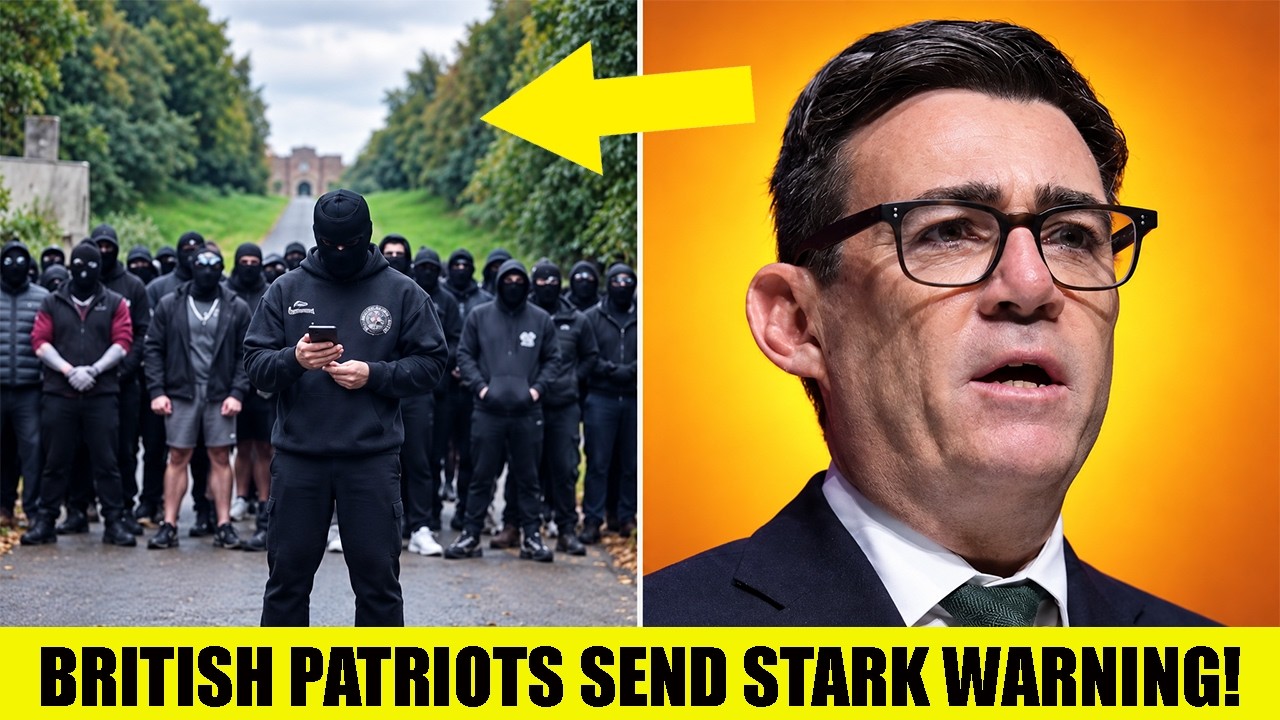
A group calling itself the Patriot Platform has released a statement directed at Prime Minister Andy Burnham and Home Secretary Shabana Mahmood. The message demands stronger border enforcement, greater political accountability and an end to what it describes as the targeting of ordinary people who raise concerns about Channel crossings. The group insists it rejects violence and civil conflict, framing its aim as evidence-based research, documentation and public pressure. It claims its membership has grown following the arrest and remand of Daniel Thomas, known online as Danny Tommo.
Thomas faces trial in March 2027 on charges of criminal damage relating to an incident involving a dinghy in the Channel and a separate allegation of failing to provide a phone PIN to police. He has pleaded not guilty. A judge refused bail and remanded him in custody. Supporters describe the case as politically motivated. The courts treat it as a standard criminal matter to be decided by evidence and a jury. Remand decisions are made under existing bail rules that weigh risk of further offences, interference with witnesses and the seriousness of the alleged offence.
The group’s stated position
In its public message the Patriot Platform says Britain is a country with borders and laws that should keep people safe. It argues that successive governments have failed to stop small-boat crossings despite repeated promises. The group says asking questions and demanding accountability is not extremism, and that documenting events will continue regardless of individual arrests. It outlines a two-stage plan focused on recruitment followed by organised research and exposure of verified failures. The statement repeatedly rejects violence and calls instead for a system in which the law is applied consistently and the government answers to the public.
These claims sit within a broader public debate. Official figures continue to show significant numbers of people crossing the Channel in small boats. The government maintains that it is increasing returns of foreign national offenders, negotiating with France and other partners, and investing in enforcement. Critics across the political spectrum, including Reform UK, argue that the numbers remain too high and that deterrence is insufficient. Labour points to capacity pressures in the asylum and prison systems and to the need for legal routes alongside enforcement.
Context of the wider immigration argument
Channel crossings have been a dominant political issue for several years. Previous Conservative administrations and the current Labour government have both faced criticism for failing to reduce arrivals to the levels they promised. Temporary and permanent changes to prison release rules have been driven by overcrowding rather than immigration policy alone, yet the two issues frequently appear together in public discussion. High-profile individual cases on both sides of the debate — early releases of certain offenders and remand decisions for activists — fuel claims of inconsistent priorities.
The Patriot Platform presents itself as a grassroots response to that frustration. Independent observers note that such groups often grow when mainstream parties are seen as unresponsive. At the same time, authorities and some community organisations warn that confrontational street activity, even when presented as peaceful monitoring, can heighten tension and risk disorder. The group’s own statement seeks to distance itself from violence, emphasising evidence and organisation over confrontation.
Political reactions and unresolved questions

Reform UK and other opposition voices have used the remand of Thomas and the continued arrivals to argue that the government prioritises certain narratives over consistent enforcement. Government ministers reject the charge of double standards, pointing to record numbers of foreign-national offender deportations and ongoing work on returns agreements. They argue that criminal damage and interference with emergency responders cannot be excused by political motivation.
Two practical questions remain central. First, can enforcement measures — interceptions, returns, and legal routes — reduce irregular arrivals enough to restore public confidence? Second, can political debate and protest on immigration remain within the law while still exerting pressure on policy? The Patriot Platform says it intends to test the second question through sustained organisation and documentation. The courts will decide the first individual’s case on the evidence. The broader policy outcomes will be measured by official crossing and return statistics over the coming months.
The statement issued by the group is one more contribution to a long-running argument about borders, capacity and political trust. Whether it develops into a lasting organised force or remains a short-term reaction will depend on its ability to maintain non-violent discipline, produce verifiable information, and sustain public interest beyond individual arrests. For now it has placed its demands on the public record and signalled that it does not intend to disband.
Patriot Platform Issues Warning to Burnham: Borders, Accountability and the Channel Debate
Britain’s increasingly heated debate over immigration has taken another turn as the emergence of Patriot Platform and repeated migrant boat arrivals place renewed pressure on Prime Minister Andy Burnham. Questions about border security, public accountability and the role of protest movements are now colliding with a wider political argument over how the government should respond to crossings of the English Channel.
The controversy reflects more than disagreement over immigration numbers. It raises questions about the limits of political protest, the responsibilities of government, the influence of anti-migration groups and the practical challenges of preventing dangerous journeys across the Channel.
Patriot Platform, a network of anti-migration activists led by Daniel Thomas, became more prominent after demonstrations in Dover and Portsmouth in September 2026. The protests brought together activists opposed to small-boat arrivals, while their tactics and the group’s links to figures associated with the far right prompted criticism from politicians and anti-racism campaigners. <Cite refs={[“turn276777search3″,”turn276777search5”]}/>
Against this backdrop, Burnham’s government faces pressure from Reform UK and other critics to demonstrate that it can manage the border effectively without allowing tensions over immigration to escalate into disorder.
Patriot Platform and the Growing Anger Over Channel Crossings
Patriot Platform attracted national attention when activists gathered in Dover and Portsmouth to protest against the arrival of asylum seekers by small boat. In Dover, demonstrators blocked roads leading to the port, causing disruption to traffic. Further protests followed in Portsmouth after people rescued during a Channel crossing were brought ashore.
The group presents itself as a movement concerned about immigration, national sovereignty and public safety. Its opponents, however, have raised concerns about its methods, the use of face coverings during demonstrations and the political messages communicated by some of its supporters.
A report by The Guardian identified Patriot Platform as a network bringing together several local anti-migration groups under Thomas’s leadership. The report also described concerns raised by campaigners about individuals associated with the movement and its connections to the wider far-right activist scene. <Cite refs={[“turn276777search3”]}/>
These developments have created a difficult environment for politicians seeking to respond to public concern about immigration. Some residents want a tougher approach to unauthorised crossings, while others worry that confrontational demonstrations can intimidate communities and increase the risk of violence.
The distinction between peaceful protest and unlawful behaviour is therefore central to the debate. People have a right to express political views and challenge government policy, but that right does not extend to violence, intimidation or unlawful obstruction.
Why Andy Burnham Is Under Pressure
Burnham has faced criticism over the government’s handling of small-boat arrivals, particularly following high-profile incidents in southern England. Reform UK has argued that the government should take a more forceful approach to preventing unauthorised crossings and returning people to France.
On October 5, Reform UK’s home affairs spokesman Zia Yusuf visited Gosport after 149 migrants arrived at Fort Blockhouse the previous evening. Yusuf blamed the government for what he described as a failure to control the border and called for the Royal Navy to play a more direct role in preventing further crossings. <Cite refs={[“turn276777news21”]}/>
Reform has argued that the government should treat the Channel as a national frontier and use stronger enforcement measures. The party’s proposals include deploying naval resources to intercept boats and returning people to France, although the practical and legal arrangements for such a policy would require detailed examination.
Burnham, meanwhile, has rejected the idea that sending the Royal Navy into the Channel to block migrant boats is a serious solution. The disagreement became more pronounced on October 12, when Reform Treasury spokesman Robert Jenrick raised the possibility of allowing Royal Marines to use lethal force in certain circumstances. <Cite refs={[“turn276777search6″,”turn276777news23”]}/>
That proposal prompted further controversy. Nigel Farage subsequently said Reform would not authorise routine lethal force against people crossing in small boats, maintaining that force would be justified only in circumstances such as self-defence if military personnel were attacked. Yusuf also clarified his position, saying lethal force would be limited to exceptional circumstances involving the protection of innocent life. <Cite refs={[“turn276777news23”]}/>
The exchange demonstrates how quickly the immigration debate can move from questions about enforcement to difficult issues involving military powers, human rights and the protection of life.
Borders and Accountability
At the heart of the political dispute is the question of what effective border control should look like.
Critics of the government’s approach argue that continued small-boat arrivals undermine public confidence in immigration enforcement. They want ministers to explain how people-smuggling networks will be disrupted, how asylum claims will be processed more quickly and what will happen to people whose claims are rejected.
Reform UK has sought to make these questions a central part of its political platform. The party has also called for local councils to receive greater power to oppose plans to accommodate asylum seekers in their communities. In July 2026, Yusuf wrote to Burnham demanding that councils be allowed to block Home Office accommodation plans, arguing that local residents should have a greater say in decisions affecting their areas. <Cite refs={[“turn276777search2”]}/>
The government faces a different set of obligations. It must enforce immigration law, investigate organised smuggling and manage asylum applications while respecting legal safeguards. People arriving by small boat do not all have the same circumstances, and an irregular arrival does not by itself determine whether an individual qualifies for international protection.
The government must therefore distinguish between people who have committed immigration offences, people who may be victims of trafficking or exploitation, and those who have a valid claim for protection. That requires an effective process for identifying individuals, assessing claims and carrying out lawful removals where appropriate.
Accountability also applies to public officials. Ministers should explain their decisions, publish reliable information about the system and demonstrate whether policies are delivering their stated objectives. At the same time, allegations of misconduct must be supported by evidence rather than political accusation alone.
The Role of Patriot Platform in the Political Debate
Patriot Platform’s emergence illustrates how frustration over immigration can be channelled into protest movements outside established political parties.
Its demonstrations have attracted attention partly because of their scale and confrontational appearance. The group has also become a subject of controversy within the wider anti-migration political movement.
After the September demonstrations, Reform UK faced questions about its relationship with activists associated with Patriot Platform. A Guardian report described divisions within Reform over how senior figures should respond to the group, with some members criticising its use of masks while others expressed support for aspects of its message. <Cite refs={[“turn276777search5”]}/>
This presents a challenge for political leaders. They may seek to acknowledge public frustration about border policy without endorsing tactics that undermine public order or place individuals at risk. The distinction matters because peaceful political mobilisation and intimidation are not the same thing.
Government responses must also be proportionate. Police have a responsibility to facilitate lawful protest while intervening where there is evidence of criminal conduct. A person’s political views alone should not determine whether they are treated as a threat, but neither should political motivation excuse unlawful behaviour.
The broader question is whether mainstream political debate can address immigration concerns clearly enough to reduce the appeal of confrontational activism, while ensuring that public safety and the rights of all communities are protected.
The Channel Crossings Debate
Small-boat crossings remain one of the most visible and politically sensitive parts of Britain’s immigration debate. The journeys are dangerous, and people smugglers can exploit the desperation of those seeking to reach the UK.
Reform UK has argued that stronger deterrence and returns would reduce the incentive to make the journey. Its position is that the prospect of being brought to Britain after crossing the Channel encourages smugglers to continue operating.
The effectiveness of any deterrence policy, however, depends on practical and legal factors. A return arrangement requires cooperation with another country, clear procedures for handling those intercepted at sea and compliance with applicable international obligations. Naval deployments also require rules governing safety, interception and the treatment of people found aboard unseaworthy vessels.
There is a further distinction between preventing departures and responding to boats already at sea. Maritime authorities have responsibilities to protect life when people face danger on the water. Any enforcement strategy must account for those responsibilities rather than treating rescue and border control as mutually exclusive objectives.
The role of the Royal National Lifeboat Institution has also become part of the political argument. Yusuf criticised those he believed were assisting unauthorised migration, but lifesaving organisations operate under a duty to respond to people in distress at sea. Rescue does not, in itself, determine the immigration status or legal rights of the people rescued.
A sustainable strategy would need to address the smuggling networks, improve the processing of claims, cooperate with France and other European partners, and provide transparent information about results and costs.
Public Confidence and Community Safety
The arrival of asylum seekers in coastal towns has created anxiety among some residents, particularly when information about planned arrivals is incomplete or rumours spread online. Authorities must communicate clearly and respond to credible concerns without encouraging hostility towards individuals because of their immigration status.
The September demonstrations in Dover and Portsmouth showed how quickly local incidents can become national political flashpoints. Downing Street condemned what it described as intimidating behaviour by protesters, while Burnham called for a response to what he saw as the spread of divisive politics. <Cite refs={[“turn276777news24”]}/>
Maintaining public confidence requires more than political statements. Communities need accurate information, visible and proportionate policing, and a clear explanation of how the authorities will manage accommodation and public safety. They also need assurance that complaints will be investigated and that unlawful conduct will have consequences.
At the same time, asylum seekers must not be collectively blamed for the actions of individuals or the failures of government policy. A fair system applies the law consistently, protects victims and treats each case according to its circumstances.
Conclusion
The warning directed at Andy Burnham over borders, accountability and Channel crossings reflects a wider struggle over the future of Britain’s immigration policy. Patriot Platform’s demonstrations have brought anti-migration activism into the national spotlight, while Reform UK has used recent boat arrivals to demand stronger enforcement and a more prominent role for the military.
The controversy also exposes difficult questions about public order, legal safeguards and the limits of political rhetoric. Governments must demonstrate that they can manage the border effectively, but policies must be operationally realistic, lawful and capable of protecting life.
For Burnham, the challenge is to explain how the government intends to reduce dangerous crossings, disrupt people-smuggling networks and process asylum claims efficiently. For Reform UK, the challenge is to show how its proposals could be implemented within the law and what evidence would demonstrate that they work.
For Patriot Platform, the attention generated by its protests has brought scrutiny of its methods and associations as well as its stated objectives. The wider public debate will depend on whether political actors can address concerns about immigration without escalating tensions or undermining the principles of lawful protest and equal treatment.
Ultimately, border security and public accountability are questions that require evidence, clear rules and measurable results. Political warnings may draw attention to the issue, but lasting progress will depend on policies that can be implemented safely, transparently and fairly.