
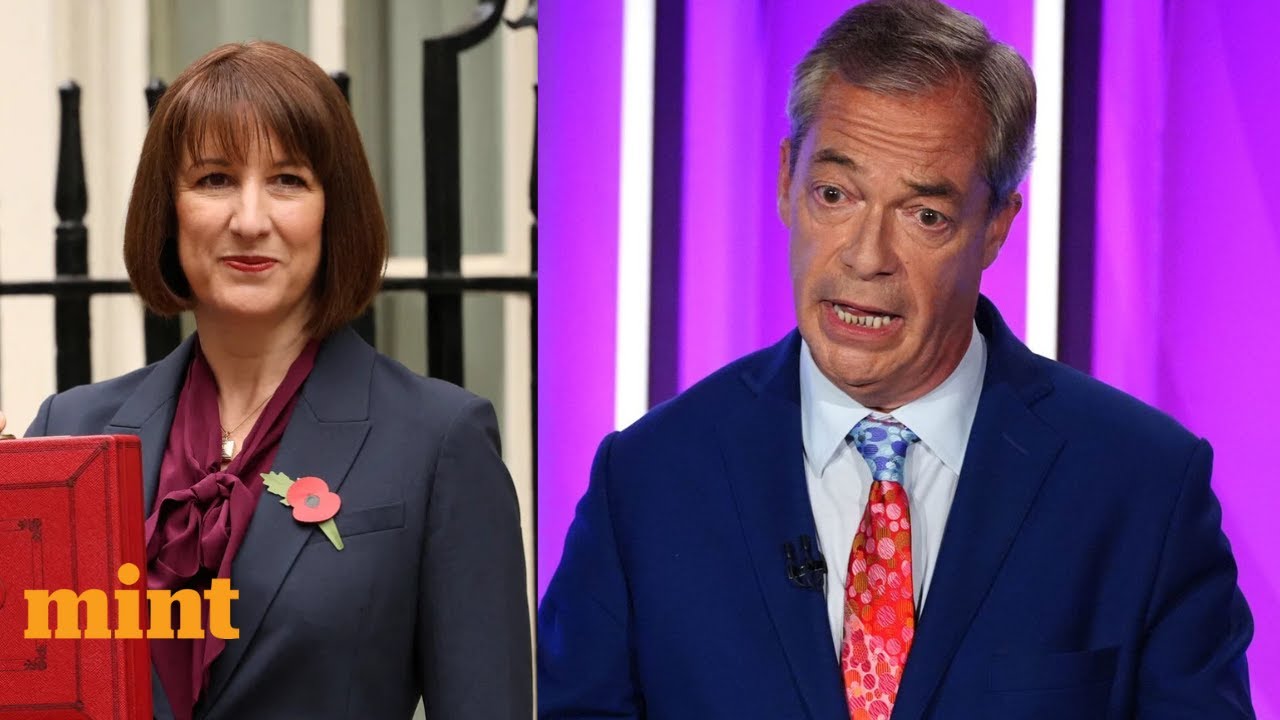
Nigel Farage pledged to reverse Labour’s planned fuel duty hike by axing net zero levies at a press conference today. The Reform UK leader staged a stunt at a petrol station in Derbyshire alongside Treasury spokesman Robert Jenrick.
It comes as Chancellor Rachel Reeves is resisting calls to cancel the 5p increase in fuel duty in response to the oil price spike caused by the Iran conflict.
Writing in The Sun, Mr Farage said he wanted to “shame” her into a U-turn.
The Reform boss will hold another rally tonight in Basingstoke with MP Suella Braverman as the party gears up for the May local elections.
Nigel Farage Vows to ‘Shame’ Rachel Reeves as He Makes Major Reform Pledge
Nigel Farage has launched another direct attack on Chancellor Rachel Reeves, promising that Reform UK will continue its campaign to pressure the Labour government over fuel duty and household costs. The Reform leader has said his party will spend the months ahead trying to “shame” Reeves into abandoning a planned increase in fuel duty, while also pledging that Reform would reverse the rise if it entered government.
The confrontation places fuel taxation at the centre of a wider political argument about the cost of living, environmental policy and the direction of Britain’s economy. Farage argues that motorists and working households should not face higher costs at a time when many families are already under financial pressure. Reeves and Labour, meanwhile, have defended their broader economic approach and have faced competing demands over taxation, public spending and the transition towards net zero.
The dispute has therefore become about more than the price displayed on a petrol station forecourt. It reflects competing ideas about how Britain should raise revenue, fund environmental programmes and protect household finances.
Farage’s Fuel Duty Campaign
Farage’s intervention came during a highly publicised Reform UK event at a petrol station in Derbyshire. He appeared alongside Robert Jenrick as the party sought to draw attention to the proposed increase in fuel duty.
During the event, Reform arranged for petrol prices at the independent station to be temporarily reduced by 25p a litre, creating a visual demonstration of the difference that lower fuel costs could make to motorists. Sky News reported that the event was designed to put pressure on the government over the planned 5p fuel-duty increase.
Farage said Reform would spend the following months trying to persuade Reeves to cancel the increase. He also said that if Labour refused, Reform would seek to reverse it in its first Budget if the party subsequently entered government.
The language used by Farage was deliberately confrontational. His pledge to “shame” the Chancellor was intended to turn the fuel-duty dispute into a broader political campaign.
Why Fuel Duty Matters
Fuel duty affects motorists directly because it is incorporated into the cost of petrol and diesel. Changes in fuel taxation can therefore have an immediate effect on drivers.
The issue can also have wider consequences. Businesses that depend on road transport may face higher operating costs when fuel becomes more expensive. Delivery companies, tradespeople, agricultural businesses and commuters can all be exposed to changes in fuel prices.
Supporters of higher fuel taxes can argue that taxation has a role in encouraging changes in behaviour and supporting environmental objectives. Critics, however, can argue that motorists should not be asked to absorb additional costs when alternatives such as public transport or electric vehicles are not equally practical or affordable for everyone.
This creates a difficult political balance.
A government must consider revenue, environmental policy and the financial impact on households simultaneously. A political party challenging the government can focus more heavily on the immediate effect on motorists.
That difference in political responsibility helps explain why fuel duty has become such a prominent issue.
Reform’s Alternative Proposal
Farage has argued that the government could find money elsewhere rather than increasing fuel duty.
According to Reform’s proposal, the party would cut spending on what it describes as unnecessary green programmes. Farage has claimed that Reform could cut £13.5 billion from such schemes and use the money to reduce household bills.
This is part of a broader Reform argument that environmental policy should be reconsidered where it imposes significant costs on consumers or businesses.
The party’s wider economic programme also includes proposals aimed at reducing energy costs and changing the UK’s approach to net zero. At its September 2026 conference, Farage pledged that a Reform government would seek to cut energy bills by £250 and end policies he said were damaging Britain’s industrial economy.
These proposals form part of Reform’s wider attempt to present itself as a party focused on reducing household costs while changing the country’s economic and energy strategy.
Reeves Faces a Broader Economic Challenge
Rachel Reeves occupies a very different position in the debate.
As Chancellor, she must balance competing pressures involving government revenue, public services, economic growth, borrowing and household finances. A decision to reduce or cancel a tax increase would potentially leave a gap that would have to be addressed elsewhere.
That is one reason why arguments about fuel duty cannot be considered separately from the government’s wider fiscal position.
Reeves has also faced criticism from opposition parties over taxation. Reform is not the only party challenging Labour’s approach. The Conservatives have also opposed the planned fuel-duty increase, with Kemi Badenoch arguing that higher fuel costs would hurt working families. Sky News reported that the Conservatives had also tabled a parliamentary motion seeking to stop the rise.
Consequently, the political argument over fuel duty is not simply a contest between Farage and Reeves.
Other opposition parties are seeking to use the same issue to challenge Labour.
Reform’s First-Budget Promise
Perhaps the most significant part of Farage’s intervention was his promise about what Reform would do in government.
He said that if Reeves did not cancel the proposed increase, Reform would reverse it in its first Budget if the party subsequently formed a government.
Such a pledge gives voters a clear distinction between Reform and Labour on fuel taxation.
It also creates an important question about the funding of alternative policies.
Whenever a political party promises to reduce taxation, voters and analysts can reasonably ask how the lost revenue would be replaced. Reform has attempted to answer that question by identifying cuts to green spending and other areas as potential sources of savings.
The precise financial implications of any future programme would depend on the detailed policies adopted at the time and the economic circumstances facing the government.
A Wider Battle Over Net Zero
Behind the fuel-duty dispute lies a much larger disagreement over Britain’s net-zero strategy.
Successive governments have committed the UK to reducing greenhouse-gas emissions, while businesses and households have increasingly faced policies intended to accelerate the transition towards lower-carbon energy.
Reform has taken a more sceptical position on aspects of this programme. Farage has argued that some green policies increase costs for consumers and undermine British industry.
At its September conference, Reform described its proposed energy strategy as part of a programme to “fix” what it calls “Broken Britain”, including a commitment to reduce energy bills and change the country’s approach to net zero.
Critics of such proposals can argue that environmental spending is intended to support long-term energy security and emissions reduction, and that abandoning or reducing programmes could create other costs.
The disagreement therefore involves competing assessments of immediate costs and long-term benefits.
The Politics of the Petrol Station
The Derbyshire petrol-station event also demonstrated the changing nature of modern political campaigning.
Instead of relying solely on speeches in Parliament or traditional press conferences, politicians increasingly stage events designed to produce strong visual images for television and social media.
Farage standing beside a petrol pump while the price was temporarily reduced provided a simple message that could be communicated instantly.
The event also allowed Reform to connect a technical policy issue — fuel duty — with an everyday experience familiar to millions of motorists.
For political parties, this kind of communication can be particularly valuable when trying to turn complicated economic policies into easily understood campaign messages.
Reform’s Broader Political Programme
The fuel-duty pledge is only one part of Reform’s current programme.
At the party’s September conference, Farage announced a series of proposals for the first 100 days of a potential Reform government. These included commitments relating to illegal migration, energy, the NHS and higher education. Reform also announced plans to reduce energy bills and increase domestic training for doctors and nurses.
Earlier in 2026, Farage also outlined other policies concerning social housing, immigration and the Equality Act. These proposals have generated substantial criticism from opponents and have contributed to a broader debate about the direction Reform UK would take if it entered national government.
The party is therefore seeking to build a much broader political platform than the single-issue campaigns associated with Farage during earlier stages of his political career.
What Happens Next?
The immediate question surrounding the fuel-duty dispute is whether the government will maintain its position or alter the planned increase.
Farage has made clear that he intends to keep the issue in the public spotlight. His promise to continue pressuring Reeves ensures that fuel duty will remain part of Reform’s political messaging.
For Labour, the challenge is to explain why its approach is necessary while responding to concerns about household costs.
For Reform, the challenge is different: demonstrating how its proposed tax reductions and spending cuts would work together in practice.
For voters, the debate ultimately involves several separate questions. How should fuel be taxed? How much should Britain spend on environmental programmes? How should the government protect households from rising costs? And how should any reduction in taxation be funded?
These are questions on which political parties offer different answers.
Conclusion
Nigel Farage’s vow to “shame” Rachel Reeves over fuel duty represents another escalation in Reform UK’s campaign against the Labour government’s economic policies.
His pledge is straightforward: Reform wants the planned fuel-duty increase cancelled and says it would reverse the measure in its first Budget if it came to power. The party says it would fund its approach through reductions in other areas of spending, particularly green programmes.
The government faces the difficult task of balancing tax revenue, environmental commitments and the cost pressures experienced by households.
The dispute is therefore unlikely to disappear quickly. Fuel duty may be only one element of Britain’s economic debate, but it provides a powerful political symbol: for Reform, it represents the cost of government policy on ordinary motorists; for Labour, it forms part of a much wider set of fiscal and environmental decisions.
As the political argument develops, the central issue will be whether the competing promises can be matched by credible financial plans — and how voters ultimately assess the choices presented to them.