

Nigel Farage Unveils Robert Jenrick as Reform UK’s Chancellor: A Major Step Towards Government
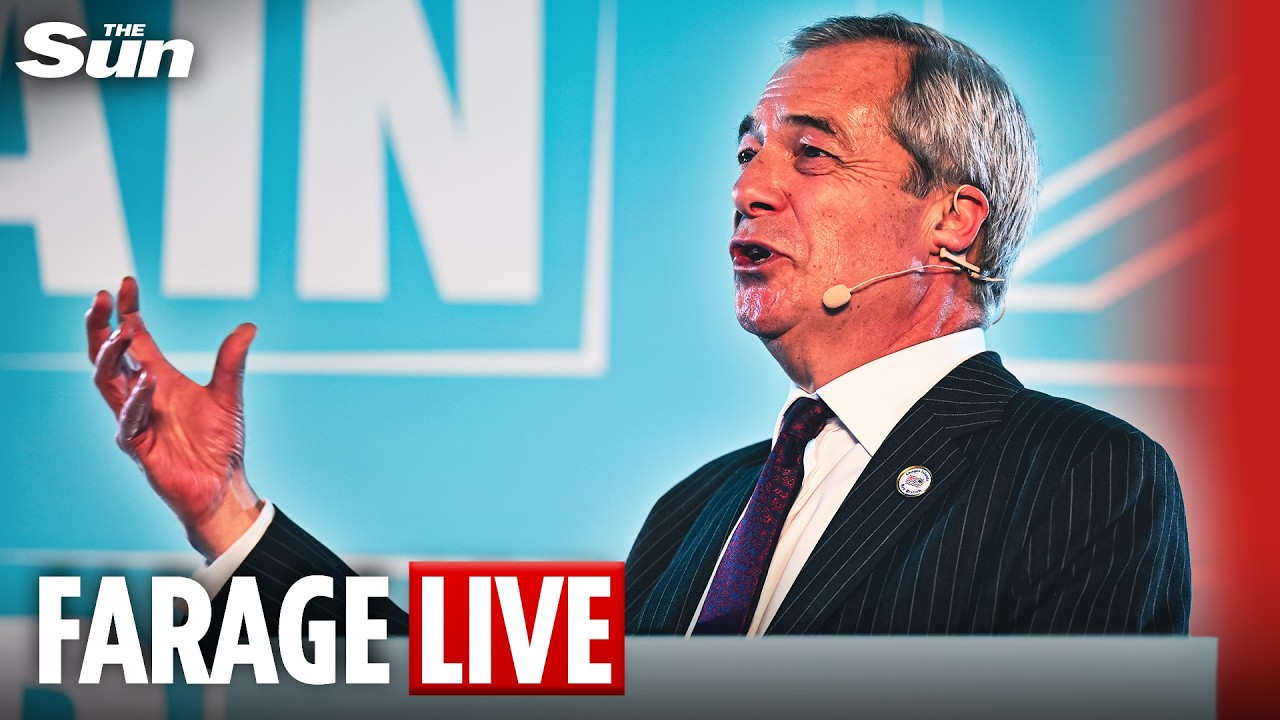
Nigel Farage’s decision to appoint Robert Jenrick as Reform UK’s would-be chancellor represents one of the clearest signs yet that the party is attempting to transform itself from a protest movement into a credible government-in-waiting.
For years, Reform UK was closely associated with Farage himself. His personality, campaigning ability and political instincts dominated the party’s public image. Critics frequently portrayed Reform as a “one-man band”, arguing that it lacked the depth of personnel and detailed economic policies required to run a modern state.
Farage now wants to change that perception.
The appointment of Jenrick is therefore about far more than giving a former Conservative politician a new title. It is an attempt to demonstrate that Reform has a team capable of taking responsibility for the economy, preparing detailed policies and potentially governing Britain after the next general election.
Reuters reported that Farage named Jenrick as Reform’s shadow chancellor in February 2026, putting him in line to become finance minister if the party wins the next election, currently expected by 2029.
Robert Jenrick’s Remarkable Political Journey
Jenrick’s arrival in Reform is particularly significant because of where he came from.
He was not a political outsider.
He was a Conservative MP, a former government minister and a candidate in the 2024 Conservative leadership contest. He served in several ministerial positions, including housing minister, and developed a high profile on issues such as immigration, crime and public policy.
He eventually finished second to Kemi Badenoch in the Conservative leadership contest.
His subsequent defection to Reform was therefore a major political event.
Reuters described him as the biggest name among a series of Conservative figures who moved towards Farage’s party.
For Farage, this provides an important advantage.
Reform can now say that it is not merely attracting dissatisfied voters. It is attracting politicians with direct experience of government.
That distinction matters enormously when a party begins claiming that it could actually run the country.
Why the Chancellor Role Is So Important
Of all the senior positions in government, the chancellor is among the most politically demanding.
The Treasury controls the government’s central economic strategy.
Taxation, public spending, borrowing, debt, welfare and many major economic decisions ultimately involve the chancellor.
For Reform, this is perhaps the most important test of its credibility.
It is relatively easy for an opposition party to promise lower taxes.
It is considerably harder to explain how those tax cuts would be funded.
It is easy to promise reductions in government waste.
It is much more difficult to identify precisely which programmes would be cut without damaging essential public services.
And it is easy to criticise the national debt.
A potential government must explain how it would actually reduce it.
Jenrick’s appointment therefore places him under enormous pressure.
He will have to turn Reform’s broad political instincts into a detailed economic programme.
Farage Wants to Build a Government
The appointment also forms part of Farage’s wider attempt to professionalise Reform.
When Farage announced his senior team, he explicitly argued that the time had come to broaden the party.
Reuters reported that Farage wanted to move beyond the perception of Reform as a “one-man band” and build a team capable of preparing for government.
This is an important strategic shift.
Farage’s political career has been remarkably successful at influencing British politics from outside government.
He helped drive the Brexit movement.
He helped reshape the Conservative Party’s position on immigration and Europe.
He built Reform into a significant electoral force.
But influencing government and actually running government are two very different things.
A party that wants to enter Downing Street needs ministers who can handle complex departments and make difficult decisions.
Jenrick is intended to help demonstrate that Reform is ready for that challenge.
The Economic Message
Jenrick has already outlined the broad themes of Reform’s economic approach.
He has spoken about reducing waste, cutting welfare spending, lowering taxes and reducing household bills.
At a Reform event, he said the party wanted a plan that would restore stability to the economy while reducing waste and the welfare bill.
That message is carefully designed.
Reform wants to appeal simultaneously to voters who believe they are paying too much tax and voters who believe government spending has become excessive.
The party’s argument is that Britain does not necessarily need higher taxes.
Instead, it needs a smaller and more efficient state.
That is a familiar argument on the political right, but Reform is attempting to present it in more populist terms.
The message is essentially:
The problem is not that ordinary Britons contribute too little; the problem is that the government wastes too much.
The £25 Billion Question
One of the most important parts of Jenrick’s economic programme concerns spending reductions.
Reform has proposed finding around £25 billion a year in savings from welfare, foreign aid and other areas. Reuters reported that the party wanted to establish strict fiscal rules and reduce spending before creating room for sustainable tax cuts.
This is crucial because Farage has moderated some of his earlier enthusiasm for immediate tax reductions.
The reason is straightforward.
Britain’s public finances are under pressure.
A government cannot responsibly cut taxes without considering the impact on borrowing and debt.
Reform therefore wants to present itself as more fiscally disciplined than some critics expect.
Jenrick’s task is to make that argument credible.
Learning From Liz Truss
There is an obvious political lesson behind Reform’s approach.
The party does not want to repeat the experience of Liz Truss’s 2022 government.
Truss’s “mini-budget”, which included large unfunded tax cuts, triggered severe market turmoil and contributed to her extremely short premiership.
The episode remains a warning to any politician promising dramatic economic change.
Reform knows that investors will be watching closely.
That is why Jenrick has emphasised fiscal rules and the need to create the necessary financial headroom before implementing major tax cuts.
Reuters reported that Reform now says it will only cut taxes when it has generated enough fiscal room to make those reductions sustainable.
That is a considerably more cautious position than some of Farage’s earlier rhetoric.
Reform and the Bank of England
Jenrick has also been given the task of establishing Reform’s position on the Bank of England.
The party has criticised the central bank’s handling of inflation and has argued that it needs to perform better.
Yet Reform says it would preserve the Bank’s independence.
That distinction is politically important.
Markets tend to value central-bank independence because monetary policy should not simply become an extension of short-term political calculations.
Reform’s position, as reported by Reuters, is that the Bank of England would remain independent but should change its priorities and improve its performance.
Jenrick has proposed changes including greater representation for business figures on the Monetary Policy Committee and removing what Reform regards as distractions related to climate policy.
The party has also proposed changes to the Office for Budget Responsibility.
The Office for Budget Responsibility
The OBR plays an important role in Britain’s fiscal system.
Its forecasts are used to assess the sustainability of government spending and taxation plans.
Reform has criticised aspects of its forecasting and wants to introduce additional independent experts, described as “super-forecasters”, selected according to forecasting performance.
Jenrick argues that the OBR has underestimated the potential benefits of tax reductions and overestimated the economic contribution of low-skilled migration.
This proposal illustrates the broader Reform philosophy.
The party does not necessarily want to abolish Britain’s economic institutions.
Instead, it wants to change how they operate.
That is politically significant because it allows Reform to present itself as a party of institutional reform rather than simply institutional destruction.
Immigration and the Economy
Immigration is another major part of Reform’s economic argument.
Farage’s party believes that high levels of immigration have contributed to pressure on housing, infrastructure and public services.
Jenrick’s economic plans are therefore connected directly to Reform’s immigration policies.
The party has proposed making it more expensive for employers to hire foreign workers and has argued that reducing migration could encourage more British citizens to enter employment.
A June 2026 Reuters Breakingviews analysis examined one of Reform’s proposals for taxing firms more heavily when they employ foreign workers. It noted that Jenrick had suggested an illustrative levy of £3,750 on full-time workers earning the National Living Wage, with the levy tapering at higher incomes.
The proposal is controversial because Britain’s economy depends on migrant workers in numerous sectors.
Healthcare, social care, hospitality, construction and other industries have relied heavily on overseas labour.
Reducing immigration therefore creates an economic trade-off.
Reform argues that employers should have stronger incentives to hire British workers.
Critics warn that some sectors could face serious labour shortages.
The Welfare State
Welfare reform is another major part of Jenrick’s responsibilities.
Reform argues that Britain’s welfare system has become too expensive and that people who could work should be encouraged to do so.
The party has proposed significant reductions in welfare spending and changes to eligibility.
Reuters reported that Reform intends to restore the two-child welfare limit for larger families and restrict access to certain benefits to British nationals, while also tightening disability-benefit rules.
These policies could potentially reduce government spending.
But they also create political risks.
Disability groups, anti-poverty organisations and Labour politicians are likely to argue that such measures could harm vulnerable households.
Jenrick will therefore need to explain not only how much money the policies could save but also how the reforms would affect people who genuinely cannot work.
A New Political Coalition
Jenrick’s appointment also illustrates the changing nature of Reform’s support.
Farage originally built his political movement around Euroscepticism and opposition to the political establishment.
Today, Reform is attracting former Conservative ministers and politicians while also attempting to win support among working-class voters who previously supported Labour.
That creates a potentially powerful coalition.
A voter may support Reform because of immigration.
Another may support it because of taxation.
Another because of opposition to Labour.
Another because they believe the Conservative Party has become ineffective.
The challenge is keeping all those voters together.
Jenrick’s economic role could be particularly important because economic policy is where these different groups may find common ground.
The Conservative Party’s Nightmare
For the Conservatives, Jenrick’s appointment is particularly uncomfortable.
A former Conservative leadership candidate is now preparing to become the potential chancellor of a rival party.
That makes it increasingly difficult for the Conservatives to dismiss Reform as simply an anti-establishment protest movement.
Reform is recruiting people who understand the Conservative Party from the inside.
And those politicians can now help Farage build a serious alternative.
The Conservative Party therefore faces a historic strategic challenge.
It must compete against Reform without simply becoming Reform.
At the same time, it needs to win back voters who believe that Farage represents a more effective version of right-wing politics.
Labour’s Response
Labour has attacked the appointments.
The party has argued that figures such as Jenrick and Suella Braverman have already held government responsibilities and failed to deliver the results Britain needed.
That is a straightforward political counterattack.
Labour wants voters to see Reform’s new leadership team as recycled Conservative politics rather than a genuine alternative.
But Reform can turn that argument around.
Its response is that precisely because these politicians have experience of the previous system, they now understand why it failed.
That creates a fascinating political battle over political experience.
Is experience evidence of competence?
Or is it evidence that the politicians were part of the problem?
The answer will depend largely on how voters interpret Britain’s recent political history.
Can Jenrick Give Reform Economic Credibility?
This may ultimately be Jenrick’s most important task.
Reform has gained substantial political momentum, but popularity does not automatically equal economic credibility.
Markets will want to know how the numbers add up.
Businesses will want to know what tax and labour policies mean for investment.
Public-sector workers will want to know what spending reductions mean for services.
Families will want to know whether they will actually pay less tax.
And voters will want to know whether Reform can deliver its promises without causing financial instability.
Jenrick has the difficult job of answering all these questions.
A Potential Government-in-Waiting
The significance of the appointment therefore goes beyond the title of “shadow chancellor”.
Farage is attempting to demonstrate that Reform can become a government-in-waiting.
The party has appointed figures responsible for economic policy, education, home affairs, business and other major areas.
That creates a more conventional political structure.
It also makes Reform easier for voters to evaluate.
Instead of asking simply whether they like Nigel Farage, voters can now ask whether they trust Robert Jenrick with the Treasury.
That is a much more serious political question.
The Farage-Jenrick Partnership
The partnership itself is politically intriguing.
Farage is an exceptional campaigner with a long history of understanding public anger and political messaging.
Jenrick brings government experience and a more conventional Westminster background.
Their strengths are therefore different.
Farage can communicate the political vision.
Jenrick must explain how that vision could be financed.
If the partnership works, Reform could become considerably more formidable.
If it fails, critics will argue that the party has discovered that campaigning against government is easier than actually preparing to govern.
Conclusion
Nigel Farage’s decision to unveil Robert Jenrick as Reform UK’s would-be chancellor represents a major stage in the party’s transformation.
Jenrick is not simply another recruit.
He is a former Conservative minister, former leadership candidate and experienced parliamentarian who has now placed himself at the centre of Farage’s attempt to construct a credible alternative government. Reuters reported that his appointment was explicitly intended to prepare Reform for the possibility of governing after the next general election.
His economic programme will be central to that effort.
Reform wants to reduce waste, cut welfare spending, create room for lower taxes and impose greater fiscal discipline.
At the same time, it wants to reform the Bank of England and OBR without abandoning their fundamental independence.
But the hardest part will be proving that the numbers work.
Britain’s economic problems cannot be solved simply by cutting taxes or reducing government spending.
Every policy has consequences.
Every spending cut creates winners and losers.
Every reduction in immigration affects employers as well as public services.
And every tax cut must ultimately be paid for through reduced spending, stronger growth, higher borrowing or some combination of the three.
That is why Jenrick’s new role is so important.
Farage has already demonstrated that he can build a political movement.
Now he needs to demonstrate that the movement can govern.
Robert Jenrick is being asked to provide the economic credibility that could take Reform from being Britain’s most disruptive political force to being a genuine government-in-waiting.
The Conservatives will see that as an existential threat.
Labour will see it as an opportunity to expose Reform’s weaknesses.
But for Farage, the objective is much bigger.
He wants voters to stop asking whether Reform is capable of winning elections—and start asking whether it is capable of running Britain.
That is the real significance of Robert Jenrick’s appointment.
Leave a Reply
You must be logged in to post a comment.