
Nigel Farage Slams Labour’s Latest Countryside Attack: “Might as Well Ban Dog Walks!”
Nigel Farage has launched another fierce attack on Labour’s approach to the British countryside, accusing the government of pursuing an increasingly restrictive agenda that could threaten rural traditions, farming communities and the freedoms enjoyed by people who live and work in the countryside.
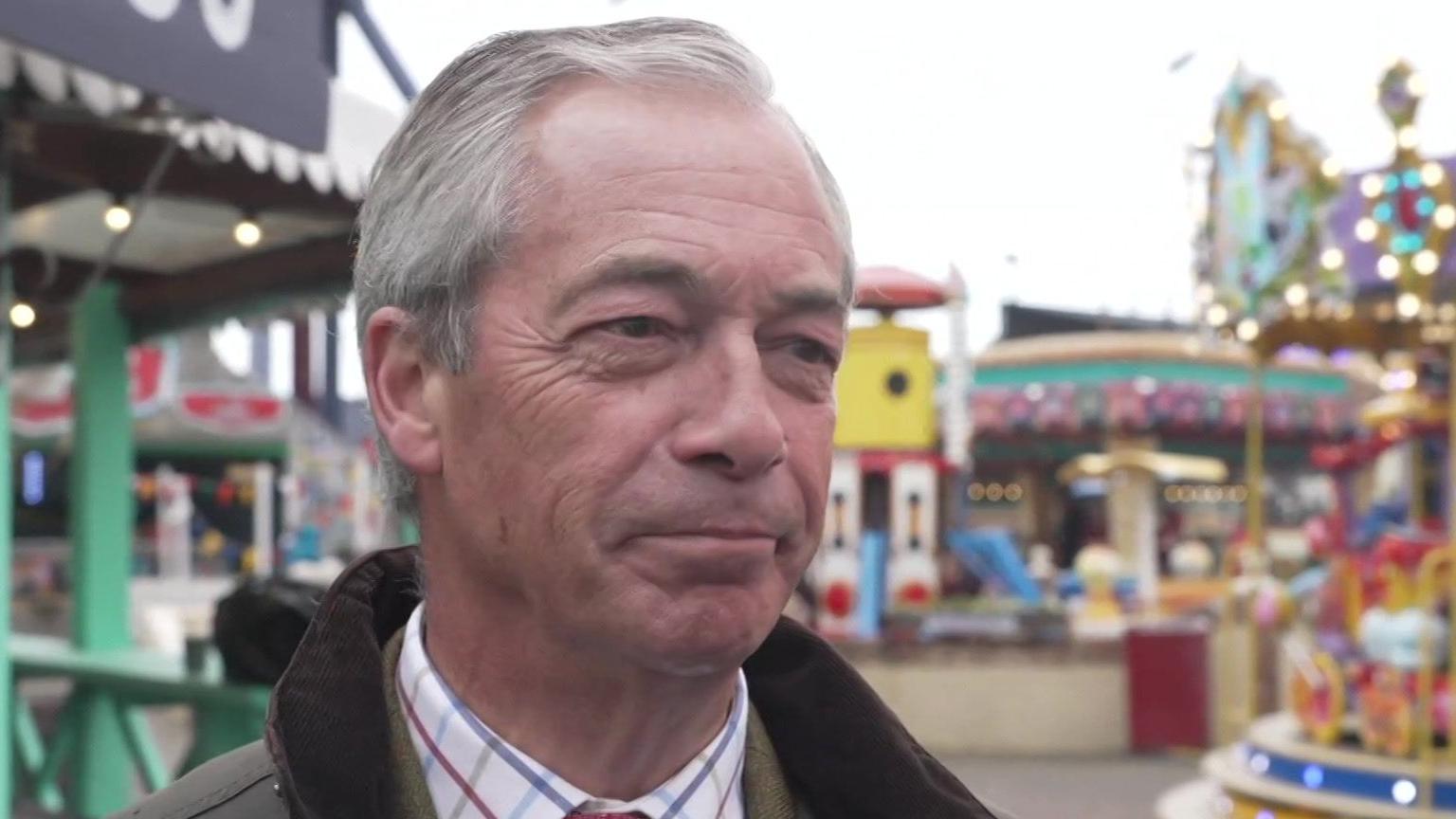
The Reform UK leader’s intervention centres on the continuing political battle over trail hunting and the wider question of how much control the state should exercise over activities taking place on rural land.
Farage’s message is deliberately provocative: if Labour continues down what he regards as an increasingly restrictive path, Britain could reach a point where even ordinary countryside activities such as walking dogs become subject to unnecessary restrictions.
The “dog walks” line has also appeared in social-media commentary from Farage and Conservative figures, where it has been used to frame Labour’s policies as part of a broader “anti-rural” agenda.
Behind the rhetoric, however, lies a genuine political dispute about animal welfare, land management, rural traditions and individual freedom.
A New Battle Over the Countryside
The countryside has become an increasingly important political battleground.
For decades, rural communities have complained that policymakers based in Westminster do not always understand the realities of agricultural life. Farmers face complicated regulations, environmental requirements, rising costs and uncertainty over government policy.
At the same time, animal-welfare campaigners argue that traditional countryside activities should not be protected simply because they have existed for generations.
Trail hunting sits directly in the middle of that argument.
Supporters describe it as a legitimate rural activity with an important place in countryside culture. Opponents argue that it can facilitate or disguise illegal hunting practices and that stronger restrictions are therefore necessary.
The disagreement is not merely about hunting.
It is about competing visions of what the countryside should look like in modern Britain.
What Is Trail Hunting?
Trail hunting involves hounds following a pre-laid scent across countryside. It was developed as an alternative activity after the Hunting Act 2004 restricted traditional hunting of wild mammals with dogs.
The distinction between trail hunting and illegal hunting has nevertheless remained controversial.
Animal-welfare campaigners have argued that trail hunting can provide opportunities for illegal hunting to occur or can be used as a cover for prohibited activity.
Hunting organisations reject that characterisation and maintain that legitimate trail hunting is a lawful countryside activity.
This dispute became particularly controversial after a 2020 incident involving the Master of the South Herefordshire Hunt, who was convicted of encouraging others to engage in illegal fox hunting. The case intensified calls from opponents of hunting for tighter restrictions.
For politicians such as Farage, however, the issue raises a wider concern about whether traditional rural activities are gradually being squeezed out by increasingly interventionist legislation.
Farage’s “Control Freaks” Argument
Farage’s language is central to his political strategy.
By describing Labour politicians and their supporters as “control freaks”, he is not merely objecting to one proposed policy.
He is attempting to construct a broader narrative.
The argument is that Labour increasingly wants to tell people how they should use rural land, what activities they should participate in and which traditional practices should disappear.
That is a particularly effective message among rural voters who already feel disconnected from Westminster.
The phrase “might as well ban dog walks too” is deliberately exaggerated. Farage is not necessarily making a literal prediction that Labour intends to prohibit people from walking their dogs.
Instead, he is using an extreme example to illustrate what he sees as the logical direction of increasingly restrictive countryside policies.
The underlying message is simple:
Where does government regulation stop?
Why Dog Walking Is Such an Effective Political Symbol
Dog walking is almost universally understood as an ordinary countryside activity.
Millions of people across Britain regularly walk dogs in parks, fields, woods and public footpaths.
It has little of the political baggage associated with hunting.
That makes it a useful rhetorical comparison.
By mentioning dog walking, Farage shifts the debate away from foxes, hunting traditions and animal welfare and towards personal freedom.
The question becomes less about whether trail hunting should be restricted and more about whether ordinary citizens can continue to enjoy the countryside without excessive interference.
This is a familiar populist political technique.
Rather than debating a complicated piece of legislation in technical terms, Farage reduces the issue to something ordinary voters can immediately understand.
If politicians can restrict one traditional rural activity, he suggests, what prevents them from restricting another?
That argument can be emotionally powerful even when the activities themselves are not directly comparable.
Labour’s Argument Is Very Different
Labour’s position is based on a different principle.
The government and animal-welfare campaigners argue that Parliament has a responsibility to protect animals and prevent illegal hunting.
From this perspective, the countryside is not simply a space where traditional practices should automatically continue.
Government has a legitimate role in determining what activities are permitted.
This is particularly true when animal welfare is involved.
Supporters of stronger regulation would argue that freedom cannot mean allowing activities that cause unnecessary suffering or undermine existing laws.
They would also reject the suggestion that regulating trail hunting amounts to an attack on the countryside.
Their argument would be that the countryside belongs to everyone, not just those who participate in traditional hunting activities.
That creates an important counterpoint to Farage’s argument.
Rural Freedom Versus Animal Welfare
The dispute therefore involves two competing concepts of freedom.
The first is the freedom of individuals and communities to maintain traditional practices.
The second is the freedom of animals from unnecessary harm.
Neither principle can simply be ignored.
For hunting supporters, restrictions can feel like an attack on their culture and way of life.
For animal-welfare campaigners, allowing hunting-related activities to continue can appear inconsistent with modern standards of animal protection.
British politics has struggled with this conflict for decades.
The Hunting Act itself was the product of an exceptionally bitter political battle.
The fact that hunting remains controversial years later demonstrates how deeply the issue is connected to questions of class, identity, tradition and rural life.
Farage’s Broader Rural Strategy
The controversy also fits neatly into Farage’s wider political strategy.
Reform UK has increasingly attempted to appeal to rural voters by presenting itself as the party that understands farmers and countryside communities.
That involves more than hunting.
Reform has criticised agricultural taxes, environmental restrictions and what it sees as excessive bureaucracy affecting farmers.
The party’s message is that rural Britain is being asked to absorb too many changes imposed by politicians who do not understand how agriculture actually works.
That message can resonate strongly in farming communities.
A farmer may not care particularly about Westminster’s arguments over party politics. But they do care about land-use rules, inheritance taxes, subsidies, planning regulations, environmental requirements and the cost of running a farm.
Farage attempts to connect all those issues into a single political narrative.
Labour, he argues, represents an urban political establishment imposing rules on rural Britain.
Reform presents itself as the alternative.
Why Labour Should Take the Argument Seriously
It would be easy for Labour politicians to dismiss Farage’s comments as exaggeration.
That could be a mistake.
Political rhetoric does not need to be literally accurate in every detail to be electorally effective.
The phrase “anti-rural” can become a powerful political label if enough voters begin to believe that a party does not understand their way of life.
The Conservatives have historically benefited from strong support in many rural areas. Reform’s growth threatens that traditional political geography.
If Farage can persuade rural voters that Reform is the party defending their freedoms, he can potentially weaken both Labour and the Conservatives.
That is why countryside policy matters far beyond the relatively small number of people directly involved in hunting.
It is about identity.
The Class Dimension
There is also an unavoidable class dimension to the hunting debate.
Fox hunting has historically been associated with wealthy landowners and traditional rural elites.
Critics of hunting therefore sometimes see restrictions as a challenge to privilege.
Supporters, however, argue that modern hunting communities include people from a much broader range of backgrounds and that attacks on hunting unfairly stigmatise rural traditions.
Farage has often positioned himself against what he describes as an out-of-touch metropolitan elite.
That makes the hunting debate particularly useful for his political narrative.
He can portray restrictions not as progressive reform but as another example of urban politicians telling rural communities how to live.
Again, the reality is more complicated.
But political narratives are rarely built entirely from complexity.
The Risk of Overstatement
Farage’s strategy also carries a risk.
If every countryside regulation is described as an attack on rural freedom, voters may eventually become sceptical.
There is a legitimate role for environmental regulation.
There are legitimate concerns about animal welfare.
There are also circumstances in which restrictions on land use are necessary to protect public safety or the environment.
The challenge is therefore to distinguish sensible regulation from unnecessary interference.
That distinction is crucial if Reform wants to be seen as a serious governing party.
Opposing every regulation is not the same as developing a coherent rural policy.
What Rural Communities Actually Need
Beyond the hunting controversy, rural Britain faces much more immediate challenges.
Farmers are dealing with rising input costs, uncertainty over agricultural policy, changing subsidy arrangements and pressure to improve environmental outcomes.
Many rural communities also face problems with public transport, healthcare access, broadband, housing and employment.
For people living outside major cities, these issues can be far more important than Westminster’s arguments over hunting.
A successful rural political strategy therefore needs to address the everyday realities of countryside life.
Reform has an opportunity to do that.
But it will need to demonstrate that its policies can support rural economies rather than simply oppose Labour.
A Battle Over Who Owns the Rural Vote
The broader political significance is clear.
Reform wants to become the political voice of voters who believe the established parties have ignored them.
The countryside is a natural part of that strategy.
If Farage can convince farmers, rural workers and countryside residents that Labour is attempting to regulate their lives from Westminster, he can build a powerful electoral coalition.
The Conservatives face a different problem.
Many traditional Conservative voters may sympathise with Farage’s views on hunting and rural freedom, while still having reservations about Reform’s broader programme.
That makes the rural vote increasingly competitive.
Labour cannot assume that rural constituencies are permanently inaccessible.
But neither can it assume that rural voters will automatically support the government simply because Reform is controversial.
Conclusion
Nigel Farage’s attack on Labour’s countryside policies is another example of his ability to turn a relatively specialised political dispute into a much broader argument about freedom and the role of government.
His suggestion that politicians “might as well ban dog walks” is best understood as a rhetorical warning rather than a literal prediction. The line has been used to portray Labour’s countryside agenda as part of what Farage and his allies describe as an “anti-rural” approach.
The underlying dispute is nevertheless serious.
Britain must decide how it balances traditional rural activities with animal welfare, environmental protection and modern legal standards.
For Labour, the argument is about regulation and preventing activities that it believes can facilitate illegal hunting or harm animals.
For Farage and Reform, it is increasingly about defending rural freedom against what they describe as excessive interference from Westminster.
Neither side can afford to ignore the wider electorate.
The countryside is not simply a backdrop to Britain’s political arguments. It is home to millions of people whose livelihoods depend on agriculture, land management and rural businesses.
If Reform can persuade those voters that it is the party prepared to defend their way of life, Farage could turn countryside politics into another important source of electoral strength.
And that is why a dispute over trail hunting—and the deliberately provocative warning about dog walks—could become part of a much larger political battle over who speaks for rural Britain.
Leave a Reply
You must be logged in to post a comment.