

Nigel Farage Looks to Be a PM in Waiting – But Five Major Problems Could Destroy Reform
Nigel Farage increasingly looks like a politician preparing for power.
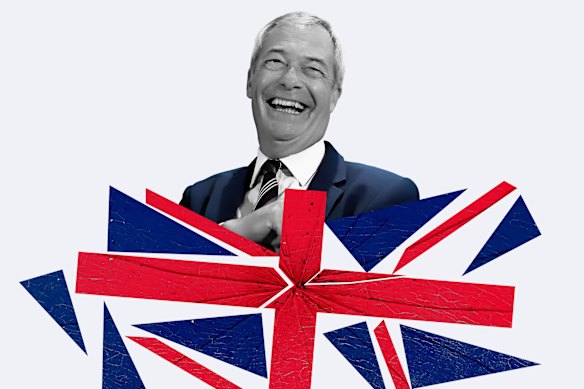
Reform UK is no longer simply a protest vehicle built around opposition to Westminster. It has become a serious electoral force, and Farage has increasingly presented his party as a potential government-in-waiting.
But political momentum can disappear remarkably quickly.
A party can rise through public anger, strong polling and a charismatic leader. Yet transforming that popularity into a durable governing organisation is an entirely different challenge.
And Reform now faces several major problems that could determine whether Farage’s political project becomes a historic success or collapses under the weight of its own ambitions.
The party’s recent rise has been accompanied by intense scrutiny over its finances, internal management, candidate selection and relations with other figures on the political right. Current reporting has also highlighted competition from Rupert Lowe’s Restore Britain movement and questions about Reform’s organisational strategy.
Here are five of the biggest dangers.
1. Reform’s Biggest Strength Could Also Be Its Biggest Weakness
Everything still revolves around Nigel Farage.
That has been one of Reform’s greatest advantages.
Farage is recognisable.
He is experienced.
He knows how to generate headlines.
He understands television.
He understands political campaigning.
And, perhaps most importantly, he has spent decades building a personal relationship with voters who believe the traditional parties have ignored them.
But a party that depends too heavily on one politician faces a fundamental problem.
What happens when that politician is unavailable?
What happens when Farage makes a mistake?
What happens when his popularity declines?
And what happens after Farage?
Those questions are becoming more important as Reform moves closer to the possibility of national government.
The party needs to demonstrate that it can survive as an institution rather than simply as a political vehicle for one individual.
That means building a deep bench of credible politicians.
It needs people who can discuss the economy.
People who understand healthcare.
People capable of running government departments.
People who can defend complicated policies under intense parliamentary scrutiny.
And people who can appeal to voters who may like Reform’s policies but dislike Farage personally.
That is a very different challenge from winning television debates.
2. Internal Divisions Could Become Fatal
Political parties can survive external attacks.
Internal conflict is much more dangerous.
Reform has already experienced disputes involving politicians, candidates and former allies.
The continuing political rivalry surrounding former Reform MP Rupert Lowe demonstrates the potential danger of fragmentation on the right. Lowe’s Restore Britain has the potential to compete for voters who otherwise might support Reform, particularly among those attracted to its harder-line political positions.
This creates a serious strategic problem for Farage.
He needs to maintain Reform’s position as the dominant force on the right.
But every new rival has the potential to divide the same electorate.
If Conservative voters move towards Reform, that helps Farage.
If Reform voters divide between Reform and Restore, the situation becomes much more complicated.
Britain’s first-past-the-post electoral system makes vote splitting particularly dangerous.
A party can receive a substantial share of the national vote and still fail to win enough constituencies if its support is divided.
That means Reform cannot simply assume that popularity automatically translates into power.
3. Financial Controversies Could Damage Trust
Perhaps the most serious threat is financial credibility.
Reform’s rise has attracted significant political donations and increasing attention to how money enters and moves through the organisation.
That is inevitable for a party preparing for national government.
But financial questions can be politically devastating.
Farage has spent much of his career demanding greater accountability from established political parties.
That means Reform is likely to face an especially high standard.
Supporters may forgive a political disagreement.
They may forgive a poor speech.
They may even forgive a bad election result.
Financial controversy is different.
It goes directly to the question of trust.
Recent reporting has highlighted scrutiny surrounding Reform’s finances, including a substantial undeclared gift and questions about party management.
None of those allegations should automatically be treated as proof of wrongdoing.
But politically, the issue is still dangerous.
The opposition does not need to prove that Reform is corrupt.
It only needs to persuade voters that the party has not yet demonstrated the transparency and professionalism expected from a potential government.
That could be enough to frighten undecided voters.
4. Reform Has to Prove It Can Govern
This may ultimately be the biggest challenge of all.
Opposition is easy compared with government.
A party can promise to cut taxes.
It can promise to reduce immigration.
It can promise to reform the NHS.
It can promise to cut waste.
It can promise tougher policing.
It can promise to reduce bureaucracy.
All of those messages can be politically attractive.
But eventually comes the difficult question:
How?
Reform’s current policy platform includes tough positions on illegal migration, welfare and borders, while its official policies also set out wider plans for taxation, public services and the economy.
Once voters start treating Reform as a genuine alternative government, they will demand much more detail.
How many civil servants would be cut?
Which departments would lose money?
How much would tax changes cost?
How would the NHS be funded?
What would happen to pensions?
How would immigration policy work in practice?
What would Britain do if another country refused to cooperate?
What would happen if courts challenged a major policy?
These are not questions that can be answered with slogans.
They require ministers, lawyers, economists and administrators.
And that is precisely where Reform faces a major test.
The Difference Between Protest and Power
A protest movement survives by identifying problems.
A government survives by solving them.
That difference cannot be overstated.
Farage has been extraordinarily successful at explaining why he believes Britain’s political system is failing.
His next challenge is demonstrating that he has a realistic plan for rebuilding it.
That requires more than anger.
It requires administration.
And administration is rarely glamorous.
There are budgets.
Civil servants.
Regulations.
International agreements.
Parliamentary procedures.
Court challenges.
Public consultations.
Implementation deadlines.
Political compromises.
The machinery of government is enormously complicated.
Reform’s supporters may welcome the party’s determination to challenge that machinery.
But they will eventually discover that changing it is much harder than criticising it.
5. The Conservative Problem
The fifth major danger is perhaps the most strategically complicated.
Reform needs to defeat the Conservatives.
But it may also need them.
That sounds contradictory.
It is not.
The Conservatives remain a major political force.
Many Reform voters are former Conservative voters.
If Reform takes enough support from the Conservatives, it can become the largest party on the right.
But if the Conservative vote collapses too dramatically, Labour or other parties may benefit from the resulting fragmentation.
Farage therefore faces a delicate balancing act.
He wants Reform to replace the Conservatives.
But he does not necessarily want every Conservative voter to abandon politics or move to another party.
The eventual relationship between Reform and the Conservatives could become one of the defining questions of the next election.
Will they fight each other everywhere?
Will they explore some form of electoral cooperation?
Will one party eventually absorb the other?
Or will the two movements remain bitter rivals?
Nobody can assume the answer.
The Rupert Lowe Challenge
The emergence of Rupert Lowe’s political movement adds another layer of uncertainty.
A rival party does not need to become larger than Reform to cause problems.
It only needs to win enough voters in the right constituencies.
If Reform has 40 percent support and another right-wing party takes 10 percent, the combined result may be very different from a situation in which Reform receives the entire vote.
That is the mathematics of first-past-the-post.
And it means Farage has a strong incentive to prevent the right from fragmenting.
But that may be easier said than done.
Political personalities matter.
Ambitions matter.
Personal rivalries matter.
Once politicians establish their own organisations, bringing them back together can become extraordinarily difficult.
Candidate Selection
Another challenge is the quality of Reform’s candidates.
The bigger the party becomes, the more candidates it needs.
That creates an enormous organisational burden.
A small political movement can carefully vet a limited number of candidates.
A national party competing across hundreds of constituencies has a much harder task.
Every candidate becomes a potential headline.
One controversial statement can dominate an election campaign.
One inappropriate social-media post can create national embarrassment.
One internal dispute can become a media storm.
And every mistake is likely to be blamed on Farage.
This makes candidate selection one of the most important organisational tests facing Reform.
The Problem of Rapid Growth
Rapid political growth sounds like an ideal problem.
It is not always.
Organisations need time to develop.
Staff need training.
Financial systems need to mature.
Local branches need structures.
Candidates need support.
Communication teams need coordination.
Policy departments need expertise.
A party that grows faster than its organisational capacity can become unstable.
The temptation is to celebrate every new supporter, councillor or defector.
But political infrastructure is less exciting.
It requires patience.
And Reform may not have much time.
Reform’s Support Is Broad – But Is It Deep?
Another question concerns the depth of Reform’s support.
A voter can support Reform because they are angry with Labour.
Another can support it because they dislike immigration policy.
Another may be attracted by lower taxes.
Another may simply want to punish the Conservatives.
Those voters do not necessarily agree on everything.
That creates a potential problem.
Anti-establishment coalitions can be powerful.
But they can also collapse once they have achieved their immediate objective.
If Labour loses popularity, what holds the Reform coalition together?
The answer must eventually be policy.
The Immigration Trap
Immigration remains one of Reform’s strongest issues.
The party has built enormous political energy around tighter borders and tougher action against illegal migration.
That has helped differentiate it from the established parties.
But it also creates a difficult governing challenge.
Immigration is affected by international agreements, labour shortages, universities, businesses, courts and foreign governments.
A government cannot simply announce a number and assume the system will immediately change.
Even policies designed to reduce migration can create economic consequences.
Businesses may struggle to recruit.
Public services may lose workers.
International relations may become more difficult.
That means Reform will eventually have to explain not only how it intends to reduce migration but what the consequences will be.
The Economic Challenge
The economy may be even more important.
Voters can support Reform’s immigration policies while remaining uncertain about its economic programme.
The party’s proposals for tax cuts and spending reductions are ambitious.
But ambitious promises create high expectations.
If Reform says it can cut taxes while protecting public services, voters will expect it to explain the mathematics.
If it promises dramatic spending cuts, voters will want to know what disappears.
If it promises faster economic growth, voters will want evidence that the strategy can deliver.
This is where Reform will encounter perhaps its most serious test from economists and independent experts.
The NHS Problem
The NHS presents another challenge.
British voters routinely rank healthcare among their most important concerns.
Reform can criticise Labour’s performance.
But criticism alone will not be enough if the party wants government.
It must answer difficult questions.
How will waiting lists be reduced?
How many doctors and nurses are required?
How much will the NHS cost?
What role should private healthcare play?
How will social care be funded?
What happens to GP services?
What happens to hospitals in rural communities?
Those answers will determine whether voters see Reform as a serious governing alternative.
The Leadership Question
Then there is the unavoidable question of Farage himself.
Can he remain the central figure without becoming a political liability?
Farage is simultaneously Reform’s greatest asset and its greatest vulnerability.
His supporters are intensely loyal.
His opponents are intensely motivated.
He attracts enormous media attention.
That can be useful during an election.
It can also make it difficult for the party to control its own message.
If every story becomes a Farage story, Reform risks becoming dependent on one personality.
A government cannot operate like that.
A government needs institutions.
The Trump Comparison
Farage is frequently compared with Donald Trump because both have built political movements around populist messages and opposition to established political elites.
But Britain is different.
The parliamentary system is different.
The electoral system is different.
The relationship between party leadership and MPs is different.
The British political environment also places enormous emphasis on party discipline and parliamentary procedure.
Farage therefore cannot simply reproduce another country’s political strategy.
He has to build a specifically British governing machine.
The Media Trap
Reform has also benefited enormously from media attention.
Every controversy generates publicity.
Every speech can become a headline.
Every attack on Labour can dominate political discussion.
But attention is not the same as support.
A party can trend online while failing to persuade undecided voters.
This is particularly important as Reform moves from protest politics towards government.
Voters who enjoy watching Farage attack Labour may not necessarily trust him to run the Treasury.
Those are different tests.
The Professionalism Test
That is why professionalism could become the defining issue for Reform.
Can it behave like a government before it becomes one?
Can its MPs operate effectively?
Can its candidates avoid unnecessary controversies?
Can its financial systems withstand scrutiny?
Can its policy teams produce detailed plans?
Can its leadership manage internal disagreements?
Can it maintain discipline?
If the answer is yes, Farage’s prospects become much stronger.
If the answer is no, the party’s rapid rise could become its downfall.
Five Problems, One Bigger Question
All five problems lead to the same fundamental question.
Is Reform ready?
Ready for government.
Ready for responsibility.
Ready for scrutiny.
Ready for compromise.
Ready for failure.
Because government guarantees failure somewhere.
No administration can satisfy everyone.
No manifesto survives contact with reality unchanged.
No leader can control every event.
No policy works perfectly.
The successful party is the one that can absorb those difficulties without falling apart.
Farage’s Moment
For Farage, the opportunity is enormous.
The political environment is unusually fluid.
Traditional party loyalties have weakened.
The Conservatives remain vulnerable.
Labour faces its own political challenges.
Reform has a strong political identity.
And Farage himself remains one of Britain’s most recognisable political figures.
Recent reporting describes Reform as having strong polling signals while simultaneously facing internal and organisational pressures.
That combination makes the current moment particularly important.
The party has momentum.
But momentum is temporary.
Organisation is permanent.
The Road to Downing Street
Farage may increasingly look like a Prime Minister-in-waiting.
But there is a huge difference between looking like one and becoming one.
To reach Downing Street, Reform needs to turn national support into constituency victories.
It needs to prevent the right from splitting.
It needs credible candidates.
It needs financial credibility.
It needs a serious economic programme.
It needs a functioning parliamentary team.
And above all, it needs to convince voters who are not already Reform supporters.
That final group will determine the result.
The Five Threats
The five dangers can therefore be summarised simply.
First: Reform’s dependence on Farage could become a weakness.
Second: internal divisions and rival movements could fragment its support.
Third: financial controversies could damage its claims to political integrity.
Fourth: the party must prove that its policies can work in government.
Fifth: the unresolved relationship with the Conservatives could determine whether the right wins or divides.
None of these problems guarantees Reform’s failure.
But ignoring them could be fatal.
The Biggest Risk of All
The biggest risk is overconfidence.
A political party that starts believing it is destined to win can stop listening.
It can underestimate opponents.
It can ignore internal warnings.
It can confuse popularity with loyalty.
It can mistake headlines for votes.
And it can assume that an election victory is inevitable.
British political history is full of parties that believed they were about to dominate the country.
Then circumstances changed.
Voters changed their minds.
Events intervened.
A scandal emerged.
An opponent recovered.
A campaign went wrong.
Politics can turn extraordinarily quickly.
The Final Test
Nigel Farage has already achieved something remarkable.
He has helped turn Reform from a protest movement into one of the most important forces in British politics.
But that achievement creates a new responsibility.
He must now prove that Reform can become more than a vehicle for dissatisfaction.
It must become a credible governing alternative.
That means answering difficult questions rather than simply asking them.
It means accepting scrutiny rather than treating every criticism as an attack.
It means building institutions rather than relying on personalities.
And it means persuading voters who are not already angry enough to support Reform.
The next stage of Farage’s political career will therefore be very different from the previous one.
For decades, his role was to challenge the establishment.
Now he has to convince Britain that he can replace it.
That is a much harder task.
The five problems facing Reform are serious.
But they are also opportunities.
If Farage can resolve the internal divisions, strengthen the party’s organisation, answer financial questions transparently, produce credible economic plans and prevent the right from splitting, Reform could enter the next general election as a formidable political force.
If he cannot, the party’s greatest strength could become its greatest weakness.
The voters who lifted Reform could just as quickly abandon it.
And that is the final lesson for Farage.
A Prime Minister-in-waiting is still only a candidate until voters make the decision.
The road to Downing Street is not built by polls.
It is not built by headlines.
It is not built by viral speeches.
It is built by trust.
And Reform’s greatest battle now is not convincing people that the old political system has failed.
Farage has already done that.
His real challenge is convincing Britain that he and his party are capable of doing better.