


Nigel Farage Is Under Threat from ‘Enemies Within His Own Party’, Warns Liz Truss
Nigel Farage has spent years building his political career around the idea of challenging the establishment. Yet his most serious challenge may now be coming from much closer to home. As Reform UK attempts to transform itself from a protest movement into a credible governing party, disagreements inside its own ranks are becoming increasingly difficult to ignore.
Former Prime Minister Liz Truss has warned that Farage could face opposition from “enemies within his own party”, raising uncomfortable questions about whether Reform can maintain unity as it becomes more ambitious. Her warning comes at a particularly sensitive moment for the party, which has recently experienced internal disputes, controversy surrounding senior figures and growing competition from other forces on the political right.
For Farage, the timing could hardly be worse.
Reform UK has spent the past several years building momentum by attracting voters who feel abandoned by the traditional political parties. Its strongest appeal has been its promise to challenge the political establishment, particularly over immigration, taxation, national sovereignty and the legacy of Brexit.
Farage remains the central figure behind that political project. His public profile is far greater than that of most of his colleagues, and many supporters see him as the politician who gave Reform its identity.
But a party built around one dominant personality can also face serious difficulties when it begins to expand.
As Reform becomes more successful, more politicians are likely to want influence. Some will agree with Farage’s strategy, while others will want to take the party in a different direction. Differences that might once have remained private can become increasingly visible when the organisation is under intense public scrutiny.
That appears to be what is happening now.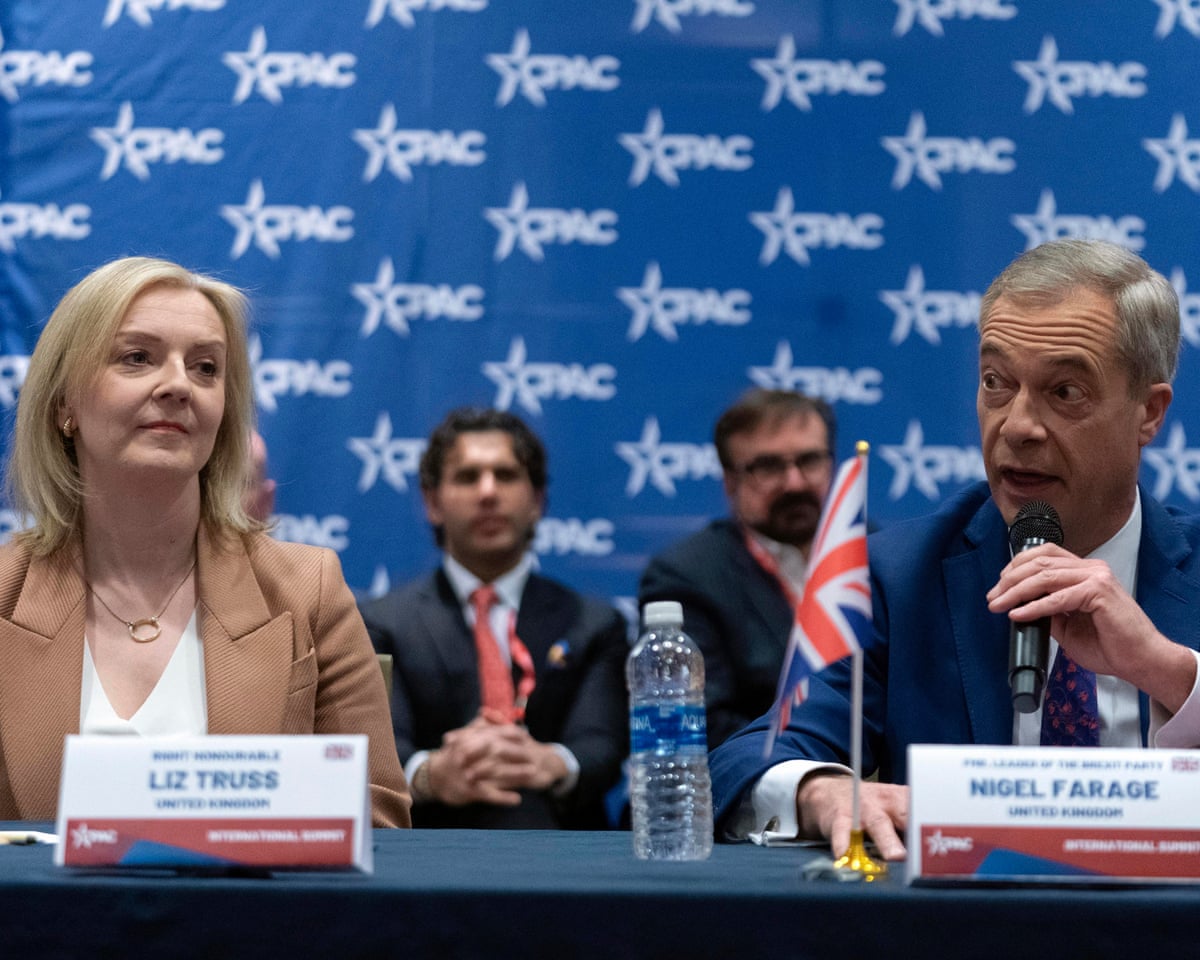
Recent months have exposed tensions within Reform, including disagreements involving prominent figures and disputes over the party’s direction. The suspension of senior activist Tim Montgomerie highlighted the difficulties Farage faces in managing a movement that contains politicians and activists with different backgrounds and ambitions.
There are also wider questions about leadership.
Farage has always been an exceptionally effective campaigner. He understands how to dominate the political conversation and how to turn controversial issues into opportunities. But running a national political organisation is different from leading a referendum campaign or opposition movement.
A future governing party requires discipline, detailed policies, competent administration and a broad range of experienced politicians.
This is where Reform’s internal tensions could become dangerous.
Farage needs people around him who are capable of challenging his ideas when necessary. At the same time, he needs to prevent disagreements from becoming public battles that damage the party’s reputation.
That balance is extremely difficult to achieve.
Liz Truss’s intervention is particularly interesting because she herself has experience of leading a government through intense internal conflict. Her premiership ended after a political and financial crisis that severely damaged her authority. She therefore understands better than most politicians how quickly internal disagreements can become existential threats.
Her warning about Farage may consequently be interpreted in different ways.
Supporters of Reform may dismiss it as an intervention from a former Conservative leader whose own political career ended disastrously. They could argue that Truss is simply attempting to influence the direction of the British right from outside the party.
Others may see her comments as a warning that Reform is beginning to experience the same problem that has affected many political movements before it: success creates competition.
When a party is small and fighting for survival, its members usually have a common purpose. When it begins to believe that government is possible, the question changes from “How do we win?” to “Who gets to decide what happens after we win?”
That is when internal factions can emerge.
For Farage, one of the biggest challenges is maintaining control while also demonstrating that Reform is more than a one-man operation.
If every major decision is associated with Farage personally, the party may struggle to convince undecided voters that it is ready for government. Yet if he allows too much freedom to other senior figures, disagreements could weaken his authority.
The issue is especially important because Reform’s support has recently shown signs of volatility.
The party enjoyed considerable momentum, but recent polling and electoral setbacks have demonstrated that political dominance cannot be taken for granted. Labour under Andy Burnham has begun to recover support, while the Conservatives remain determined to rebuild. At the same time, Rupert Lowe’s Restore Britain is competing for some of the same voters who previously appeared likely to support Reform.
This creates a three-way pressure on Farage.
He must fight the established parties while preventing smaller right-wing competitors from taking his supporters. At the same time, he must keep his own organisation united.
The emergence of Restore Britain makes internal discipline even more important.
If Reform politicians publicly attack one another, voters may begin to question whether the party is capable of governing. Political opponents will seize on every disagreement as evidence that Reform is chaotic or inexperienced.
This could be particularly damaging because Farage has spent years criticising Labour and the Conservatives for internal division.
The public may reasonably ask whether Reform would be any different once given power.
There is also a question about policy.
Reform has historically been strongest when discussing immigration and national sovereignty. But a governing party must address much more than those issues. It needs credible plans for healthcare, education, housing, taxation, defence, energy and the economy.
Recent policy announcements suggest that Reform is attempting to broaden its appeal. The party has proposed measures aimed at small businesses, changes to tax rules and reductions in regulation. It wants to demonstrate that it is not simply an anti-immigration party but a potential alternative government.
That expansion creates another source of internal disagreement.
Some Reform supporters want the party to remain uncompromising on cultural and immigration issues. Others recognise that winning government requires attracting voters who may agree with Reform on some issues but dislike its more controversial positions.
Farage must decide how far the party can broaden its appeal without losing the voters who created its initial success.
This is where internal critics could become influential.
A senior Reform figure who believes Farage is becoming too moderate could challenge him from the right. Another could argue that the party is too confrontational and needs to appeal to the political centre. Someone else could focus on economic policy and demand greater detail.
None of these disagreements is necessarily unhealthy.
Indeed, a strong political party needs internal debate. The danger comes when disagreements become personal rather than ideological.
Farage’s political history demonstrates that personal conflicts can have major consequences. He has previously experienced bitter disputes within Eurosceptic and populist movements. Reform itself emerged from the political tradition associated with UKIP and the Brexit movement, both of which experienced repeated internal battles.
Farage knows how damaging factional politics can be.
The challenge now is whether he can prevent history from repeating itself.
There is also an important generational question. Reform has attracted politicians from different parts of the Conservative movement, as well as activists who have spent years outside Westminster politics. These people do not necessarily share identical views about how the party should operate.
Some favour a highly centralised organisation controlled by the leadership. Others want greater influence for MPs and local representatives.
As Reform grows, this disagreement over internal democracy could become increasingly important.
A party seeking national government needs strong leadership, but it also needs mechanisms for resolving disputes. Without those mechanisms, disagreements can quickly become public and destructive.
Farage therefore has an opportunity to learn from the difficulties experienced by previous governments.
He needs to establish clear rules, responsibilities and expectations for senior figures. He needs to make sure that policy disagreements can be handled internally. Most importantly, he needs to demonstrate that Reform’s leadership team is capable of working together even when personalities clash.
The alternative is dangerous.
If Reform becomes associated with constant infighting, voters who currently support the party as a vehicle for change may begin to look elsewhere. Some could return to the Conservatives. Others might move towards Labour. Some could support alternative parties such as Restore Britain.
The result would be a fragmented political right.
That would benefit Reform’s opponents.
For Labour, internal conflict within Reform would be extremely useful. Andy Burnham’s government faces significant challenges of its own, but a divided opposition gives the Prime Minister valuable political breathing space.
The Conservatives would also welcome any sign that Reform’s momentum is weakening. Kemi Badenoch’s party is attempting to recover from years of electoral decline and will be looking for opportunities to reclaim voters who moved towards Farage.
This means that every public disagreement inside Reform carries consequences beyond the party itself.
Farage’s enemies, therefore, may not need to defeat him directly. They may simply need to wait for internal disagreements to weaken the organisation.
But there is another interpretation.
The fact that Reform is experiencing internal pressure could actually be a sign of political maturity. Small protest parties rarely face serious debates about government because they do not expect to govern. A growing party must eventually confront difficult questions about policy, leadership and organisation.
If Reform can survive these disputes, it could emerge stronger.
Farage himself remains a formidable political force. His ability to communicate directly with voters, dominate media coverage and identify political grievances has repeatedly allowed him to survive setbacks that would have ended other careers.
He has also demonstrated considerable resilience. Political opponents have declared his career finished many times, yet he has repeatedly returned to the centre of British politics.
The question now is whether his greatest challenge will come not from Labour, the Conservatives or the media, but from the people standing beside him.
Liz Truss’s warning should therefore not be dismissed entirely.
Reform is entering a new stage. It can no longer behave simply like a protest movement. If it genuinely wants to form the next government, it must prove that its leadership can operate as a team and that its policies can survive serious scrutiny.
Farage has built the vehicle. Now he must ensure that it does not fall apart while moving towards its destination.
The danger is that political ambition can create the very divisions that destroy political movements. Once politicians begin thinking about ministerial positions, influence and policy control, personal ambitions can compete with collective goals.
For Farage, the answer is discipline without authoritarianism, debate without public warfare and strong leadership without creating an organisation entirely dependent on one individual.
That will not be easy.
But if he succeeds, Reform could emerge from its current difficulties with a stronger and more professional structure. If he fails, the phrase “enemies within” could become more than a warning.
It could become the explanation for why a party that once appeared capable of transforming British politics ultimately failed to take power.
The next phase of Reform’s story will therefore be about much more than Nigel Farage himself. It will be about whether the movement he created can become bigger than its founder without turning against him.
That may be the greatest test of Farage’s political career yet.