
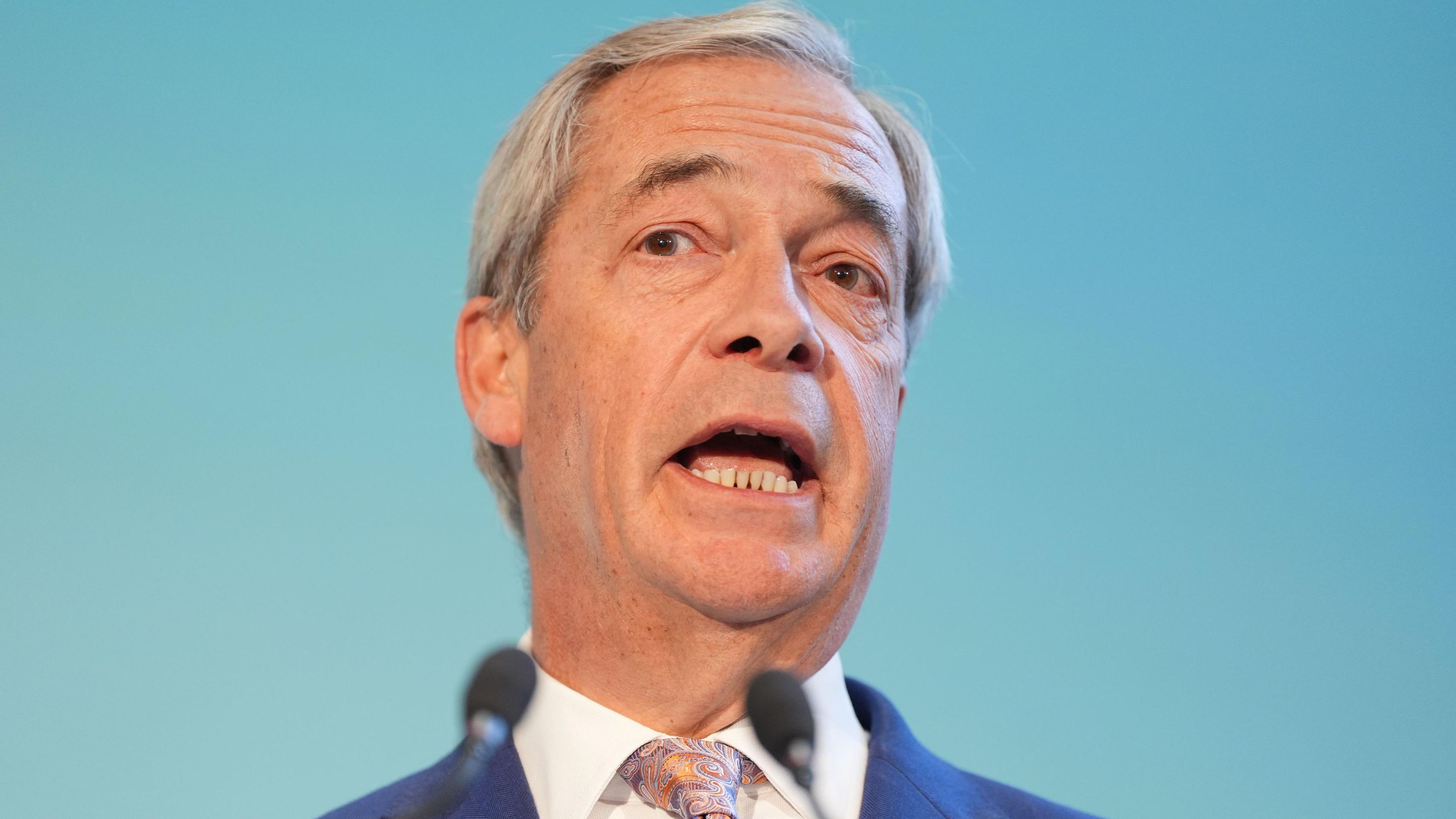
Nigel Farage Erupts at Keir Starmer in Furious Racism Row: “Utterly Ludicrous!”
Britain’s political debate descended into another bitter confrontation after Prime Minister Keir Starmer branded Nigel Farage “spineless” and demanded that the Reform UK leader explain allegations about his behaviour during his school years. Farage responded with a furious dismissal, describing it as “utterly ludicrous” for what he called the “weakest prime minister in living memory” to attack him in such terms.

The extraordinary exchange illustrates how rapidly the political battle between Labour and Reform UK is intensifying. What might once have been a relatively narrow disagreement about historical allegations has developed into a much wider argument about racism, political leadership, accountability and the character of the people seeking to govern Britain.
For Farage, the confrontation provides another opportunity to portray himself as the target of an establishment campaign. For Starmer, it is a chance to challenge the Reform leader directly and question whether he possesses the leadership qualities required of a potential prime minister.
But beneath the political theatre lies a more serious question: how should politicians and the public respond when allegations about a person’s distant past collide with their present-day political ambitions?
Starmer’s Direct Attack on Farage
The row escalated after reports emerged containing allegations from former pupils at Dulwich College about Farage’s behaviour as a teenager. Several former school contemporaries claimed that he had made racist and antisemitic remarks and had engaged in offensive behaviour. Farage has repeatedly denied the allegations, while Reform UK has described them as entirely without foundation and criticised the lack of contemporaneous documentation or corroborating evidence.
Starmer subsequently attacked Farage personally.
The Prime Minister said the Reform leader needed to explain the alleged comments and questioned his record on racism. He also connected the controversy to comments made by Reform MP Sarah Pochin, who had previously criticised the presence of Black and Asian people in television advertising. Pochin later apologised for those remarks.
Starmer’s argument was therefore twofold.
First, he wanted Farage to answer questions about allegations concerning his schooldays. Second, he argued that Farage had failed to demonstrate sufficient leadership by not disciplining Pochin.
That allowed the Prime Minister to turn the controversy from an argument about Farage’s past into an argument about his fitness to lead a political party today.
It was a politically calculated move.
Farage’s Furious Response
Farage did not respond by quietly accepting Starmer’s criticism.
Instead, he attacked the Prime Minister directly, arguing that Starmer had no credibility to describe him as “spineless”. His response characterised the Prime Minister as weak and suggested that voters would ultimately settle the dispute at the ballot box.
That response is entirely consistent with Farage’s political style.
Rather than allowing his opponents to establish the terms of the debate, he frequently attempts to turn criticism back against them. In this case, the focus moved quickly from allegations concerning Farage to Starmer’s popularity, political performance and leadership.
This is a familiar feature of modern populist politics.
When an established politician attacks an outsider, the outsider can attempt to portray the attack as evidence that the establishment is frightened by his growing popularity.
For Reform UK, that narrative is particularly useful.
The party has spent years presenting itself as an alternative to the traditional Westminster parties. Farage’s supporters can therefore interpret intense criticism from Starmer not necessarily as evidence of weakness, but as confirmation that Reform has become a serious threat.
The Allegations Must Be Distinguished From Established Facts
The most important issue in assessing the controversy is the distinction between allegations and proven facts.
Reports cited accounts from former school contemporaries who claimed to remember racist and antisemitic behaviour by Farage during his teenage years. Other former pupils subsequently came forward with similar accounts. Farage has denied the allegations, and Reform has argued that they are unsupported recollections from almost half a century ago.
That means the allegations should not simply be presented as established historical facts.
At the same time, the fact that allegations concern events from decades ago does not automatically make them irrelevant. Political leaders are routinely judged partly on their past behaviour, particularly when that behaviour relates directly to questions of character and public trust.
The difficult task is determining what weight should be given to claims about events that allegedly happened when someone was a teenager.
A responsible political debate should therefore recognise both realities.
The allegations deserve scrutiny.
Farage deserves the opportunity to deny and challenge them.
And the public deserves sufficient evidence to form its own judgment.
The Sarah Pochin Dimension
The dispute became more complicated because Starmer also raised comments made by Reform MP Sarah Pochin.
Pochin attracted criticism after saying that she was frustrated by television advertising featuring large numbers of Black and Asian people and that this did not reflect what she regarded as the composition of British society. She subsequently apologised. Farage described her comments as “ugly” but stopped short of calling them racist or taking disciplinary action against her.
This gave Starmer a straightforward political argument.
If Farage wants to present himself as a future Prime Minister, Starmer can argue, he must demonstrate that he is willing to exercise leadership when members of his party make controversial remarks.
Farage’s position is different.
He appears to have judged that condemning Pochin’s comments as unacceptable was sufficient, while stopping short of the stronger disciplinary response demanded by Starmer.
That disagreement raises an important question about political leadership.
Does leadership require removing or disciplining politicians who make offensive comments, or is public condemnation sufficient?
There is no universal answer.
Different political parties have historically dealt with controversial statements in different ways. But the decision can have political consequences, particularly when a party is attempting to establish itself as a credible alternative government.
Why the Row Matters to Reform UK
The controversy arrives at a significant moment for Reform UK.
Farage has increasingly presented himself not simply as a protest politician but as someone capable of becoming Prime Minister. That inevitably changes the standards to which he is held.
A politician campaigning from the margins can survive controversy more easily because supporters may view attacks as evidence that the establishment fears him.
A politician seeking Downing Street faces a different challenge.
Voters will want to know whether he can govern effectively, control his party and deal with difficult situations without constantly escalating political conflict.
That is why the racism controversy has implications beyond the immediate allegations.
It becomes a test of Farage’s political maturity.
Can he answer difficult questions without simply attacking his opponent?
Can he distinguish between legitimate scrutiny and politically motivated criticism?
Can he demonstrate that Reform UK has the discipline necessary to function as a government?
Those questions will become increasingly important if Reform continues to gain electoral support.
Starmer Has Risks Too
However, the controversy also carries risks for Starmer.
Calling a political opponent “spineless” is highly confrontational language for a serving Prime Minister. It may satisfy Labour supporters, but it also gives Farage an opportunity to portray Starmer as desperate or politically threatened.
Farage’s response was designed precisely to exploit that opportunity.
Instead of discussing whether he should answer the allegations, he challenged Starmer’s authority to make the accusation.
This creates a familiar political cycle.
Starmer attacks Farage.
Farage attacks Starmer.
Supporters of each side become more convinced that their own leader has won.
Meanwhile, undecided voters may become increasingly frustrated with both.
Political conflict can generate attention, but attention does not necessarily translate into public approval.
The Broader Question of Political Accountability
There is nevertheless a legitimate principle at the centre of the argument.
Political leaders should be accountable for their actions and statements.
That applies to Farage.
It also applies to Starmer.
If allegations about Farage’s past are credible, voters have a right to know and to consider them. If the allegations are inaccurate or unsupported, Farage has a right to defend himself and challenge the evidence.
Similarly, if Starmer makes serious accusations against a political opponent, he should be prepared to explain the evidence behind those accusations.
Democracy depends on that reciprocal standard.
It cannot function properly if allegations automatically become facts simply because they are politically useful. But neither can it function if every uncomfortable allegation is dismissed merely because it is inconvenient.
The answer must be evidence.
A Battle Over Britain’s Political Future
The deeper significance of the confrontation is that it represents a much broader struggle over the future of British politics.
Labour represents the current government and traditional centre-left establishment.
Reform UK seeks to disrupt the existing political system from the right.
Farage’s ambitions go far beyond influencing Conservative policy. He has increasingly positioned himself as a potential future Prime Minister and Reform as a party capable of replacing the Conservatives as the dominant force on the political right.
That makes confrontations with Starmer inevitable.
Every dispute between the two men becomes a miniature contest over leadership.
Starmer wants voters to see Farage as irresponsible and divisive.
Farage wants voters to see Starmer as weak, out of touch and incapable of addressing Britain’s biggest problems.
The racism controversy has simply provided another battlefield.
Conclusion
The furious exchange between Nigel Farage and Keir Starmer demonstrates just how personal Britain’s political battle has become.
Starmer has demanded that Farage explain allegations concerning racist and antisemitic behaviour allegedly dating from his schooldays, while also accusing him of failing to demonstrate leadership over controversial remarks made by Reform MP Sarah Pochin. Farage has rejected the allegations and described Starmer’s attack as “utterly ludicrous”.
The allegations themselves remain contested, and that distinction is essential. Farage has denied them, while Reform has challenged their evidential basis.
But the political consequences are real regardless of how the controversy develops.
For Starmer, the episode provides an opportunity to question Farage’s character and leadership.
For Farage, it offers another chance to argue that Labour’s attacks are evidence of a political establishment determined to undermine Reform.
Ultimately, British voters will have to decide which interpretation they believe.
The coming political struggle will not be won simply through accusations of racism or accusations of weakness. It will be won by the politician who can convince voters that he understands their concerns, can defend his record under pressure and possesses the competence and judgment required to lead the country.
For Nigel Farage, that means more than surviving attacks from Keir Starmer.
It means demonstrating that the man who spent decades challenging the political establishment is genuinely ready to become part of the establishment he has spent his career criticising.
And for Keir Starmer, it means proving that attacking Farage is not enough.
He must persuade voters that Labour offers a more credible alternative.
That is the real battle behind this latest furious row.
Leave a Reply
You must be logged in to post a comment.