

Nigel Farage Claims There Is a “Communist” Plot to Make the Public Fund Labour Campaigns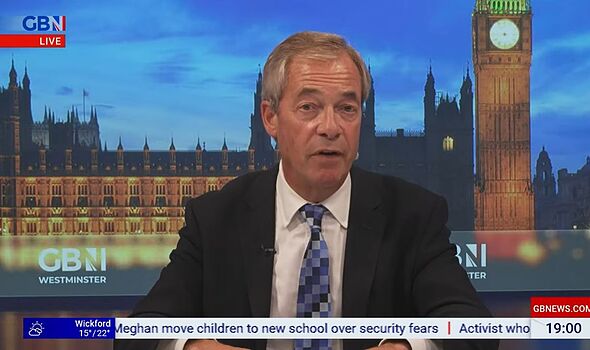
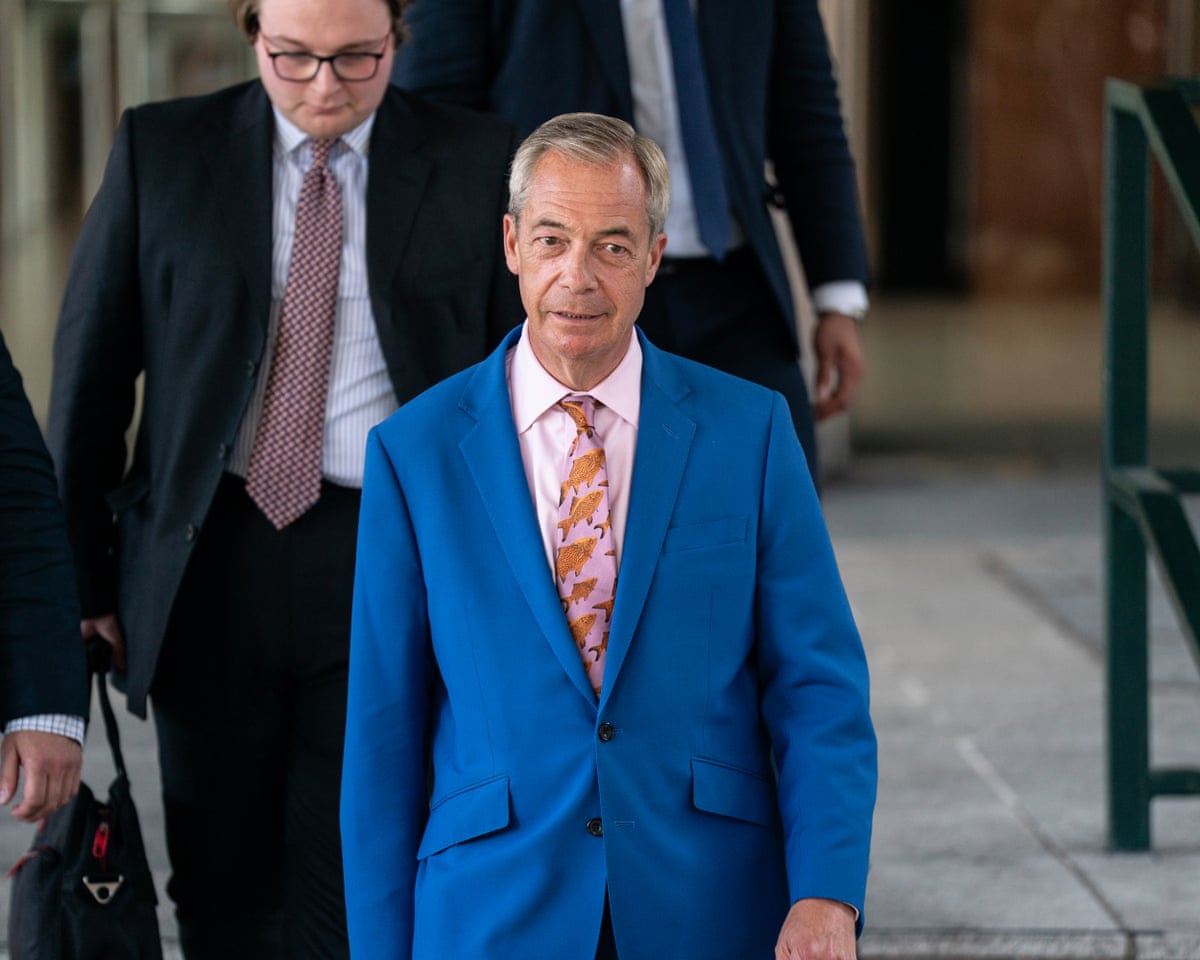
A new political controversy has erupted in Britain after Reform UK leader Nigel Farage accused the government of pursuing what he described as a “communist” plan to make taxpayers contribute to the funding of political parties. His comments came amid a wider debate about how political parties should be financed and whether the state should play a greater role in supporting political organisations. Farage’s language has attracted considerable attention because it presents a technical question about political finance as part of a much broader ideological argument about the relationship between citizens, political parties and the state.
The central issue is whether political parties should continue to depend primarily on private donations and membership income or whether taxpayers should provide a larger and more predictable source of funding. Supporters of public funding can argue that state support could reduce the influence of wealthy donors and create a more level political environment. Critics, including Farage, argue that taxpayers should not be compelled to financially support political parties whose policies they may strongly oppose. The disagreement therefore involves both practical questions about political finance and deeper arguments about democratic accountability.

Farage’s description of the proposal as “communist” is a political characterisation rather than an established description of the policy itself. The term has historically referred to political systems based on collective ownership and the abolition or limitation of private ownership of productive resources. A proposal for public funding of political parties, by contrast, can exist within parliamentary democracies that remain fundamentally capitalist. Nevertheless, Farage uses the word to emphasise his argument that citizens should not be forced to finance political organisations through taxation.
The controversy comes at a time when Britain’s political parties are increasingly concerned about the cost of modern election campaigns. Elections require significant spending on advertising, staff, digital communication, transport, polling, offices and campaign materials. Large parties can also depend on wealthy individual donors or organisations capable of contributing substantial sums. This has produced a longstanding debate over whether private donations give wealthy individuals disproportionate political influence.
Public funding has been proposed as one possible response to this problem. The basic argument is that political parties perform a public democratic function and therefore should receive some financial assistance from the state. Such funding could help parties maintain professional organisations, communicate with voters and participate in elections without relying entirely on large private donations.
However, public funding raises an obvious question: where does the money come from? Ultimately, government expenditure is financed through taxation and other public revenues. A taxpayer who supports one party may therefore contribute indirectly to a system that also provides resources to political parties they oppose. This is one of the principal objections raised by critics of state funding.
Farage’s argument focuses heavily on this issue of consent. From his perspective, political parties should obtain financial support from people who voluntarily choose to support them. Membership fees, donations and fundraising activities allow citizens to decide which political organisations receive their money. Compulsory taxation removes that individual choice.
Supporters of public funding can respond that taxation already finances many institutions that citizens do not personally support. Courts, Parliament, elections and public broadcasters, for example, perform functions considered important to democratic society even though individual taxpayers may disagree with particular decisions. From this perspective, supporting political parties through a regulated public funding system could be regarded as an investment in democratic competition rather than a donation to a particular political ideology.
The debate becomes particularly sensitive when the possibility of Labour benefiting from such a system is discussed. Farage has framed the issue as though taxpayers could be compelled to help fund Labour’s political activities. However, the precise structure of any proposed system would determine how money was distributed. A public funding mechanism could potentially allocate resources according to votes received, parliamentary representation, membership or another objective formula. Therefore, the question is not necessarily whether taxpayers would simply “pay for Labour”, but how public money would be allocated among eligible political organisations.
This distinction matters because political finance systems can be designed in different ways. Some systems provide funding according to electoral performance, while others offer support for specific parliamentary functions or campaign activities. There can also be spending limits and transparency requirements designed to prevent public money from becoming an unlimited source of political income.
Transparency is one of the strongest arguments for reform. Political parties already have to comply with rules concerning donations and electoral expenditure. A public funding system could potentially make party finances easier to monitor because the source and amount of government support would be known. However, critics could argue that increasing state funding might reduce parties’ incentives to maintain strong relationships with ordinary members and supporters.
Membership is an especially important issue. Political parties traditionally rely on members not only for money but also for volunteers, local organisation and political engagement. If parties receive substantial guaranteed public funding, critics may worry that they could become increasingly professionalised organisations disconnected from their grassroots supporters.
On the other hand, political parties can argue that modern campaigning has become extremely expensive and technologically sophisticated. Social media advertising, professional communications teams and sophisticated voter outreach require resources that local membership organisations may struggle to provide. Public funding could therefore be presented as a way to ensure that political competition does not depend entirely on access to wealthy donors.
There is also an important question about fairness between established and emerging parties. A funding system based heavily on existing parliamentary representation could benefit large parties while making it more difficult for new organisations to compete. Conversely, a system based on votes could provide resources to smaller parties that have demonstrated significant electoral support. Designing a fair formula would therefore be a central challenge.
Farage’s criticism also needs to be understood in the context of Reform UK’s own political development. The party has become an important force in British politics and has increasingly challenged the established parties. Its position in the political system means that changes to party funding could potentially affect Reform itself as well as Labour, the Conservatives, the Liberal Democrats and other parties.
This makes the debate more complicated than a simple dispute between Farage and Labour. Any general rule concerning public funding would apply to multiple political organisations. A system designed today could provide resources to parties that currently have relatively little representation but might become significant political forces in the future. Political finance rules therefore have consequences that extend beyond the immediate political interests of the government of the day.
The controversy also illustrates how political language can shape public understanding. Calling a proposal a “communist plot” creates a powerful emotional association. It suggests that the policy represents a fundamental attack on individual freedom and private choice. Supporters of the proposal, however, may describe it in very different terms, such as democratic funding, political transparency or reducing the influence of wealthy donors.
Neither description by itself explains the actual mechanics of the policy. To understand the proposal properly, voters would need to know how much money would be provided, which parties would qualify, what conditions would apply, whether private donations would remain legal, and what restrictions would be placed on campaign spending.
The issue also raises a broader philosophical question: what is the proper relationship between money and democracy? Elections require resources, but excessive dependence on private wealth can create concerns about unequal influence. At the same time, compulsory public funding can raise concerns about freedom of political choice. Democratic societies therefore face the difficult task of balancing these competing principles.
A possible compromise could involve a combination of private and public funding. Political parties might receive limited state support while continuing to raise money from members and donors. Strict transparency requirements could make major donations visible to the public, while spending limits could restrict the amount any individual or organisation can contribute. Such systems would attempt to reduce the influence of money without making political parties entirely dependent on the state.
The debate is also connected to public trust. Citizens are more likely to accept political institutions when they believe the rules apply fairly to everyone. If voters believe that wealthy donors can buy political influence, confidence may decline. Equally, if taxpayers believe that their money is being used to support political organisations against their wishes, confidence can also suffer.
For this reason, the discussion surrounding Farage’s comments should not be reduced to whether the word “communist” is appropriate. The more substantive questions concern democratic accountability, political equality, freedom of association and the responsible use of public money.
Ultimately, political funding is an issue that affects every democratic party, not simply Labour. A reform introduced by one government could remain in place under future governments and benefit parties with very different political positions. The long-term consequences therefore deserve careful consideration.
In conclusion, Nigel Farage’s accusation of a “communist” plot has brought renewed attention to Britain’s debate over the financing of political parties. His central objection is that taxpayers should not be compelled to provide financial support to political organisations they may not support. Supporters of public funding, by contrast, can argue that political parties perform an important democratic function and that state support could reduce dependence on wealthy donors.
The disagreement ultimately involves a balance between two principles. One is individual choice: people should be free to decide which political organisations they financially support. The other is democratic fairness: political competition should not depend excessively on private wealth.
Whether Britain should adopt greater public funding for political parties is therefore a question that requires detailed examination rather than simply ideological labels. Any reform would need clear rules concerning eligibility, distribution, transparency and spending limits. It would also need to consider the interests of established parties and emerging political movements.
Farage’s comments have ensured that the issue has entered the political spotlight. But beyond the dramatic language, the fundamental question remains practical: how should a modern democracy finance political competition while protecting both public accountability and individual freedom of political choice? That question is likely to remain an important part of Britain’s political debate as discussions over electoral reform and party funding continue.