

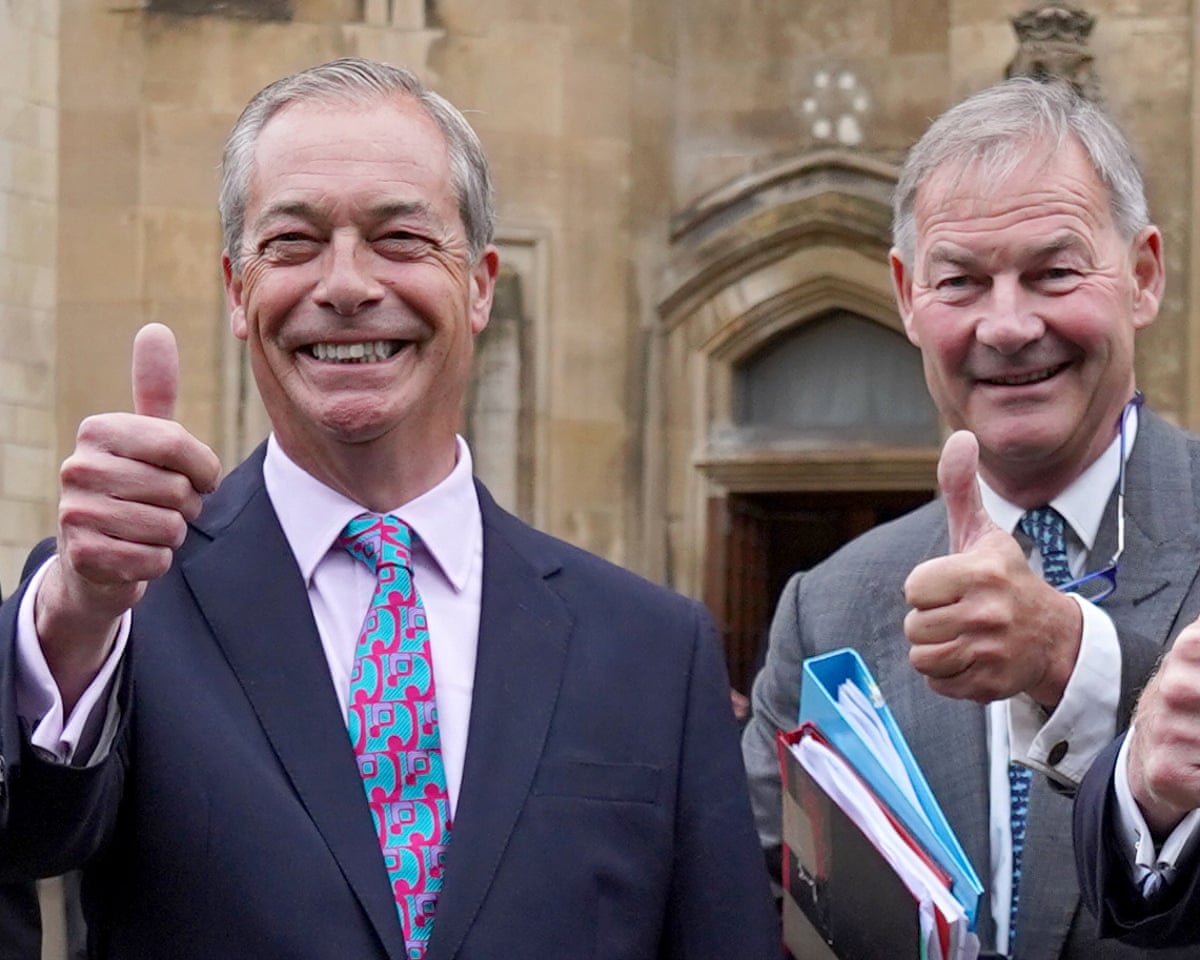
Nigel Farage and Rupert Lowe in Huge Row Over Reform UK Deal With Restore Britain
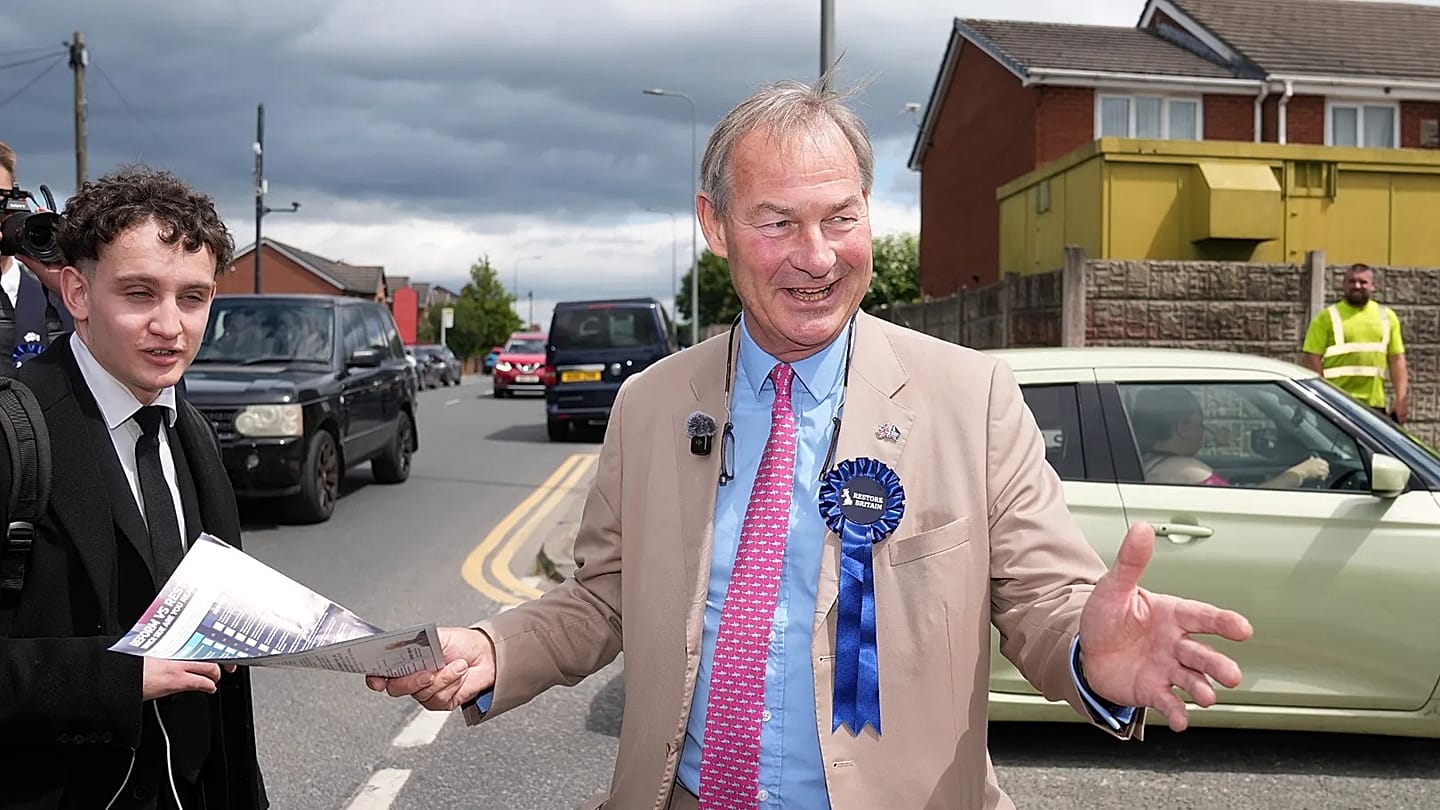
Nigel Farage and Rupert Lowe have become embroiled in a bitter political row over the possibility of a deal between Reform UK and Restore Britain, with an attempted alliance between the two right-wing parties threatening to expose deep divisions over the future of Britain’s political right.
Lowe, the former Reform UK MP who now leads Restore Britain, has publicly called for the two movements to put their differences aside and work together.
Farage, however, has shown little enthusiasm for accepting Lowe’s terms.
The dispute is particularly significant because both men are attempting to appeal to broadly similar voters. A split between Reform UK and Restore Britain could divide the right-wing vote at future elections, potentially allowing Labour to win seats that neither party would necessarily be able to take on its own.
Lowe has therefore presented cooperation as a matter of political necessity.
Farage appears to see the situation very differently.
Lowe makes an extraordinary offer
The latest confrontation began when Lowe publicly appealed to Farage to find what he described as a “common way forward”.
He argued that Britain’s “patriotic right” is hopelessly divided and that continuing the feud between Reform UK and Restore Britain risks allowing the political left to benefit.
But Lowe’s offer came with conditions.
Among the demands were support for the mass deportation of migrants, a ban on burkas and a referendum on bringing back the death penalty. Lowe also called for former Conservative ministers to be excluded from any future Reform-led Cabinet.
That immediately created a problem for Farage.
The Reform leader has spent years attempting to build a broad electoral coalition around immigration, Brexit, opposition to the political establishment and dissatisfaction with the traditional parties.
Lowe’s approach is considerably more hardline.
Instead of simply asking Reform to cooperate, he is effectively asking Farage to accept a set of policies and political conditions before an alliance can take place.
That makes the proposal look less like a straightforward electoral pact and more like a test of who controls the future direction of Britain’s right.
Farage refuses to play by Lowe’s rules
Farage has not formally closed the door on cooperation with people outside Reform UK.
He has said he wants support from across the political spectrum to defeat what he regards as the left-wing establishment.
But he has stopped short of endorsing Lowe’s conditions.
Most importantly, Farage has defended members of his own political team who Lowe wants excluded from future government.
He has also criticised Restore Britain for dividing the right-wing vote.
The disagreement is therefore not simply ideological.
It is personal.
Lowe was expelled from Reform after a bitter dispute with the party leadership and subsequently established Restore Britain.
Since then, the relationship between the two men has remained extremely hostile.
Lowe has accused Farage of refusing to engage seriously with his attempts at cooperation, while Farage has previously dismissed Restore as little more than a vehicle centred on its former Reform MP.
Lowe accuses Farage of “outright lying”
The row intensified when Lowe accused Farage of giving a false account of their attempts to communicate.
According to Lowe, he had made a genuine effort to contact the Reform leader.
He claimed that the response he received was limited to a message saying that Farage would call him later.
Farage, however, subsequently suggested that he was waiting for Lowe to contact him.
Lowe publicly challenged that version of events, accusing Farage of “outright lying”.
The dispute might appear personal, but it has much wider implications.
If two parties cannot agree even on whether meaningful discussions have taken place, the chances of negotiating a detailed electoral pact appear remote.
And yet both men have a powerful reason to find some form of agreement.
The right-wing vote is at risk of splitting
This is the central strategic problem.
Reform UK remains considerably larger than Restore Britain nationally.
But Restore has demonstrated that it can attract a meaningful share of voters in certain contests.
At the Greater Manchester mayoral election, Restore won 8.7 per cent of first-preference votes, putting it ahead of the Conservatives.
Reform also performed strongly, receiving around 21 per cent, while Labour’s Bev Craig won the contest with 47.1 per cent.
The result offered Lowe an important political argument.
Restore does not necessarily need to defeat Reform to damage it.
It only needs to take enough votes away from Farage’s candidates to prevent Reform from winning marginal constituencies.
That possibility has alarmed some Reform supporters.
If Reform and Restore fight each other in dozens of constituencies, the combined right-wing vote could be larger than Labour’s or the Conservatives’ vote while still producing no right-wing victory.
The first-past-the-post electoral system makes that especially dangerous.
Farage faces another problem
The disagreement comes at an awkward time for Farage personally.
His political position has been under intense scrutiny following an investigation into a previously undeclared £5 million gift from cryptocurrency businessman Christopher Harborne.
Farage has denied wrongdoing and has said the gift was unrelated to his decision to become an MP.
But the investigation has continued following his return to Parliament after the Clacton by-election.
That controversy has given Lowe an opportunity to attack Farage’s leadership.
Restore can portray itself as a more uncompromising alternative to Reform.
At the same time, Farage can argue that Lowe’s intervention is damaging the wider right at precisely the moment when Labour is gaining political momentum.
The timing could therefore hardly be more awkward.
Farage’s Clacton victory changes the picture
Farage has now regained his Clacton parliamentary seat, winning the by-election with 22,239 votes.
However, the contest was highly unusual.
The major political parties chose not to participate, leaving Farage facing a field of fringe and independent candidates.
Count Binface finished second with 9,455 votes, securing around 27 per cent of the vote.
Farage’s victory allows him to return to Parliament, but it does not completely resolve the political problems facing Reform.
Indeed, the result has intensified questions about his national popularity and the party’s wider strategy.
National polling has reportedly fallen from Reform’s previous highs, while Labour has benefited from a rise in support since Burnham became Prime Minister.
That makes the possibility of a fragmented right even more important.
Is Lowe genuinely offering peace?
There is disagreement over Lowe’s motives.
Supporters argue that he has recognised a simple political reality.
Reform and Restore are competing for many of the same voters, and neither side benefits from allowing Labour to win because of a divided opposition.
From that perspective, cooperation is common sense.
But critics believe Lowe’s conditions are deliberately designed to be unacceptable to Farage.
His demands are sufficiently controversial that the Reform leader would struggle to accept them without giving Lowe significant political leverage.
Some commentators have therefore suggested that the proposal could be a strategic trap rather than a genuine compromise.
The argument is straightforward.
If Farage rejects the conditions, Lowe can claim that he tried to unite the right but Farage refused.
If Farage accepts them, Lowe gains influence over Reform’s political direction.
Either way, Restore benefits from the confrontation.
Immigration is the biggest dividing line
The strongest disagreement concerns immigration.
Both parties are highly critical of the current system, but Restore Britain has pushed a significantly more radical position.
Lowe has called for the deportation of millions of migrants and has advocated policies including a burka ban.
He has also argued for a referendum on restoring the death penalty.
Farage has adopted increasingly hardline rhetoric on immigration himself, including proposals aimed at stopping small boats crossing the English Channel.
But he also wants Reform to appeal to a broader electorate.
That creates a strategic dilemma.
Moving further to the right could energise Reform’s existing supporters but make it harder to win moderate voters.
Remaining broader could leave Reform vulnerable to Restore on its right flank.
Lowe therefore represents a particularly awkward challenge.
He can attack Farage for being insufficiently radical while simultaneously accusing him of preventing the right from uniting.
The “patriotic right” dilemma
Lowe’s central argument is that the British right needs to stop fighting itself.
That message is likely to resonate with voters who want to see Labour defeated.
But political alliances require more than shared opposition to the Government.
The parties must agree on policy, candidates and leadership.
And that is where the relationship between Farage and Lowe becomes particularly difficult.
Neither man appears willing to subordinate himself to the other.
Farage sees himself as the national leader of the populist right.
Lowe is attempting to establish Restore Britain as an independent political force.
An alliance in which one party simply becomes a junior partner would therefore be difficult to sell to either side.
Could they actually work together?
A formal merger appears unlikely in the immediate future.
A limited electoral agreement may be more realistic.
For example, the parties could theoretically avoid standing candidates against one another in selected constituencies.
That could allow Reform to concentrate on areas where it has the strongest support while Restore targets constituencies where Lowe believes its harder-line message has greater appeal.
But even that would require enormous trust.
The two sides would have to agree on which seats belong to whom.
They would also have to persuade local activists and candidates to stand aside.
Given the bitterness of the relationship, that would be extremely difficult.
Reform’s bigger strategic question
For Farage, the Lowe dispute raises a much bigger question.
What exactly does he want Reform UK to become?
One option is to transform Reform into a broad anti-establishment party capable of attracting former Conservative voters, working-class Labour voters and politically disengaged people.
Another is to embrace an increasingly hardline nationalist platform and compete directly with Restore for the most uncompromising section of the right.
The first strategy offers a potentially larger electoral coalition.
The second could strengthen Reform’s position among its most committed supporters.
But it also risks making Restore Britain’s existence increasingly relevant.
Labour could benefit from the feud
The biggest potential winner from the division may be Labour.
If Reform and Restore split the right-wing vote, Labour could retain seats despite losing support.
That is particularly important because Burnham’s Government is already facing major controversies over immigration, the economy, prisons and public services.
A united opposition could make those issues much more dangerous for Labour.
A divided opposition gives the Government breathing space.
This is precisely why Lowe’s call for unity has some strategic logic.
But the personal hostility between the two men may be stronger than their shared electoral interests.
A battle for the future of Britain’s right
The confrontation between Farage and Lowe is therefore about much more than one political deal.
It is a battle over who controls Britain’s populist right.
Farage has the established brand, national profile and parliamentary platform.
Lowe has a new party, an increasingly hardline agenda and the ability to threaten Reform in individual contests.
Both need the other to disappear or cooperate.
Neither appears willing to make the first major concession.
For now, Lowe says the door remains open.
Farage, meanwhile, appears far more interested in strengthening Reform than allowing a former colleague to dictate its direction.
The result is an increasingly bitter stalemate.
And with the next general election potentially determining whether Labour can maintain its grip on power, the consequences could be enormous.
If Reform and Restore eventually reach an agreement, the combined force of Britain’s populist right could become a formidable electoral challenge.
If they continue fighting, they could hand Labour victories in constituencies where a united right-wing candidate would otherwise have had a realistic chance.
That is the paradox at the heart of the Farage-Lowe feud.
Both men insist that they want to defeat the political establishment. Yet their continuing battle could ultimately make that objective harder to achieve.
For now, the political right remains divided.
And as Nigel Farage attempts to rebuild Reform UK following his Clacton victory, Rupert Lowe is making clear that Restore Britain intends to remain a serious threat from the right.
The question is no longer simply whether Farage and Lowe can settle their personal differences.
It is whether they can put those differences aside long enough to prevent Britain’s right-wing vote from destroying itself.
Leave a Reply
You must be logged in to post a comment.