


Labour’s Claim to Be the Party of the Working Class Is Looking More Ridiculous by the Day
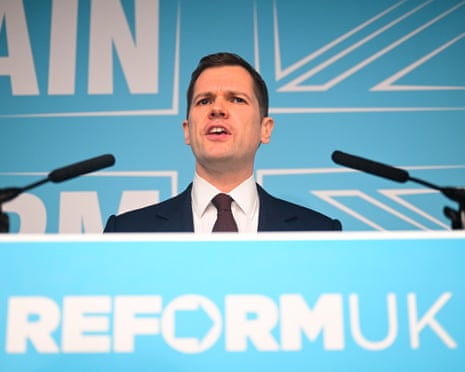
For generations, the Labour Party claimed a special relationship with Britain’s working class.
It was more than an electoral strategy.
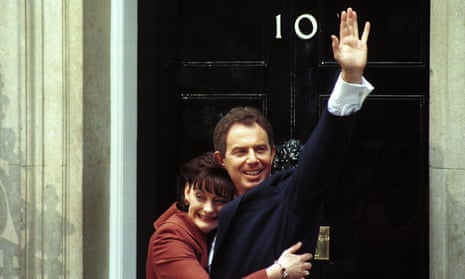
It was part of Labour’s identity.
The party was founded by working people, trade unionists and political activists who believed that government should give ordinary families a stronger voice.
For decades, Labour could point to industrial towns, mining communities, factory workers and trade union households as the foundation of its political movement.
But that historic relationship has changed dramatically.
And increasingly, critics are asking a brutally simple question:
Does Labour still understand the working class?
To its opponents, the answer is becoming increasingly obvious.
Nigel Farage and Reform UK have seized on the growing frustration, arguing that Labour has become disconnected from the people it was created to represent.
Whether that criticism is completely fair is a matter of political debate.
But the fact that it is gaining traction should concern Labour enormously.
The old Labour voter has changed
The working-class voter of today is not necessarily the working-class voter of fifty years ago.
Britain’s economy has changed.
Factories have disappeared from many communities.
Trade union membership has declined.
The service economy has expanded.
Home ownership has become more difficult.
Housing costs have risen.
And political identities have become much less predictable.
A voter can support higher public spending while also wanting stricter immigration controls.
They can support the NHS while opposing higher taxes.
They can favour workers’ rights while being deeply sceptical of political correctness.
The old assumption that economic left-wing views automatically produce socially progressive politics no longer works.
That creates an enormous opportunity for Reform.
Farage has understood the change
Nigel Farage has spent years arguing that Labour abandoned traditional working-class voters.
His message is deliberately provocative.
He tells voters that Westminster politicians talk about working people but do not understand their lives.
He points to immigration.
He points to taxation.
He points to housing.
He points to crime.
He points to the cost of living.
And he asks why people who once voted Labour should continue doing so.
That question has become increasingly difficult for Labour to answer.
A fictional conversation in a former Labour stronghold
Imagine a fictional conversation between two voters in a former industrial town.
“I’ve always been Labour,” one says.
“So why are you thinking about Reform?”
“Because Labour doesn’t sound like the party my parents voted for.”
“What changed?”
“Everything.
“The jobs.
“The town.
“The cost of living.
“And politics.”
The conversation is fictional, but the underlying political transformation is real.
Working-class voters are no longer automatically loyal to Labour.
They are shopping around.
And Reform wants to become their new political home.
Taxation is a major dividing line
One of the biggest problems for Labour is taxation.
The government needs money.
Public services need money.
The NHS needs money.
Local councils need money.
Schools need money.
Infrastructure needs money.
But taxpayers also feel pressure.
When households are struggling with mortgages, rent, food and energy bills, higher taxation becomes politically sensitive.
Reform has understood this.
Its message is simple:
Government should spend less and allow working people to keep more of their money.
Labour responds that public services require investment.
Both arguments have political logic.
But the emotional advantage often belongs to the party talking about what people see in their bank accounts.
Immigration has changed the argument
Immigration is another issue where Labour faces a difficult political calculation.
Many working-class voters want controlled immigration.
They may be concerned about pressure on housing, schools, healthcare and public services.
They may also believe that wages can be affected by labour supply in some sectors.
Labour cannot simply dismiss these concerns.
If it does, Reform can present itself as the only party willing to listen.
But Labour must also balance those concerns against the needs of employers and sectors that depend on migrant workers.
That is a complicated policy problem.
Political slogans make it sound much easier than it is.
The danger of talking down to voters
Perhaps the greatest mistake Labour could make is assuming that Reform supporters are simply ignorant or prejudiced.
That would be politically disastrous.
Voters may have complicated reasons for switching parties.
Some support Reform because of immigration.
Some because of taxation.
Some because of distrust of politicians.
Some because of frustration with public services.
Some simply want to punish the government.
If Labour treats all of these people as one stereotype, it will never understand why they are leaving.
And if it does not understand why voters are leaving, it cannot win them back.
The working class wants results
The phrase “working class” has become politically complicated.
Politicians often use it as a symbol.
But voters are usually more interested in practical outcomes.
Can they afford a home?
Can their children find decent jobs?
Can they get a hospital appointment?
Are their streets safe?
Are taxes reasonable?
Are public services functioning?
Can they build a better future?
These questions are not ideological.
They are practical.
And if voters believe that Labour cannot answer them, they will look elsewhere.
Labour’s historic advantage is disappearing
The biggest danger is that Labour may no longer be able to rely on inherited loyalty.
Previous generations could vote Labour because their family always had.
That political inheritance has weakened.
A younger voter may not care what their grandparents voted.
They may care about rent.
They may care about wages.
They may care about immigration.
They may care about taxes.
They may care about national identity.
And they may be perfectly comfortable voting for a party that did not exist in their parents’ political imagination.
That is how political realignment happens.
Reform does not need to become traditional Conservative
This is one of the most important points.
Reform’s potential success does not depend on transforming its supporters into Conservatives.
In fact, it may depend on doing the opposite.
Farage wants to create a coalition that is economically diverse but united around dissatisfaction with the political establishment.
A former Labour voter may support Reform because of immigration.
A former Conservative voter may support it because of taxation.
Another voter may simply want smaller government.
They do not need to agree on everything.
They only need to agree enough to vote together.
That could make Reform extremely difficult to defeat.
The Conservatives are watching nervously
The irony is that Labour’s weakness does not automatically benefit the Conservatives.
The Conservatives face their own existential challenge.
Many former Tory voters have already moved towards Reform.
If Reform then begins taking Labour voters as well, Farage could become the dominant force on Britain’s right.
That would fundamentally change the Conservative Party’s strategic position.
It would no longer be enough to say:
“Vote Conservative to stop Labour.”
Voters could respond:
“Why not vote Reform?”
That is the question Conservative leaders fear.
What Labour could do
Labour still has options.
It could focus relentlessly on living standards.
It could accelerate housebuilding.
It could improve public services.
It could demonstrate that economic growth is increasing wages and opportunities.
It could address immigration concerns more effectively.
And it could communicate with voters in language that sounds less like Westminster and more like everyday Britain.
Most importantly, Labour could stop assuming that its historic identity automatically gives it a claim on working-class voters.
A claim must be earned.
Every election.
Every generation.
Every community.
The political irony
There is a deep irony in the current situation.
Labour’s historic mission was to give ordinary working people more political power.
Yet some of those same voters now say they feel ignored by Labour.
Meanwhile, Reform — a party that did not exist in its current form when many of these voters were young — is presenting itself as the new voice of political rebellion.
That would have been almost unimaginable a generation ago.
But British politics has changed.
A fictional Labour activist’s warning
Imagine a fictional Labour activist speaking at a local meeting.
“We keep telling people we’re the party of working people,” she says.
“But are we listening to them?”
Someone replies:
“They voted for us.”
She shakes her head.
“That isn’t the same thing.”
The exchange is fictional.
But the lesson is important.
Past votes do not guarantee future votes.
Political parties survive by continuously convincing people that they deserve support.
The next election will provide the answer
Ultimately, the debate over whether Labour remains the party of the working class will not be settled by speeches.
It will be settled by voters.
If working-class communities continue supporting Labour, the party will be able to argue that its traditional coalition remains intact.
If more of them move towards Reform, the political consequences will be profound.
A long-standing relationship could be replaced by a new political alignment.
That would not necessarily mean Labour disappears.
It would mean Labour has to become something different.
The real question for Starmer
Keir Starmer therefore faces a question far bigger than party conference speeches or opinion polls.
What does Labour stand for now?
And can ordinary working people recognise themselves in that answer?
If the party can offer higher living standards, better public services, controlled immigration and stronger economic opportunities, it can rebuild trust.
But if voters continue to see Labour as a party more interested in Westminster arguments than everyday problems, Reform will continue to have an opening.
Nigel Farage knows that.
He does not need to persuade every working-class voter.
He simply needs to persuade enough of them that Labour’s historic claim is no longer convincing.
The old political map is disappearing
Britain is entering a period in which traditional political identities are becoming weaker.
“Labour voter.”
“Conservative voter.”
Those labels mean less than they once did.
Voters are increasingly willing to switch.
They are willing to punish.
They are willing to experiment.
And they are willing to abandon parties that once seemed permanently connected to their communities.
That is the real danger facing Labour.
The party’s claim to be the natural political home of working people cannot survive on history alone.
It must be demonstrated in practice.
Because if a growing number of working-class voters decide that Labour no longer speaks for them, Reform will be waiting.
And once political loyalty disappears, winning it back can be much harder than losing it.
The Labour Party was built on the belief that working people deserved a political voice.
Its greatest challenge now is proving that those people still hear their own voice when Labour speaks.