
Labour MP Offers to Quit for Andy Burnham as Leadership Chaos Intensifies
The political crisis surrounding Keir Starmer’s leadership became even more extraordinary when Labour MP Clive Lewis offered to give up his own parliamentary seat to help Andy Burnham return to Westminster. The extraordinary proposal demonstrated just how seriously some Labour politicians viewed the party’s problems and how strongly they believed Burnham could provide an alternative political direction.
Lewis, the Labour MP for Norwich South, said he was prepared to put the national interest before his own political career by making way for Burnham. His proposal immediately fuelled speculation that a leadership challenge against Starmer could be developing. Although Burnham did not immediately endorse the plan, the offer itself was highly significant because it showed that some Labour MPs were willing to take extraordinary measures to bring him into Parliament.
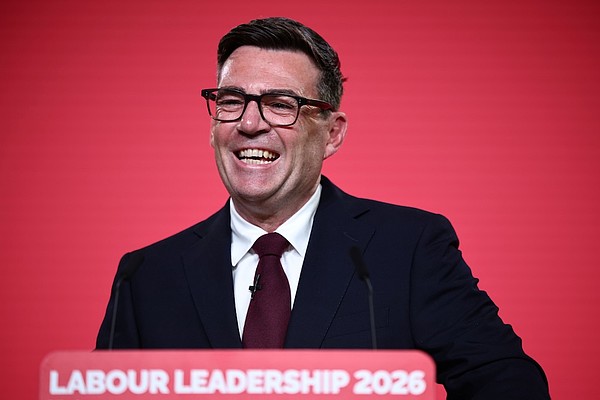
The reason Burnham needed such assistance was straightforward. As Mayor of Greater Manchester, he did not have a seat in the House of Commons. This created a major obstacle to any immediate leadership challenge. Under Labour’s political system, a person seeking to lead the parliamentary Labour Party would normally need to be an MP. Burnham was therefore in the unusual position of being one of the most popular potential successors to Starmer while remaining outside Westminster.
Lewis’s offer attempted to solve precisely that problem. Rather than waiting for a suitable by-election in Greater Manchester, he suggested that Burnham could contest Norwich South. This would allow Burnham to return to Parliament without having to wait for another Labour MP in his home region to resign.
However, the proposal was far from straightforward. Giving up a parliamentary seat is a major personal decision, and Norwich South was not necessarily a constituency in which local Labour members would automatically accept an outsider. There were also questions about whether Burnham himself would want to represent a constituency hundreds of miles away from Greater Manchester, the region with which his political identity was most strongly associated. The Financial Times noted that Burnham had not committed to the proposal and that there were significant practical obstacles.
Nevertheless, the offer had enormous symbolic significance. Lewis was effectively saying that the Labour Party’s political crisis was so serious that ordinary parliamentary conventions were no longer sufficient. In his view, the party needed a change of direction, and Burnham represented one possible route towards that change.
The proposal also reflected the wider collapse in confidence surrounding Starmer. By this stage, Labour was facing serious electoral difficulties, falling support and increasingly public criticism from its own MPs. Following poor local election results in May 2026, more than 80 Labour MPs publicly called for Starmer to step down or establish a timetable for his departure.
For Starmer, this was particularly damaging because his government had entered office only two years earlier with a huge parliamentary majority. Labour’s 2024 general election victory had initially appeared to give him the political authority needed to govern for a full parliamentary term. Instead, dissatisfaction developed surprisingly quickly.
The party’s difficulties were not limited to opinion polls. Labour began losing support in areas that had traditionally been regarded as secure. The Gorton and Denton by-election was perhaps the clearest warning. The Green Party won the seat, Reform UK finished second and Labour fell to third place. For a party traditionally dominant in Greater Manchester, the result was deeply embarrassing.
The defeat also had an important connection with Burnham. Earlier, Labour’s National Executive Committee had blocked him from standing in the by-election. The decision was officially justified by concerns over resources and the potential need for another Greater Manchester mayoral election. However, many Labour figures suspected that the leadership also wanted to prevent Burnham from gaining a parliamentary platform from which he could challenge Starmer.
The NEC voted overwhelmingly against Burnham’s candidacy, while Deputy Labour leader Lucy Powell supported allowing him to stand. Around 50 Labour MPs and several peers subsequently signed a letter objecting to the decision.
This created a dangerous political situation for Starmer. If Labour won Gorton and Denton without Burnham, the leadership could claim that the decision had been justified. If Labour lost, Burnham’s supporters could argue that the party had rejected the candidate most capable of winning.
The eventual result strengthened the second argument. Labour’s collapse to third place allowed critics to claim that the leadership had badly misjudged the mood of voters.
Clive Lewis was among the most outspoken critics. Following the by-election, he described the result as a “punch in the face” for Labour and argued that the party had alienated its traditional supporters. He warned that changing the leader without changing Labour’s political direction would achieve little. In his view, the party needed a fundamental transformation rather than another communication strategy or ministerial reshuffle.
This is important because Lewis’s support for Burnham was not simply about personalities. Lewis belonged to the Labour left and had long criticised the direction taken by Starmer. His willingness to sacrifice his own seat for Burnham therefore represented a broader ideological argument: Labour needed a leader who could reconnect the party with voters who felt abandoned.
Burnham’s political appeal was based partly on precisely that idea. During his time as Mayor of Greater Manchester, he developed a reputation for emphasising public services, regional government and economic intervention. He argued that Westminster was too centralised and that communities should have greater control over decisions affecting their lives.
For supporters, this made Burnham a natural candidate to rebuild Labour’s support among voters outside London. He was able to present himself as a politician with practical experience rather than simply another Westminster figure.
This distinction became increasingly important as Reform UK grew stronger. Nigel Farage’s party had successfully attracted voters who felt ignored by the traditional political establishment. Immigration, the cost of living and dissatisfaction with mainstream politics became central to Reform’s appeal.
Labour therefore faced pressure from both sides. Reform was competing for voters who wanted a tougher response to immigration and greater political disruption, while the Greens were attracting voters who believed Labour had moved too far towards the centre.
Gorton and Denton demonstrated this problem clearly. Labour was squeezed between Reform on the right and the Greens on the left. The party could no longer assume that voters would support it simply because they had done so in previous elections.
Burnham’s supporters believed he could help solve this problem by offering something distinctive. Rather than trying to imitate Reform, he could address economic insecurity and regional inequality. Rather than attempting to outflank the Greens on environmental or progressive issues, he could emphasise Labour’s traditional commitment to public services and social justice.
Yet Burnham also faced an important question: could his Greater Manchester model work nationally?
Running a large metropolitan region is very different from running the United Kingdom. As Prime Minister, a leader must deal with defence, foreign policy, taxation, immigration, national infrastructure and the entire British economy. Burnham’s supporters could point to his record in Greater Manchester, but national government would present a much more difficult test.
There was also the question of money. Many of Burnham’s preferred policies would require substantial public investment. A national government must balance these ambitions against the demands of fiscal responsibility and economic stability.
Nevertheless, the very fact that a Labour MP was prepared to give up his seat demonstrated the strength of Burnham’s appeal among some sections of the party. Lewis was not merely suggesting that Burnham should become a future leader. He was offering a practical solution to the immediate problem of Burnham’s absence from Parliament.
The proposal also highlighted the increasingly personal nature of Labour’s leadership crisis. Political parties normally resolve disagreements through elections, parliamentary procedures and internal debate. Here, however, individual MPs were contemplating extraordinary personal sacrifices to change the balance of power.
Starmer attempted to resist this pressure. He argued that Labour could not repeat the instability of the Conservative years, when Britain experienced several prime ministers in a short period. His position was that changing leaders would not necessarily solve the underlying political problems.
There is logic to this argument. Leadership changes can create uncertainty, and a new leader does not automatically make voters more supportive. If Labour’s problems were primarily economic or structural, replacing Starmer alone might not be enough.
But the counterargument was that a leader who had lost the confidence of a large section of his own parliamentary party would struggle to deliver an effective political programme. Once MPs began believing that Starmer could not win the next election, loyalty became increasingly difficult to maintain.
That was the context in which Burnham became such a powerful symbol. He was not merely an alternative personality. He represented the possibility of a different Labour strategy.
The crisis eventually moved beyond speculation. Burnham was later given a route back into Parliament through the Makerfield by-election after Josh Simons announced his resignation as MP. Simons’ decision effectively opened the door for Burnham to return to Westminster and transformed the political situation.
Once Burnham was back in Parliament, the argument surrounding Lewis’s earlier offer became much clearer. The central question was no longer whether Burnham could find a parliamentary seat. It was whether Starmer could retain the leadership in the face of mounting opposition.
The subsequent leadership crisis demonstrated the significance of the earlier developments. More than 100 Labour MPs were reported to have called for Starmer to resign or establish a timetable for his departure. Senior figures also began distancing themselves from the Prime Minister.
Eventually, Starmer resigned, and Burnham became Labour leader. What had once seemed like an extraordinary proposal from one Labour MP had therefore foreshadowed a dramatic transformation in British politics.
Looking back, Lewis’s offer was significant because it revealed how quickly internal dissatisfaction had developed into an organised search for an alternative. It showed that some Labour politicians were prepared to take personal risks because they believed the party’s existing direction was unsustainable.
It also demonstrated the unique position occupied by Burnham. He had no parliamentary seat, yet he had become one of the most discussed potential successors to the Prime Minister. His popularity outside Westminster gave him an unusual kind of political authority, while his absence from Parliament simultaneously made him difficult to challenge directly.
Ultimately, the story of Clive Lewis and Andy Burnham is not simply about one MP offering to surrender his career for another politician. It is about a Labour Party struggling to decide what it wanted to become.
Starmer represented continuity, discipline and an attempt to govern from the political centre. Burnham represented regional empowerment, stronger public services and a more interventionist approach to government. Lewis’s extraordinary offer showed that, for some Labour MPs, the choice between those two visions had become urgent.
The episode also provides a broader lesson about political leadership. When a party loses the confidence of its voters and its own MPs simultaneously, pressure for change can become almost impossible to contain. Attempts to prevent a potential challenger from entering Parliament may delay the confrontation, but they cannot necessarily eliminate the underlying demand for a different direction.
Clive Lewis’s willingness to sacrifice his own parliamentary career for Andy Burnham was therefore an extraordinary moment. It captured the depth of Labour’s internal crisis and the growing belief that Burnham could offer a route out of it. More importantly, it foreshadowed the dramatic political events that followed: Burnham’s return to Westminster, Starmer’s eventual resignation and the transformation of Labour’s leadership.
What began as an unusual offer from one MP ultimately became part of the story of one of the most remarkable leadership changes in modern Labour politics.