

Labour MP Branded “Stupid” by Senior Tory Over Claims Britain Is Racist and Sexist
A fresh political row has erupted in Westminster after a Labour MP came under fire from a senior Conservative over claims that racism and sexism have become increasingly normalised in Britain. The extraordinary exchange highlights one of the most divisive debates in modern British politics: whether the country is becoming more tolerant and equal, or whether discrimination and prejudice remain deeply embedded in society.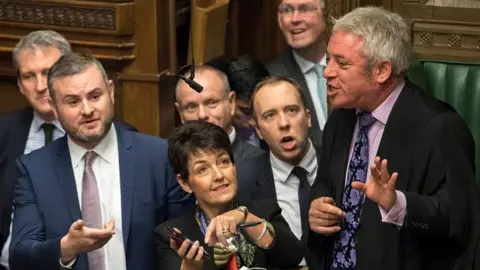
The controversy follows comments from Labour’s Equalities Minister Bridget Phillipson, who has warned that racism and sexism have become more normalised in Britain. Phillipson argued that social media, inflammatory political rhetoric and online grievance culture are contributing to a more hostile public environment. She also criticised politicians on the right whom she accused of making inflammatory comments about minority communities.
Her intervention immediately attracted criticism from Conservative politicians, with one senior Tory dismissing the argument as misguided and branding the Labour MP “stupid”. The language used in the confrontation reflects just how politically sensitive discussions about race and gender have become.
For Labour, the issue is relatively straightforward. Ministers argue that discrimination has not disappeared simply because Britain has made significant progress in equality legislation. They point to racism experienced by minority communities, misogyny directed at women online and the persistence of discriminatory attitudes in parts of society. From this perspective, acknowledging the problem is necessary if politicians want to address it.
Phillipson has particularly focused on the role of social media. Online platforms have transformed political debate, allowing people to express opinions instantly and reach enormous audiences. While this has created opportunities for free expression and political participation, it has also enabled abusive and extremist material to spread rapidly.
Young people are particularly exposed to online culture. Content that would once have remained within small groups can now be distributed to millions of people within hours. Algorithms can also encourage users to consume increasingly provocative material because controversial content often generates strong reactions and engagement.
The government therefore faces a difficult question: how can it challenge racism and sexism without appearing to restrict legitimate political disagreement?
This distinction is crucial. Britain has a long tradition of free speech and vigorous political debate. People are entitled to disagree about immigration, feminism, religion, policing, education and many other subjects. Strong criticism of government policy is not automatically racist or sexist.
At the same time, freedom of expression does not mean that every statement is harmless. There is a difference between criticising an immigration policy and attacking an ethnic group, just as there is a difference between debating gender policy and deliberately abusing women. The challenge for politicians is to identify that boundary without turning political disagreement into accusations of bigotry.
This is where the Conservative response becomes important. By describing Phillipson’s claims as foolish or “stupid”, critics are essentially arguing that the government is exaggerating the scale of the problem. They may believe that Britain has already made enormous progress in combating discrimination and that constantly describing the country as racist or sexist risks creating unnecessary division.
There is a legitimate argument behind this position. Britain today has extensive legal protections against discrimination. People from minority backgrounds occupy prominent positions across politics, business, entertainment, education and public life. Women have achieved positions of influence that would have been almost unimaginable several generations ago.
The country should therefore recognise its progress.
However, recognising progress does not necessarily mean that remaining problems should be ignored. The existence of equality laws does not guarantee that every person experiences equality in everyday life. Discrimination can take subtle forms that are difficult to measure or regulate.
Racism, for example, may involve direct abuse, unequal treatment, stereotypes or assumptions based on someone’s background. Sexism can range from overt harassment to more subtle attitudes about women’s abilities and roles. Online platforms can make these behaviours particularly visible.
The political disagreement is therefore partly about interpretation. Labour politicians may look at continuing examples of discrimination and conclude that Britain still has a serious problem. Conservatives may look at decades of social and legal progress and conclude that describing the entire country as racist or sexist is unfair.
Both perspectives contain elements of truth.
The danger comes when political debate becomes excessively polarised. If one side suggests that Britain is fundamentally prejudiced, some people may feel that their country and communities are being unfairly condemned. If the other side dismisses every concern about racism or sexism as political correctness, people who experience discrimination may feel that their experiences are being ignored.
This is why language matters.
Politicians have considerable influence over public debate. When senior figures make accusations about racism or sexism, their words can shape how millions of people understand social problems. Similarly, when politicians dismiss such concerns, they can influence whether victims feel that their experiences are taken seriously.
Phillipson’s comments also come at a politically sensitive time for Labour. The party is attempting to establish a strong identity under Prime Minister Andy Burnham, while opposition parties are competing aggressively for voters concerned about immigration, crime, identity and social change.
The government therefore has to balance two objectives. It needs to demonstrate that it will tackle genuine discrimination while avoiding language that could alienate voters who do not believe Britain should be described in fundamentally negative terms.
The issue is especially complicated because concerns about racism and sexism increasingly overlap with debates about immigration and national identity. Politicians may disagree strongly about immigration policy without being motivated by racial prejudice. Equally, racist attitudes can sometimes be disguised as political arguments about immigration.
Determining the difference requires careful analysis rather than simple labels.
The Conservative criticism of Phillipson illustrates the frustration felt by some opponents of Labour’s approach. They argue that the government should concentrate on practical problems such as living standards, public services, crime and economic growth rather than repeatedly discussing social prejudice.
Labour, however, would argue that equality is itself a practical issue. If people experience discrimination at work, in education, in housing or in their communities, the government has a responsibility to address it. Social cohesion cannot be achieved simply by avoiding difficult conversations.
There is also an electoral dimension. Britain is becoming increasingly diverse, particularly in major cities. Political parties need to appeal to voters from different backgrounds while maintaining support among traditional working-class communities. A message that is perceived as too focused on identity politics can alienate some voters, while ignoring discrimination can alienate others.
This creates a difficult strategic challenge for Labour.
The party cannot simply tell voters that Britain is racist and sexist. Such a message would be too broad and could undermine national confidence. Instead, it needs to explain where specific problems exist, provide evidence and propose practical solutions.
Similarly, Conservatives cannot simply dismiss concerns about discrimination as political correctness. Doing so risks appearing indifferent to people who genuinely experience racism or sexism.
The argument should therefore move beyond personal insults.
Calling a politician “stupid” may generate headlines, but it does not answer the underlying question. Are racist and sexist attitudes becoming more common? Are social media platforms amplifying them? Are existing laws sufficient? And what should governments actually do?
These are much harder questions.
There is evidence that online abuse and misogynistic content can have serious consequences. Phillipson has specifically linked the issue to wider concerns about violence against women and girls and has criticised institutions for failing to respond adequately. At the same time, political rhetoric must distinguish between genuinely dangerous behaviour and unpopular opinions that remain protected by freedom of expression.
Britain’s democratic culture depends on that distinction.
The controversy also demonstrates how quickly debates about equality can become personal. Instead of discussing whether a particular claim is accurate, politicians often attack the person making it. This may be effective for generating headlines, but it rarely produces better policy.
For voters, the most important issue should be whether politicians can identify real problems and address them effectively.
Britain has undoubtedly changed enormously over the past century. Laws have been introduced to combat discrimination, women have gained greater economic and political opportunities, and minority communities have become increasingly represented throughout public life. Those achievements should not be dismissed.
But progress is not the same as perfection.
A modern democracy can be both more equal than it was in the past and still contain serious examples of racism and sexism. These two realities are not contradictory. The challenge is to acknowledge both without exaggerating either one.
For Labour, the task will be to convince the public that its warnings are based on evidence rather than political ideology. For the Conservatives, the challenge is to demonstrate that criticism of Labour does not amount to dismissing legitimate concerns about discrimination.
Ultimately, the latest Westminster row is about much more than one insult or one ministerial statement. It reflects a fundamental disagreement about how Britain should understand itself. Is the country experiencing a dangerous resurgence of prejudice, or has political debate become too quick to label ordinary disagreements as racism and sexism?
The answer is unlikely to be found at either extreme.
Britain has made enormous progress, but prejudice has not disappeared. Social media has created new ways for hateful attitudes to spread, while political arguments about immigration and identity have become increasingly intense. The responsible response is neither complacency nor constant condemnation. It is to recognise genuine problems, protect free speech and demand evidence before making sweeping claims about society.
The row involving Phillipson and her Conservative critics therefore offers an important lesson. Political leaders have every right to disagree passionately, but they also have a responsibility to avoid turning serious questions about equality into a competition of insults.
If Britain is to have a constructive debate about racism and sexism, politicians will need to do more than accuse one another of being stupid. They will need to listen, examine evidence and accept that the country’s progress and its remaining problems can exist at the same time.