
Labour Civil War Erupts as Andy Burnham Slammed Over Holiday After Just Two Weeks on the Robo
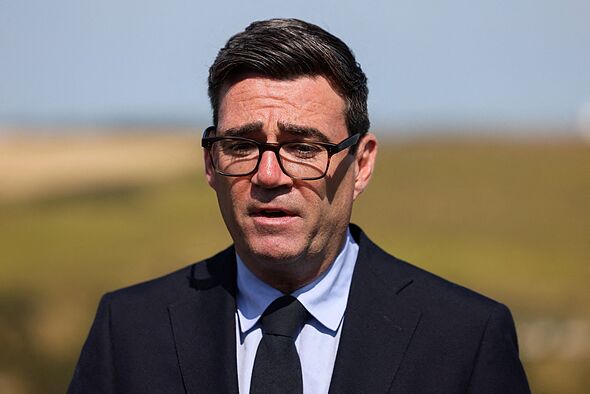
Andy Burnham has been plunged into an early political row after taking a family holiday only two weeks after entering Downing Street, with critics questioning whether the new Prime Minister should have stepped away from the job so soon after taking office.

Burnham became Prime Minister on July 20 and left for a foreign family break in early August, just 15 days into his premiership. Downing Street said he would remain in contact with officials and that the government would continue to operate normally while he was away.
But the timing has created an awkward political storm.
For a Prime Minister only days into office, every decision is scrutinised. The first weeks of a new administration are normally filled with announcements, meetings, crises and attempts to establish political authority. Burnham’s decision to take time away has therefore given opponents an easy opportunity to question his priorities.
The criticism has been particularly sharp from Reform UK. The party accused Burnham of effectively “bunking off” from the responsibility of governing Britain, while deputy leader Richard Tice and chairman Lee Anderson attacked the Prime Minister’s decision to leave the country so soon after taking office.
But the controversy does not stop with the opposition.
The more damaging question for Burnham is whether discontent is beginning to emerge inside Labour itself.
A new Prime Minister needs to establish authority quickly. Cabinet ministers need to know who is setting the direction, MPs need confidence in the government’s strategy and Labour activists need to believe that their party is moving towards electoral success.
A holiday, of course, does not automatically mean that a Prime Minister has stopped governing.
Modern governments operate continuously. Officials remain in place, ministers continue working and a Prime Minister can communicate remotely. There is also a legitimate argument that even the country’s leader is entitled to spend time with their family.
Burnham is married and has three children, and the holiday was described as a family break. ITV reported that officials said he would remain available for government business while away.
The constitutional position is also important.
Unlike some of his predecessors, Burnham did not appoint a Deputy Prime Minister. Instead, Louise Haigh was given the title of First Secretary of State and effectively occupies the senior Cabinet position beneath him. Britain does not require a Prime Minister to appoint a formal deputy, so Burnham’s absence does not create a constitutional vacuum.
Nevertheless, politics is about perception as much as constitutional procedure.
And the perception created by the holiday is potentially damaging.
Burnham entered Downing Street promising an energetic government focused on changing Britain. His political brand has been built around action, regional renewal and practical government. The decision to take a foreign holiday so quickly therefore creates an awkward contrast with the image of a leader determined to hit the ground running.
The timing is especially unfortunate because his government has already faced several major controversies.
The early-release prison scheme has become one of the biggest problems confronting the new administration. Burnham was forced to intervene after concerns emerged about serious offenders potentially benefiting from the arrangements. The controversy has generated anger among victims’ families and opposition parties.
That crisis was unfolding almost immediately before Burnham’s departure.
For his critics, the sequence of events is politically irresistible.
They can argue that Britain was facing serious problems while the Prime Minister was preparing to leave for a holiday.
Whether that criticism is fair is another matter.
The prison crisis is not something that can be solved simply by keeping Burnham physically inside Downing Street. The underlying problems are structural, including overcrowding, rising sentence lengths, pressure on probation and a shortage of prison capacity.
A Prime Minister staying at his desk for another week would not magically create thousands of new prison places.
Yet leadership is often judged symbolically.
The first few weeks of a premiership are an opportunity to demonstrate seriousness and urgency. Voters may therefore reasonably ask why a new leader could not wait before taking a holiday.
That question becomes more powerful when combined with the wider political pressures already facing Labour.
Burnham’s government is attempting to distinguish itself from the previous administration. He has promised greater regional empowerment, changes to public services and a different economic approach. Most recently, he announced plans to shift significant responsibility for economic growth from the Treasury to a new “No 10 North” operation based in Manchester.
That is an ambitious agenda.
It requires political discipline.
It also creates the potential for conflict inside Labour.
Burnham’s approach is more decentralised and openly interventionist than some Labour figures may be comfortable with. His emphasis on public control of services, regional government and economic redistribution could generate disagreements over spending, taxation and the role of the state.
Those disagreements could eventually become much more important than a holiday.
But the holiday provides a convenient focal point for wider dissatisfaction.
Whenever a new leader faces internal tensions, apparently minor decisions can become symbols of something larger. A holiday becomes a question about commitment. A reshuffle becomes a question about loyalty. A policy disagreement becomes evidence of a “civil war”.
That is how political narratives develop.
Burnham therefore needs to be careful about allowing the story to become bigger than the original event.
He can reasonably argue that Prime Ministers are human beings and that a short family break does not mean the government has stopped functioning. The fact that officials remained in contact with him supports that argument.
But he must also recognise that public expectations are different for someone who has just become Prime Minister.
There is little political benefit in appearing detached from the problems dominating the news.
The strongest response would therefore be to return from the holiday with a clear programme of action.
Burnham needs to show that the break was temporary and that the government remains firmly focused on its priorities.
That means delivering on the economy.
It means addressing the prison crisis.
It means dealing with immigration.
It means improving public services.
And it means proving that his promise of regional empowerment can translate into measurable improvements for people outside London.
The pressure will increase if those results fail to materialise.
Indeed, the holiday controversy may become insignificant if Burnham delivers a series of political successes. Voters rarely remember a holiday when the economy is improving, public services are working and government policies are producing visible results.
Conversely, if problems multiply, the holiday could be remembered as an early symbol of a government that appeared distracted.
That is why the timing matters more than the holiday itself.
There is also an important question about the standard applied to political leaders.
Should Prime Ministers be expected to work continuously without taking breaks? That would be an unreasonable expectation. The demands of the job are enormous, and exhaustion can itself damage decision-making.
A Prime Minister who never takes time away from the office may eventually become less effective.
The real issue should therefore be whether the government remains capable of functioning effectively when its leader is temporarily absent.
If it does, there is little constitutional reason to object.
But politics does not operate entirely through constitutional principles.
Voters want to see leaders who understand the seriousness of their responsibilities.
For Burnham, this means maintaining the balance between being a human being and projecting authority.
That balance will become increasingly important as his premiership develops.
He has already demonstrated that he intends to govern differently. His decision to create “No 10 North” and move economic decision-making closer to the regions is one of the clearest examples of his attempt to reshape the traditional Westminster model.
His government is also attempting to make tackling rough sleeping a major early priority, with a £102 million initiative designed to accelerate action before Christmas.
Those policies suggest that Burnham’s government is not simply standing still.
The challenge is communication.
If the public sees a Prime Minister taking a holiday while serious problems continue, opponents will fill the information gap with their own narrative.
If the public instead sees a Prime Minister returning from a short break and immediately delivering results, the controversy will quickly fade.
That is the reality of modern political leadership.
The opposition will always look for opportunities to portray a government as weak, distracted or out of touch. Labour MPs with their own ambitions may also use moments of vulnerability to push the Prime Minister in a different direction.
Burnham must therefore avoid allowing a relatively ordinary personal decision to become a symbol of political weakness.
The coming weeks will be much more important than the holiday itself.
He has a new government to establish, an economy to manage and a series of difficult policy problems to confront. His first budget is due on October 28, while his government is preparing a broader ten-year economic and constitutional reform programme.
Those are the events that will ultimately determine whether his premiership succeeds.
A holiday lasting a few days will not decide Burnham’s political future.
Results will.
If he delivers, the criticism will look increasingly petty.
If he struggles, however, his opponents will inevitably return to the story and argue that the warning signs were visible from the beginning.
That is why the current Labour row matters.
It is not really about whether a Prime Minister deserves a holiday.
It is about whether Andy Burnham can convince his party, his government and the British public that he is fully in control of the job.
The next few months will provide the answer.
And for a Prime Minister only weeks into office, the pressure has already begun.