
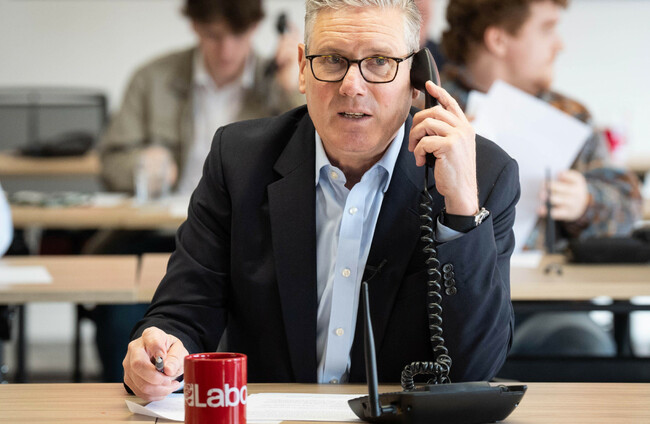
 LABOUR IS EXPECTED to take a hammering in today’s elections across England, Scotland and Wales, with some pollsters predicting Keir Starmer’s party will lose 75% of the council seats they’re defending.
Throughout the day, voters will choose who they want to represent them in the Scottish and Welsh parliaments and in councils across England, in what are the biggest elections in Britain since the 2024 general election that saw Starmer sweep to power.
Six mayoral contests will also be held today, in or around the London area – Croydon, Hackney, Lewisham, Newham, Tower Hamlets and Watford.
The prime minister’s party is under pressure from the right and left, with Reform expected to make significant gains in white working-class areas outside of London, while the Greens, under new leader Zack Polanski, are tipped to outperform Starmer in the capital.
Labour is also expected to suffer a historic defeat in Wales and see it lose further ground in Scotland.
Over 4,850 council seats across England will be filled in today’s election, 2,550 of which are currently held by Labour.
And while in previous elections the main opposition party could have expected to benefit from Labour’s misfortune, the Conservative Party under Kemi Badenoch is also expected to see significant losses, with one pollster predicting the Tories may lose up to 600 seats.
In Scotland, all 129 Members of the Scottish Parliament (MSPs), Holyrood, are up for re-election.
Meanwhile, Wales is set to see the biggest shake-up of its parliament since powers began to be transferred from Westminster in 1999. The number of members of the Senedd (MSs) will be expanded from the current 60 to 96 representatives as 16 new constituencies are created.
Keir pressure
So would a defeat on the scale being predicted signal the end for Starmer’s leadership?
That remains to be seen, but many think it will – including a growing number in his own party.
According to reports from the UK press, MPs are already plotting to oust Starmer once the dust has settled on today’s elections.
It comes amid ongoing rumblings of potential leadership heaves by Health Secretary Wes Streeting, former deputy prime minister Angela Rayner or Greater Manchester Mayor Andy Burnham.
Allies of Rayner are confident she would be able to gain the support of the 81 MPs required to launch a challenge – a number which Streeting is also said to have met, though neither is said to want to be the first to move.
Meanwhile, Burnham has been tipped as a party favourite to succeed Starmer, but he would have several logistical obstacles to clear should he seek to mount a bid for No 10 – as he’s currently serving as Manchester mayor and is not a member of parliament.
How to follow the results
UK elections don’t follow the same pattern as Irish votes, where results don’t become final until well into the next day – so we can expect some areas to tally and finalise results overnight before breakfast on Friday.
However, just 46 of the 136 councils up for election will be declaring overnight, which means we’ll have only a very partial picture of what’s going on come daybreak.
Those earlier declaring constituencies will all be based in England. Some are in areas tipped to go for Nigel Farrage’s Reform – so we will get at least get a relatively clear sense of how well the insurgent party has fared before other areas return results.
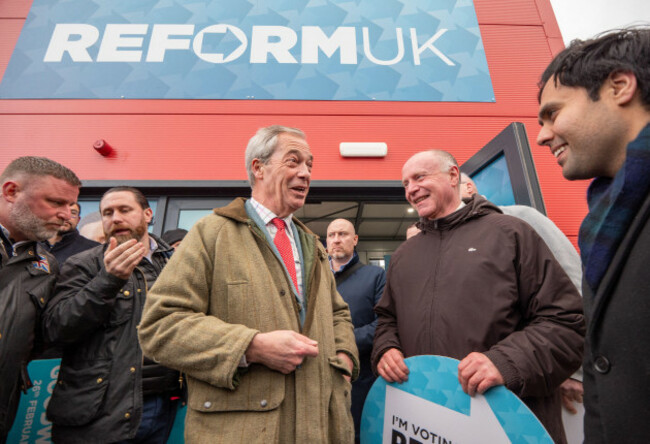
No Scottish or Welsh constituencies will be reporting back overnight, so the picture of the pressure facing Starmer will only become clearer later on Friday, with most results expected to be in by 3.30pm-6pm that evening.
Surveys suggest Labour will lose control of the devolved Welsh government in Cardiff for the first time since the country got its own parliament 27 years ago.
A YouGov poll published in recent days showed Reform neck-and-neck with pro-independence Plaid Cymru.
That suggests that Labour’s share of the vote could plunge to just 12% – down 24 points on the 2021 election.
Losing power in Wales would be “disastrous” for the prime minister’s party, according to Laura McAllister, a politics professor at Cardiff University.
McAllister outlined to The Journal how Labour is suffering by losing voters to its left to the Greens in England and Plaid Cymru in Wales, while Reform is making strides by claiming not just previous Labour voters but also Tory support.
“We can pretty much bet now that Starmer will be the leader that loses Wales for the first time in a century,” she added.
The picture is not much better in Scotland; when Starmer entered Downing Street two years ago, Labour was confident it could regain power north of the border for the first time since 2007.
But polling now suggests the Scottish National Party (SNP) will extend its 19-year grip on devolved rule. If one recent YouGov poll becomes reality, then it would see Reform beat Labour to second place, no doubt resulting in further despair for Starmer and allies at the top of the UK Labour Party.
SNP leader John Swinney has said his party will resume its own independence push for Scotland if it returns with a majority, but surveys currently project that it may fall just a handful of seats short of that ambition.
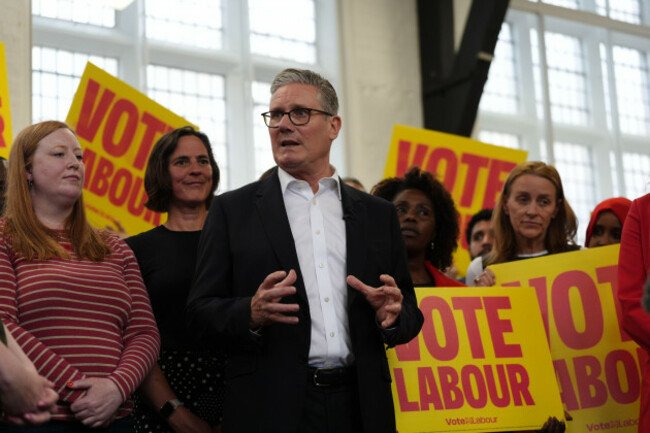
Regarding the other major consequence of the results if they unfold as many now expect, McAllister said it’s set up to be “disastrous” for Starmer – but she does not expect him to lose his grip of the party’s leadership and Prime Minister’s office just yet.
“Does this push Starmer over the edge? I don’t think it does, because at this moment in time, they haven’t got a successor lined up. We’re in the middle of a very difficult economic environment, and Labour, traditionally, hasn’t got rid of its leaders in this way,” she said.
“I think they wait a little bit for the dust to settle, and for clarity over who might replace Starmer before they move. But either way, this is going to be a very, very troubling election for Labour.”
Keir Starmer Is Bracing for Bad News in Today’s Local Elections – So Will He Be Forced Out?
Local elections are often described as a political test of public mood. Although they do not directly decide who becomes prime minister, they provide an important indication of how voters feel about the government and the direction of the country. For a sitting prime minister, poor local election results can create serious political pressure, especially when combined with falling popularity, internal criticism, and concerns about the party’s future.
The headline “Keir Starmer Is Bracing for Bad News in Today’s Local Elections – So Will He Be Forced Out?” captures a moment of uncertainty for Labour’s leadership. The question is not only about election results themselves but about what those results might mean for Starmer’s authority inside his own party. Could disappointing results trigger a leadership crisis, or would Labour MPs continue to support him and allow him to continue towards the next general election?
Local elections are traditionally difficult for governing parties. Voters often use them as an opportunity to express dissatisfaction without changing the national government. A voter who may still support a party nationally can choose another option locally to send a message. This means that losses at council level do not automatically mean a prime minister has lost the confidence of the country.
However, the political situation becomes more complicated when a government is already facing criticism. Reports before the local elections suggested Labour was under pressure from both Reform UK and the Greens, with concerns about losses in areas where the party had previously been strong. For Starmer, the results therefore represented more than just local contests; they became a judgement on whether voters believed Labour was delivering the change it promised.
One of the biggest challenges facing Starmer has been managing expectations. Labour entered government with a promise of renewal and improvement after years in opposition. Supporters expected action on major issues such as healthcare, housing, economic growth, and public services. Yet many of these problems are long-term challenges that cannot be solved quickly.
When voters do not immediately see improvements in their daily lives, frustration can grow. Rising living costs, pressure on public services, and concerns about economic security can influence how people judge a government. Even when problems have deep causes, the party in power is usually held responsible.
For Starmer personally, the challenge has also been about leadership style. Since becoming Labour leader, he has often presented himself as a serious, careful, and professional politician. Supporters argue that this approach provides stability after years of political uncertainty. They believe his focus on competence and discipline is necessary for effective government.
Critics, however, argue that Starmer has struggled to create an emotional connection with voters. They claim that while he appears competent, he has not always inspired enthusiasm or clearly communicated a strong sense of national purpose. In modern politics, where personality and communication play a major role, this can become a significant weakness.
The possibility of Starmer being forced out depends heavily on the reaction of Labour MPs. Prime ministers are rarely removed simply because of poor local election results. A leadership challenge usually requires a significant number of MPs to believe that replacing the leader would improve the party’s chances of winning the next general election.
Reports following poor election performances suggested growing internal criticism, with some Labour figures questioning whether Starmer could continue successfully. However, challenging a sitting prime minister is a major political gamble. MPs must consider whether removing a leader would solve problems or create even greater instability.
Labour’s history also makes leadership challenges complicated. Removing a leader who has already won a general election would be a dramatic step. Supporters of Starmer could argue that he earned a mandate from voters and deserves time to implement his programme. They may warn that changing leaders repeatedly creates the appearance of chaos.
Those calling for change would likely argue that political parties must respond when public confidence declines. They may claim that continuing with an unpopular leader risks damaging Labour’s chances at the next election. For them, changing direction early could be preferable to waiting until electoral defeat becomes unavoidable.
Another factor is the existence of potential replacements. Leadership challenges are not only about dissatisfaction with the current leader; they also require an alternative figure who can unite the party and appeal to voters. Any challenger would need to demonstrate that they could perform better than Starmer.
Andy Burnham has often been mentioned in discussions about Labour’s future because of his experience as Mayor of Greater Manchester and his reputation for connecting with voters outside Westminster. His supporters argue that his regional leadership experience gives him a different style from Starmer. However, moving from local government to national leadership would also present major challenges.
Other Labour figures could also attract attention during periods of uncertainty. However, leadership contests can expose divisions within parties, creating risks for whoever eventually wins. A new leader must not only defeat opponents but also rebuild unity afterwards.
The role of media coverage is another important element. Political pressure often increases when newspapers and broadcasters focus heavily on leadership questions. Headlines about whether a prime minister is “finished” or “in trouble” can influence public discussion and encourage more politicians to speak out.
Social media has intensified this process. Political debates now develop rapidly online, where supporters and critics can create competing narratives about a leader’s success or failure. A single difficult election result can quickly become portrayed as evidence of a wider crisis.
However, political survival depends on more than headlines. Leaders often recover from setbacks if they can demonstrate improvement and regain public trust. Many governments experience difficult periods before recovering their position.
Starmer’s supporters may argue that local elections should not be treated as a national referendum. They may point out that governments need time to deliver major reforms and that constant leadership changes would prevent long-term planning.
Critics would respond that elections are important warnings. They may argue that voters are expressing genuine frustration and that ignoring those signals could make future problems worse. For them, local election results provide an opportunity for a party to correct course.
The wider political environment also matters. Labour faces competition from multiple directions. Reform UK has attempted to attract voters concerned about immigration, national identity, and dissatisfaction with traditional parties. The Greens have appealed to voters seeking stronger action on environmental and social issues. This makes maintaining Labour’s coalition of supporters more difficult.
A prime minister must therefore balance different groups of voters. Appealing too strongly to one section of society can risk losing support elsewhere. Starmer’s challenge has been creating a broad coalition that includes traditional Labour voters, former Conservative voters, and people who simply want competent government.
Ultimately, whether Starmer survives depends on confidence within Labour that he remains the best person to lead the party. Poor local election results may increase pressure, but removing a prime minister requires a belief among MPs that an alternative would provide a better chance of success.
In conclusion, “Keir Starmer Is Bracing for Bad News in Today’s Local Elections – So Will He Be Forced Out?” reflects a major test of political leadership rather than a simple question about election results. Poor performances can damage a leader’s authority, but they do not automatically lead to resignation.
Starmer’s future depends on several factors: the scale of electoral losses, the reaction of Labour MPs, the availability of alternative leaders, and his ability to convince voters that his government can deliver results.
Politics often changes quickly. A leader facing intense criticism today may recover tomorrow, while a leader who appears secure can suddenly become vulnerable. For Keir Starmer, the challenge is proving that his leadership can survive difficult moments and ultimately deliver the change that voters expected.