
Just When Keir Starmer Thought It Couldn’t Get Worse – Angela Rayner Is Back
British politics has rarely lacked drama, but the latest developments within the Labour Party have created an especially difficult situation for Keir Starmer. Just as the former prime minister appeared to be struggling with questions about his leadership, political direction and future, Angela Rayner has returned to the centre of Labour politics. Her comeback is significant not simply because of her personality or previous position, but because she represents a different political style and a different relationship with the Labour movement.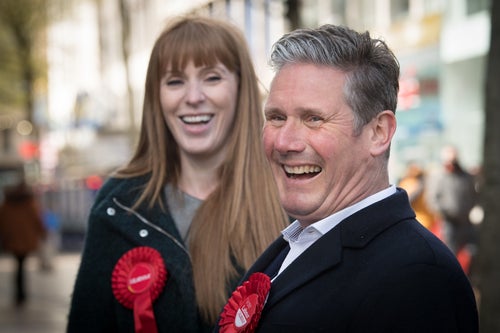
Rayner’s return has the potential to change the balance of Labour politics. She remains a figure with strong support among many Labour members, trade unionists and MPs, while also being a controversial figure among parts of the wider electorate. Her reappearance therefore creates both an opportunity and a threat for the party. For Starmer’s critics, it provides another reason to question his political legacy. For Labour’s leadership, it could become a source of renewed internal tension.
Angela Rayner has always occupied an unusual position within Labour. She has presented herself as a politician rooted in working-class communities and the trade union movement. Her personal story has contributed significantly to this image. Unlike politicians who entered Westminster through traditional professional routes, Rayner has frequently emphasised her background and connection with ordinary working people.
This has helped her build a strong relationship with Labour’s activist base. Many members see her as someone who represents the traditional values of the party: social equality, stronger public services, workers’ rights and support for people on lower incomes. Her political style is also more direct and emotional than Starmer’s.
That difference matters.
Starmer built much of his political identity around competence, discipline and professional government. His leadership attempted to reassure voters that Labour had changed and was ready to govern responsibly. Rayner, by contrast, has often been more willing to speak in emotional and confrontational terms.
Neither approach is necessarily better in every circumstance. But when a political party is struggling to connect with voters, the contrast between the two styles becomes especially important.
Rayner’s return also comes at a time when Labour’s political landscape has changed dramatically. The party is no longer simply competing with the Conservatives. Reform UK has become a major force, while the Greens and Liberal Democrats are also capable of attracting voters who might once have supported Labour.
This creates a difficult strategic problem. Labour needs to recover voters who have moved away from the party without losing the younger, metropolitan and progressive supporters who helped it build a broad electoral coalition.
Rayner could potentially help with one part of this challenge. Her working-class background and strong links with Labour’s traditional base may allow the party to reconnect with voters who believe that Labour has become too distant from its roots.
However, this advantage comes with risks.
Rayner has also experienced significant political controversy. Her previous difficulties over tax and property arrangements damaged her reputation and became a major issue for opponents. Although political scandals can fade with time, they do not necessarily disappear from public memory.
This creates a problem for Labour. The party may want Rayner’s popularity among members and her ability to communicate with traditional Labour voters, but it must also consider how the wider electorate sees her.
The contrast between internal popularity and public popularity is particularly important in a leadership contest. A politician who is extremely popular with Labour members may not necessarily be the candidate most capable of winning a general election.
This issue has already shaped speculation about Starmer’s future. Some Labour MPs have reportedly been concerned that removing Starmer could simply result in Rayner becoming the strongest candidate to replace him. That possibility has encouraged some critics to hesitate, even when they are dissatisfied with the prime minister.
The political calculation is straightforward. If MPs believe Starmer is weak but fear that his replacement could be even less popular with the wider electorate, they have an incentive to leave him in place.
Rayner’s return could therefore have an unintended effect. Instead of immediately strengthening the anti-Starmer movement, it could expose divisions among those who want a new leader but disagree about who should replace him.
At the same time, her return gives Labour’s left and centre-left wings a more influential voice. Under Starmer, the party attempted to move away from some of the internal conflicts associated with the Jeremy Corbyn era. Rayner’s political identity is different from Corbyn’s, but her strong relationship with the trade union movement means that she can potentially become a bridge between Labour’s traditional left and its modern electoral strategy.
This could be useful if managed carefully.
Labour cannot win sustainably if it constantly fights itself. The party needs activists who believe in its political mission, MPs who can defend its policies and voters who trust it to improve their lives. Rayner could help strengthen the emotional connection between the party and its members.
But she could also become a focus for internal competition.
Leadership speculation has a tendency to change political behaviour. Ministers begin considering their future positions. MPs start forming alliances. Supporters promote potential candidates. Policy disagreements become interpreted as evidence of factional conflict.
If Rayner becomes associated with one particular faction, her return could intensify these divisions.
The situation is even more complicated because Andy Burnham’s rise has created another potential centre of gravity within Labour. Burnham has built considerable political popularity through his years as mayor of Greater Manchester and has developed a reputation for speaking directly to voters outside Westminster.
Rayner and Burnham therefore represent two different kinds of Labour appeal. Rayner has strong connections with the party’s membership and trade union movement, while Burnham has developed significant public recognition and regional popularity.
A future leadership contest involving both figures could become highly competitive. It could also force Labour to confront fundamental questions about its identity.
Should Labour prioritise winning back traditional working-class voters? Should it focus on younger and socially progressive voters? Should it become more economically interventionist? Should it adopt a tougher position on immigration? Should it seek closer relations with Europe?
These questions cannot be answered simply by changing the party leader.
This is why Rayner’s return matters beyond the immediate political headlines. She symbolises a debate about what Labour should stand for after years of political transformation.
The party has attempted to present itself as economically responsible and electorally broad. Yet many members still want stronger redistribution and more ambitious public spending. Rayner’s political instincts may be closer to these demands than Starmer’s cautious approach.
Housing is likely to be particularly important. Rayner has previously been closely associated with housing policy and the need to increase affordable housing. Britain’s housing shortage is one of the country’s most serious social problems, particularly for younger people and lower-income families.
A stronger focus on housing could therefore provide Labour with an opportunity to demonstrate practical results. If the party can increase housebuilding, improve affordability and protect renters, it could rebuild some of the trust lost among voters.
But housing reform also involves difficult political choices. New developments can face opposition from local communities, while government investment is constrained by public finances. A politician can promise more homes, but delivering them requires years of planning and infrastructure investment.
This illustrates a wider truth about Rayner’s return: enthusiasm is easier to generate than results.
Labour’s current problems cannot be solved through personalities alone. The party faces economic pressures, strained public services, political competition and a public that has become increasingly sceptical of politicians.
Rayner can contribute to a political recovery, but she cannot create one by herself.
Her greatest potential strength may be authenticity. Voters often respond positively to politicians who appear comfortable with who they are and where they come from. Rayner’s direct style can make politics feel less formal and distant.
However, authenticity also requires credibility. If voters believe that a politician is promising more than the government can realistically deliver, initial enthusiasm can quickly turn into disappointment.
This is particularly important for Labour because the party is already attempting to rebuild trust. Voters who have become sceptical of Westminster politics may be unwilling to give the government many second chances.
Starmer’s difficulties therefore provide the context for Rayner’s comeback. His leadership was built around the promise of competence and stability, but political stability becomes less valuable if voters do not believe that their lives are improving.
Rayner offers a different political message: greater emotional connection, stronger links with Labour’s traditional supporters and a more openly progressive approach.
The question is whether these qualities can complement the government or instead become a challenge to its direction.
If Rayner supports Burnham’s government while maintaining her own political identity, she could become an important figure in rebuilding Labour’s connection with its traditional base. If she becomes associated with an internal campaign against the previous leadership, however, she could become a source of further instability.
Much will depend on how Labour politicians behave.
The party’s greatest mistake would be to turn Rayner’s return into another personality battle. Britain has already experienced years of political conflict over Brexit, leadership changes and internal party divisions. Voters are unlikely to be impressed if Labour spends more time fighting over positions than addressing practical problems.
Rayner’s comeback should instead be treated as an opportunity to broaden the government’s political appeal.
She can speak to working-class communities. She can emphasise housing and public services. She can defend workers’ rights while supporting economic development. Most importantly, she can help Labour demonstrate that modernisation does not require abandoning its traditional identity.
For Starmer, however, her return is undoubtedly uncomfortable. A former deputy with strong support inside the Labour movement returning to frontline politics provides a constant reminder that there are alternative visions of the party.
The political irony is that the very qualities that make Rayner useful to Labour could also make her dangerous to the party’s previous leadership. She has the profile, relationships and political instincts necessary to influence Labour’s future.
Whether she becomes a stabilising force or a source of further conflict will depend on what Labour does next.
Ultimately, Angela Rayner’s return is not important simply because one politician has come back. It matters because it represents the unresolved struggle over Labour’s identity.
The party must decide whether it wants to be primarily a cautious governing machine or a movement capable of inspiring people with a stronger social and economic vision. It must decide how to respond to Reform UK without abandoning its principles. It must also rebuild relationships with voters who once regarded Labour as their natural political home.
Rayner can play a significant role in that process.
But she should not be expected to become another political saviour. Labour’s problems are too deep for one individual to solve. The party needs competent government, realistic policies and a clear long-term strategy.
For Keir Starmer, the return of Angela Rayner may feel like another unwelcome development in an already difficult political story. For Labour as a whole, however, it could become something more constructive: a chance to reconnect with the parts of the party that have felt increasingly distant from its national leadership.
The real test will be whether Labour can use Rayner’s return to unite rather than divide itself.
If it can, her comeback could strengthen the party. If it cannot, the return of one of its most recognisable figures could deepen the internal conflict that has already weakened Labour’s political authority.
For now, one thing is clear: just when Labour might have hoped for a quieter political period, Angela Rayner is back—and Westminster is unlikely to remain quiet for long.