
Reeves claims pensioners ‘better off’ under her (Image: Getty)
Rachel Reeves stands accused of “gaslighting pensioners” after claiming Britain’s elderly are “better off” thanks to her time as Chancellor.
The Chancellor, who is widely tipped to face the sack within weeks, made the extraordinary boast during a television interview, insisting older people had been protected on her watch.
Get the latest politics news – straight from our team in Westminster and more Invalid email
We use your sign-up to provide content in ways you’ve consented to and to improve our understanding of you. This may include adverts from us and 3rd parties based on our understanding. You can unsubscribe at any time. Read our Privacy Policy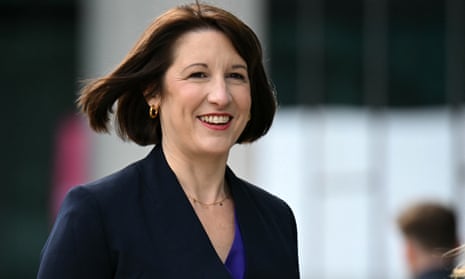
But the claim sparked fury from Conservative rivals who pointed out the millions of pensioners have been drafted into paying tax under Labour.
Speaking to the Daily Express top Tories also pointed to Ms Reeves decision to strip away the winter fuel allowance.
Speaking on the BBC‘s Sunday With Laura Kuenssberg, Ms Reeves said: “I have had to make hundreds and hundreds of choices as Chancellor, and they haven’t always been easy choices.”
She added: “But if you are a pensioner watching this programme today then you have had two increases in your state pension, significantly higher than the increase in prices”.
The Chancellor went on: “I do know that pensioners are better off after two years of this Labour government.”
But Shadow Work and Pensions Secretary Helen Whately torpedoed the claim, blasting: “Rachel Reeves is gaslighting pensioners once again.”
She added: “Thanks to her, many pensioners are being dragged into paying tax. That comes on top of rising prices driven by her disastrous policies and high energy bills courtesy of net zero zealot Ed Miliband.”
Ms Whately reminded readers of the winter fuel row that enraged pensioners across the country. She said: “Labour showed their true colours when they tried to take the winter fuel allowance from millions of pensioners.”

She insisted only the Conservatives could “be relied on to back pensioners and deliver a stronger economy and stronger country”.
Shadow Chancellor Sir Mel Stride was equally scathing, declaring: “I am afraid her score card is very low when it comes to securing the economic future of our country.”
He warned little would improve once Ms Reeves is gone, with Andy Burnham “clearly going to lean more into tax, more into borrowing”.
But Labour MP Miatta Fahnbulleh, a close ally of the incoming Prime Minister, admitted “people are impatient for change”, conceding the “pace and scale of it needs to be much greater to meet the demands of the country”.
Mr Burnham has previously affirmed his commitment to the triple lock on the state pension, in a Q&A online where he said he would stand by it as a manifesto commitment from 2024.
Fury Erupts as Rachel Reeves Claims Pensioners Are “Better Off” Under Her
Fury has erupted after Rachel Reeves claimed that pensioners are better off under Labour, prompting an angry backlash from critics who argue that the Chancellor’s assessment bears little resemblance to the financial reality facing many older people.
The claim has immediately reignited one of the most politically sensitive arguments in Britain: whether pensioners have genuinely benefited from Labour’s economic policies or whether ministers are attempting to present a much rosier picture than millions of households recognise.
For Reeves, the argument is straightforward.
The government can point to increases in the State Pension and argue that pensioners have received additional financial protection despite the difficult economic environment.
But for many pensioners, the calculation is much more complicated.
An increase in the headline State Pension does not automatically mean an increase in disposable income.
Household bills remain high. Energy costs continue to put pressure on budgets. Food prices have risen dramatically over recent years, while council tax, insurance and other essential expenses have also increased.
At the same time, changes to pensioner support have generated anger among older voters who believe Labour has treated them unfairly.
That is why Reeves’s “better off” claim has proved so explosive.
Critics argue that the Chancellor is looking at one side of the balance sheet while pensioners are being forced to deal with the other.
The State Pension increase
The strongest argument available to Reeves is the State Pension itself.
Under Britain’s triple lock system, the State Pension is increased annually according to whichever is highest of inflation, average earnings growth or 2.5 per cent.
The policy has provided significant protection for pensioners and has become one of the most politically important commitments in British politics.
For the government, pointing to higher pension payments is therefore an obvious way to demonstrate that pensioners have not been forgotten.
But critics say this misses the wider picture.
A pensioner does not live on the State Pension in isolation.
Many have mortgages or rent, household bills, transport costs and healthcare-related expenses.
Some also support adult children or grandchildren who are struggling with the cost of living.
For these households, a rise in income can quickly be absorbed by rising expenses.
The result is a growing argument over what “better off” actually means.
Is a pensioner better off simply because their weekly pension has increased?
Or should the government measure whether they have more money left after paying their essential bills?
That distinction is at the heart of the controversy.
Winter Fuel Payment anger
Perhaps the biggest problem for Reeves is the government’s decision to restrict the Winter Fuel Payment.
Under the Labour government’s changes, the payment was limited largely to pensioners receiving Pension Credit or another qualifying benefit.
The policy was presented as a necessary decision to target support at pensioners most in need while helping the government manage public finances.
But millions of pensioners who had previously received the payment lost access to it.
That created an extremely difficult political contradiction.
The government could simultaneously increase the State Pension while removing another form of financial support.
From the perspective of a pensioner, the question is obvious:
If the government says I am better off, why has one of the payments I previously received been taken away?
Labour’s answer is that universal support was expensive and poorly targeted.
Critics respond that many pensioners who are not officially considered poor can still be under considerable financial pressure.
Someone may own their home, for example, but have relatively little cash income.
A homeowner with modest savings can appear wealthy on paper while struggling to pay monthly bills.
The “wealthy pensioner” argument
The wider political debate has increasingly focused on the wealth held by older generations.
There is substantial evidence that older households, on average, hold more property and accumulated wealth than younger generations.
This has encouraged some economists and policymakers to argue that the tax and welfare system should do more to target wealthier older people.
The argument is politically attractive to younger voters.
Many younger adults face high rents, expensive mortgages and difficulties saving for retirement.
They see older generations benefiting from decades of rising house prices and relatively generous pension arrangements.
But the argument can become dangerously simplistic.
Not every pensioner is wealthy.
There are millions of older people living on relatively modest incomes.
A pensioner who owns a house worth several hundred thousand pounds may still have very limited monthly income.
That house cannot easily be used to pay an electricity bill without selling it or borrowing against it.
This is why many pensioners resent being described collectively as wealthy.
They believe politicians are confusing assets with income.
The generational divide
The controversy is therefore becoming part of a much larger generational argument.
Younger workers are being asked to finance today’s public services while also saving for their own retirement.
At the same time, they may doubt whether the State Pension will be equally generous when they reach retirement age.
That creates resentment.
Why should today’s workers pay increasingly high taxes to protect benefits that they themselves may never receive?
On the other side, pensioners argue that they have already paid taxes and National Insurance throughout their working lives.
They did not create Britain’s current demographic problems.
They did not decide that housing prices should rise dramatically.
They did not determine government spending.
And they should not be blamed for being old.
Both sides therefore have legitimate grievances.
The danger is that politicians turn those grievances into a war between generations.
Reeves’s economic challenge
For Rachel Reeves, the problem is much bigger than one controversial statement.
She is attempting to balance the government’s commitment to economic stability with enormous demands for public spending.
The NHS needs money.
Social care needs money.
Local government needs money.
Infrastructure needs investment.
Defence spending is under pressure.
And the State Pension bill continues to rise as Britain’s population ages.
The Chancellor therefore has very limited room for manoeuvre.
If she protects pensioners from every possible financial shock, the government may have less money available for other priorities.
If she cuts pensioner benefits or restricts them to poorer households, she risks alienating a powerful electoral group.
If she increases taxes, younger and working-age households may feel increasingly squeezed.
There is no painless solution.
The triple lock dilemma
The State Pension triple lock sits at the centre of this debate.
Supporters argue that it protects pensioners from inflation and prevents their incomes from falling behind wages.
Critics say it has become too expensive and creates a long-term ratchet effect that increases pension spending faster than the economy can comfortably sustain.
The controversy has intensified because pension spending is becoming an increasingly large part of government expenditure.
As the population ages, more people are receiving pensions while a relatively smaller proportion of the population remains in employment.
That demographic shift creates a fundamental challenge.
Britain must decide how much it is prepared to spend on retirement security and who should ultimately pay for it.
Reeves cannot escape that calculation.
Is Labour really helping pensioners?
This is where the political battle becomes particularly fierce.
Labour can point to higher State Pension payments.
But critics can point to the loss of Winter Fuel Payment for millions of pensioners.
Labour can argue that support is being better targeted.
Critics can argue that the government has created insecurity for people who previously believed their retirement income was protected.
Labour can point to fiscal responsibility.
Opponents can accuse Reeves of balancing the books at the expense of older people.
Both narratives contain elements of truth.
The real question is the overall impact on household finances.
That is much harder to summarise in a single political slogan.
Pensioners are watching closely
Older voters are also becoming increasingly politically important.
They are more likely to vote than many younger groups, meaning governments ignore their concerns at their own risk.
A pensioner who feels that Labour has taken away financial support may remember that decision at the ballot box.
The opposition knows this.
Conservative politicians will attempt to portray Labour as hostile to pensioners.
Reform UK is likely to make a similar argument, presenting itself as the party willing to challenge what it describes as an increasingly expensive political establishment.
Labour will insist that its policies are designed to protect those who genuinely need help while ensuring that the country’s finances remain sustainable.
The battle for pensioner votes could therefore become extremely intense.
The uncomfortable truth about retirement
There is an uncomfortable reality behind the argument.
Britain cannot indefinitely promise ever-rising pensions without considering how those promises will be financed.
People are living longer.
Healthcare costs are increasing.
The number of pensioners is growing.
At the same time, the working-age population faces its own pressures.
The government therefore has to consider difficult reforms.
That could mean changes to the triple lock.
It could mean a higher State Pension age.
It could mean greater taxation of wealthy pensioners.
It could mean more targeted benefits.
Or it could mean higher taxation across society.
Every option has political consequences.
Reeves’s words may come back to haunt her
That is why the claim that pensioners are “better off” could prove politically dangerous.
If pensioners genuinely feel better off, Reeves will have strong evidence to support her argument.
But if households continue struggling with bills and resent the loss of benefits, the statement could become a symbol of government detachment.
People do not judge their finances through government spreadsheets.
They look at their bank accounts.
They look at their energy bills.
They look at the supermarket receipt.
They look at their council tax bill.
And they ask whether they have enough money left at the end of the month.
That is the test Reeves ultimately has to pass.
A political battle that is far from over
The argument over pensioners is unlikely to disappear.
It will become increasingly important as Britain debates the future of the State Pension, the triple lock and the wider welfare state.
Rachel Reeves has made the case that pensioners are receiving stronger financial protection under Labour.
Her critics vehemently disagree.
They argue that higher pension payments cannot be considered in isolation from the loss of other support and the continuing cost pressures facing households.
The truth is more complicated than either side’s political slogans.
Some pensioners may indeed be better off.
Others may be worse off.
And many will find that the answer depends entirely on their circumstances.
But politically, perception can matter just as much as statistics.
If pensioners believe that Labour understands their concerns, Reeves may eventually win the argument.
If they believe the government is telling them they are prosperous while they struggle to pay their bills, the backlash could become much more serious.
For now, the fury surrounding Reeves’s claim reveals a much deeper problem.
Britain is entering an era in which the question of who pays for retirement can no longer be avoided.
Pensioners want security.
Workers want fairness.
Younger generations want a future they can afford.
And the government wants to balance all three without breaking the public finances.
Rachel Reeves says pensioners are better off.
Now she faces the much harder task of convincing pensioners themselves.