
Fresh Blow to Keir Starmer as New Poll Shows Reform UK-Tory Alliance Would Beat Labour
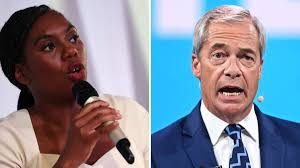
Keir Starmer has been handed another uncomfortable warning after a new poll suggested that a hypothetical alliance between Reform UK and the Conservatives could defeat Labour at a future general election.
The finding is only a hypothetical scenario.
There is no formal Reform-Conservative alliance.
Nigel Farage and the Conservative leadership remain separate political forces, with very different histories, personalities and policy positions.
But the significance of the numbers goes far beyond the question of whether the two parties could actually work together.
The real message is much more uncomfortable for Labour:
A large section of the electorate may be more interested in changing the government than preserving the traditional party system.
And if Reform and Conservative voters ever found a way to cooperate, Labour could face a formidable electoral challenge.
The nightmare scenario for Starmer
For Keir Starmer, the mathematics are potentially alarming.
Labour’s greatest advantage has traditionally been that its opponents are divided.
The Conservative Party competes for centre-right voters.
Reform competes for populist and anti-establishment voters.
The Liberal Democrats compete for another section of the electorate.
Smaller parties attract support in different regions.
Under Britain’s first-past-the-post electoral system, that fragmentation can produce very different results from the national vote share.
A party can win a constituency without receiving a majority of votes.
That makes the division between Reform and the Conservatives extremely important.
If the two parties remain rivals, Labour can benefit from their competition.
If they somehow cooperate, the electoral landscape could become much more dangerous.
The idea of an alliance
An alliance between Reform and the Conservatives would be politically complicated.
The two parties have spent years attacking one another.
Farage has repeatedly accused Conservative governments of failing to deliver on immigration, taxation and political reform.
Conservative politicians, meanwhile, have warned that Reform risks splitting the right-wing vote and allowing Labour to win seats it might otherwise lose.
Yet politics has a habit of creating unlikely partnerships.
If both parties concluded that defeating Labour was more important than competing against each other, discussions about electoral cooperation could become much harder to dismiss.
That does not mean an alliance is inevitable.
It means the possibility itself has political value.
Why the poll matters
The most important element of the poll is not necessarily the precise number.
Polls can change.
Election campaigns can transform voter behaviour.
And hypothetical questions do not always predict real-world voting.
But polls can reveal something about political sentiment.
If voters believe that two separate parties could combine to defeat Labour, it suggests dissatisfaction with the current government may be substantial.
That should concern Starmer.
Because governing parties can survive poor polls.
What they cannot survive indefinitely is a widespread belief that they have lost their mandate.
Reform’s growing influence
Nigel Farage has spent years trying to achieve something that once appeared extremely difficult.
He wanted Reform to become more than a protest party.
He wanted it to become a serious political force.
That transformation is now increasingly visible.
Reform has won elections.
It has attracted prominent politicians.
It has built a growing local presence.
And it has forced both Labour and the Conservatives to respond to its agenda.
That gives Farage enormous leverage.
He does not necessarily need to enter an alliance with the Conservatives to influence them.
He simply needs to make the Tories believe that ignoring Reform would be electorally disastrous.
The Conservative dilemma
For the Conservatives, the situation is deeply uncomfortable.
They need to win back voters.
But many of those voters are now considering Reform.
If the Conservatives move sharply towards Reform on immigration and taxation, they risk losing moderate voters.
If they move towards the political centre, they risk losing more supporters to Farage.
If they attack Reform, they may energise its supporters.
And if they cooperate with Reform, they risk damaging their own identity.
It is a political trap.
What would an alliance actually mean?
An electoral alliance could take many forms.
It could involve informal cooperation.
It could involve standing aside in selected constituencies.
It could involve local agreements.
Or, in the most dramatic scenario, it could involve a broader agreement before a general election.
Each option would have different consequences.
The central objective would be simple:
Avoid splitting the anti-Labour vote.
But implementing that strategy would be extremely difficult.
Who stands where?
Which party gets which constituencies?
Who chooses the candidates?
What happens to MPs who refuse to step aside?
What policies would the alliance support?
Who would lead it?
These questions could destroy an agreement before it ever begins.
Farage’s biggest problem
Farage would face a particularly difficult decision.
He has built Reform around the idea that the old parties have failed.
If he suddenly joins forces with the Conservatives, critics would accuse him of becoming exactly what he once opposed.
His supporters might ask:
Why vote Reform if Reform simply becomes another version of the Conservative Party?
That is a genuine danger.
The political value of Reform comes partly from its identity as an outsider.
An alliance with the establishment could weaken that identity.
But Farage also understands arithmetic
At the same time, Farage is an experienced electoral campaigner.
He understands that political principles do not exist in isolation from electoral mathematics.
If cooperation with the Conservatives could dramatically increase the number of seats available to the right, he would have to consider it.
The question would be whether the short-term electoral gain outweighed the long-term damage to Reform’s independence.
That would be one of the biggest strategic decisions of Farage’s political career.
Labour’s vulnerability
For Labour, the biggest danger is that voters stop seeing the election as a choice between Labour and the Conservatives.
Instead, they may see it as a choice between Labour and a broader anti-Labour movement.
That would fundamentally change the political battlefield.
Starmer could no longer rely on the Conservatives dividing the opposition.
Every marginal constituency would become more unpredictable.
Seats that Labour won comfortably could suddenly become competitive.
And the party would have to defend areas it once considered safe.
The working-class vote
The most dangerous part of this scenario for Labour is the working-class vote.
Reform has increasingly targeted voters who feel disconnected from traditional Labour politics.
Some of these voters remain economically left-leaning.
They may support the NHS.
They may support workers’ rights.
They may favour stronger public services.
But they may also be deeply concerned about immigration, crime, national identity and taxation.
Traditional party labels do not always capture those attitudes.
Reform is attempting to exploit that political gap.
Immigration could unite the right
Immigration is perhaps the issue most capable of bringing Reform and Conservative voters together.
Both parties have supporters who want stronger border controls.
The difference is often one of degree rather than direction.
Reform demands much more radical measures.
The Conservatives may favour tougher enforcement within a more conventional framework.
But the underlying voter concern can overlap.
That creates the possibility of political cooperation.
Taxation is another battlefield
Tax is more complicated.
Conservative voters traditionally favour lower taxation.
Reform also presents itself as a low-tax alternative.
That creates another area of common ground.
Both parties can attack Labour for increasing the tax burden.
Both can argue that government spending should become more efficient.
Both can promise to reduce waste.
But again, the details would matter enormously.
A shared slogan is easier than a shared budget.
The public services question
Healthcare and public services would be harder.
The Conservatives have historically favoured limiting government spending.
Reform has also criticised bureaucracy and government waste.
But voters still expect the NHS, schools, policing and social care to function effectively.
Any alliance would therefore have to explain how it could reduce spending while improving services.
That is where political rhetoric meets reality.
Starmer’s best defence
Labour’s response would probably be straightforward.
Starmer could argue that a Reform-Conservative alliance is not a serious governing alternative but an arrangement created purely to defeat Labour.
He could ask voters:
What would they actually do together?
Who would lead?
What would happen to public services?
How would their promises be funded?
Would they agree on foreign policy?
Would they agree on the economy?
Would they agree on immigration?
Those questions could expose significant divisions.
The danger of attacking too hard
But Labour would also have to be careful.
If Starmer spends too much time attacking the hypothetical alliance, he risks making it appear more important.
Farage could respond that Labour is frightened.
The Conservatives could claim that Labour is trying to prevent voters from choosing an alternative.
The alliance could become a political story simply because Labour keeps talking about it.
That is the paradox.
The power of tactical voting
British voters are already familiar with tactical voting.
In marginal constituencies, people sometimes vote for a party they do not particularly like because they believe it is the best way to defeat another party.
A Reform-Conservative understanding could formalise that behaviour.
If voters in a constituency were told that only one of the two parties was standing a serious chance of defeating Labour, some might change their vote.
That could have dramatic consequences.
The electoral map could change
Imagine a series of constituencies where Labour wins because Conservative and Reform candidates divide the opposition vote.
Now imagine those two candidates becoming one.
The result could change without Labour losing a single supporter.
That is the terrifying arithmetic for Starmer.
The government could lose seats simply because its opponents stop competing against one another.
But alliances can also fail
Political alliances are not automatically successful.
Voters may reject them.
Candidates may rebel.
Supporters may refuse to cooperate.
Local party organisations may resist.
And political leaders may disagree over who should lead.
The history of politics is full of alliances that looked impressive on paper but collapsed under pressure.
That is why the hypothetical poll should not be treated as a forecast.
It is a warning rather than a prediction.
The bigger story
The bigger story is that Britain’s political system is becoming increasingly fluid.
Party loyalties are weaker.
Voters are more willing to switch.
New parties can rise quickly.
Established parties can lose support quickly.
And political coalitions that once appeared impossible can suddenly become subjects of serious debate.
That is precisely the environment in which Reform has flourished.
Farage’s ultimate objective
Farage wants to replace the old political order.
Whether that happens through Reform winning outright or through a broader political realignment remains uncertain.
But the strategic objective is clear.
He wants voters to believe that Labour is no longer inevitable.
He wants Conservative voters to believe that Reform is viable.
And he wants the entire political establishment to recognise that the old two-party assumptions no longer apply.
The question for the Conservatives
The Conservatives must now decide what kind of party they want to become.
Do they compete directly with Reform?
Do they attempt to reclaim the centre?
Do they cooperate with Farage?
Or do they pursue a completely different strategy?
There is no easy answer.
But refusing to confront the Reform challenge is increasingly impossible.
The question for Labour
For Starmer, the challenge is even more immediate.
Labour must make voters believe that it can deliver.
Not simply that Reform is dangerous.
Not simply that the Conservatives are divided.
Not simply that Farage is controversial.
The government must demonstrate that ordinary people are better off under Labour.
That means economic growth.
Better public services.
Affordable housing.
Controlled immigration.
And a credible response to public frustration.
The real battle
Ultimately, the question is not whether a Reform-Conservative alliance will definitely happen.
The real question is why the idea has become politically imaginable.
That alone tells us something about the changing British electorate.
Voters are increasingly willing to consider new combinations.
They are increasingly willing to abandon traditional loyalties.
And they are increasingly focused on outcomes rather than party identity.
That is a profound change.
A warning Starmer cannot ignore
The poll should therefore be treated as a warning rather than a prophecy.
Reform and the Conservatives remain separate parties.
Their supporters are not identical.
Their leaderships have major differences.
And there is no guarantee they could cooperate successfully.
But if they ever discovered enough common ground to avoid splitting the anti-Labour vote, the electoral consequences could be substantial.
For Starmer, that possibility is deeply uncomfortable.
Because Labour’s path back to government may depend not only on its own performance, but also on whether its opponents remain divided.
The next political earthquake
British politics has entered a period where assumptions can disappear almost overnight.
A party once considered marginal can become a major force.
A safe constituency can become competitive.
A political alliance once considered impossible can become a serious subject of debate.
And voters who once appeared permanently loyal can suddenly change direction.
That is the environment Nigel Farage has been waiting for.
For Labour, it is the environment Starmer must learn to navigate.
The question now is whether Reform and the Conservatives remain rivals — or whether the pressure of defeating Labour eventually becomes stronger than their differences.
If they remain divided, Labour may benefit.
If they cooperate, even informally, the political arithmetic could change dramatically.
And if the poll is even remotely capturing the mood of a significant section of the electorate, Keir Starmer has been given a very clear warning.
The next election may not be a simple contest between Labour and the Conservatives.
It could become a battle between Labour and an entirely new political coalition.
And that is a prospect that could keep Downing Street awake long before voters enter the polling booths.