
Farage “Struck Secret £1m Reform Return Deal” Months Before the Election
Nigel Farage is facing renewed questions over his return to frontline politics after reports claimed that he reached a private financial arrangement with Reform UK months before the 2024 general election. The reported agreement has intensified scrutiny of the circumstances surrounding his return as party leader and raised fresh questions about the timing of his political ambitions.
According to reports, Farage held negotiations with Richard Tice, who was then leader of Reform UK, during March and April 2024. The discussions allegedly involved an arrangement under which Reform would repay or write off more than £1 million in loans connected to Tice’s company if Farage returned to lead the party.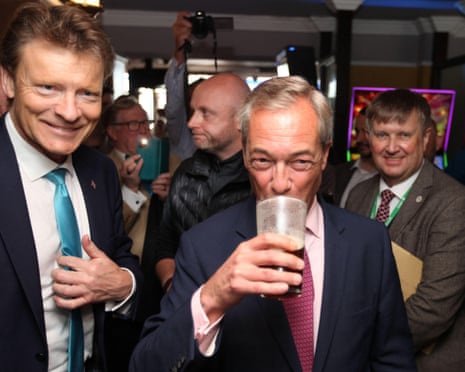
The negotiations were reportedly overseen by George Cottrell, a close associate of Farage who has attracted considerable attention because of his previous criminal conviction in the United States.
The allegations are politically significant because Farage had previously maintained that he had not decided to return to frontline politics until June 2024, shortly before the general election. If the reported agreement is accurate, it would suggest that discussions about his political comeback were taking place several months earlier than he had publicly indicated.
Farage, however, has rejected the suggestion that there was a completed secret agreement.
What Was the Reported £1 Million Deal?
The central allegation concerns Reform UK’s financial liabilities.
Reports have claimed that Farage and Tice discussed the party’s outstanding obligations as part of negotiations over Farage’s possible return. One of the most significant elements was reportedly more than £1 million in loans that Reform owed to a company connected to Tice.
The proposed arrangement allegedly involved the loans being repaid or written off after Farage became leader.
This is important because the financial condition of a political party can have a direct influence on leadership decisions. A potential leader would reasonably want to understand what liabilities he or she would inherit before accepting responsibility for an organisation.
However, critics argue that the reported negotiations went beyond ordinary financial due diligence.
The question is whether Farage was merely examining what would happen if he returned, or whether he had already negotiated the financial terms of his comeback.
That distinction is at the heart of the controversy.
Farage’s Explanation
Farage has offered a different interpretation of the events.
He acknowledged that he discussed Reform’s financial liabilities with Tice during the spring of 2024. However, he argued that these conversations did not amount to a final agreement to return as leader.
His explanation was that he wanted to know what financial responsibilities would arise if he eventually decided to take over the party.
From his perspective, investigating the party’s debts did not mean that he had already made the decision to return.
This distinction is crucial.
A politician considering a major career decision would naturally want to understand the financial and organisational circumstances before committing himself. Farage has argued that his conversations with Tice were conditional and related to a possible future return rather than evidence that he had already decided to come back.
He has also said that the discussions took place after he received a controversial £5 million personal gift from cryptocurrency billionaire Christopher Harborne.
That timing has become another important part of the political debate.
The £5 Million Gift
Farage has been under scrutiny over the £5 million gift from Christopher Harborne, which was received in April 2024.
The gift has become politically sensitive because of questions about Farage’s political status and intentions at the time.
Farage has repeatedly argued that he was not actively involved in frontline politics when he received the money and therefore did not believe it needed to be declared as a parliamentary financial interest.
The Parliamentary Commissioner for Standards subsequently opened an investigation into the matter.
The new allegations about Farage’s conversations with Reform leadership have therefore created an obvious political problem.
If Farage was already seriously discussing a return to the leadership in March and April, critics can argue that his political involvement was more substantial than he previously suggested.
The Labour Party has used this argument aggressively, claiming that the new information undermines Farage’s explanation for why the £5 million gift was not declared.
Farage, meanwhile, has insisted that the two issues are separate.
The Role of George Cottrell
Another controversial element of the story is the involvement of George Cottrell.
Cottrell is a long-time associate of Farage and has remained close to the Reform leader. His background has attracted significant attention because he was convicted in the United States of wire fraud and served a prison sentence.
According to the reports, Cottrell played a role in supervising the discussions between Farage and Tice.
That has increased political scrutiny because Cottrell has also been linked to financial arrangements involving Reform and individuals connected to the party.
The presence of someone with such a controversial background in discussions about the leadership and finances of a political party naturally raises questions about transparency.
However, association alone does not establish that any financial arrangement was unlawful.
The key issues for investigators are whether the money involved was properly recorded, whether political finance rules were followed and whether all relevant interests were correctly declared.
Why the Timing Matters
The timing of Farage’s return is politically important.
For months, Farage maintained that he had not intended to return to frontline politics before the 2024 election. His eventual announcement that he would lead Reform transformed the election campaign.
Reform subsequently performed strongly, winning millions of votes and becoming a major force in British politics.
If Farage had already negotiated a return in March or April, it would suggest that his comeback was not the sudden decision he had previously portrayed.
Instead, it could have been the culmination of months of preparation.
That does not necessarily mean that Farage was being dishonest. Political decisions can evolve over time. A politician can explore a possible return without having made a final commitment.
Nevertheless, the discrepancy between private discussions and public statements has created a credibility problem.
Reform UK’s Financial Questions
The controversy also highlights wider questions about Reform UK’s finances.
Political parties in Britain are subject to strict rules governing donations, loans and financial declarations. Transparency is particularly important for parties that present themselves as challengers to the established political system.
Reform has faced increasing scrutiny over its financial arrangements, including donations and loans connected to prominent supporters.
The party’s critics argue that its financial affairs deserve greater transparency because Reform has built much of its political identity around challenging the traditional establishment.
The party, however, argues that it has been subjected to disproportionate scrutiny because of its growing electoral success and Farage’s personal prominence.
The financial controversy is therefore not simply about accounting.
It has become part of a much broader argument about political trust.
Political Opposition Seizes the Opportunity
Labour has used the controversy to attack Farage’s credibility.
The governing party argues that the reported agreement demonstrates that Farage was privately preparing for a political comeback while publicly presenting himself as someone who had not yet made a decision.
Such criticism is politically predictable.
Reform has become a serious threat to Labour in many constituencies, particularly among voters who are unhappy with immigration policy, living costs and public services.
Any controversy involving Farage therefore gives his opponents an opportunity to weaken his image.
The Conservatives are also watching carefully.
Reform’s rise has placed enormous pressure on the Conservative Party, and continued controversy surrounding Farage could influence voters who are considering switching between the two parties.
Could the Deal Have Broken Electoral Rules?
The existence of a private agreement is not automatically evidence of a criminal or electoral offence.
Political parties can receive loans and enter financial agreements, provided that the arrangements comply with the relevant laws and are properly reported.
The more important questions concern how the loans were classified, whether any repayments were accurately recorded and whether the relevant financial interests were disclosed at the appropriate time.
Investigations by parliamentary authorities and other bodies will determine whether any rules were breached.
Until those investigations reach conclusions, allegations should not be treated as established facts.
This distinction is especially important in a politically charged controversy where both supporters and opponents of Farage have strong incentives to interpret the evidence differently.
A Bigger Question About Trust
Ultimately, the controversy is about more than £1 million.
It concerns the credibility of Nigel Farage and the political movement he leads.
Farage has built his career around presenting himself as an outsider who challenges the established political class. His supporters see him as unusually direct and willing to confront institutions that other politicians avoid.
That reputation makes allegations of secrecy particularly damaging.
If voters believe that Farage privately arranged his political comeback while publicly suggesting that he had not made up his mind, his credibility could suffer.
On the other hand, if his explanation is accepted—that he was simply examining Reform’s financial liabilities before making a decision—the controversy may have less long-term impact.
Much will depend on what documentary evidence and official investigations ultimately establish.
Conclusion
The reported £1 million Reform agreement has opened a new chapter in the controversy surrounding Nigel Farage’s return to politics.
Reports suggest that Farage negotiated with Richard Tice during March and April 2024 over the possibility of returning as Reform UK leader, with the party’s outstanding loans forming part of the discussions. The alleged arrangement would have involved more than £1 million being repaid or written off.
Farage has acknowledged discussing the party’s liabilities but rejects the interpretation that this amounted to a completed deal. He insists that his return was not decided until later and that the earlier conversations were conditional on whether he eventually chose to take the leadership.
The dispute has become particularly significant because it coincides with scrutiny of the £5 million gift Farage received from Christopher Harborne and investigations into his financial affairs.
For Reform UK, the controversy presents a serious political challenge. The party is trying to portray itself as a credible alternative government, yet questions over leadership arrangements and financial transparency threaten to distract from its policy agenda.
For Farage personally, the stakes are even higher. His political influence depends heavily on his reputation for authenticity and independence.
Whether the reported agreement was simply preliminary planning or evidence of a secret political comeback will ultimately depend on the available evidence.
For now, however, the controversy has ensured that Farage’s return to Reform UK will remain under intense scrutiny—and that questions about what happened behind closed doors in the months before the 2024 election are unlikely to disappear soon.
:::{“fallbackMarkdown”:””,”reference”:{“matched_text”:” “,”prefix”:null,”start_idx”:12737,”end_idx”:12737,”safe_urls”:[],”refs”:[],”alt”:””,”prompt_text”:null,”type”:”sources_footnote”,”sources”:[{“title”:”‘Stench of sleaze’: Farage struck deal over political return months before 2024 election, reports say | Reform UK | The Guardian”,”url”:”https://www.theguardian.com/politics/2026/aug/02/nigel-farage-deal-political-return-reform-2024-election-reports?utm_source=chatgpt.com”,”attribution”:”Guardian”}],”has_images”:false},”showLoginRequiredCard”:false}