

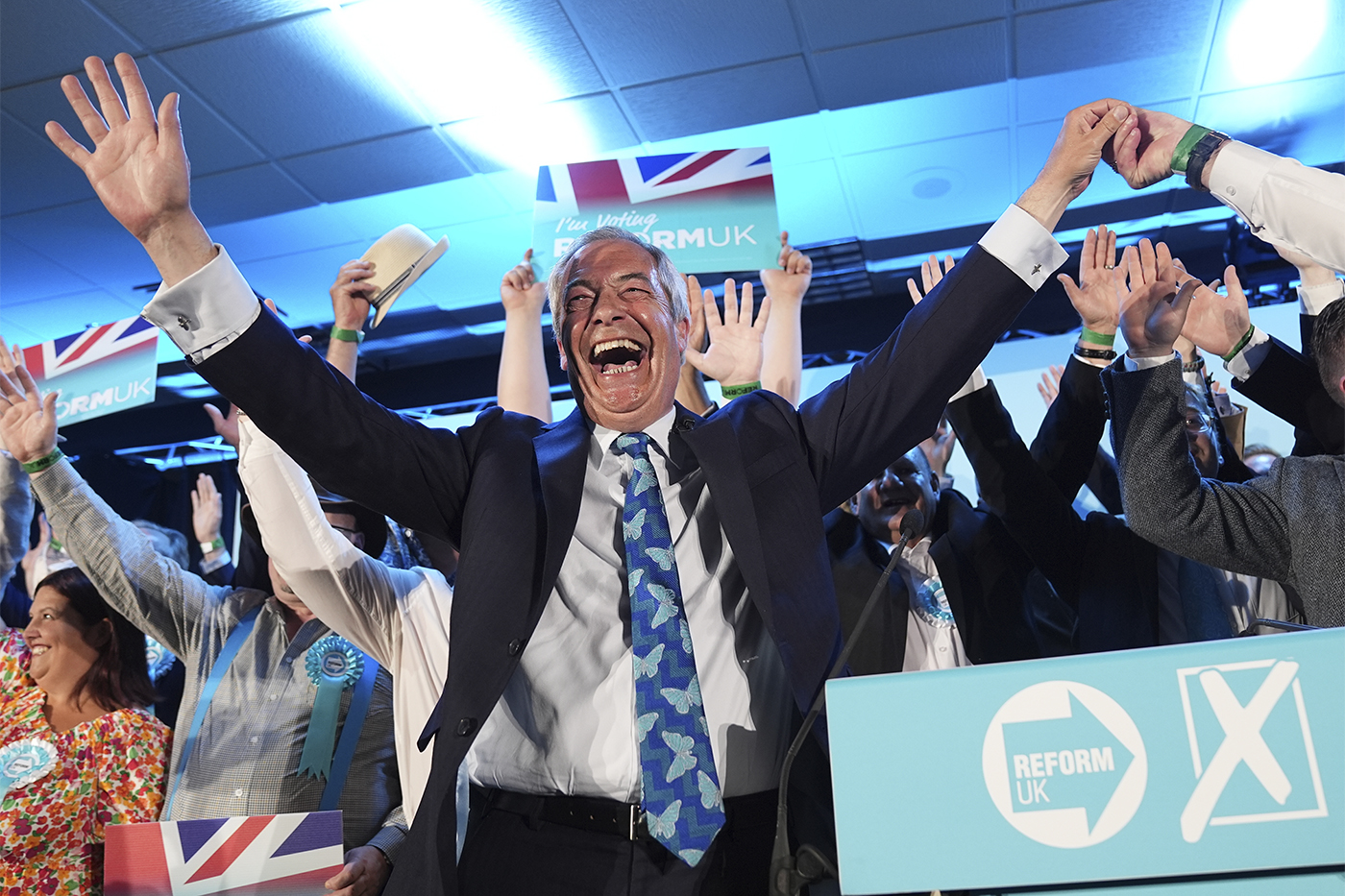
Farage Sparks Major Political Row as Reform UK Demands Voting Rule Changes and Insists Britain’s Future Should Be Decided by British Citizens

Nigel Farage has reignited one of Britain’s most sensitive political debates by putting electoral rules, citizenship and national sovereignty at the centre of Reform UK’s political agenda.

The Reform UK leader argues that Britain’s political future should ultimately be determined by British citizens, a position that has triggered strong reactions across Westminster and raised wider questions about who should have the right to participate in British democracy.
For Reform supporters, the argument is straightforward. They believe citizenship should carry particular political significance and that people who determine the government of the United Kingdom should have a clear and enduring connection to the country.
Critics, however, warn that changing voting rules is far more complicated than a political slogan suggests. Britain’s electoral system has developed over decades and reflects a mixture of constitutional arrangements, citizenship rules, residency requirements and historical relationships.
Any significant reform would therefore have consequences extending well beyond a single election.
The controversy comes at a time when immigration and national identity have become central issues in British politics. Reform UK has built much of its support around demands for stronger border controls, reduced immigration and greater national sovereignty.
Farage’s latest intervention fits naturally into that wider message.
He wants voters to see citizenship not merely as a legal status but as an important part of political belonging.
The argument appeals particularly to people who believe Britain’s traditional political parties have failed to maintain a clear distinction between citizenship and residency.
From this perspective, living in Britain does not automatically mean that someone should have exactly the same political rights in every type of election as a British citizen.
Supporters say that citizens carry a long-term responsibility toward the country. They pay taxes, participate in public life and accept the rights and obligations associated with citizenship. They therefore believe citizenship should be central to determining political representation.
But opponents point to the complexity of Britain’s existing system.
Voting rights in the United Kingdom are not governed by one simple rule. Eligibility varies according to the type of election and the individual’s nationality and circumstances.
The system has also been influenced by Britain’s historical relationships with other countries, particularly Ireland and Commonwealth nations.
That history means that changing one part of the electoral system could require reconsidering other provisions.
It also raises questions about British citizens living overseas.
If citizenship becomes the fundamental principle for political participation, should British citizens who have lived abroad for many years retain extensive voting rights?
Conversely, what should happen to people who are not British citizens but have lived in Britain for decades, worked in the country, paid taxes, raised families and become deeply involved in their local communities?
These questions demonstrate why electoral reform is unlikely to be simple.
Nevertheless, the political message behind Farage’s position is powerful.
Reform UK wants to argue that Britain belongs politically to its citizens and that democratic decision-making should reflect that principle.
The party sees this as part of a wider struggle over national sovereignty.
For Farage, the issue is connected to immigration, borders and the ability of the British government to determine its own political priorities.
That message has particular resonance among voters who believe that Britain has lost control over important aspects of national policy.
Brexit remains an important part of this political background.
The 2016 referendum was built around the idea of restoring sovereignty to the United Kingdom. For many Leave voters, sovereignty meant more than leaving the European Union. It meant ensuring that decisions affecting Britain were ultimately made within Britain’s democratic institutions.
Reform UK has attempted to carry that argument into a new generation of political debates.
The party’s position is that sovereignty must include control over borders, immigration and political participation.
Critics argue that this interpretation risks creating an overly narrow definition of British identity.
Britain is a diverse country with millions of residents whose backgrounds extend across the world. Many non-British citizens have spent most of their adult lives in Britain and contribute to their communities in ways that are difficult to separate from ordinary British life.
For opponents of Reform’s approach, excluding such people from political participation could weaken rather than strengthen democratic representation.
They argue that residency can create legitimate political interests.
If someone lives in a community, pays local taxes, uses public services and is affected by decisions made by elected representatives, they may have a reasonable claim to participate in local democracy.
This distinction between citizenship and residency is at the heart of the argument.
Which principle should matter more?
There is no universal answer.
Different democratic countries have adopted different systems, and even within the United Kingdom the rules vary.
The political dispute therefore concerns not only Reform UK’s proposal but also the broader philosophy behind democratic participation.
Should elections primarily represent citizens?
Or should certain categories of long-term residents also have political rights because they are directly affected by government decisions?
The debate becomes even more complicated when considering local and national elections.
A person might have a strong interest in local services, schools and council decisions while having a different relationship with national constitutional questions.
This is one reason Britain’s electoral arrangements contain different eligibility rules.
Any future reform would have to consider these distinctions carefully.
Farage’s political advantage is that he can present the issue in much simpler terms.
His supporters do not necessarily want a detailed constitutional lecture.
They want an answer to a basic question: who should decide Britain’s future?
For them, the answer is British citizens.
That message can be emotionally powerful because it connects electoral rights with national identity.
It also allows Reform UK to distinguish itself from Labour and the Conservatives.
The party can present itself as willing to challenge assumptions that have existed for decades.
That strategy has become a defining feature of Farage’s political career.
He has repeatedly positioned himself against what he describes as an establishment consensus.
Whether the issue is Brexit, immigration, taxation or political reform, his political method is often to identify a question that he believes established parties have avoided and turn it into a national campaign.
The latest controversy follows that pattern.
But there are risks.
Changing electoral rules can have significant consequences for public confidence.
Voters need to believe that elections are fair, transparent and based on stable principles.
If electoral rules become a source of continuous political conflict, public trust could suffer.
There is also the danger that political debate over citizenship becomes a proxy for broader arguments about ethnicity and identity.
Citizenship is a legal status, while identity can be cultural, personal and emotional.
The two are not always identical.
A British citizen may have been born overseas.
A person without British citizenship may have lived in Britain since childhood.
Someone may hold multiple nationalities.
Others may feel deeply British while having family origins elsewhere.
A modern democracy therefore has to deal with identities that do not fit neatly into traditional categories.
Reform UK would need to make clear that its proposed changes concern legal citizenship and democratic rules rather than ethnic definitions of who belongs in Britain.
That distinction would be essential.
The political debate is likely to become even more intense as immigration remains a major concern for voters.
Successive British governments have promised to reduce irregular migration and improve the immigration system. Yet public dissatisfaction has remained significant.
For Reform, this provides an opportunity.
The party can connect electoral reform with its wider argument that Britain needs stronger control over national institutions.
Its supporters may see voting restrictions as part of a broader restoration of sovereignty.
Opponents will likely argue that the government should focus instead on practical problems such as housing, public services, economic growth and immigration administration.
That disagreement reflects a much larger divide over Britain’s political future.
Is Britain experiencing a crisis of sovereignty?
Or is the country confronting ordinary economic and administrative challenges that should be addressed through conventional government?
Reform UK clearly favours the first interpretation.
Its message is that Britain needs a fundamental political reset.
Farage’s critics argue that the language of national restoration can be politically divisive.
They point out that democracy is not simply about deciding who belongs to the national community. It is also about ensuring that people affected by political decisions have meaningful representation.
Both principles deserve serious consideration.
A strong democracy needs citizens who feel that their political system belongs to them.
But it also needs institutions capable of representing diverse communities without treating sections of society as permanent outsiders.
The question is how to balance those goals.
That is why the controversy over voting rules matters.
It is not merely a technical argument about electoral law.
It is a debate about citizenship itself.
What does it mean to be part of Britain?
What responsibilities accompany citizenship?
How long should political rights be connected to residency?
And who should have the final say over the country’s direction?
These questions are likely to remain controversial regardless of what Parliament ultimately decides.
For Reform UK, the political objective is clear: make citizenship, sovereignty and national control central issues in Britain’s next political chapter.
For its opponents, the challenge is to respond without dismissing the concerns of voters who genuinely believe the democratic system should place citizens first.
The debate will therefore require more than accusations from either side.
It will require careful examination of Britain’s existing electoral arrangements, evidence about how proposed reforms would affect voters, and a clear understanding of the constitutional consequences.
Ultimately, the argument will come down to a fundamental principle.
A democracy must decide who has the right to participate in choosing its government.
Farage believes that citizenship should play a much more decisive role in that decision.
His opponents believe Britain’s democratic traditions require a broader understanding of political participation.
Whatever position voters take, the controversy demonstrates how profoundly questions of immigration, citizenship and national sovereignty now shape British politics.
Reform UK has succeeded in forcing those questions into the centre of the national conversation.
Whether it can turn that argument into lasting electoral support—and whether Parliament would ever accept the changes being demanded—remains uncertain.
But one thing is clear: the debate over who gets to decide Britain’s future is no longer confined to the margins of British politics.
It has become a central question about what British democracy should look like in the years ahead.