
Ex-Reform Chief Urges Nigel Farage to “Have a Break”
Nigel Farage has been told to “have a break” by a former senior figure in Reform UK, in an intervention that highlights the growing debate over the future direction of Britain’s populist right.
The comment may sound simple, but it touches on a much bigger question facing Reform UK: can the party continue to expand while remaining so closely identified with one man?
Farage has been at the centre of the movement for years.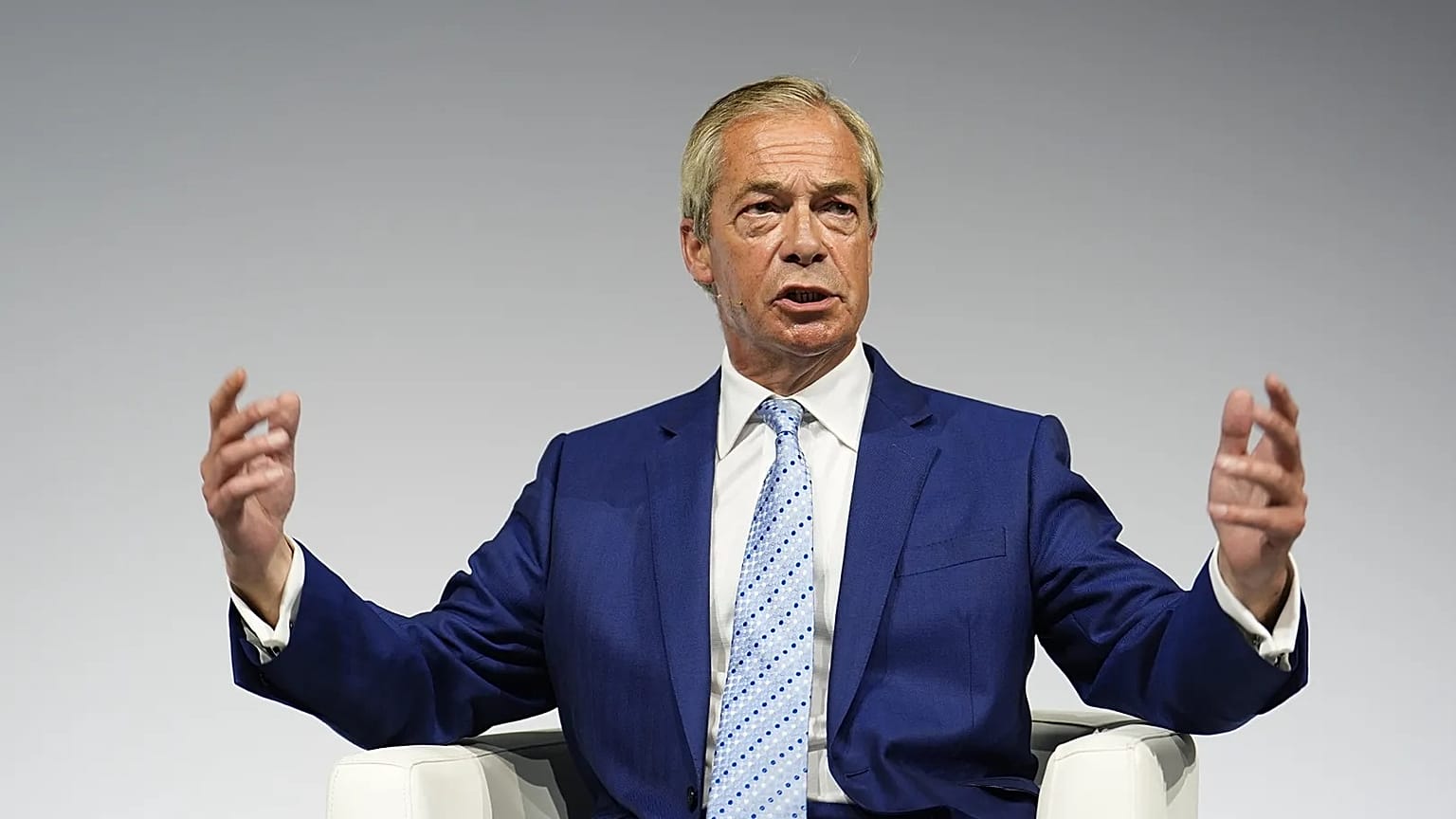
He helped turn Euroscepticism into a dominant political force, played a central role in the Brexit campaign and eventually became the most recognisable figure associated with Reform UK.
His personal popularity has been one of the party’s greatest assets.
But it can also become a vulnerability.
If Reform’s identity depends too heavily on Farage, questions about his leadership, his workload and his future inevitably become questions about the party itself.
That is why the intervention from a former Reform chief deserves attention.
The former chairman has argued that Reform UK is “way bigger” than Nigel Farage.
The message is significant because it challenges one of the most obvious assumptions about the party: that Reform and Farage are effectively inseparable.
For supporters, that connection is a strength.
Farage is the politician who built the movement.
He has a level of public recognition that few other Reform figures can match.
He can attract media attention almost automatically.
A Reform event featuring Farage can generate headlines in a way that an ordinary local political meeting cannot.
His ability to communicate directly with voters is also central to the party’s appeal.
He speaks in a straightforward style.
He often avoids complicated political language.
He presents himself as an outsider challenging the established political system.
For voters who feel ignored by Westminster, that image can be extremely powerful.
But there is another side.
A political party cannot remain permanently dependent on one personality if it wants to become a durable governing force.
Eventually, it needs institutions.
It needs local councillors.
It needs MPs.
It needs policy experts.
It needs organisers.
It needs candidates who can win elections without the party leader appearing on every ballot paper.
And it needs a succession plan.
That is where the suggestion that Farage should “have a break” becomes more interesting.
The phrase does not necessarily mean that Farage should leave politics.
Nor does it mean that he has lost control of Reform UK.
It can instead be interpreted as a warning about political exhaustion and the dangers of becoming too closely associated with every battle.
Farage has spent decades at the centre of political controversy.
He has campaigned through elections.
He has fought leadership battles.
He has faced hostile interviews.
He has dealt with internal disagreements.
He has repeatedly reinvented his political career.
That is an extraordinary workload.
Even the most energetic politician eventually faces the question of whether constant political confrontation is sustainable.
A temporary break could therefore be viewed as sensible rather than dramatic.
But Farage’s position makes that difficult.
Reform UK is still a relatively young political force.
Its electoral momentum is important.
The party has built support among voters who previously backed the Conservatives, Labour or smaller parties.
It is trying to turn protest votes into permanent political support.
At precisely this moment, Farage stepping away from the spotlight could create uncertainty.
Opponents might interpret a break as weakness.
Supporters could worry that the party is losing momentum.
Rival parties could attempt to exploit the opportunity.
And internal factions could become more visible.
This is particularly relevant because Reform’s political environment has become increasingly competitive.
Rupert Lowe’s Restore Britain movement is attempting to attract voters from the same political territory.
Other right-wing and anti-establishment groups are also seeking attention.
That means Reform cannot assume that its supporters will remain loyal indefinitely.
Farage’s personal appeal remains a major part of the party’s defence against fragmentation.
The former chairman’s argument therefore presents a strategic challenge.
If Reform really is “way bigger” than Farage, the party should be capable of continuing to grow even when he is not constantly leading every political battle.
If it cannot, critics may reasonably conclude that Reform remains more of a personal movement than a fully developed political organisation.
That distinction could determine its future.
Political history provides plenty of examples of parties that became associated with individual leaders.
Some survived those leaders.
Others struggled badly after they departed.
A party built around one charismatic figure can grow rapidly because voters immediately understand what the leader represents.
But that same personalisation can make succession extremely difficult.
Farage’s supporters might argue that this concern is premature.
Why worry about succession when the leader remains politically active and popular?
The answer is that successful organisations plan before they face a crisis.
Reform has an opportunity to build a broader leadership team while Farage remains at the top.
That would allow younger politicians to gain experience.
It would create greater public recognition for other MPs.
It would make the party less dependent on a single media personality.
And it could demonstrate that Reform is capable of governing rather than simply campaigning.
This is particularly important because campaigning and governing require different skills.
A political outsider can gain support by attacking the establishment.
A government must eventually become the establishment.
It must make difficult decisions.
It must manage budgets.
It must negotiate with civil servants.
It must deal with international governments.
It must operate public services.
It must respond to crises.
The rhetorical skills that win elections do not automatically translate into effective government.
Reform therefore faces a crucial transition.
If it wants to become a serious governing party, it must demonstrate that it has more to offer than Farage’s personality.
That does not mean removing him.
Quite the opposite.
Farage could remain the central political figure while giving greater prominence to colleagues who can develop the organisation.
A short break could even help.
If Farage stepped away temporarily, other Reform politicians would have to answer questions.
They would have to defend the party’s policies.
They would have to speak to voters.
They would have to handle criticism.
And they would have to demonstrate that the movement can function without its founder constantly intervening.
That could ultimately strengthen Reform.
But there is a risk.
Farage’s political instinct has always been to stay close to the action.
He understands the importance of media coverage.
He knows that political momentum can disappear quickly.
He has seen other political movements rise and fall.
From his perspective, taking a break could allow opponents to define the party in his absence.
That may be why he remains so visible.
The current political environment also gives him plenty of reasons to remain active.
Immigration remains one of the most important issues in British politics.
Housing is under intense pressure.
Taxation is controversial.
Public services face financial difficulties.
Many voters remain frustrated with the traditional political parties.
These are precisely the conditions in which Reform can grow.
Farage will therefore believe that now is not the time to step back.
Yet constant campaigning carries its own risks.
Political leaders who respond to every controversy can eventually become trapped in a cycle of confrontation.
Every comment becomes a headline.
Every disagreement becomes a leadership story.
Every criticism becomes another battle.
That can distract from the central objective: building a successful political organisation.
The intervention from the former Reform chief may therefore be less about Farage personally and more about organisational maturity.
Reform needs to move beyond the idea that every political question must be answered through Farage.
The party needs a broader identity.
It needs to show voters what Reform looks like without its founder standing at the microphone.
That does not mean abandoning Farage’s political principles.
The party can continue to campaign on immigration, lower taxes, national sovereignty, public service reform and economic growth.
But those policies need to belong to the organisation rather than exclusively to its leader.
This matters particularly when Reform faces internal disputes.
The conflict with Rupert Lowe demonstrated how quickly disagreements can become public.
A party with a strong institutional structure can survive such disputes.
A personality-driven movement is more vulnerable because internal disagreements can quickly become leadership crises.
The best way to reduce that vulnerability is to strengthen the organisation.
That means transparent procedures.
Strong local associations.
Effective candidate selection.
Professional campaigning.
Clear policy development.
And a leadership team with the credibility to speak independently.
Farage himself has an interest in this process.
If Reform becomes a durable political force, his legacy will be much greater.
He will not simply be remembered as the politician who led a protest movement.
He could be remembered as the person who created a new major party.
That would require Reform to survive beyond his own political career.
The former chairman’s warning therefore deserves serious consideration.
“Have a break” does not have to mean “walk away”.
It could mean allowing other politicians to take responsibility.
It could mean reducing the constant media appearances.
It could mean focusing on long-term strategy rather than responding to every short-term controversy.
It could mean giving the party room to demonstrate its strength.
For Farage, that may be difficult.
His political career has been built around visibility.
He is most effective when he is campaigning, debating and confronting opponents.
But leaders sometimes need to recognise when their greatest contribution is not to do more, but to create space for others.
That may be the real challenge facing Reform today.
Can Farage remain the party’s most important figure without becoming the party’s only important figure?
If the answer is yes, Reform could become much stronger.
If the answer is no, every future controversy surrounding Farage will automatically become a controversy surrounding the entire party.
That is a dangerous position for any political organisation.
The former chairman’s claim that Reform is “way bigger” than Farage is therefore more than a compliment to the party.
It is a test.
If Reform really is bigger than Farage, it should be able to function when he takes a step back.
Its MPs should be able to defend its policies.
Its councillors should be able to campaign locally.
Its activists should be able to organise without waiting for instructions from the centre.
Its voters should identify with the party’s principles rather than only with its leader.
That is the path from political movement to political institution.
The irony is that Farage may be the only person capable of helping Reform make that transition.
His greatest legacy could be building a party strong enough not to need him every day.
For now, however, there is little indication that Farage intends to disappear from British politics.
He remains one of the country’s most prominent political figures and continues to dominate attention whenever Reform makes a major intervention.
A temporary pause may therefore be more realistic than a genuine withdrawal.
And perhaps that is all the former Reform chief is really asking for.
Not retirement.
Not surrender.
Not the end of Farage’s political career.
Simply a recognition that even the most successful political leader cannot do everything alone.
Reform UK has reached a point where its future will depend on more than the charisma of one man.
The party must prove that it can build structures, develop new leaders and maintain support across the country.
Farage can remain its most recognisable face.
But if Reform is truly “way bigger” than Nigel Farage, then eventually the party must be able to stand confidently on its own feet.
That may be the most important political challenge of all.
And ironically, taking a break could be the very thing that proves whether it can.