


End Mass Migration and Stop Postal Votes – The Major Demands Behind Claims Britain’s Democracy Is Being Distorted
Britain’s debate over immigration and electoral reform has entered increasingly controversial territory, with critics arguing that mass migration and the widespread use of postal voting are changing the country’s political landscape. Some campaigners and political figures have gone further, claiming that Britain’s democracy is being “distorted” and calling for major changes to both immigration policy and the voting system.
These claims bring together two very different political issues. Immigration concerns who is allowed to live and work in the United Kingdom, while postal voting concerns how eligible citizens exercise their democratic right to vote. Linking the two can create a powerful political message, but the evidence for each issue needs to be considered separately.
The demand to “end mass migration” reflects a longstanding argument among politicians who believe that the scale of immigration has placed excessive pressure on housing, public services, infrastructure and wages. Supporters of lower migration levels argue that Britain should have greater control over the number of people entering the country and that immigration policy should give greater weight to the interests of existing residents.
Those who favour higher levels of immigration take a different view. They point to the contribution made by migrants to the economy, including workers in healthcare, social care, hospitality, construction and other sectors. They also argue that immigration can help businesses address labour shortages and contribute to tax revenues.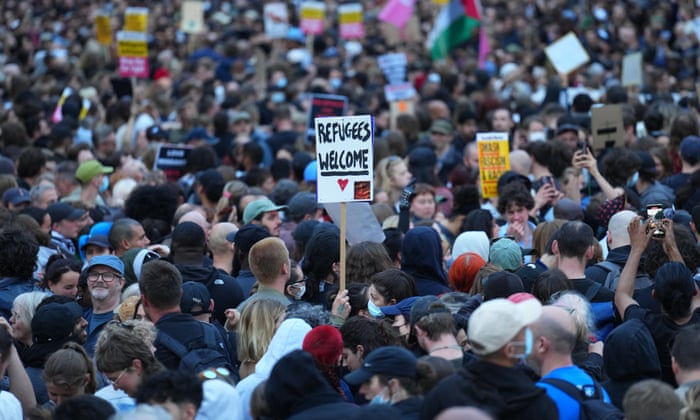
The disagreement therefore cannot be reduced simply to whether migration is “good” or “bad”. Its effects vary depending on the type of migration, the skills of migrants, where people settle and the ability of public services and infrastructure to accommodate population growth.
Housing is one of the most frequently cited areas of concern.
Britain has experienced significant pressure on housing supply for many years. Critics of high migration argue that population growth increases demand for homes and can therefore contribute to higher rents and house prices. However, housing costs are influenced by many other factors, including the number of homes being built, planning restrictions, mortgage rates, investment patterns and regional differences.
The same complexity applies to public services.
An increase in population can create additional demand for schools, hospitals, transport and local government services. At the same time, migrants can contribute to those services as workers and taxpayers. A nurse who comes to Britain from overseas, for example, may increase the population while simultaneously helping an NHS service cope with staffing shortages.
The question is therefore not simply how many people enter Britain, but how migration interacts with the country’s economic and social infrastructure.
The second part of the controversy concerns postal voting.
Postal voting has existed in Britain for decades and allows eligible voters to cast their ballot without attending a polling station in person. It can be particularly useful for people who are away from home, have mobility difficulties or face other practical barriers to attending a polling station.
However, concerns about postal voting have also existed for many years. Critics have argued that voting outside the controlled environment of a polling station can create opportunities for undue influence, particularly if other people are present when a ballot is completed.
These concerns have contributed to changes in electoral law.
The UK has introduced stronger requirements concerning postal-vote applications and identity verification. There are also limits on the number of people for whom an individual can act as a proxy voter. These reforms are intended to strengthen the integrity of elections while maintaining access for legitimate voters.
The existence of postal voting itself does not demonstrate that an election has been manipulated. Allegations of electoral fraud require evidence concerning specific incidents or systematic patterns.
This distinction is particularly important because claims that postal votes are “distorting democracy” can easily become broader accusations about the legitimacy of elections.
Britain’s electoral system contains multiple safeguards. Postal votes are subject to procedures involving applications, ballot papers, declarations and verification. Election officials also have responsibilities for maintaining the integrity of the count.
That does not mean that electoral fraud is impossible. No voting system can guarantee that no individual will ever attempt to break the rules. The appropriate response is therefore to investigate credible allegations and strengthen safeguards where evidence demonstrates weaknesses.
A complete ban on postal voting would also affect legitimate voters.
People who work away from home, travel regularly, have disabilities or are unable to attend a polling station for other reasons could face additional barriers. Any reform would therefore need to balance electoral security against accessibility.
This is where the political debate becomes more complicated than the headline suggests.
A demand to “stop postal votes” may sound straightforward, but there are several possible alternatives. Postal voting could be restricted to people who can demonstrate a specific reason. It could remain generally available but be subject to stronger verification. Or policymakers could retain the existing system while improving enforcement against fraud.
Each approach would have different consequences.
The same applies to immigration.
“End mass migration” is a broad political slogan rather than a specific policy. A government would need to decide what level of migration constitutes “mass migration”, which categories should be reduced, whether skilled workers should receive different treatment from family migrants, how student migration should be handled and what should happen to humanitarian routes.
Britain’s post-Brexit immigration system already gives the government considerable control over legal migration through visa requirements and eligibility rules. The political argument is therefore partly about how those powers should be used.
There is also a distinction between legal and irregular migration.
Legal migration involves people entering Britain through established visa and immigration routes. Irregular migration includes people who enter or remain outside those routes. Asylum seekers represent another category because international and domestic law provides mechanisms through which people can seek protection.
Political campaigns sometimes combine these categories under the general word “migration”, even though they involve very different legal circumstances.
A serious policy debate needs to distinguish between them.
Another issue is the impact of migration on democratic representation.
Population changes can alter the size and composition of electorates. As communities grow, electoral boundaries may eventually be redrawn to reflect changes in population. This is a normal feature of representative democracy. It does not automatically mean that democracy has been “distorted”.
However, critics argue that rapid demographic change can transform communities faster than political institutions can adapt. They may believe that traditional voting patterns, local identities and political priorities are changing as a consequence.
Again, this is a political interpretation rather than a measurable conclusion that can be established simply from population statistics.
There is an important principle at stake: citizenship and voting rights are not determined solely by someone’s birthplace. Eligible British citizens can vote regardless of their ethnic background or ancestry. In certain elections, some qualifying foreign nationals may also have voting rights under British law or reciprocal arrangements.
Consequently, claims about migration changing electoral outcomes need to distinguish between population change and the actual electorate.
The question of who can vote is determined by electoral law.
This makes the call for immigration controls fundamentally different from the call for postal-voting reform. The first concerns the composition of the population and the country’s immigration rules. The second concerns the mechanism by which eligible voters cast ballots.
Combining the two may be politically effective, but it can obscure the distinct policy questions involved.
Supporters of tougher immigration controls nevertheless argue that democratic accountability requires voters to have confidence that government has meaningful control over national borders. From this perspective, reducing immigration is presented not only as an economic or cultural issue but also as a question of political sovereignty.
Opponents respond that democratic legitimacy does not require low immigration. They argue that voters can choose governments that support different levels of migration and that policy should be determined through elections and parliamentary debate.
The same disagreement exists over electoral reform.
Those calling for restrictions on postal voting say that election security must take priority. Those defending postal voting argue that accessibility is itself an important democratic principle.
The challenge for policymakers is to achieve both.
A secure voting system must prevent fraud and intimidation, but it must also make it reasonably possible for legitimate voters to participate.
Similarly, an effective immigration system needs to maintain border controls and enforce immigration law while also allowing the country to recruit workers, educate international students, reunite families and provide protection to people who qualify for asylum.
The political controversy becomes particularly intense when these questions are presented as an existential threat to the country.
Claims that Britain’s democracy has been “distorted” can encourage public concern, but such language should be tested against evidence. If specific cases of electoral fraud exist, they should be investigated. If migration is believed to be placing excessive pressure on housing or public services, those effects should be measured.
Evidence-based policymaking is especially important because both immigration and elections affect fundamental democratic rights.
There is also a danger in treating entire groups of people as responsible for political change. Migrants are not a single political bloc, just as postal voters are not a single political constituency. Individuals have different political opinions, backgrounds and priorities.
A migrant who becomes a British citizen may eventually vote in exactly the same way as someone whose family has lived in Britain for generations. Similarly, someone who votes by post may have political views indistinguishable from someone who votes at a polling station.
The mechanism of voting does not determine political preference.
The broader debate therefore comes down to trust.
People need confidence that Britain’s borders are properly managed and that elections are conducted fairly. Governments need to demonstrate that immigration rules are enforceable and that electoral safeguards are effective. Election officials need to ensure that every legitimate vote is counted while preventing fraud.
These goals do not necessarily require eliminating either immigration or postal voting.
Instead, they require clear rules, effective enforcement and transparent evidence.
If the government wants to reduce migration, it can set immigration targets and eligibility requirements through legislation and administrative policy. If Parliament believes postal voting requires additional safeguards, it can introduce stronger verification and enforcement measures.
Such changes should be assessed according to their measurable effects rather than simply their political appeal.
Ultimately, the demand to “end mass migration and stop postal votes” represents a much broader political argument about sovereignty, identity and democratic confidence. It reflects concerns held by some voters that Britain has experienced rapid demographic and institutional change.
Those concerns are politically significant, but they do not by themselves establish that democracy has been distorted.
The appropriate response is to examine the evidence. How many people are entering through each migration route? What impact are they having on housing and public services? How many postal votes are being cast? How many electoral offences have been identified? What safeguards are currently in place, and how effective are they?
Only by answering those questions can policymakers determine whether further reform is necessary.
Britain’s democracy depends on both participation and integrity. Citizens must be confident that they can vote, while also knowing that the rules are applied fairly. Immigration policy similarly requires a balance between national control, economic needs, public services and legal obligations.
The political debate over these issues is unlikely to disappear. Migration will remain a major subject of public discussion, while postal voting will continue to attract scrutiny whenever questions arise about electoral security.
The strongest approach is therefore neither to dismiss public concerns nor to accept dramatic claims without evidence. Instead, Britain needs transparent statistics, enforceable rules and democratic debate about what kind of immigration system and electoral system the country wants.
The demand for change may be politically powerful. Whether particular reforms are justified, however, depends on the evidence of how Britain’s migration and voting systems actually operate—and on the consequences those reforms would have for both security and democratic participation.
:::