
Donald Trump Now Reviewing US Position on the Falkland Islands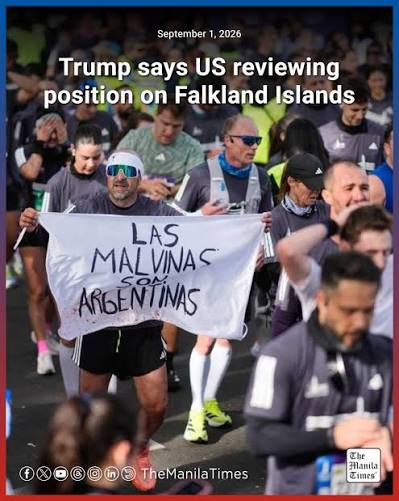
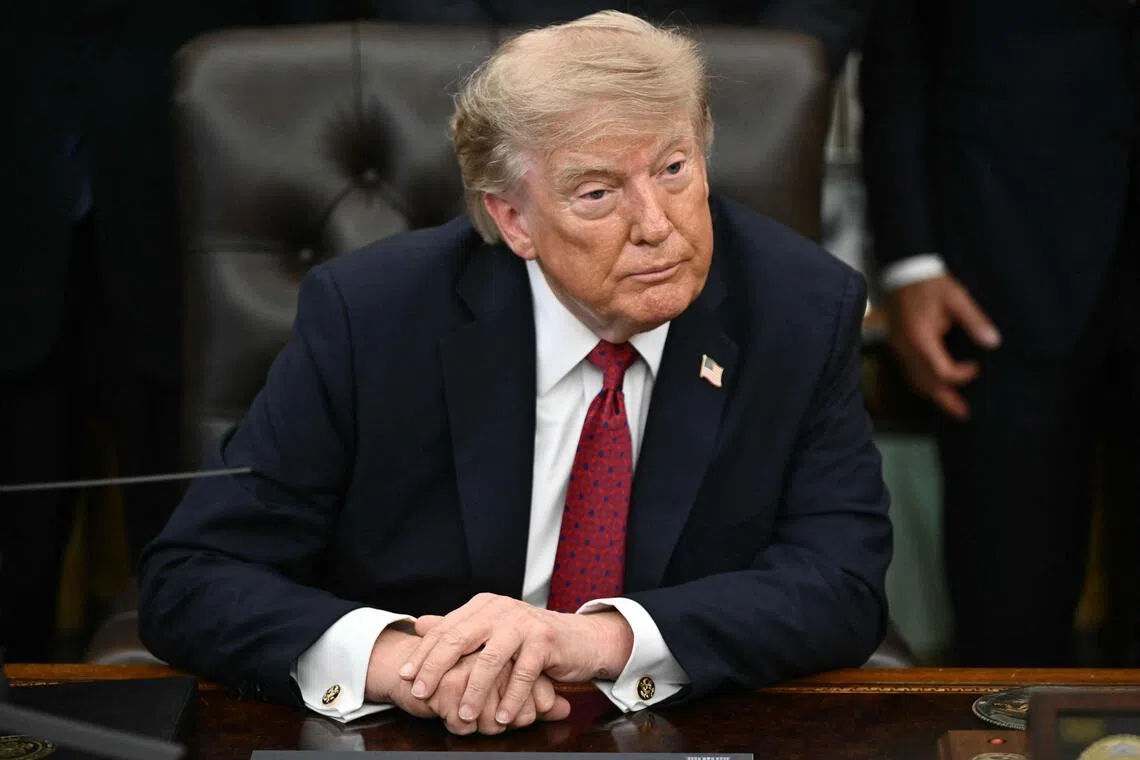
Donald Trump’s decision to review the United States’ position on the Falkland Islands has created a new diplomatic challenge for Britain and raised questions about the future of one of the longest-running territorial disputes in the South Atlantic. The islands are administered by Britain but claimed by Argentina, which calls them the Malvinas. Trump’s announcement is particularly significant because the United States has traditionally maintained a relatively neutral position on the question of sovereignty. A possible change in that position could therefore have consequences not only for relations between Britain and Argentina, but also for the wider relationship between Washington and London.
Trump said that he reviews every position and suggested that the Falkland Islands issue was one of many matters being reconsidered by his administration. However, he did not announce a definite change in American policy. This distinction is important. Reviewing a policy does not necessarily mean abandoning it. Nevertheless, the fact that the American president has publicly raised the question is significant because it introduces uncertainty into an issue that Britain has long regarded as settled from its own perspective.
The Falkland Islands have a complicated history. Britain has exercised control over the islands for many years, while Argentina has consistently maintained that they are part of its national territory. The dispute became particularly serious in 1982, when Argentina invaded the islands and Britain responded with military force. The conflict lasted several months and resulted in the deaths of hundreds of British and Argentine military personnel. Britain eventually regained control of the islands, but the sovereignty dispute was never permanently resolved.
For Britain, the issue is not simply about territory. The British government argues that the wishes of the islanders must be respected. The people living on the Falkland Islands have repeatedly expressed a strong desire to remain connected to Britain. From the British perspective, self-determination is therefore a central principle. London argues that the future of the islands should not be decided solely by Argentina or by other countries without considering the wishes of the people who actually live there.
Argentina takes a very different position. Argentine governments have consistently argued that the islands belong to Argentina because of historical and geographical considerations. The issue has become an important part of Argentine national identity, and political leaders have frequently promised to continue pursuing sovereignty through diplomatic means. President Javier Milei has also strongly supported Argentina’s claim. His close relationship with Donald Trump makes the American review especially sensitive.
The possibility of a change in US policy could therefore strengthen Argentina’s diplomatic position. For decades, Washington has attempted to avoid taking a definitive side on the sovereignty question. If the United States moved closer to Argentina’s position, Buenos Aires could gain greater international support for its claim. Such a development would be welcomed by the Argentine government but strongly opposed by Britain.
For the United Kingdom, the situation is particularly uncomfortable because it comes at a time when relations with the Trump administration are already under pressure. One important source of tension is defence spending. Trump has repeatedly demanded that European allies take greater responsibility for their own defence and increase military expenditure. Britain has promised to raise defence spending, but questions remain about whether London is doing enough from Washington’s perspective.
Reports that the Falkland Islands could potentially be used as leverage over Britain’s defence commitments have therefore caused concern. If Washington were to connect support for Britain’s position on the islands with British defence spending, the issue would become more than a territorial dispute. It would become part of a much broader disagreement about the responsibilities of NATO members and the future of the transatlantic alliance.
This would represent a major challenge for Prime Minister Andy Burnham. The British government has reaffirmed that its commitment to the Falkland Islands is unwavering and that the islands will remain a British Overseas Territory in accordance with the wishes of their inhabitants. Burnham therefore faces a difficult diplomatic task: Britain wants to maintain its close relationship with the United States while making clear that its sovereignty over the Falklands is not something that can simply be exchanged for greater defence spending.
The issue also raises questions about the meaning of the so-called special relationship between Britain and the United States. For decades, London and Washington have maintained close military, intelligence, diplomatic, and economic ties. The two countries have fought together in numerous conflicts and have traditionally regarded each other as among their most important international partners.
However, Trump’s foreign policy has challenged some traditional assumptions about alliances. His administration has placed greater emphasis on national interests, burden-sharing, and the willingness of allies to support American priorities. From this perspective, relationships between countries may be judged less by historical friendship and more by practical benefits and responsibilities.
The Falklands issue could therefore become a test of how strong the British-American relationship really is. If Washington were to change its position on the islands, many British policymakers would question whether the traditional concept of the special relationship remains reliable. On the other hand, if the review ends without a policy change, the episode could eventually be remembered as another example of Trump’s willingness to use uncertainty as a diplomatic tool.
There is also a wider international principle involved. Territorial disputes are particularly sensitive because changing borders can have consequences far beyond the countries directly involved. If powerful states begin to support territorial claims primarily because of political alliances or strategic interests, smaller countries may become increasingly concerned about the stability of the international system.
The Falkland Islanders themselves should therefore remain central to the discussion. Any long-term solution should consider their democratic wishes and their right to determine their political future. The people of the islands have developed their own society and institutions over generations. They are not simply an abstract object of dispute between Britain and Argentina.
At the same time, Argentina’s historical claim cannot simply be ignored. Buenos Aires is unlikely to abandon the issue regardless of who occupies the White House or Downing Street. For Argentina, the Falklands represent both a territorial claim and a question of national identity. A sustainable diplomatic approach must therefore recognise that the dispute has deep emotional and historical dimensions.
Military confrontation, however, would be unacceptable. The experience of 1982 demonstrates the enormous human and political cost of resolving territorial disputes through force. The international community should encourage Britain and Argentina to maintain diplomatic channels and prevent the issue from becoming a source of renewed military tension.
Trump’s review could potentially create an opportunity for diplomacy if all sides approach the situation carefully. The United States has considerable influence over both Britain and Argentina. Rather than simply choosing one side, Washington could encourage dialogue and confidence-building measures. It could support peaceful negotiations while recognising the importance of self-determination and the avoidance of military force.
There are also economic considerations. The Falkland Islands have valuable natural resources, including fishing and potential energy reserves. Economic interests can make territorial disputes even more complicated. If the islands become increasingly economically important, both Britain and Argentina may have stronger incentives to defend their respective positions.
For Britain, the challenge is to demonstrate that its commitment to the Falklands is not dependent on American support. The UK has its own military presence in the South Atlantic and has repeatedly stated that it will defend the islands. At the same time, Britain must avoid unnecessary escalation with Washington. A confrontational response could damage cooperation in other areas where the two countries continue to share important interests.
For Argentina, Trump’s review may appear to represent a diplomatic opportunity. However, Buenos Aires would also need to act carefully. Excessive pressure or nationalist rhetoric could make negotiations more difficult. If Argentina wants to strengthen its international position, it may be more effective to emphasise diplomacy, international law, and peaceful dialogue rather than confrontation.
Ultimately, the most important question is what Trump actually intends to do. At present, the announcement represents a review rather than a confirmed change in American policy. The United States has not formally announced that it recognises Argentine sovereignty over the islands. The uncertainty is therefore greater than the immediate policy change.
Nevertheless, uncertainty itself can have consequences. Governments respond to signals from powerful allies, financial markets monitor geopolitical risks, and military planners must consider possible changes in strategic relationships. Even without a formal policy shift, Trump’s statement has already placed the Falkland Islands back at the centre of international attention.
In conclusion, Donald Trump’s decision to review the US position on the Falkland Islands represents a potentially important development in the long-running dispute between Britain and Argentina. It could become a serious challenge to the British government, particularly if the issue is connected to American demands for greater defence spending. At the same time, it offers Argentina an opportunity to strengthen its diplomatic campaign for sovereignty.
However, the situation should not be allowed to develop into another military confrontation. The wishes of the Falkland Islanders, the principles of self-determination, peaceful diplomacy, and international stability should remain central to any future discussion. Britain will need to defend its position firmly while preserving its relationship with the United States, while Argentina will need to continue pursuing its claim through peaceful means.
Trump’s review may ultimately result in no major policy change. But the fact that Washington is reconsidering a position that has remained broadly stable for decades demonstrates how quickly international relationships can change. The Falkland Islands may be geographically remote, but the dispute surrounding them could become an important test of Britain’s relationship with America, Argentina’s diplomatic ambitions, and the future direction of international politics.