

Burnham Is Hellbent on Sabotaging Our Brexit – We’ve Got Three Words for Him\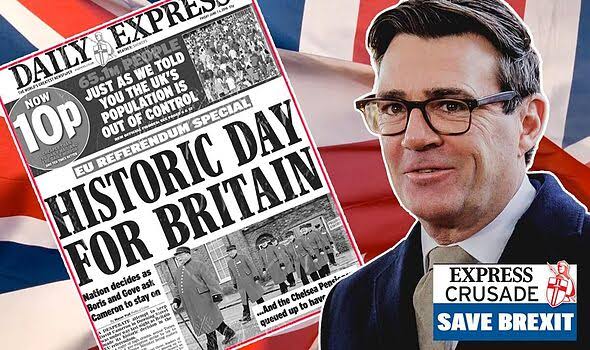
Britain’s hard-fought departure from the European Union has returned to the centre of an explosive political battle after Prime Minister Andy Burnham reignited the debate over the country’s future relationship with Brussels.
His increasingly outspoken criticism of Brexit and willingness to consider closer European integration have angered supporters of the 2016 referendum result. For many Brexit campaigners, the concern is that Britain could gradually be pulled back towards the European Union without voters fully understanding the consequences.
The Prime Minister insists that his approach is about improving Britain’s economy, reducing trade barriers and strengthening international cooperation. However, opponents believe the government risks undermining the independence that millions of people voted to secure.
Their message to Burnham is straightforward: Respect the referendum. Protect sovereignty. Put Britain first.
Burnham reopens Britain’s Brexit battle
Andy Burnham has made little secret of his dissatisfaction with Britain’s current relationship with the European Union.
In November 2026, he declared that Brexit had failed to deliver the benefits promised by its supporters, arguing that Britain had lost more than it gained over the past decade.
He also criticised the previous Conservative governments for creating a harder Brexit than many voters expected.
Speaking ahead of the Brussels summit, Burnham argued that closer cooperation with European countries could improve Britain’s economic prospects.
He has also suggested that the country should examine several possible long-term arrangements, including a customs union, single-market membership and potentially full EU membership.
These comments have reignited a political argument that many believed had been settled by the 2016 referendum.
For Brexit supporters, the question is whether the government is attempting to reverse the decision through gradual changes rather than a direct public vote.
<Cite refs={[“turn336045search0″,”turn336045search1″,”turn336045search2”]}/>
The Brussels agreement raises fresh questions
At the UK-EU summit on November 20, Burnham secured a package of agreements covering several important areas of cooperation.
The arrangements include:
- Easier trade in food and agricultural products.
- Cooperation on energy and carbon emissions trading.
- Opportunities for young people to live, study and work across Britain and Europe for limited periods.
- Greater cooperation on security and migration.
- Discussions about future industrial and defence partnerships.
The government estimates that the agreements could contribute approximately 0.5 per cent to Britain’s GDP by 2040, equivalent to around £17 billion annually.
Burnham has described the package as a positive development for British businesses and consumers.
However, critics want greater clarity about the obligations attached to the agreements and whether closer regulatory alignment could gradually reduce Britain’s freedom to establish independent policies.
There is an important distinction between cooperating with the EU and becoming a member again. Nevertheless, the direction of travel is now a major political issue.
<Cite refs={[“turn336045search8″,”turn336045search13”]}/>
Nigel Farage and Brexit supporters prepare to fight back
Nigel Farage and Reform UK have consistently opposed Britain’s return to the European Union.
Farage has argued that Brexit must be protected and that the government should not undermine the referendum result.
The emergence of the Stay Out campaign has also provided a platform for opponents of closer European integration.
Their concerns centre on several important questions:
- Would Britain regain control over its immigration policies?
- Could British businesses face additional European regulatory requirements?
- Would taxpayers eventually be expected to make larger financial contributions?
- Could Britain lose the freedom to negotiate independent trade agreements?
- Would voters receive a referendum before any decision to rejoin?
These are questions that deserve detailed answers from the government.
The debate should not simply revolve around whether politicians support or oppose Europe. It should examine exactly what each proposed arrangement would mean for British citizens.
What would returning to the EU actually mean?
One of the biggest issues surrounding Burnham’s comments is the difference between closer cooperation and full membership.
Joining a customs union would involve accepting common external tariff arrangements.
Single-market membership would involve accepting extensive common rules designed to facilitate trade and movement.
Full EU membership would involve a much wider range of responsibilities, including participation in European institutions and the EU’s legal framework.
These arrangements are not interchangeable, and each would require separate negotiations.
Britain has not agreed to rejoin the European Union.
Furthermore, the government remains bound by Labour’s existing manifesto commitments against returning to the customs union, single market and free movement during the current political programme.
Burnham has nevertheless indicated that the longer-term options deserve examination.
This distinction is essential because the political argument should be based on actual proposals rather than assumptions about decisions that have not yet been made.
<Cite refs={[“turn336045search3″,”turn336045search4″,”turn336045search5”]}/>
The economic argument dividing Westminster
Supporters of Burnham’s approach argue that Brexit created additional barriers for British exporters and made trading with European partners more complicated.
They point to customs paperwork, regulatory differences and difficulties affecting agricultural businesses.
The government believes reducing these barriers could support economic growth and improve the competitiveness of British companies.
Brexit supporters, however, argue that Britain must also consider the benefits of independent decision-making.
They believe that leaving the EU created opportunities to establish trade agreements and policies suited to Britain’s own economic priorities.
The disagreement is therefore about more than European politics. It concerns the economic model Britain should pursue over the coming decades.
Any assessment must consider the potential economic benefits of closer integration alongside its financial costs, regulatory obligations and implications for national sovereignty.
Will the British public get the final say?
Perhaps the most important question concerns democratic accountability.
In the 2016 referendum, 51.9 per cent of voters chose to leave the European Union, compared with 48.1 per cent who voted to remain.
That decision fundamentally changed Britain’s political and economic relationship with Europe.
Burnham has repeatedly said that the public will ultimately decide the country’s future direction.
However, questions remain about what form that decision would take and whether a referendum would be offered before any major constitutional change.
Opponents want a clear commitment that voters will not be presented with a fundamentally different relationship with Brussels without an opportunity to examine and approve it.
The government, meanwhile, argues that improving practical cooperation does not automatically require another referendum.
The distinction between individual agreements and a decision to restore EU membership will remain central to this debate.
<Cite refs={[“turn336045search1″,”turn336045search12”]}/>
Three words for Burnham: Respect the referendum
The political challenge facing Burnham is considerable.
He wants to demonstrate that closer relations with Europe can improve economic conditions while avoiding a return to the divisions that followed the original referendum.
But his critics believe the government must be much clearer about its intentions.
For millions of people who voted Leave, Brexit represented an opportunity to establish a different relationship with the rest of the world and regain greater control over domestic decision-making.
They want assurances that those principles will not be quietly abandoned through a series of negotiations in Brussels.
Meanwhile, supporters of closer EU relations argue that Britain should not ignore opportunities to improve trade, cooperation and economic growth simply because of the divisions of the past.
Both sides deserve to have their arguments examined against the available evidence.
Britain’s future must be decided openly
The latest developments demonstrate that Brexit remains an important political issue, even ten years after the referendum.
Burnham has opened a new conversation about Britain’s relationship with Europe, but the eventual outcome remains uncertain.
The government must explain the advantages of its agreements, acknowledge their potential costs and make clear what additional commitments could be required.
Opposition parties and campaigners will continue scrutinising the negotiations, particularly where regulatory alignment, immigration and national sovereignty are concerned.
Ultimately, Britain needs an honest debate rather than political slogans.
If the government believes closer European integration is in the national interest, it must explain precisely what that means and allow voters to scrutinise the consequences.
And if any future government wishes to take Britain back into the European Union, the democratic case for such a fundamental change must be addressed openly.
The three words at the heart of the argument remain clear: Respect the referendum.