

Andy Burnham has suggested that taxes could rise to bankroll a new national care service for Britain.
The Prime Minister said there needed to be a “conversation with the public” about how to pay for the care of the UK’s ageing population.
Moments after starting in the job, he said Westminster’s failure to grasp the issue was “damning of my generation of politicians”.
The Health Foundation think tank has estimated that introducing an NHS-style system for social care would cost an extra £18.7bn a year by 2035.
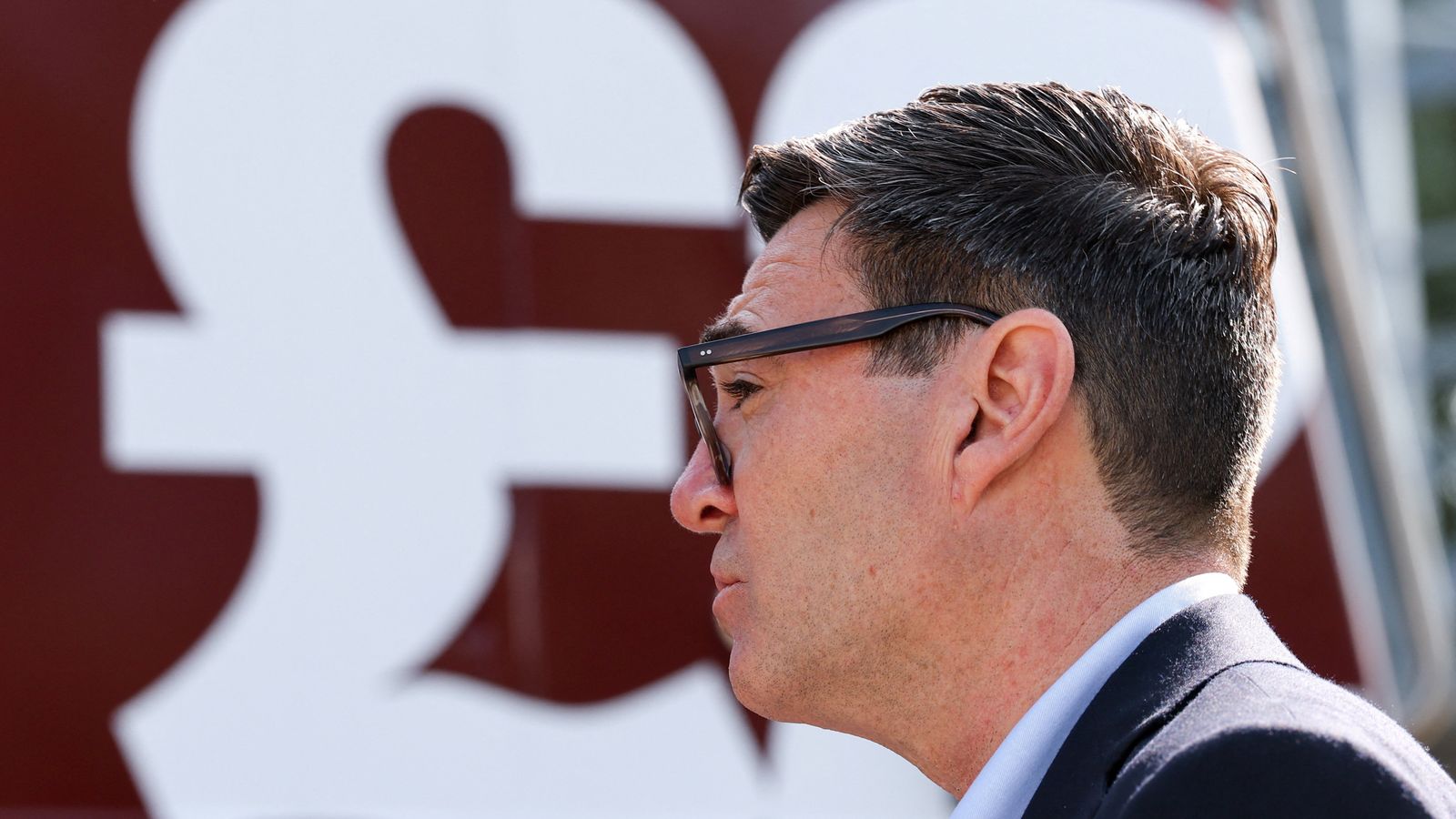
When he was health secretary under Gordon Brown, Mr Burnham proposed replacing inheritance tax with a 10 per cent levy on all estates passed on after death.
Asked by The Telegraph whether he was still committed to that idea, he said: “I’ve thought a lot about social care and how to pay for it, but I did that 15 years ago.
“The cost to the NHS of people sent in unnecessarily, long length of stay, and then medically fit to be discharged but can’t – this is in the billions now. So that has to be taken into account alongside a conversation with the public about how could we pay for a care system that operates on the NHS principle.”


A flat levy on all estates would mean millions more families who are currently exempt from inheritance tax could be dragged into paying a fee on their loved ones’ estates.
At the moment, married couples can hand down £1m of assets tax-free to their children, with death duties only paid on anything above that amount. The Treasury raises close to £9bn a year from inheritance tax, while spending on social care is forecast to hit £39bn by the end of the decade.
Mr Burnham has suggested he still favours a social care levy on estates, despite having to drop the idea in 2009 after it was described by the Conservatives as a “death tax”.
In an interview during the Makerfield by-election campaign in June, he told The Guardian he would “look at all of the kind of implications of that in relation to inheritance tax and care charges and everything,” saying: “I wouldn’t flinch from it.”
Speaking at a New Statesman conference in December 2023, the then mayor of Greater Manchester suggested that he could tweak the idea to ensure that wealthier people with assets paid proportionally more for care than the average household.
He said he would replace inheritance tax “with a care levy that everybody would pay, but obviously the wealthiest would pay most”.
Mr Burnham said he would “use some of my political capital” on social care and have the “courage” to make potentially unpopular choices on paying for it.
He added: “Before people rush to condemn a certain approach, I think the country needs to step back here and say ‘how have we let a situation kind of just roll on, where we know it’s a major issue, and yet no one’s got the courage to fix it?’
“I just think that’s quite damning, really, of my generation of politicians. Has no one got the ability any more to say ‘right, it is a difficult thing, but we’re going to do it’?”
Mr Burnham said the broken system was putting huge pressure on the NHS and meant that “corridor care is becoming the norm all year round”.
He warned that hospitals were overwhelmed with patients who should be treated in the community, meaning A&E waiting targets were “just not achievable”.
The new Prime Minister, whose father has Alzheimer’s, said he “would not want to leave office” without reforming the current system. Speaking about the failure to act, he said: “It’s not defensible. How many people have lost their homes and their savings in that time? We need to face it and fix it.”
Mr Burnham has also previously suggested he would be in favour of other tax increases targeting property owners and people with investments.
He has supported calls for the introduction of a land value tax on homeowners, which would be most likely to replace stamp duty or council tax.
His allies have also urged him to equalise capital gains tax rates with income tax, which they claim would raise £14bn a year, even though official Treasury forecasts show the move would be likely to end up costing the Exchequer money.
Burnham Hints at Tax Rises to Pay for Social Care
Social care has become one of the most important public policy challenges in many developed countries. As populations age and demand for care services continues to grow, governments face increasing pressure to provide better support for elderly people, individuals with disabilities, and others who require long-term assistance. The headline “Burnham Hints at Tax Rises to Pay for Social Care” reflects an ongoing political debate about how these essential services should be funded. While increasing taxes may provide additional resources for social care, such proposals often generate disagreement because they involve balancing public needs with the financial burden placed on taxpayers.
Andy Burnham has frequently spoken about the importance of improving public services and protecting vulnerable members of society. Social care is a key part of this discussion because it affects not only those who receive care but also their families, healthcare providers, and local communities. Many experts argue that the current system requires significant investment to cope with rising demand. If Burnham suggests that higher taxes may be necessary, he is acknowledging the difficult reality that expanding public services usually requires additional funding.
Supporters of tax increases argue that high-quality social care benefits society as a whole. Elderly people deserve to live with dignity and receive appropriate support when they are no longer able to care for themselves. Individuals with disabilities should have access to services that allow them to participate fully in society. In addition, effective social care can reduce pressure on hospitals by ensuring that patients receive appropriate care in the community rather than remaining in hospital beds unnecessarily. From this perspective, paying slightly higher taxes can be viewed as an investment in a healthier and more compassionate society.
Supporters also point out that the demand for social care is expected to increase in the coming decades because people are living longer. Advances in medicine have improved life expectancy, but they have also created greater demand for long-term care services. Without additional funding, local authorities and healthcare providers may struggle to maintain current standards. They argue that governments should plan for these demographic changes instead of delaying difficult financial decisions.
However, proposals to raise taxes are rarely popular. Critics argue that individuals and businesses already face significant financial pressures from inflation, housing costs, and other living expenses. Higher taxes could reduce disposable income, discourage investment, and slow economic growth. Some opponents believe that governments should first improve efficiency, reduce unnecessary spending, or reform existing public services before asking taxpayers to contribute more money.
Another criticism is that politicians sometimes announce spending commitments without providing enough detail about how tax increases would affect different groups of people. Citizens generally expect transparency when governments propose changes to taxation. Questions often arise about which taxes would increase, how much additional revenue would be generated, and whether the money would be spent effectively. Without clear answers, public confidence may decline even if the overall objective is widely supported.
The debate also highlights broader questions about fairness. Some people believe that wealthier individuals should contribute more toward funding essential public services through progressive taxation. Others argue that tax increases should be shared more evenly across society to avoid placing excessive burdens on any one group. Finding a balance between fairness, economic competitiveness, and adequate public funding remains one of the greatest challenges for policymakers.
An effective social care system also depends on more than financial resources alone. Governments need well-trained staff, efficient management, and close cooperation between healthcare providers, local authorities, and community organisations. Additional funding may improve services, but success also requires careful planning and accountability to ensure that public money is used effectively. Tax increases without wider reforms may not achieve the desired improvements if structural problems remain unresolved.
The issue has become increasingly important because of changing public expectations. Many citizens believe that governments should protect vulnerable people and ensure equal access to essential services. At the same time, taxpayers expect responsible management of public finances and want evidence that any additional revenue will lead to measurable improvements. Political leaders must therefore balance compassion with fiscal responsibility while maintaining public trust.
For Burnham, suggesting possible tax rises may be politically risky. Some voters may appreciate his willingness to discuss difficult financial realities instead of making promises without explaining how they will be funded. Others may view any proposal for higher taxes as unacceptable, particularly during periods of economic uncertainty. How the public responds will depend largely on whether the proposed policies appear fair, transparent, and capable of delivering meaningful improvements in social care.

In conclusion, the debate surrounding Burnham’s suggestion of tax rises to fund social care reflects one of the most difficult issues facing modern governments. High-quality social care requires substantial financial resources, but increasing taxes is never an easy political decision. Supporters argue that additional funding is necessary to protect vulnerable people and strengthen public services, while critics believe governments should seek greater efficiency before asking citizens to pay more. Ultimately, the success of any policy will depend on whether it achieves a fair balance between meeting society’s growing care needs and maintaining a sustainable economy. The discussion demonstrates that responsible political leadership requires not only ambitious goals but also realistic financial planning and clear communication with the public.