
Britain has been extended a migrant crisis olive branch as Kosovo’s Prime Minister has said he “wants to help the UK” by offering to accept the UK’s rejected asylum seekers.
Albin Kurti said he wants to help Britain combat illegal immigration in return for more support to strengthen its national security against Serbian and Russian threats.
Mr Kurti spoke before a summit of Western Balkan leaders, hosted by Sir Keir in London on Wednesday, where he said talks were ongoing between British and Kosovo officials.
The move makes Kosovo the first country to express its interest in Sir Keir’s plan to establish a series of return hubs where rejected asylum seekers would be sent after they have exhausted all avenues of appeal in the UK.
The topic of return hubs was not the summit’s formal agenda, however, Sir Keir hopes to open talks with some of the attending countries.
Montenegro’s Prime Minister Milojko Spajic said his country would be open to having a return hub agreement.
That would only happen if Britain invested significantly in its infrastructure.
Bosnia and Herzegovina’s presidency – three members, serving as head of state – said the country had “no intention, nor any willingness, to enter into any agreement”.
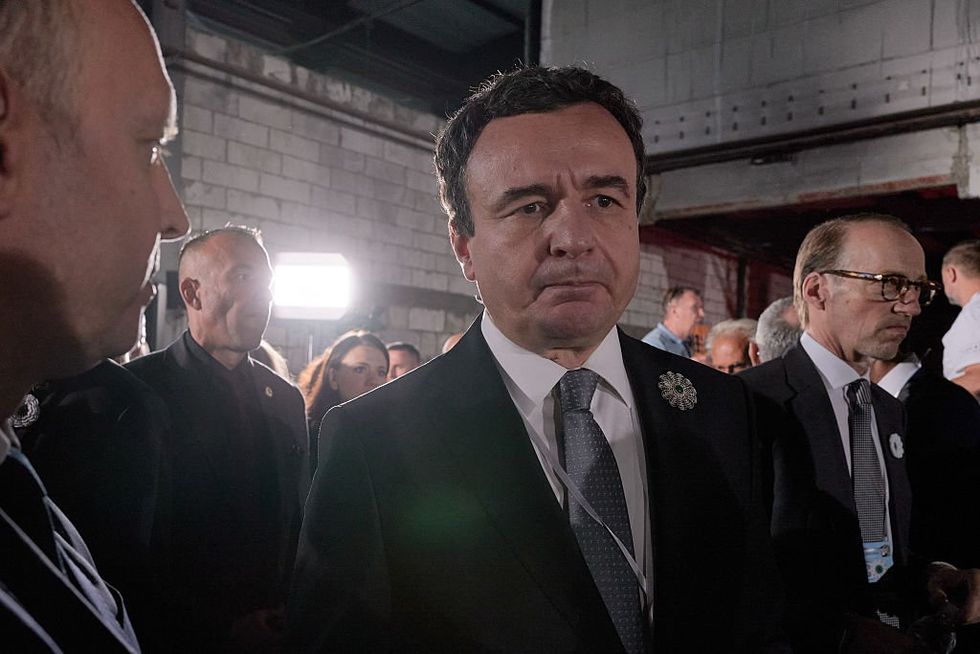
Kosovo’s Prime Minister Albin Kurti said his country was willing to help Britain’s migrant crisis
Albanian Prime Minister Edi Rama was adamant about whether his country would take part in the hubs.
“I repeat … Never in Albania,” he said.
The Times had previously reported that Britain had approached Kosovo and North Macedonia, along with other nations outside Europe, to open return hubs.
Mr Kurti said his Government had an “obligation” to repay Britain for its leading role in the peacekeeping force that protected the country against Slobodan Milosevic’s regime in the 1990s.
Sir Keir Starmer is establishing relationships in a bid to have return hubs for asylum seekers
PA
Asked whether Kosovo was willing to accept migrants from Britain, Mr Kurti added: “We want to help the UK”.
“We consider that is our friendly and political duty,” he said.
“We have limited capacity, but still we want to help and as we speak there is regular communication between our teams of state officials from our ministry of internal affairs and lawyers about how to do this smoothly for mutual benefit.”
Mr Kurti said he expected extra support from Britain regarding security equipment and intelligence-sharing to combat Serbian and Russian threats.
The proposed return hubs are different from offshore processing, which the Conservatives had proposed with the Rwanda scheme.
Individuals would only be sent to a return hub if their claim for asylum in the UK had been rejected, and they were awaiting deportation.
The Government hopes by sending them to a third country it will prevent people trying to delay the process of removal and deter people from coming on small boats.
According to the Oxford Migration Observatory, only three per cent of arrivals on small boats between 2018-24 were returned from the UK.
However, removals of failed migrants from all routes has increased in the last year.
Britain Receives Major Olive Branch as Rwanda Offers to Become UK Return Hub for Failed Asylum Seekers
The United Kingdom has received a significant diplomatic opportunity as Rwanda signals its willingness to cooperate with European countries over plans to establish migrant return hubs. The proposal has attracted considerable attention because Britain previously abandoned its controversial agreement with Rwanda to relocate asylum seekers, following years of political disagreement, legal challenges and substantial public expenditure. Now, as several European countries explore new arrangements with Rwanda, Britain is facing renewed questions about whether it should reconsider its approach to immigration enforcement. The development could represent an important opportunity for the British government to strengthen its border policies, although serious concerns remain about human rights, financial costs and the practical effectiveness of overseas deportation arrangements.
First of all, immigration has become one of the most politically sensitive issues in the United Kingdom. Successive governments have struggled to control irregular migration, particularly the growing number of people crossing the English Channel in small boats. Many migrants arrive from countries affected by war, persecution, political instability and economic hardship. However, the dangerous journeys organised by criminal smuggling networks have created serious challenges for British border authorities. The government must deal with asylum applications, provide temporary accommodation and determine whether individuals have a legal right to remain in the country. These responsibilities have placed considerable pressure on public finances and generated frustration among members of the public who want stronger border controls.
The previous Conservative government, led by Boris Johnson, introduced an agreement with Rwanda in April 2022. Under the original arrangement, certain people arriving in Britain through irregular routes could be transferred to Rwanda, where their asylum claims would be processed. Those recognised as refugees could potentially remain in Rwanda rather than returning to Britain. The policy was presented as a deterrent intended to discourage dangerous Channel crossings and weaken the business model of people-smuggling organisations. However, it immediately generated political controversy and faced legal challenges from human rights organisations and individuals affected by the scheme.
The proposed arrangement encountered significant difficulties because of concerns about the safety of Rwanda as a destination for asylum seekers. In November 2023, the United Kingdom Supreme Court ruled that the policy was unlawful because there were substantial risks that people transferred to Rwanda could subsequently be returned to countries where they might face persecution. The court emphasised the importance of ensuring that asylum seekers receive proper protection under international law. The Conservative government subsequently attempted to address these concerns through new legislation and a revised treaty with Rwanda, but the policy remained controversial.
When Keir Starmer became Prime Minister in July 2024, one of his government’s first major decisions was to abandon the Rwanda deportation scheme. Labour argued that the previous policy had failed to deliver meaningful results despite consuming substantial public resources. By that point, the programme had cost approximately £700 million, according to figures subsequently cited by government ministers, without carrying out the planned deportations of asylum seekers. The new government described the arrangement as an expensive and ineffective approach to managing irregular migration. Instead, Labour promised to focus on disrupting criminal smuggling networks, improving asylum processing and strengthening international cooperation.
However, the immigration challenge has continued, and the European political landscape has changed considerably. Several European governments are now exploring the possibility of establishing return hubs outside their territories. These facilities would accommodate people whose asylum applications have been rejected and who cannot immediately be returned to their countries of origin. Rwanda has emerged as a potential partner because it has previously negotiated migration agreements with Western governments and expressed interest in international cooperation on migration management.
In November 2026, Germany, Austria, Denmark, Greece and the Netherlands announced plans to begin negotiations with Rwanda over a proposed migrant return hub. The initiative is intended to provide an alternative destination for certain rejected asylum seekers who cannot be removed directly to their home countries. The proposed centre could accommodate approximately 100 people at a time, with arrangements potentially allowing residents to return home, settle in Rwanda or move elsewhere if they have a legal right to do so. The countries involved hope to reach an agreement that could allow the first transfers to take place in 2027. This development has renewed interest in Rwanda’s potential role in Europe’s wider immigration strategy.
For Britain, the proposal creates an opportunity to reconsider its position. The UK government has indicated that it is monitoring developments in Europe and examining possible approaches to improving returns. Prime Minister Andy Burnham has said that Britain will watch the European initiative with interest while considering its own next steps. Government representatives have also indicated that return hubs remain among the options being explored to deal with people who have no legal right to remain in the country. Rwanda’s willingness to cooperate could therefore provide Britain with another possible partner in its efforts to strengthen immigration enforcement.
Nevertheless, supporters and critics have very different views about the potential benefits of such an arrangement. Supporters argue that overseas return hubs could help governments deal more effectively with rejected asylum applications. Some individuals cannot be returned to their countries of origin because of diplomatic difficulties, a lack of travel documents or the refusal of their governments to cooperate. A suitable third-country arrangement could provide an alternative solution, potentially reducing the amount of time people spend in expensive temporary accommodation. Supporters also believe that the possibility of removal could discourage some migrants from undertaking dangerous journeys organised by smuggling gangs.
On the other hand, human rights organisations have expressed serious concerns about transferring vulnerable individuals to countries with different legal systems and protection arrangements. They argue that governments must guarantee that anyone transferred to an overseas facility will be treated humanely and will have access to appropriate legal assistance. There must also be effective procedures to prevent individuals from being sent to places where they could face persecution, torture or other serious harm. The experience of the previous British-Rwandan agreement demonstrates that political promises alone are not sufficient to guarantee compliance with international legal obligations.
Another important question concerns the financial implications. The previous Rwanda scheme cost British taxpayers hundreds of millions of pounds without achieving its intended deportation objectives. Any new agreement would therefore need to demonstrate clear financial benefits and practical results. Governments must consider the costs of transporting individuals, maintaining accommodation, providing healthcare and ensuring legal supervision. If an overseas return hub becomes another expensive administrative programme without significantly improving deportation rates, taxpayers may question whether it represents good value for money.
Furthermore, the proposal raises wider questions about the responsibilities of international partners. Rwanda may benefit from financial assistance, diplomatic cooperation and greater international recognition through its participation in migration agreements. However, such arrangements must be based on genuine cooperation and clear legal responsibilities. European governments cannot simply transfer their immigration obligations to another country without ensuring that the rights of affected individuals remain protected. Any agreement should establish transparent monitoring procedures and mechanisms for addressing complaints or allegations of mistreatment.
There are several important measures Britain should consider before participating in a new return hub arrangement. Firstly, the government should conduct an independent assessment of the proposed facilities and the legal protections available to transferred individuals. Secondly, it should negotiate clear agreements defining responsibilities, costs and monitoring arrangements. Thirdly, asylum applications must continue to receive fair and individual consideration, with appropriate opportunities to challenge incorrect decisions. Finally, Britain should continue working with France and other European partners to disrupt smuggling networks and improve cooperation over the return of people who have no legal right to remain.
In conclusion, Rwanda’s willingness to cooperate with European countries over migrant return hubs represents a potentially significant development for Britain’s immigration policy. Following the failure of the previous deportation scheme, the new European initiative provides an opportunity to examine whether international partnerships can offer a more practical approach to managing irregular migration. However, the government must learn from past mistakes and avoid repeating an expensive policy that produces limited results. Strong border controls, effective asylum procedures and international cooperation are all important, but they must operate alongside respect for human rights and international law. Ultimately, the success of any new agreement should be measured by its effectiveness, financial sustainability and ability to provide lawful and humane solutions to the challenges of irregular migration.