

Tragedy at Sea: 139 Migrants Feared Dead After Boat Capsizes, Including 15 Children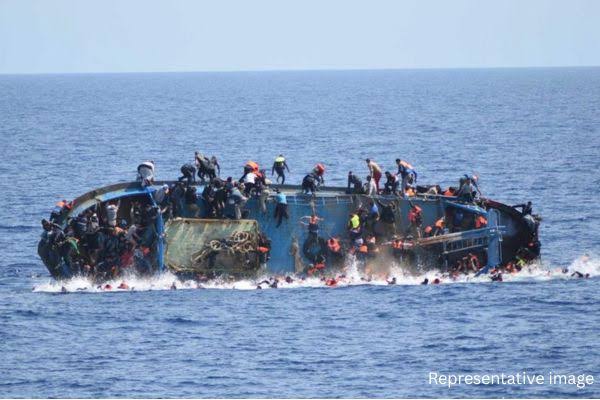
A devastating maritime tragedy has once again highlighted the dangers faced by migrants attempting to cross the sea in overcrowded and unsafe boats. According to the reported figures in the headline, 139 migrants have died after a vessel capsized off the coast, including 15 children. The scale of the reported loss has raised urgent questions about dangerous migration routes, human trafficking networks and the international community’s response to people risking their lives in search of safety and a better future.
Behind every number is a human story: a family separated, a child whose future has been lost and a community left waiting for news of loved ones. For many families, the decision to undertake a dangerous sea journey comes after months or years of uncertainty, poverty, conflict or fear. Yet the promise of reaching another country can turn into a nightmare when a fragile vessel is overwhelmed by waves, bad weather or the weight of too many passengers.
The reported deaths, particularly those of children, underline the human cost of irregular migration by sea. They also renew the difficult debate over how governments should protect their borders while preventing further loss of life.
The precise circumstances of the reported incident, including its location, the condition of the vessel and the number of survivors, would need to be confirmed by reliable authorities. Nevertheless, the tragedy described in the headline reflects a wider international crisis that has repeatedly claimed lives along dangerous maritime migration routes.
A Journey That Ended in Disaster
Sea crossings undertaken in overcrowded boats are among the most dangerous ways to migrate. Vessels used by smugglers may be poorly maintained, inadequately equipped and unsuitable for carrying large numbers of passengers over open water.
Some boats have insufficient life jackets, unreliable engines or little capacity to withstand rough seas. Passengers may have limited access to food and drinking water, while many have no meaningful understanding of the risks they face once they leave the coast.
When a boat begins to take on water or loses stability, disaster can unfold within minutes. Passengers may be thrown into the sea, and those who cannot swim or are exhausted by the journey can struggle to stay afloat. Even people who initially survive the capsizing may face life-threatening conditions before rescuers reach them.
The loss of so many lives in a single incident would represent a devastating blow to the families involved. The reported deaths of 15 children make the tragedy particularly painful, highlighting how young and vulnerable passengers can become victims of journeys organised by adults who promise safe passage but may expose them to extraordinary danger.
For relatives waiting on shore, uncertainty can be almost unbearable. Families may spend hours or days trying to establish whether loved ones have survived, often relying on incomplete information from other passengers, community contacts or local authorities.
In such circumstances, accurate communication and timely assistance are essential.
Why Do People Risk Such Dangerous Crossings?
The reasons people undertake dangerous maritime journeys are complex. There is no single explanation that applies to every migrant, and individual circumstances can differ dramatically.
Some people leave their home countries because of armed conflict, persecution or threats to their personal safety. Others are escaping severe economic hardship, unemployment, political instability or environmental pressures that have made ordinary life increasingly difficult.
For families with few safe and affordable alternatives, the prospect of reaching another country may appear to offer a chance of security, employment or a better future for their children.
However, reaching a destination through an irregular route does not guarantee permission to remain there. People who survive a crossing may face lengthy asylum procedures, uncertain legal status, detention in some jurisdictions or the possibility of being returned to another country.
The journey itself can also expose migrants to exploitation. Smuggling networks may demand large sums of money, provide misleading information about the risks and abandon passengers when conditions become dangerous.
Some migrants sell possessions or borrow money to finance the journey. If the crossing ends in tragedy, their families may lose not only a loved one but also the savings or assets they sacrificed in the hope of reaching safety.
These realities demonstrate why dangerous migration cannot be understood solely through statistics about border arrivals. It is also a story about desperation, exploitation and the limited choices available to people in vulnerable situations.
The Role of People-Smuggling Networks
People-smuggling networks play a significant role in many irregular migration routes. They arrange transportation across borders, often charging substantial fees for journeys that may be conducted in unsafe conditions.
The services offered by smugglers can be presented as a route to a better life, but the reality may be very different. Passengers may be placed on boats that are dangerously overcrowded, with little information about the distance to be travelled or the condition of the vessel.
Those organising the journey may not accompany the passengers at sea, leaving them dependent on inexperienced operators or unreliable equipment. In some cases, migrants may be forced to travel under threats or coercion, increasing their vulnerability.
The reported capsizing therefore raises broader questions about the people who profit from dangerous crossings. If criminal networks can continue operating despite repeated tragedies, governments and law-enforcement agencies face pressure to improve intelligence-sharing, investigate organisers and disrupt the financial structures that sustain these operations.
Effective enforcement must focus on those who exploit vulnerable people rather than assuming that every person undertaking a dangerous crossing has the same motives or circumstances.
International cooperation is essential because smuggling operations frequently cross national borders. Investigations may require cooperation among coastal authorities, police forces, financial investigators and organisations working to identify missing people.
However, enforcement alone cannot address every factor that drives irregular migration. If people continue to believe that dangerous routes are their only realistic option, smugglers may find new ways to operate.
The Difficult Challenge Facing Governments
Maritime migration has become one of the most politically sensitive issues facing governments in Europe and other regions.
Authorities must protect national borders, enforce immigration laws and maintain public confidence in the immigration system. At the same time, they have responsibilities to respond to people in distress at sea and to comply with applicable legal obligations.
These objectives can generate intense disagreements over policy.
Some politicians argue that tougher border enforcement is necessary to discourage dangerous journeys and prevent criminal networks from profiting. They contend that if irregular crossings are allowed to continue without effective consequences, more people may attempt the journey.
Others emphasise the importance of safe and lawful routes, faster asylum procedures and cooperation with countries of origin and transit. They argue that reducing the number of people who undertake dangerous journeys requires addressing the circumstances that drive them to leave.
Both perspectives raise practical questions that governments must confront.
A border policy that fails to disrupt smuggling networks may struggle to prevent further crossings. But a strategy that focuses exclusively on deterrence may also fail to protect people who are already at sea or address the needs of those fleeing genuine persecution.
The challenge is to develop a system that combines effective enforcement, emergency rescue, fair asylum procedures and cooperation between countries.
Search and Rescue: Every Minute Matters
When a vessel capsizes, the immediate priority is to locate survivors and provide emergency assistance.
Search-and-rescue operations can involve coastguards, naval units, helicopters, nearby commercial vessels and humanitarian organisations. The precise response depends on the location of the incident, weather conditions, available resources and communications received from the vessel or witnesses.
Finding survivors can be difficult, especially when people are scattered over a wide area or visibility is poor. Strong currents and rough seas can further complicate the operation.
Rescuers must also consider the possibility that survivors are suffering from exhaustion, hypothermia, injuries or the effects of prolonged exposure to seawater. Immediate medical attention may be necessary even for people who have managed to remain afloat.
After a major maritime disaster, authorities may need to identify recovered bodies, establish the number of passengers and notify relatives. These procedures can be complicated when travellers lack identification documents or when families are located in different countries.
Transparent communication is particularly important during this period. Unconfirmed reports can cause additional distress for families, while inaccurate casualty figures can make it harder to establish what happened.
The reported death toll of 139 people should therefore be treated as a figure requiring confirmation from credible authorities before it is presented as an independently established fact.
The Particular Horror of Children Dying at Sea
The reported deaths of 15 children make this tragedy especially distressing.
Children who travel along dangerous migration routes are often dependent on adults to make decisions about transportation, accommodation and the risks of the journey. Younger passengers may be unable to understand the danger posed by overcrowded vessels or to protect themselves during an emergency.
Some children travel with parents or relatives, while others may be separated from their families or accompanied by people whose relationships to them are unclear. In any major maritime disaster, establishing the identities of young victims and tracing surviving relatives can be especially difficult.
The death of a child also has consequences that extend far beyond the immediate incident. Parents may lose their children, siblings may be separated permanently, and extended families may struggle with grief while trying to determine what happened.
These losses should not become merely another statistic in the political argument over immigration.
Regardless of a person’s nationality or legal status, a child who dies at sea represents a human tragedy. Governments, humanitarian organisations and communities have a shared interest in preventing similar incidents and ensuring that people in distress receive appropriate assistance.
Can Future Tragedies Be Prevented?
Preventing further deaths requires action at several levels.
First, governments can strengthen efforts to identify and disrupt smuggling networks, investigate those responsible for organising unsafe journeys and improve cooperation across international borders.
Second, coastal authorities need adequate resources for search-and-rescue operations. Rapid communication, reliable equipment and clear coordination can improve the chances of locating survivors when boats encounter difficulties.
Third, countries can work together to improve the availability of lawful routes for people who qualify for protection, alongside fair and efficient asylum procedures. When applications are delayed for long periods, uncertainty can increase for applicants and create additional administrative costs.
Finally, international cooperation is needed to address conflict, persecution, instability and other conditions that force people to leave their homes. These challenges cannot be solved by one country alone.
None of these measures offers a simple or immediate solution. Migration pressures are influenced by many factors, including political developments, economic conditions, family connections and the actions of criminal networks.
Nevertheless, the scale of the reported tragedy reinforces the importance of combining practical border management with measures designed to protect human life.
A Tragedy That Demands More Than Words
The reported capsizing, with 139 migrants dead and 15 children among the victims, is a stark reminder of the consequences of dangerous maritime journeys.
It also exposes the limitations of a debate that treats migration exclusively as a political contest. Governments must decide how to manage borders, control irregular arrivals and process asylum claims, but these responsibilities exist alongside the urgent need to prevent people from drowning.
For families affected by such a disaster, political arguments offer little comfort. Their immediate concerns are finding missing relatives, identifying victims and receiving reliable information about what happened.
For policymakers, the incident raises difficult questions about prevention, rescue operations, criminal exploitation and international responsibility. Those questions deserve serious examination, supported by verified evidence rather than speculation or sensational claims.
Ultimately, a credible response must recognise two realities: countries have legitimate reasons to enforce their immigration laws, and people in distress at sea must not be left without appropriate assistance.
The loss of children and adults on dangerous migration routes should prompt renewed efforts to prevent smugglers from exploiting vulnerable people and to ensure that maritime emergencies receive an effective response.
The true measure of progress will not be the strength of political statements made after a disaster. It will be whether governments and international partners can work together to reduce the dangers that lead to such tragedies and prevent more families from receiving the devastating news that their loved ones will never return home.