
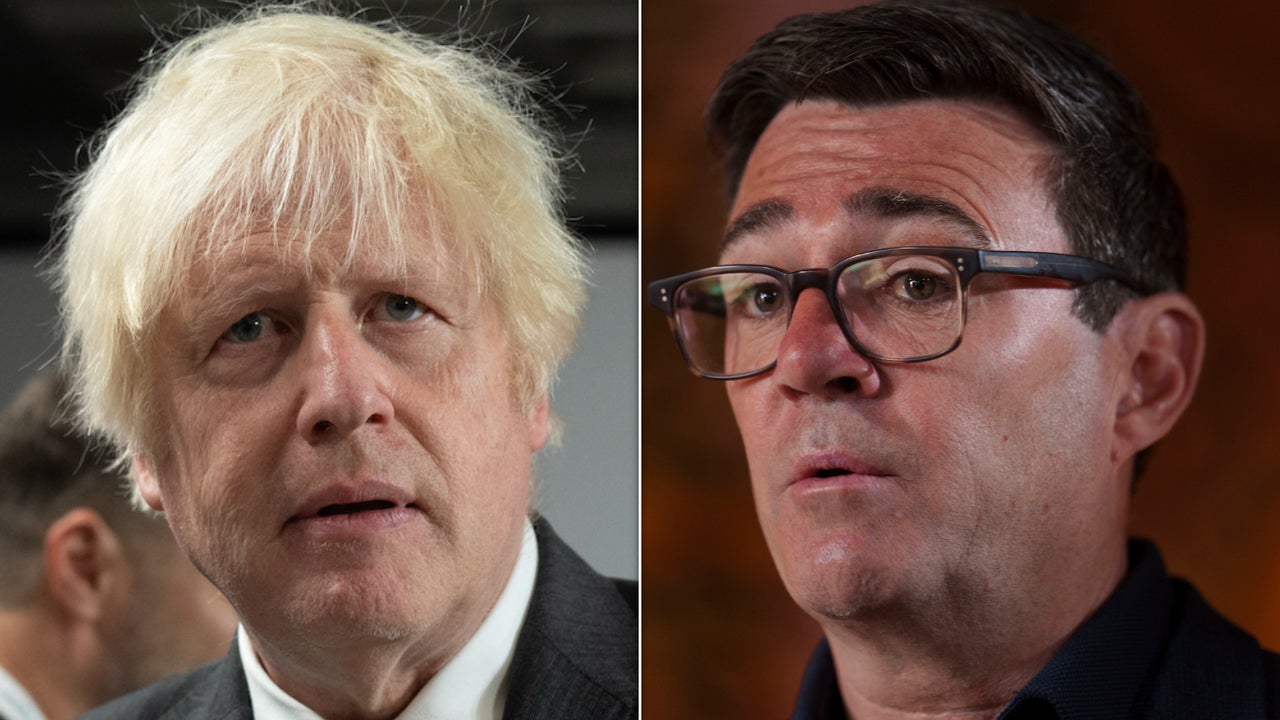
Andy Burnham is just days away from becoming the next prime minister.
Nominations have opened in the Labour leadership contest, but the former mayor of Greater Manchester’s victory is already a foregone conclusion.
His only possible opponent, former armed forces minister Al Carns, confirmed on Wednesday that he would not be putting his name forward.
That means that he will replace Keir Starmer as Labour leader on July 17, and become prime minister three days later.
The country’s most popular Labour politician, Burnham has been charged with turning his party’s fortunes around and give them a chance of winning the next election.
His charisma and firm promise to implement real change – along with his history as a successful metropolitan mayor – looks like the perfect recipe to be a successful PM, according to many Labour MPs.
If that sounds familiar, it’s because it has eerie similarities to the circumstances in which Boris Johnson defeated Jeremy Hunt to become Tory leader in 2019.
Like Burnham, he too was a charismatic former MP-turned-mayor-turned MP again who took charge of his party shortly after a devastating election performance.
In Johnson’s case, it came after the Conservatives had come fifth in the 2019 European elections.
Burnham will take the Labour helm just two months after the May 7 elections, which saw the party hammered in England, Scotland and Wales.
Lest we forget, Johnson was only prime minister for three years before he was brought down by his own lockdown-breaking gatherings in partygate and the sexual assault scandal around Tory whip Chris Pincher.
Though obviously at different ends of the political spectrum, it’s hard to deny that he and Burnham have similar appeal to voters – and their parallel journeys to Downing Street.
Both men first became MPs in 2001 – Johnson in the Tory safe seat of Henley, Burnham in the Labour stronghold of Leigh.
Johnson left parliament to become the London mayor for two terms; Burnham left parliament to become the Greater Manchester mayor for two and a half.
Johnson considered running as Conservative leader in 2016 before taking the helm in 2019; Burnham ran unsuccessfully to be Labour leader in 2010 and 2015 before his (expected) success this year.
Both returned to the Commons when they saw there may be an opportunity to take over as party leader, and then got the job mid-term without facing an immediate general election.
The two men, very popular in their respective mayoralties, championed changes to city travel while in their regional posts, too.
Both rose to prominence during times of national change; Johnson was one of the key faces of the Leave campaign in favour of Brexit while Burnham became known as the “King of the North” for pushing back against a lack of furlough funding for Manchester during the Covid pandemic.
The politicians recognised that promising to address regional inequality is a vote-winner. Johnson vowed to introduce “Levelling Up” and Burnham’s most prominent policy so far is his bid to strengthen devolution.
Johnson and Burnham can also be described as populists, who like to be liked – though both have faced criticism for ducking difficult decisions and dodging media scrutiny.
Johnson famously hid in a fridge during a Good Morning Britain interview in 2019 to avoid reporters.
Burnham has not held a single press conference since he announced his plan to replace Starmer and has only used Reddit as his main forum to speak to voters.
And – much like Starmer – Burnham and Johnson have outlined plans for a decade in power.
Johnson did succeed in the short-term, even winning a snap general election in December 2019.
But he went on to endure a humiliating fall from grace due to his struggles with the Covid pandemic and his own misconduct in office.
Burnham certainly has a less chequered past than Johnson, and allies say he is more of a heavyweight when it comes to ideas and their execution.
But, unlike Johnson, does he really have what it takes to survive in No.10?
In this week’s Commons People, we unpick the similarities between the two politicians – and if Burnham will be able to learn from Johnson’s mistakes.
Andy Burnham is just days away from becoming the next prime minister.
Nominations have opened in the Labour leadership contest, but the former mayor of Greater Manchester’s victory is already a foregone conclusion.
His only possible opponent, former armed forces minister Al Carns, confirmed on Wednesday that he would not be putting his name forward.
That means that he will replace Keir Starmer as Labour leader on July 17, and become prime minister three days later.
The country’s most popular Labour politician, Burnham has been charged with turning his party’s fortunes around and give them a chance of winning the next election.
His charisma and firm promise to implement real change – along with his history as a successful metropolitan mayor – looks like the perfect recipe to be a successful PM, according to many Labour MPs.
If that sounds familiar, it’s because it has eerie similarities to the circumstances in which Boris Johnson defeated Jeremy Hunt to become Tory leader in 2019.
Like Burnham, he too was a charismatic former MP-turned-mayor-turned MP again who took charge of his party shortly after a devastating election performance.
In Johnson’s case, it came after the Conservatives had come fifth in the 2019 European elections.
Burnham will take the Labour helm just two months after the May 7 elections, which saw the party hammered in England, Scotland and Wales.
Lest we forget, Johnson was only prime minister for three years before he was brought down by his own lockdown-breaking gatherings in partygate and the sexual assault scandal around Tory whip Chris Pincher.
Though obviously at different ends of the political spectrum, it’s hard to deny that he and Burnham have similar appeal to voters – and their parallel journeys to Downing Street.
Both men first became MPs in 2001 – Johnson in the Tory safe seat of Henley, Burnham in the Labour stronghold of Leigh.
Johnson left parliament to become the London mayor for two terms; Burnham left parliament to become the Greater Manchester mayor for two and a half.
Johnson considered running as Conservative leader in 2016 before taking the helm in 2019; Burnham ran unsuccessfully to be Labour leader in 2010 and 2015 before his (expected) success this year.
Both returned to the Commons when they saw there may be an opportunity to take over as party leader, and then got the job mid-term without facing an immediate general election.
The two men, very popular in their respective mayoralties, championed changes to city travel while in their regional posts, too.
Both rose to prominence during times of national change; Johnson was one of the key faces of the Leave campaign in favour of Brexit while Burnham became known as the “King of the North” for pushing back against a lack of furlough funding for Manchester during the Covid pandemic.
The politicians recognised that promising to address regional inequality is a vote-winner. Johnson vowed to introduce “Levelling Up” and Burnham’s most prominent policy so far is his bid to strengthen devolution.
Johnson and Burnham can also be described as populists, who like to be liked – though both have faced criticism for ducking difficult decisions and dodging media scrutiny.
Johnson famously hid in a fridge during a Good Morning Britain interview in 2019 to avoid reporters.
Burnham has not held a single press conference since he announced his plan to replace Starmer and has only used Reddit as his main forum to speak to voters.
And – much like Starmer – Burnham and Johnson have outlined plans for a decade in power.
Johnson did succeed in the short-term, even winning a snap general election in December 2019.
But he went on to endure a humiliating fall from grace due to his struggles with the Covid pandemic and his own misconduct in office.
Burnham certainly has a less chequered past than Johnson, and allies say he is more of a heavyweight when it comes to ideas and their execution.
But, unlike Johnson, does he really have what it takes to survive in No.10?
In this week’s Commons People, we unpick the similarities between the two politicians – and if Burnham will be able to learn from Johnson’s mistakes.