
Andy Burnham’s Universal Appeal and the Battle to Stop Nigel Farage and Reform in 2029
The future of British politics is becoming increasingly uncertain as traditional party loyalties weaken and new political movements attempt to reshape the country’s political landscape. One of the biggest questions facing the Labour Party is how it can maintain support among different groups of voters while preventing the rise of Reform UK and its leader Nigel Farage. Some commentators argue that Andy Burnham, the Mayor of Greater Manchester, could hold the key because of his ability to appeal beyond Labour’s traditional supporters. They believe that his combination of working-class appeal, practical politics, and emphasis on local communities could provide a powerful alternative to the growing influence of Reform in the run-up to the 2029 general election.
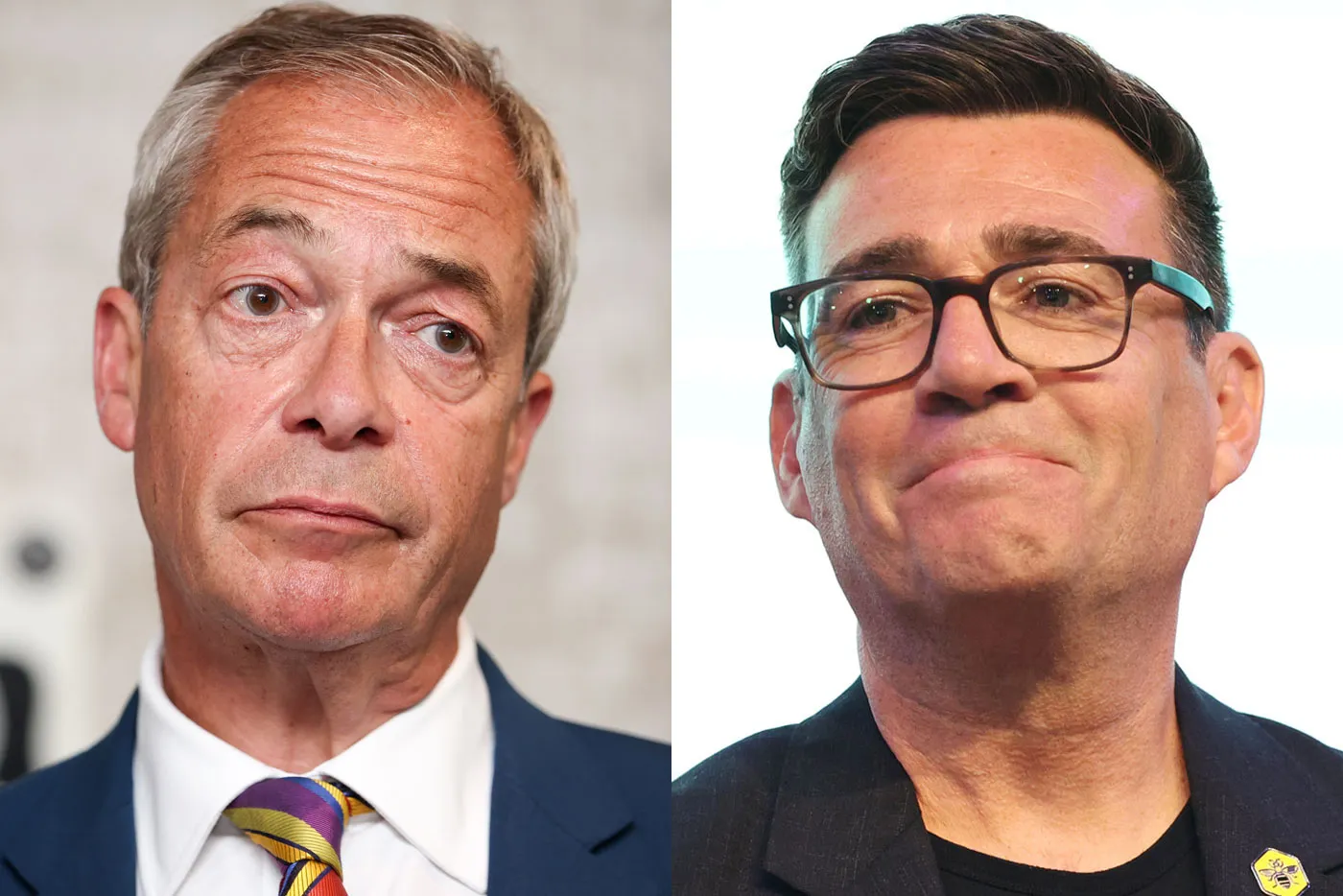
Andy Burnham has become one of the most recognisable figures in British politics outside Westminster. A former cabinet minister and long-serving Labour MP, he has built a strong reputation as a politician who focuses on public services, regional inequality, and giving more power to local communities. As Mayor of Greater Manchester, he has presented himself as a champion of northern England and an advocate for communities that feel disconnected from national politics.
The argument that Burnham has “universal appeal” comes from the belief that he can attract voters from different political backgrounds. Unlike some politicians who are strongly associated with a particular ideological group, Burnham’s supporters argue that he combines Labour values with a practical, moderate approach. They believe he can speak to traditional Labour voters, undecided voters, and even some people who have considered supporting Reform UK.

Nigel Farage and Reform UK represent one of the biggest challenges facing Labour and the wider political establishment. Farage has built his political career around challenging mainstream parties and presenting himself as a voice for voters who feel ignored by Westminster. Reform’s message has focused on issues such as immigration, national identity, economic frustration, and dissatisfaction with traditional political leadership.
Supporters of Reform argue that the party represents a necessary change because many people believe existing parties have failed to address their concerns. They claim that voters who feel left behind economically or culturally are looking for a political alternative. Farage’s ability to connect with these voters has made him a significant figure in British politics.
However, critics argue that Reform’s rise is partly based on public frustration rather than a complete political vision. They believe that Labour’s best response is not simply to criticise Farage but to offer a credible alternative that addresses the reasons why some voters are attracted to Reform. This is where Burnham’s supporters believe he could play an important role.
One of Burnham’s greatest strengths is his reputation as a politician who focuses on practical issues. Rather than concentrating only on ideological arguments, he often highlights concerns such as transport, housing, healthcare, jobs, and local investment. His supporters argue that many voters care more about whether politicians can improve their daily lives than about political labels.
This approach could be particularly important because many traditional party boundaries have become less predictable. In previous decades, Labour was strongly associated with working-class communities, while Conservative support was often stronger among middle-class voters. Today, voting patterns have become more complicated. Some working-class voters who once supported Labour have moved towards other parties, while some urban and professional voters have become more supportive of Labour.
Burnham’s political style attempts to reconnect with voters who feel that politics has become too distant and controlled by national elites. His emphasis on devolution reflects a belief that decisions should be made closer to the communities affected by them. He argues that people outside London should have more influence over policies that shape their lives.
This message may have particular appeal in areas where voters feel neglected. Many communities across northern England have experienced economic change, industrial decline, and uneven investment. Burnham argues that restoring local pride and giving regions more power can help address these problems.
However, the idea that Burnham alone could stop Reform UK also faces challenges. Politics is rarely determined by one individual, and Labour’s success in 2029 will depend on many factors, including the economy, public services, government performance, and international events. A popular politician can help a party, but voters ultimately judge governments on results.
There are also questions about whether Burnham’s approach would appeal equally across the entire country. His strongest support comes from Greater Manchester and parts of northern England, but a national election requires appealing to voters in Scotland, Wales, southern England, rural communities, and major cities. Labour would need to demonstrate that his style of politics can work beyond his regional base.
Another challenge is the relationship between Labour’s values and electoral strategy. Some members of the party may argue that Labour should focus on stronger progressive policies, while others believe it must prioritise broad appeal and practical governance. Burnham’s supporters suggest that these goals are not necessarily opposed. They argue that Labour can remain committed to social justice while also presenting itself as a competent party of government.
The comparison with Nigel Farage is also significant. Both politicians have built their reputations partly on challenging political establishments, but they do so in different ways. Farage presents himself as a disruptor who challenges the system from outside. Burnham presents himself as someone who reforms the system from within while pushing power closer to communities.
The competition between these two political approaches could become one of the defining features of British politics before 2029. One vision focuses on national change through opposition to existing institutions, while the other focuses on rebuilding trust through local empowerment and practical solutions.
The concept of “universal appeal” is therefore central to Labour’s challenge. To defeat Reform, Labour may need to attract voters who do not naturally identify with the party. It must convince people that it understands their concerns and can provide effective leadership. Burnham’s supporters believe that his communication style and political record give him an advantage in this area.
At the same time, Labour must be careful not to assume that popularity in one region automatically translates into national success. The party will need a clear programme, strong leadership, and policies that respond to the concerns of millions of voters. Burnham could be an important part of that strategy, but he cannot replace the need for a wider political vision.
The debate also reflects a broader question about what voters want from politicians today. Many people appear less interested in traditional political identities and more interested in competence, honesty, and whether leaders understand everyday problems. Politicians who can combine values with practical results may have an advantage in an increasingly competitive political environment.
In conclusion, the argument that Andy Burnham’s universal appeal could help stop Nigel Farage and Reform UK in 2029 reflects the changing nature of British politics. Burnham’s supporters believe that his focus on communities, public services, and regional empowerment gives Labour a way to reconnect with voters who feel ignored. His critics argue that defeating Reform will require more than one politician and that Labour must develop a broader national strategy.
Whether Burnham becomes a central figure in Labour’s future remains uncertain. However, the debate surrounding him demonstrates an important reality: the next election may not only be a contest between political parties, but also between different visions of how Britain should be governed. One vision seeks disruption and dramatic change, while another seeks to