

Andy Burnham’s “Cocky” Labour Party Faces a Shock as the Prime Minister Returns From Holiday
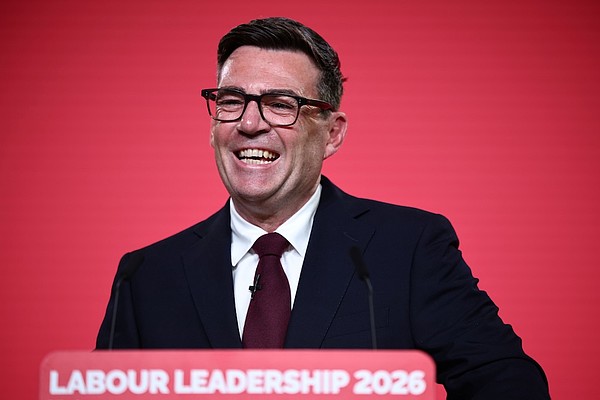
Andy Burnham returned from his first family holiday as Prime Minister facing a very different political landscape from the one he left behind.
Just weeks into his premiership, Burnham had enjoyed what appeared to be an extraordinarily strong start. His energetic political style, a stream of eye-catching announcements and a deliberate contrast with his predecessor Keir Starmer helped Labour regain ground in the opinion polls. At one point, Labour even moved ahead of Reform UK in voting-intention polling.
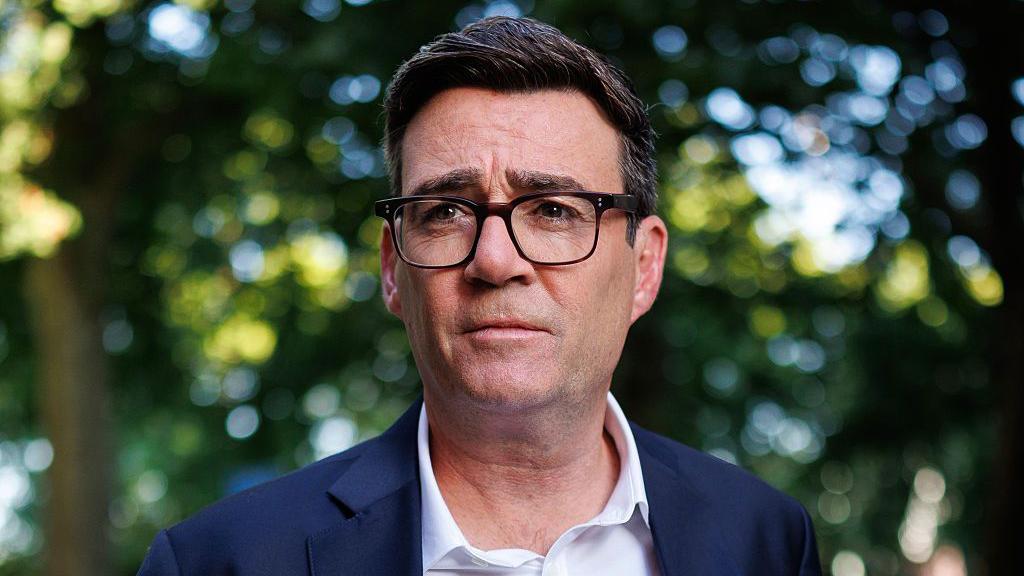
But the honeymoon was never going to last forever.
As Burnham returned to Downing Street, the serious business of governing was beginning. The prison crisis, immigration, public finances, the cost of living and a difficult autumn Budget were all waiting for him.
The political shock Labour faces is therefore not necessarily one dramatic event.
It is the possibility that the party’s early confidence could collide with the realities of government.
From political excitement to political reality
Burnham’s first fortnight in office was remarkably busy.
He launched policies on skills, devolution and household costs, promoted his vision of moving political power away from Westminster and opened the new “Number 10 North” operation in Manchester.
His approach was deliberately different from Starmer’s.
Where Starmer was often criticised for appearing cautious and technocratic, Burnham sought to project optimism and energy.
The strategy worked, at least initially.
The Financial Times reported that Burnham had quickly seized control of the political narrative, while Labour recovered significantly in the polls after his arrival in Downing Street.
That early success created a sense of momentum inside Labour.
But momentum can create its own danger.
When a new government starts strongly, expectations rise just as quickly.
And once expectations rise, voters begin asking a much harder question:
What can Burnham actually deliver?
The holiday controversy was only the beginning
Burnham’s decision to take a pre-planned family holiday barely two weeks after becoming Prime Minister provided his opponents with an obvious line of attack.
Reform UK chairman Lee Anderson accused him of “bunking off for a jolly abroad”, while critics questioned whether a new Prime Minister should take a break so soon after entering Downing Street.
The Government defended the decision, pointing out that Burnham remained in contact with officials, held meetings and received regular updates while abroad.
There was nothing inherently extraordinary about a Prime Minister taking a family holiday.
But the timing was politically awkward.
More importantly, the controversy highlighted the enormous expectations surrounding Burnham.
He had arrived promising action.
He had presented himself as a leader who would not accept bureaucratic excuses.
And then, almost immediately, Britain was reminded that even a new Prime Minister cannot escape the normal rhythms of government.
The holiday itself is unlikely to damage Burnham permanently.
What matters is what happens after it.
The prison crisis is waiting
The most immediate challenge is Britain’s prison system.
The Government has been forced to confront severe overcrowding and the consequences of an early-release programme inherited from the previous administration.
The controversy became particularly explosive after it emerged that the arrangements could potentially affect offenders whose cases have generated intense public concern, including two men convicted in connection with the death of PC Andrew Harper.
Burnham has since ordered Justice Secretary Alex Norris to find ways of creating additional prison capacity and to prevent particularly serious offenders from benefiting from early release.
That intervention was politically necessary.
But it also demonstrates the scale of the problem.
The Government cannot simply announce that dangerous offenders should remain in prison without creating the prison places necessary to accommodate them.
And releasing other offenders creates pressure on probation services.
Indeed, probation officers recently voted overwhelmingly in favour of potential strike action, warning that workloads were already excessive and could become even more difficult under the new release arrangements.
For Burnham, this is a classic example of the difference between announcing a political objective and actually implementing it.
Immigration could become another flashpoint
The second major challenge waiting for Labour is immigration.
Burnham’s government is attempting to present a tougher approach to illegal migration while maintaining Labour’s broader commitment to international obligations and legal migration.
That is politically difficult.
Reform UK has made immigration one of its most important issues, and any increase in small-boat crossings provides Nigel Farage’s party with ammunition.
At the same time, Labour MPs have their own disagreements about migration policy.
The Times has reported that Labour MPs returning to Westminster will be watching planned immigration changes particularly closely, including proposals that could extend the qualifying period for indefinite leave to remain from five years to ten.
That could trigger arguments inside Labour.
Some MPs will demand tougher controls.
Others will warn that excessive restrictions could damage Britain’s economy and undermine Labour’s traditional values.
Burnham therefore faces pressure from both directions.
The October Budget could be the real shock
But perhaps the biggest threat to Labour’s confidence is hidden in the Treasury.
The new Government is expected to face difficult decisions in its autumn Budget.
The Times reports that Chancellor John Healey is dealing with a fiscal gap of around £4.7 billion, while difficult choices over taxation and spending are already looming.
This is where Burnham’s political strategy could encounter its greatest difficulty.
It is relatively easy for a government to announce popular measures.
Reducing household bills is popular.
Supporting high streets is popular.
Improving public transport is popular.
Investing in public services is popular.
The difficult part is paying for everything.
If the Treasury raises taxes, Labour risks angering households and businesses.
If ministers cut spending, they risk angering Labour’s own supporters.
If they borrow more, financial markets and fiscal watchdogs may become concerned.
And if they do nothing, the Government may be accused of lacking a credible economic plan.
There is no painless option.
Burnham’s popularity is strong — but fragile
The Prime Minister still has a significant political advantage.
His approval ratings remain considerably better than those of many recent British leaders.
The Times’ latest polling analysis put Burnham’s net favourability at around -7, which sounds negative but is substantially stronger than the ratings recorded by recent prime ministers such as Rishi Sunak, Liz Truss and Keir Starmer.
That tells us something important.
Burnham has not suddenly become unpopular.
Instead, he is operating in an environment where British voters have become deeply sceptical of political leaders.
A leader with a net rating around zero can still be doing relatively well compared with recent standards.
The problem is that personal popularity does not necessarily translate into long-term electoral support.
Voters may like Burnham while remaining unconvinced about Labour.
And that distinction could become increasingly important.
Reform is waiting for Labour to stumble
Nigel Farage’s Reform UK has no reason to panic.
Even though Labour has regained ground, Reform remains a formidable challenger.
The party’s strategy is to attack Labour whenever the Government appears out of touch, weak or unable to deliver.
The prison crisis is therefore useful to Reform.
Immigration is useful.
Tax increases would be useful.
Public-service failures would be useful.
And internal Labour disagreements would be even more useful.
Reform does not necessarily need Burnham to become personally unpopular.
It only needs voters to conclude that Labour cannot solve Britain’s problems.
That is a much easier political task.
Labour’s confidence could become its weakness
The phrase “cocky Labour Party” is loaded political language, but there is a genuine danger behind it.
A new government that receives an immediate improvement in polling can begin to believe that it has solved its political problems.
That would be a mistake.
Burnham’s arrival has changed the political atmosphere.
It has not changed Britain’s underlying economic difficulties.
It has not solved the prison crisis.
It has not eliminated illegal migration.
It has not repaired strained public services.
And it has not made the national debt disappear.
The danger is that Labour mistakes a change in public mood for a permanent political realignment.
History offers plenty of examples of governments that enjoyed an early surge in popularity only to lose support once difficult decisions arrived.
The autumn will reveal the truth
Burnham’s return from holiday marks the beginning of a much more demanding phase of his premiership.
His Government has announced a national tour focusing on the cost of living and high streets, with Burnham planning to visit every region of the UK before September.
The political logic is clear.
Burnham wants to remain visible outside Westminster.
He wants to demonstrate that his government is listening to voters.
And he wants to make devolution and local government central to his political identity.
But eventually the photo opportunities must be followed by difficult decisions.
The October Budget will be particularly important.
So will the Government’s final approach to immigration.
And the prison crisis will remain a major test of whether Labour can reconcile public safety with the reality of limited prison capacity.
A shock could come from inside Labour
Perhaps the greatest danger is that the first serious political battle comes not from Reform or the Conservatives but from Labour’s own MPs.
The party contains competing political instincts.
Some want Burnham to move firmly towards the centre and demonstrate economic discipline.
Others want a much more interventionist Labour Government.
Some demand tougher immigration controls.
Others are concerned about the impact of restrictions on migrants and businesses.
And there are likely to be disagreements over welfare, taxation, public spending and constitutional reform.
Burnham’s ability to manage these tensions will determine whether his early momentum survives.
A leader can impose discipline for a while.
Eventually, however, MPs begin calculating their own political futures.
The real test of “Burnhamism”
The Prime Minister has effectively created a new political brand around himself.
It combines regional devolution, public-service investment, populist cost-of-living measures and a more optimistic political tone.
Supporters may call this a new form of Labour politics.
Critics may dismiss it as political theatre.
The truth will be determined by results.
If Burnham can demonstrate that devolving power improves local economies, that public services become more effective and that households genuinely feel better off, his approach could become politically powerful.
But if the policies prove expensive without producing significant results, the criticism will be much harsher.
The question will then become whether “Burnhamism” was a genuine governing philosophy or simply an effective launch strategy.
Conclusion
Andy Burnham returned from his holiday to a Labour Party that appeared confident, energised and increasingly optimistic about its political prospects.
But the real test is only beginning.
The Prime Minister’s first weeks have demonstrated that he can dominate the political conversation.
The next stage will determine whether he can dominate the problems facing Britain.
The prison crisis is unresolved.
Immigration remains politically explosive.
The economy is under pressure.
The Treasury faces difficult choices.
And Reform UK is waiting for Labour to make a mistake.
Burnham still has a considerable advantage: he is more popular than the leaders who came before him, and Labour has recovered ground in the polls.
But that advantage can disappear quickly.
The political shock waiting for Labour may not be a sudden collapse in support.
It may simply be the moment when voters stop judging Burnham by the excitement of his arrival and start judging him by the consequences of his decisions.
That moment is approaching.
And when it arrives, the Prime Minister will discover whether his early confidence was justified — or whether Labour’s apparent resurgence was simply another political honeymoon waiting to end.
Leave a Reply
You must be logged in to post a comment.