

Andy Burnham Urged to U-Turn on the Rachel Reeves Era to Rescue Britain’s Economy
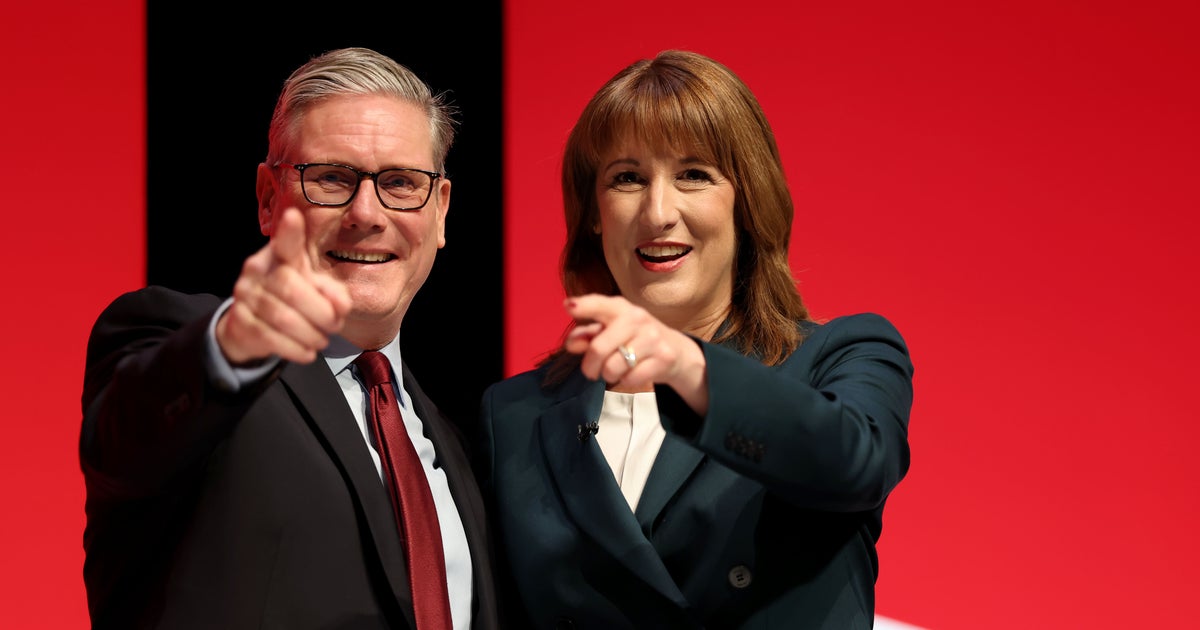
Andy Burnham has inherited a remarkably difficult economic challenge.
After years of weak productivity, high borrowing costs, pressure on household finances and an exceptionally demanding fiscal environment, the new Prime Minister faces a fundamental choice over the economic direction of his government.
Should he continue broadly along the path established by Rachel Reeves, with an emphasis on fiscal discipline and tight control of the public finances?

Or should he make a decisive break with the Reeves era and pursue a more interventionist economic strategy designed to stimulate growth, investment and regional development?
That debate is becoming increasingly important.
Burnham has spent years developing an economic philosophy in Greater Manchester that is very different from the traditional Westminster approach. His model has emphasised devolution, public investment, transport, skills, housing and the idea that economic growth should benefit communities outside London. His supporters describe this approach as a form of “business-friendly socialism”, while critics worry that it could ultimately require higher taxation and greater government intervention.
Now he has the opportunity to put those ideas into practice nationally.
But he also has a problem.
Britain cannot simply spend its way out of its economic difficulties.
The Reeves inheritance
Rachel Reeves’ time at the Treasury was dominated by one overriding objective: restoring credibility to the public finances while creating room for investment.
The strategy involved difficult tax decisions and a strong emphasis on fiscal rules. Supporters argue that these measures were necessary after years of economic instability and that they created the conditions for increased public investment.
Indeed, recent economic data provide some grounds for optimism. The UK economy grew by 0.4 per cent in the second quarter of 2026, following 0.6 per cent growth in the first quarter, putting Britain among the faster-growing major advanced economies at present.
That means Burnham cannot simply dismiss everything Reeves did.
The economy is not in the position of a country facing an immediate collapse.
But growth alone does not mean that the underlying problems have been solved.
Britain still faces high debt, elevated borrowing costs, persistent inflation risks and serious structural weaknesses.
And that is where Burnham’s challenge begins.
Why a U-turn is being demanded
Critics who want Burnham to break from Reeves argue that Labour needs a fundamentally different approach.
Their concern is that excessive reliance on taxation and fiscal restraint could restrict economic activity precisely when Britain needs investment.
Businesses need confidence.
Households need higher disposable incomes.
Workers need better wages.
Regions outside London need investment.
And the country needs higher productivity.
The argument for a change of direction is therefore not necessarily that fiscal discipline should disappear.
It is that fiscal discipline should be combined with a more ambitious growth strategy.
That distinction could become the defining feature of the Burnham government.
Burnham’s Manchester model
Burnham’s record in Greater Manchester provides a clue to what he might attempt.
During his time as mayor, he championed greater regional control over transport, investment and skills. His political philosophy has frequently challenged the idea that economic development should be concentrated overwhelmingly in London and the South East.
His concept of “Manchesterism” has been described as an attempt to combine economic development with social benefits, rejecting the idea that growth will automatically “trickle down” to poorer communities. Policies associated with his approach included the Bee Network and regional investment initiatives.
Now Burnham wants to take that philosophy to the national level.
That could mean greater investment in northern cities.
It could mean further devolution of economic powers.
It could mean a stronger role for the state in infrastructure.
It could mean expanding vocational education and technical training.
And it could mean a much more deliberate attempt to move economic activity away from London’s dominance.
The opportunity is enormous.
So are the risks.
Britain needs growth, not just redistribution
The central economic question Burnham must answer is surprisingly simple:
Where will the money come from?
It is relatively easy for a government to announce more spending.
It is much harder to generate the additional economic activity necessary to pay for it.
If Burnham wants better public services, more social housing, improved transport and greater investment, Britain needs a larger and more productive economy.
That means businesses must invest.
Workers must become more productive.
Infrastructure must improve.
Planning restrictions may need to change.
Skills shortages must be addressed.
And the country must become more attractive to entrepreneurs and investors.
This is why Burnham’s economic agenda cannot simply be about spending more.
It has to be about producing more.
The danger of higher taxes
One of the most controversial aspects of the debate concerns taxation.
Burnham’s supporters have floated ideas involving increased taxation of wealth and businesses, while other proposals associated with the wider Labour debate include changes to income-tax thresholds.
Critics argue that Britain is already carrying a very high tax burden.
If businesses face substantially higher costs, investment could suffer.
If higher-income workers face additional taxation, some may reduce investment or relocate.
If employers face higher payroll costs, hiring could become more difficult.
These are legitimate concerns.
At the same time, supporters of higher taxation argue that Britain cannot maintain high-quality public services without raising sufficient revenue.
That is the political dilemma Burnham inherits.
He needs to convince markets that he is fiscally responsible while convincing voters that Labour can improve their living standards.
Those objectives are not necessarily incompatible.
But achieving both requires careful policy design.
The strongest argument for Burnham
Burnham’s greatest advantage is that he can make an argument that goes beyond traditional Westminster economics.
He can point to Greater Manchester and say that regional government can deliver practical change.
Transport provides one example.
Skills provide another.
Housing provides another.
The wider devolution agenda provides perhaps the most important example of all.
Rather than concentrating economic decisions in Whitehall, Burnham has argued for giving cities and regions greater power over their own futures.
That philosophy could become central to his premiership.
Instead of asking London to solve every regional economic problem, Burnham could attempt to create a system in which local leaders have greater responsibility for investment and growth.
The North could become his economic laboratory
For decades, British governments have struggled with the North-South divide.
London and the South East have generally benefited from higher levels of economic activity and investment, while many northern communities have faced lower productivity, weaker infrastructure and poorer transport connections.
Burnham has made reducing that gap a central part of his political identity.
His book Head North, co-written with Steve Rotheram, argued for a more economically balanced Britain and criticised excessive centralisation.
As Prime Minister, he has an opportunity to turn that argument into national policy.
That could involve major infrastructure projects, new transport links, investment in skills and further devolution.
There is already evidence that Burnham’s government is pursuing decentralisation aggressively. A recent analysis suggested that as many as 90,000 white-collar jobs could eventually move from London to regional cities, potentially generating billions of pounds of additional economic activity.
If such a strategy succeeds, it could become one of Burnham’s defining achievements.
But Manchester cannot simply be scaled up
There is an obvious criticism.
Greater Manchester is not Britain.
A regional mayor can experiment with transport policy in a relatively defined geographical area.
A national government has to deal with the entire economy.
It must manage defence.
It must manage international trade.
It must manage monetary policy alongside an independent central bank.
It must manage pensions, welfare, taxation and national infrastructure.
And it must respond to international economic shocks.
A policy that works in Manchester may not automatically work across the United Kingdom.
Burnham therefore needs to distinguish between the principles that can be transferred and the policies that cannot.
Reeves’ fiscal rules remain important
Another important reality is that Burnham cannot simply erase the economic legacy of the previous government.
Senior figures around the government have reportedly urged Chancellor John Healey not to undermine the recovery with additional tax increases, while ministers have indicated that they intend to remain within Reeves’ fiscal framework.
That suggests the new government is unlikely to abandon fiscal discipline completely.
And perhaps it should not.
Investors need confidence.
Bond markets need confidence.
Businesses need predictable policy.
The government cannot promise unlimited spending without explaining how it will be financed.
Burnham’s challenge is therefore not to destroy the Reeves framework.
It is to reshape it around growth.
A new economic bargain
The most interesting possibility is that Burnham could attempt to create a new economic bargain.
Under such an approach, government would provide infrastructure, housing, skills and investment.
Businesses would be expected to invest and create jobs.
Local government would receive greater control over economic development.
Workers would receive greater access to training and better employment opportunities.
And the resulting growth would generate additional tax revenue.
That is very different from simply increasing taxes to fund higher spending.
It is an attempt to make economic growth itself the source of improved public finances.
That is the gamble.
The productivity problem
Britain’s long-term economic weakness is ultimately a productivity problem.
If workers produce more per hour, wages can rise.
If businesses become more efficient, profits can rise.
If the economy grows faster, tax revenues can rise without necessarily increasing tax rates.
That is why Burnham’s emphasis on skills could be particularly important.
His government has already been developing a national technical-education approach inspired by initiatives associated with Greater Manchester. The proposed Manchester Baccalaureate model places greater emphasis on vocational routes, employer involvement and work experience alongside traditional academic qualifications.
If this approach helps reduce skills shortages and improve productivity, it could have far greater economic significance than another short-term tax measure.
The cost-of-living question
Ultimately, however, voters will judge Burnham by their household finances.
They do not experience GDP statistics directly.
They experience mortgage payments.
Rent.
Food prices.
Energy bills.
Transport costs.
Wages.
Taxes.
And the quality of public services.
The government can announce strong economic growth, but if families still feel poorer, political dissatisfaction will remain.
This is why Burnham has placed cost-of-living issues at the centre of his early agenda.
But again, there is a fundamental constraint.
A government cannot permanently reduce household costs through subsidies without paying for them somewhere else.
The sustainable solution is higher productivity and stronger real wages.
The political danger
Burnham therefore faces a difficult political balancing act.
If he follows the Reeves approach too closely, he risks disappointing Labour voters who expected a major change in economic direction.
If he abandons fiscal discipline and pursues expensive programmes without adequate funding, he could alarm financial markets and undermine the very economic stability he needs.
If he raises taxes too aggressively, he could damage business confidence.
If he cuts taxes without identifying spending reductions or new revenue, he could create a fiscal hole.
And if he does nothing, voters may conclude that the new government offers little more than a change of personnel.
This is why calls for a “U-turn” are easier to make than to execute.
Burnham needs a third way
The best strategy may therefore be neither a continuation of Reeves nor a complete rejection of her economic legacy.
Burnham needs a third way.
Keep fiscal credibility.
Keep control of borrowing.
Keep investor confidence.
But redirect spending towards projects that increase the economy’s productive capacity.
Build houses.
Improve transport.
Expand technical education.
Modernise infrastructure.
Support businesses that invest.
Give cities more economic power.
And measure government spending according to whether it creates long-term economic value.
That would allow Burnham to argue that he is changing the direction of economic policy without abandoning financial responsibility.
The test of his premiership
The coming months will determine whether Burnham can make that argument convincing.
The economy currently has some encouraging momentum, with strong recent quarterly growth.
But growth can slow.
Inflation remains a risk.
Energy prices remain vulnerable to geopolitical developments.
Borrowing costs remain significant.
And public expectations are extremely high.
Burnham therefore has little room for error.
His government must demonstrate that it can simultaneously promote growth, improve living standards and maintain confidence in Britain’s public finances.
That is an enormous task.
A historic opportunity
Yet there is also a genuine opportunity.
Burnham has spent years arguing that Britain’s economic model is too centralised, too dependent on London and insufficiently focused on regional growth.
He now has the chance to prove his critics wrong.
If he can combine fiscal discipline with ambitious investment, decentralisation and productivity reforms, he could create a genuinely different economic model for Britain.
If he simply increases spending without generating sufficient growth, critics will say that he has repeated the mistakes of previous Labour governments.
The difference will come down to one thing:
whether the money is invested in Britain’s future or merely used to finance today’s problems.
That is the real economic test.
Conclusion: Burnham’s moment of truth
Andy Burnham does not necessarily need to destroy the Rachel Reeves economic legacy.
He needs to learn from it.
Reeves placed fiscal stability at the centre of Labour’s economic strategy. Burnham can retain that discipline while changing the emphasis towards investment, productivity and regional growth.
Britain does need stronger public services.
It does need more housing.
It does need better infrastructure.
It does need higher wages.
But all of those objectives ultimately depend on one thing: a larger, more productive economy capable of paying for them.
That is where Burnham’s political philosophy will be tested.
His greatest opportunity is to demonstrate that social democratic economics does not have to mean choosing between fiscal responsibility and public investment.
His greatest danger is proving the opposite.
For now, the message from Britain’s economic debate is clear.
Andy Burnham has inherited the Reeves era—but he does not have to remain trapped inside it.
If he can turn the Treasury’s emphasis on stability into a broader strategy for investment and growth, he could begin a genuinely new chapter in British economic policy.
If he cannot, the calls for a U-turn may soon become much louder.
Leave a Reply
You must be logged in to post a comment.