

Andy Burnham Just Kicked State Pensioners Off a Cliff – He’s Just Like Rachel Reeves
For years, Andy Burnham cultivated an image as the Labour politician who understood ordinary people. As Mayor of Greater Manchester, he presented himself as a champion of working families, struggling households and communities that felt ignored by Westminster. His political appeal was built partly on the promise that Labour should stand with those who have the least power.
Yet his recent approach to pensioners raises a deeply uncomfortable question: what happens when political compassion collides with the Treasury, fiscal restraint and the fear of making difficult spending commitments?
The answer, critics would argue, is that Burnham begins to look remarkably similar to Rachel Reeves.
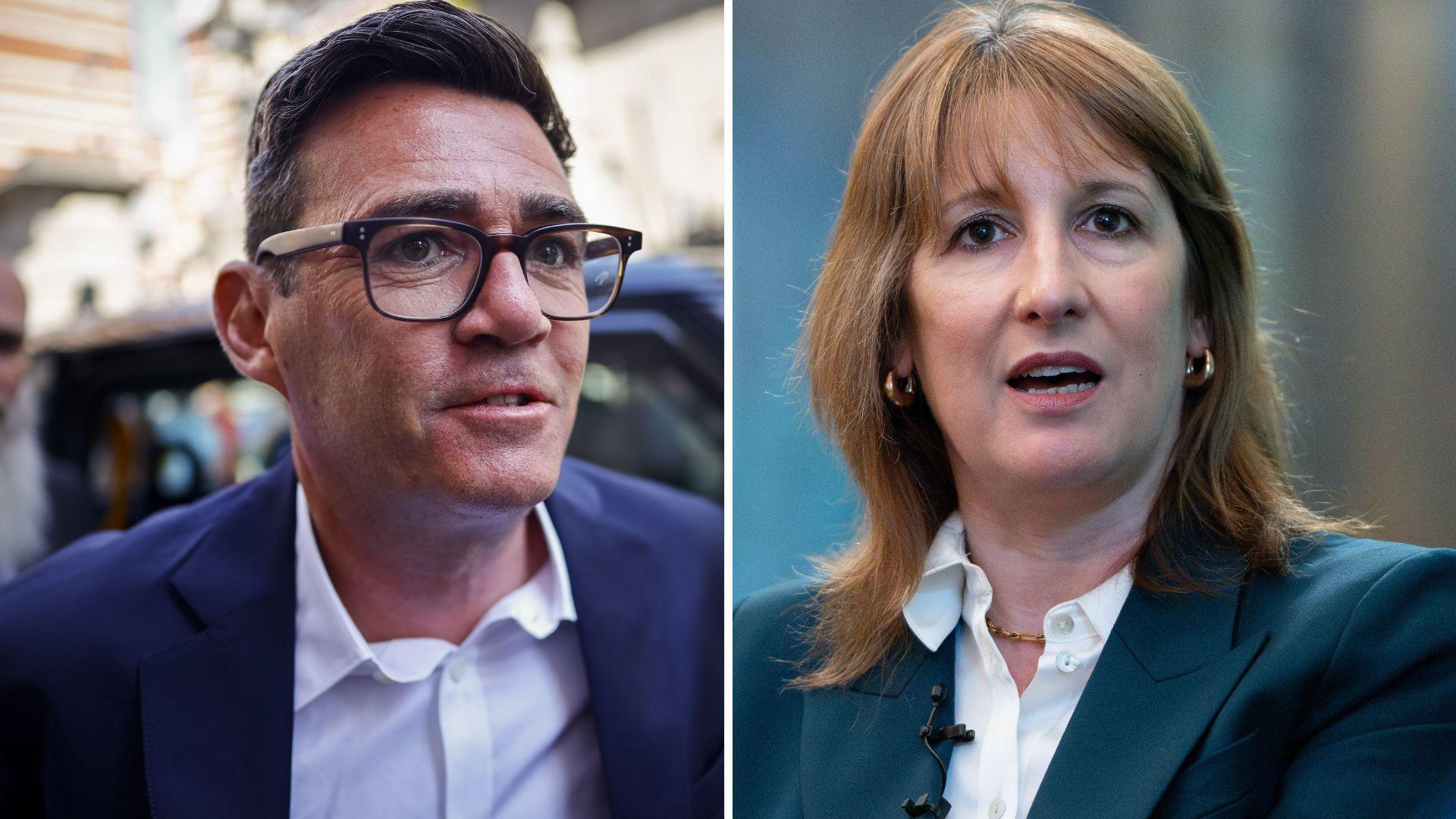
That comparison matters because pensioners have already experienced a dramatic shift in Labour’s approach to financial security. In 2024, Reeves restricted the Winter Fuel Payment in England and Wales to pensioner households receiving Pension Credit or certain other means-tested benefits. According to the House of Commons Library, the change reduced the number of individuals expected to receive the payment from around 10.8 million pensioners in 2023/24 to roughly 1.5 million in 2024/25.
The policy generated enormous political controversy. It was defended as necessary because the new Labour government inherited difficult public finances, but for many pensioners the message was brutally simple: a benefit they had previously received was suddenly no longer guaranteed.
The government subsequently reversed course. From winter 2025/26, all people above State Pension age became eligible for the Winter Fuel Payment again, although those with annual incomes above £35,000 would have the payment recovered through the tax system. The government said this would mean more than three quarters of pensioners in England and Wales receiving the support.
That U-turn demonstrates something important. Pensioner living standards are not an abstract accounting exercise. Decisions about £200 or £300 can have real consequences when energy bills, food prices, council tax and other household costs are rising.
This is why Burnham’s position on the Waspi women is so politically significant.
In June 2026, Burnham ruled out compensation for women affected by increases in the State Pension age, despite previously indicating support for compensation for some of the millions of women born in the 1950s who argued that they had been inadequately informed about changes to their retirement age. He said he remained open to alternative forms of assistance.
To supporters, this could be presented as responsible government. There is a legitimate question about how much taxpayers should be required to spend on historical grievances, particularly when governments face competing demands for healthcare, social care, defence, infrastructure and other public services.
But to pensioners and campaigners, the decision can look very different.
It can look like another example of politicians expressing sympathy until sympathy becomes expensive.
That is where the comparison with Reeves becomes powerful.
Reeves’ original Winter Fuel Payment decision was based on a familiar political argument: difficult choices had to be made because public finances were under pressure. Burnham’s position on Waspi can similarly be defended as a decision not to commit billions of pounds without a clear justification for doing so.
But political decisions are about more than arithmetic.
A government does not simply decide what it can afford. It also decides whose interests deserve priority, whose sacrifices are acceptable and which promises are worth defending.
For pensioners, that distinction is crucial.
The State Pension is not generally perceived as a conventional welfare handout. People have spent decades paying National Insurance and taxes while building their lives around the expectation that, eventually, they would receive financial security in retirement. The State Pension may be supplemented by private savings and occupational pensions, but for millions of households it remains a central pillar of retirement income.
That is why any perceived weakening of pensioner security can provoke such an emotional reaction.
There is also a wider political danger for Labour. Pensioners are not simply a demographic group that can be taken for granted. They vote in large numbers, remember political promises and can be particularly sensitive to changes affecting household income.
The Winter Fuel Payment controversy demonstrated how quickly pension policy can become a political liability. The government eventually expanded eligibility again, with nine million pensioners expected to benefit during winter 2025/26.
And the financial reality remains complicated. From April 2026, HM Revenue and Customs began recovering Winter Fuel Payments from pensioners whose income exceeded £35,000, with almost two million people expected to repay their payments, mostly through adjustments to their PAYE tax codes.
So even after the apparent reversal, the argument over pensioner support has not disappeared.
This is the environment into which Burnham has stepped as Prime Minister and Labour leader. He is no longer merely the mayor who can campaign against Westminster from the outside. He is now responsible for the difficult decisions that come with governing the country.
That creates a test of political character.
The easy thing for any politician is to promise that pensioners will be protected. The difficult thing is to explain exactly how that protection will be funded. Burnham now has to demonstrate that his concern for older people is more than rhetoric.
If he cannot, critics will understandably ask whether his transformation from Labour champion to Labour administrator has happened remarkably quickly.
There is, however, a danger in exaggerating the comparison. Burnham is not literally implementing the same policy as Reeves did in 2024. The Winter Fuel Payment is a specific benefit, while the Waspi issue concerns compensation following changes to the State Pension age. The two controversies involve different legal, financial and historical circumstances.
Nevertheless, they share a political theme: pensioners are repeatedly being asked to accept that the government understands their concerns while being told that substantial financial remedies are simply too difficult, too expensive or impossible to justify.
That is the deeper problem.
A government can make a technically defensible decision and still make a politically disastrous one.
If Labour wants to rebuild trust with older voters, it cannot treat pension security as an afterthought. It must acknowledge that retirement planning depends upon confidence. People need to believe that the rules governing their pensions will not suddenly change beneath their feet, that legitimate complaints will be taken seriously and that fiscal responsibility will not always be achieved by asking the same groups to shoulder the burden.
Burnham’s supporters may argue that responsible government sometimes requires saying no. They are right. No government can meet every demand, and no politician should pretend otherwise.
But responsibility also means establishing clear priorities.
If pensioners are repeatedly told that the country cannot afford to compensate them, cannot guarantee every benefit and must accept difficult compromises, they are entitled to ask a simple question: who, exactly, is government for?
That is why the accusation that Burnham is becoming “just like Rachel Reeves” has political force, even if the details of their policies differ.
It is not really about personality. It is about priorities.
It is about whether Labour’s promise of social justice survives when the spreadsheet arrives.
And it is about whether politicians who built their reputations defending ordinary people are prepared to defend those people when doing so becomes politically and financially inconvenient.
Burnham has inherited the ultimate test of that principle. As Prime Minister, he can no longer simply point towards Westminster and say that someone else is responsible. The decisions are now his.
For pensioners watching closely, that means the question is no longer whether Andy Burnham sounds like a champion of their interests.
The question is whether he will actually act like one.
Until he provides a convincing answer, the accusation that another Labour politician has asked pensioners to take yet another hit will continue to resonate. And after the upheaval over Winter Fuel Payments, many older voters may have little patience left for politicians who offer sympathy with one hand while withdrawing meaningful support with the other.
For a party that claims to represent working people throughout their entire lives, that should be a warning.
Because pensioners are not merely numbers on a Treasury balance sheet.
They are the people who built the country Labour now governs.
And they deserve more than being told to accept another “difficult choice.”