

Andy Burnham Issues Rallying Call for Volunteers to Help End Rough Sleeping
Prime Minister Andy Burnham has issued a powerful appeal for volunteers, charities, faith groups and communities to join the government’s campaign to end rough sleeping in England. His call comes as the government acknowledges that public funding alone may not be sufficient to achieve the ambitious goal of offering every rough sleeper a place to stay before Christmas. Burnham has described the campaign as a moral mission and urged people across Britain to work together to address one of the country’s most visible social problems.
The Prime Minister’s intervention represents an important shift in the way the government is approaching homelessness. Rather than presenting rough sleeping as a problem that can be solved entirely through Whitehall spending, Burnham is asking wider society to become directly involved. During a visit to the homelessness charity Changing Lives in Newcastle, he called on community organisations, voluntary groups and religious institutions to contribute to the national effort.
Burnham admitted that government funding “may not fully be enough” to achieve his objective. However, he argued that Britain had already demonstrated during the Covid-19 pandemic that society could respond quickly when there was a strong national determination to act. His ambition is to recreate that spirit of collective action and ensure that people sleeping on the streets are offered somewhere safe to stay before the winter becomes more severe.
The government’s financial commitment is substantial. Burnham’s national campaign is backed by approximately £442 million, including an additional £102 million announced for immediate action during the coming winter. The new funding is intended to help areas with the greatest levels of rough sleeping provide accommodation and support. Of the additional money, £8.4 million will strengthen the Ending Homelessness in Communities Fund, recognising the role already played by charities, faith groups and community organisations.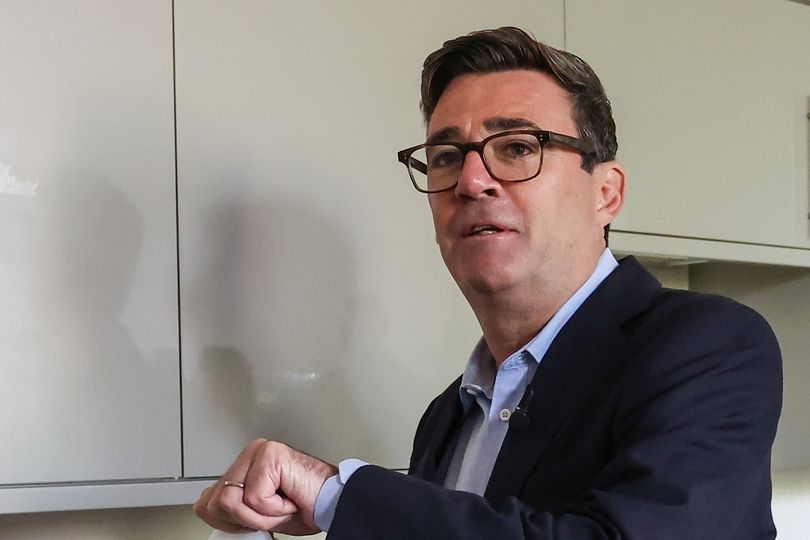
The scale of the investment demonstrates that Burnham’s promise is not simply a political slogan. The government is putting significant resources behind the campaign. Nevertheless, the Prime Minister’s decision to ask volunteers and community organisations to help shows that he believes money alone cannot solve the problem.
This is particularly important because rough sleeping is rarely caused by a single factor. Some people may lose their homes because of financial difficulties, high rents or unemployment. Others may experience mental-health problems, addiction, family breakdown or difficulties accessing public services. People who have been sleeping rough for long periods may have experienced repeated failures across different systems, making it difficult to move permanently into stable accommodation.
Burnham has therefore stressed the importance of cooperation between different parts of society. Councils can provide housing and local services, charities can offer specialist support, healthcare organisations can address medical needs, while faith groups and volunteers can provide practical assistance and human contact. Businesses may also have a role to play through employment opportunities, funding and partnerships.
The appeal reflects Burnham’s experience as Mayor of Greater Manchester. During almost a decade in the role, he introduced initiatives designed to reduce rough sleeping, including the “A Bed Every Night” programme. That scheme provided emergency accommodation to people who would otherwise have been sleeping on the streets. Burnham has defended his record by arguing that rough sleeping numbers fell significantly, although he acknowledged that the situation later became more complicated.
According to Burnham, Greater Manchester’s success created an unintended problem. Because the region was offering a comparatively high level of support, some people experiencing homelessness travelled there from other parts of the country. The experience convinced him that a national approach is necessary. If one region provides significantly more support than neighbouring areas, it can attract people who need assistance without addressing the underlying national shortage of housing and support.
This is one reason the Prime Minister wants his current campaign to involve the whole country. He argues that rough sleeping cannot be permanently reduced if only certain cities or councils provide extensive services. A coordinated national effort could ensure that people receive support regardless of where they happen to be.
The latest figures underline the scale of the challenge. Government statistics published in February estimated that 4,793 people were sleeping rough on a single night in England during autumn 2025. This represented a record level and the fourth consecutive annual increase. Around 43% of those recorded were sleeping rough in London and the South East.
These figures explain why Burnham has chosen homelessness as one of the defining priorities of his early premiership. He has argued that Britain should not accept people sleeping in doorways, outside railway stations or in other public places as a normal part of everyday life.
The Prime Minister has also emphasised that his objective is not merely to reduce the number of people sleeping rough. His ambition is to end the practice by ensuring that everyone has an offer of somewhere to stay. This distinction is politically important. A government can claim success by reducing rough sleeping by a certain percentage, but Burnham wants to establish a much more ambitious standard.
However, there is an important difference between offering someone a bed and permanently ending their homelessness. Experts have warned that emergency accommodation must be accompanied by appropriate support if people are to avoid returning to the streets.
Jason Dugdale, a former rough sleeper, highlighted the importance of addressing individual circumstances. He argued that people need an opportunity to rebuild their lives, beginning with immediate safety but continuing through mental-health care, physical healthcare and employment. His comments illustrate why homelessness cannot be solved simply by providing accommodation for a few nights.
Charities have made similar arguments. St Mungo’s has warned that people experiencing entrenched rough sleeping may have already passed through several systems without receiving the support they need. Simply offering another temporary room may therefore fail unless the reasons previous interventions did not work are properly understood.
Mental-health and addiction services are particularly important. Local authorities already spend large amounts of money dealing with homelessness, but council leaders argue that housing-related funding alone cannot address the problem. People may need access to NHS services, psychological support, addiction treatment and long-term assistance with employment and daily living.
There is also a concern about the use of temporary accommodation. If thousands of people are suddenly offered rooms in hotels or privately rented properties, the additional demand could increase costs substantially. Homelessness organisations have warned that private providers could raise prices if governments compete for a limited supply of accommodation. In that situation, large amounts of public money could be spent on short-term solutions without creating a sufficient supply of permanent homes.
For that reason, Burnham’s campaign should be viewed as the beginning of a wider programme rather than the complete answer to homelessness. Getting people off the streets before Christmas is an urgent humanitarian objective, but maintaining stable housing afterwards will require sustained investment.
The Prime Minister has attempted to address this wider challenge by planning a national summit in the autumn. The meeting is expected to bring together representatives from business, finance, charities, healthcare, faith organisations and other parts of society. Burnham wants participants to consider what contribution they can make to reducing rough sleeping.
His approach is deliberately broad. The message is that homelessness is not solely the responsibility of housing departments or local councils. It is a social problem requiring cooperation between government and civil society.
Burnham has also demonstrated his personal commitment by announcing that he will donate 15% of the additional salary associated with his role as Prime Minister to homelessness causes. He previously donated 15% of his salary as Mayor of Greater Manchester to tackling homelessness in the region. His decision is intended to show that he is prepared to make a personal contribution while asking others to support his campaign.
The gesture is largely symbolic compared with the hundreds of millions of pounds being committed by the government, but symbolism can have political value. Burnham is attempting to present homelessness as an issue that requires moral as well as financial commitment. His argument is essentially that if Britain has the resources to respond to major national emergencies, it should also have the determination to ensure that vulnerable people are not left sleeping outside.
There are, however, legitimate questions about whether the Christmas deadline is achievable. Some people may refuse accommodation for personal reasons, while others may require specialist support before they can live safely indoors. There are also thousands of people in temporary accommodation who are not technically counted as rough sleepers but still lack permanent homes.
Burnham himself has acknowledged that not everyone may accept an offer of accommodation. His government is therefore likely to be judged not only by whether every individual is housed, but by whether it makes substantial progress in reducing rough sleeping and creates credible long-term routes out of homelessness.
The political risks are considerable. By making such a clear promise so early in his premiership, Burnham has created a measurable test of his government’s performance. If rough sleeping remains highly visible after Christmas, critics will argue that the campaign failed to meet its central objective. On the other hand, if the government succeeds in bringing large numbers of people indoors and establishing effective long-term support, the policy could become one of the strongest achievements of Burnham’s early leadership.
Ultimately, the success of the campaign will depend on what happens after the first night indoors. A bed can provide immediate safety, warmth and dignity, but it does not automatically provide a home. Permanent progress will require affordable housing, mental-health services, addiction treatment, employment support and coordinated local services.
In conclusion, Andy Burnham’s rallying call for volunteers represents an ambitious attempt to make ending rough sleeping a national social mission. His government has committed hundreds of millions of pounds, but the Prime Minister accepts that financial resources alone may not be enough. He is therefore asking charities, faith organisations, businesses, volunteers and local communities to work alongside government.
The campaign has been welcomed for putting homelessness high on the political agenda, but it also faces substantial challenges. The number of people sleeping rough has reached record levels, while many individuals require much more than emergency accommodation. The government will need to ensure that temporary solutions lead to permanent homes and effective support.
Burnham’s central message is that Britain has solved seemingly enormous challenges before by deciding that collective action was necessary. His reference to the pandemic reflects a belief that the same determination can be applied to homelessness. Whether that optimism becomes reality will depend on the ability of government and wider society to turn a powerful political promise into sustained practical action.
If Burnham succeeds, his campaign could demonstrate that rough sleeping does not have to be accepted as an inevitable feature of British life. If it fails, however, the experience will highlight the difficult truth that homelessness cannot be eliminated by emergency accommodation alone. The coming months will therefore be a crucial test of whether the Prime Minister’s rallying call can turn public goodwill, government funding and community action into lasting change.